Many market participants viewed the June 2026 Hormuz memorandum of understanding as the beginning of shipping normalization.
From a security perspective, the agreement reduced immediate concerns about military escalation and vessel safety. Freight markets stabilized, insurers became cautiously optimistic and chemical buyers began planning for improved supply chain conditions.
However, one critical issue remains unresolved.
The debate over future transit fees for vessels passing through the Strait of Hormuz has emerged as one of the most important geopolitical variables for global chemical trade during the second half of 2026.
For chemical producers, traders and logistics managers, the question is no longer whether the Strait will remain open. The question is whether future passage will come with additional costs, regulatory requirements or political conditions.
Why the Transit Fee Debate Matters
The Strait of Hormuz remains one of the world's most strategically important maritime corridors.
A significant portion of global trade in:
Crude oil
LNG
LPG
Methanol
Petrochemicals
Chemical feedstocks
moves through this narrow waterway.
Any change to the economics of transit can influence:
Freight costs
Delivered chemical pricing
Shipping route selection
Supply chain planning
Inventory strategies
Even relatively small additional charges can have meaningful effects when applied across millions of tonnes of cargo.
The Core Dispute
The current disagreement centers on whether vessels transiting the Strait should be subject to future fees after the temporary MOU framework expires.
Supporters of free navigation argue that international waterways should remain accessible without transit tolls.
Others suggest that countries bordering the Strait may seek compensation or regulatory control over passage.
The debate remains unresolved and is expected to become a major topic during ongoing negotiations.
For shipping markets, uncertainty itself can be disruptive.
International Law and UNCLOS Considerations
One reason the issue has attracted significant attention is its connection to international maritime law.
The principle of transit passage through international straits has historically supported global trade by ensuring that vessels can move through critical waterways without excessive restrictions.
Legal experts continue to debate:
Jurisdictional authority
Navigation rights
Transit obligations
Enforcement mechanisms
The outcome could influence not only Hormuz but future discussions involving other strategic chokepoints worldwide.
For chemical shippers, the practical issue is cost rather than legal theory.
Why Oman Is Also Part of the Discussion
Many logistics professionals focus exclusively on Iran when analyzing Hormuz developments.
However, Oman also occupies a strategically important position.
The southern side of the Strait falls within Omani territorial waters, giving Oman an important role in any long-term navigation arrangements.
Potential negotiations may therefore involve multiple stakeholders, increasing complexity.
This means future shipping frameworks could include:
Bilateral agreements
Regional arrangements
International mediation
Alternative fee structures
The final outcome remains uncertain.
Scenario 1: No Transit Fee
This is the outcome preferred by many shipping companies and cargo owners.
Under this scenario:
Navigation remains unrestricted.
Freight markets normalize gradually.
Shipping costs decline over time.
Trade flows recover naturally.
For chemical buyers, this would represent the least disruptive outcome.
It would also support broader efforts to reduce logistics costs following the disruptions experienced earlier in the year.
Scenario 2: Limited Transit Charges
A second possibility involves modest administrative or navigation-related fees.
Under this scenario:
Shipping remains open.
Additional costs are introduced.
Freight rates absorb part of the increase.
Cargo owners face higher landed costs.
Even small per-tonne increases become meaningful across large-volume commodity chemicals.
Products most exposed include:
Methanol
Polyethylene
Polypropylene
Ammonia
Urea
LPG-derived chemicals
Scenario 3: Full Commercial Transit Fee Structure
The most disruptive scenario would involve a formal toll system applied to commercial shipping.
Potential consequences include:
Higher freight costs
Increased insurance complexity
Revised trade economics
Route optimization reviews
Long-term supply chain adjustments
While many observers view this as the least likely outcome, it remains an important scenario for risk planning purposes.
The Impact on Chemical Pricing
Chemical markets are particularly sensitive to logistics costs because many products operate on relatively thin margins.
Additional shipping expenses can affect:
Commodity Petrochemicals
Large-volume products often have limited pricing flexibility.
Fertilizers
Transportation costs are a major component of delivered pricing.
Methanol
A globally traded product heavily influenced by freight economics.
Polymers
Delivered cost competitiveness often determines sourcing decisions.
For traders, even minor freight changes can alter arbitrage opportunities.
Why Scenario Planning Is Essential
The biggest mistake chemical shippers can make is assuming only one outcome.
Instead, procurement and logistics teams should prepare for multiple possibilities.
Key planning questions include:
What happens if no fees are implemented?
What happens if freight costs increase modestly?
What happens if transit charges become permanent?
How would each scenario affect supplier economics?
Which products face the greatest exposure?
Organizations that model multiple outcomes will be better positioned to respond quickly.
Recommendations for Chemical Buyers
Chemical importers and traders should consider several actions.
Review Freight Sensitivity
Identify products most exposed to transportation costs.
Update Landed Cost Models
Incorporate potential transit fee scenarios.
Diversify Supply Sources
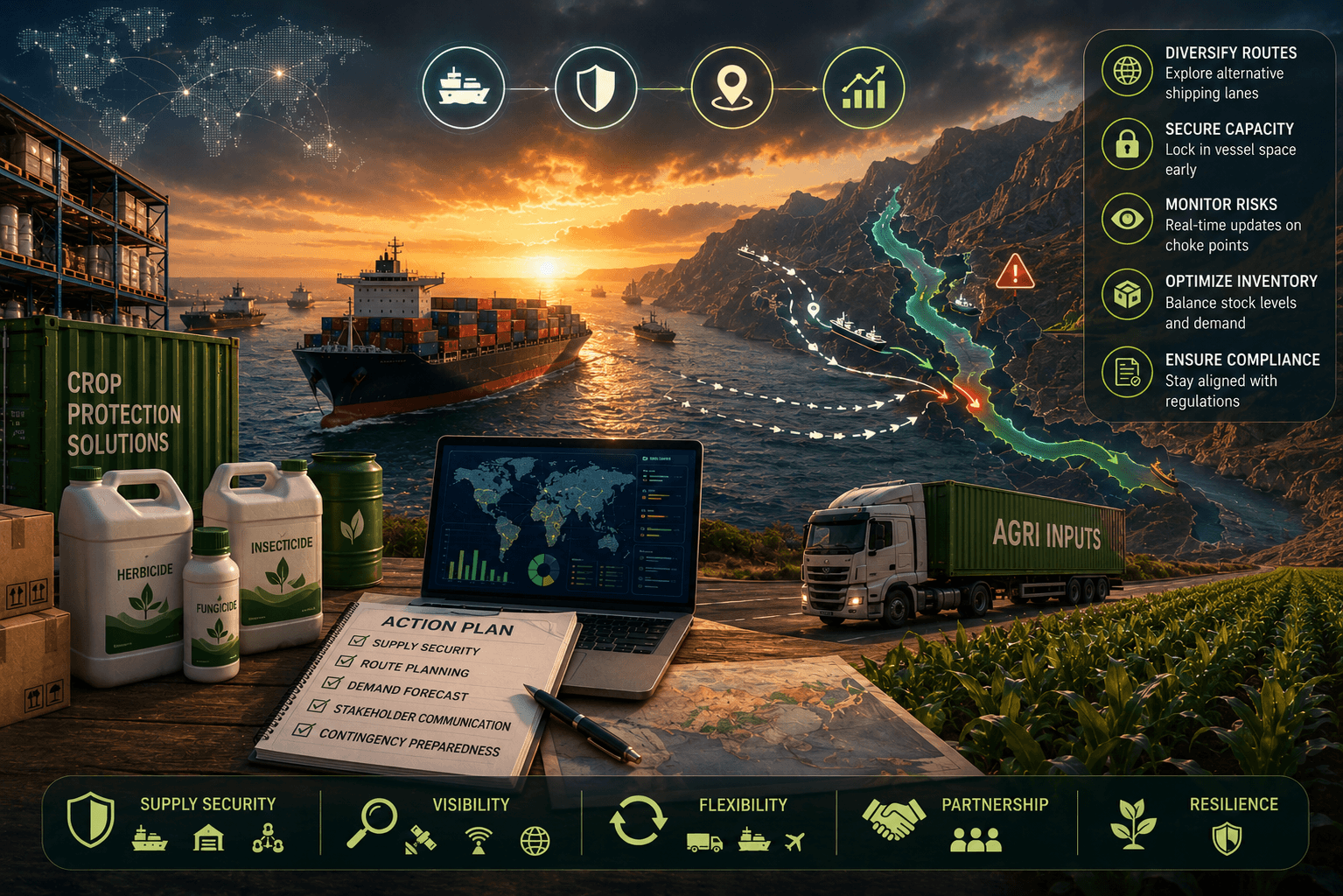
Reduce dependence on a single logistics corridor where possible.
Monitor Negotiation Developments
Political announcements may provide early signals of future policy direction.
Maintain Flexible Contracts
Supply agreements should accommodate evolving freight conditions.
These measures can reduce exposure to unexpected cost increases.
What to Watch Through August
Several developments will determine the direction of the market.
Diplomatic Negotiations
The structure of any post-MOU arrangement remains critical.
Maritime Legal Developments
International responses may influence policy outcomes.
Freight Market Reactions
Shipping markets often react before formal agreements are finalized.
Insurance Sector Guidance
Insurers will play an important role in evaluating future risk.
Together, these indicators will help define the next phase of Hormuz-related trade dynamics.
Conclusion
The Hormuz MOU reduced immediate shipping disruption risks, but it did not eliminate geopolitical uncertainty. The unresolved transit fee debate has emerged as one of the most important variables facing chemical logistics markets during H2 2026.
For chemical shippers, the issue is not merely legal or political—it is fundamentally economic. Even modest transit charges could influence freight rates, landed costs and trade flows across multiple chemical value chains.
Rather than assuming a single outcome, procurement teams should adopt scenario-based planning and closely monitor negotiations during the coming months. In today's chemical markets, resilience increasingly depends on preparing for multiple futures rather than predicting only one.
Corn Gluten Meal (60% Min Protein) - Indonesia CAS: 66071-96-3