
Introduction Borax Decahydrate
The industrial water treatment sector is undergoing rapid transformation as manufacturers, utilities, and process industries seek more efficient and sustainable chemistries. Among the key inorganic additives, Borax Decahydrate (sodium tetraborate decahydrate, Na2B4O7·10H2O) has maintained a stable role in specialized water treatment formulations, particularly where buffering, corrosion inhibition, and microbiological control are required. As we approach 2026, understanding the evolving application landscape and buyer dynamics for Borax Decahydrate in water treatment chemicals is essential for producers, formulators, and procurement teams worldwide.
Globally, demand for industrial water treatment chemicals is driven by stricter discharge regulations, water reuse initiatives, and the expansion of water-intensive industries such as power generation, mining, pulp and paper, and petrochemicals. Within this context, Borax Decahydrate stands out as a multifunctional borate source that can support pH stabilization, enhance performance of biocides, and contribute to corrosion mitigation in closed-loop systems. While it is not the largest-volume water treatment chemical, its niche but critical applications make it strategically important for certain formulations and sectors.
This article provides a detailed, professional overview of the global market outlook for Borax Decahydrate in water treatment chemicals up to 2026, with a focus on applications, product specifications, buyer profiles, and sourcing strategies. It also highlights how global suppliers such as chemtradeasia can support buyers in securing reliable, compliant, and cost-effective supply across regions.
Global Market Outlook for Borax Decahydrate in Water Treatment
The overall borates market, which includes Borax Decahydrate, has historically grown in line with industrial production and construction, with global borates demand estimated in the range of 4–5 million metric tons (B2O3 equivalent) annually. While glass and ceramics dominate borate consumption, water treatment represents a smaller but technically important segment. Between 2023 and 2026, industry analysts project low- to mid-single digit CAGR for borates, with specialty applications such as water treatment, detergents, and flame retardants showing relatively resilient growth due to regulatory and performance-driven demand.
In industrial water treatment, Borax Decahydrate usage is tied to sectors where precise pH control and corrosion protection are critical, such as closed cooling water circuits in power plants, HVAC systems in commercial buildings, and certain process water loops in metalworking and electronics manufacturing. As more facilities adopt water recirculation and zero-liquid-discharge (ZLD) strategies, the need for stable, buffer-capable additives like borates is expected to rise modestly. By 2026, it is reasonable to anticipate that the share of Borax Decahydrate used in water treatment will increase incrementally, even if the absolute tonnage remains small relative to major consuming industries.
Regionally, Asia-Pacific continues to be the largest growth engine for both water treatment chemicals and borates. Rapid industrialization, urbanization, and investment in power and infrastructure drive demand for advanced water management solutions. North America and Europe, meanwhile, are characterized by more mature markets but higher regulatory pressure on water quality and system efficiency, which encourages the use of multifunctional additives and optimized formulations. In all these regions, global trading platforms and distributors like chemtradeasia play a critical role in connecting Borax Decahydrate producers—primarily located in countries with large boron reserves such as Turkey and the United States—to water treatment chemical formulators and end users worldwide.
Key Properties and Specifications of Borax Decahydrate
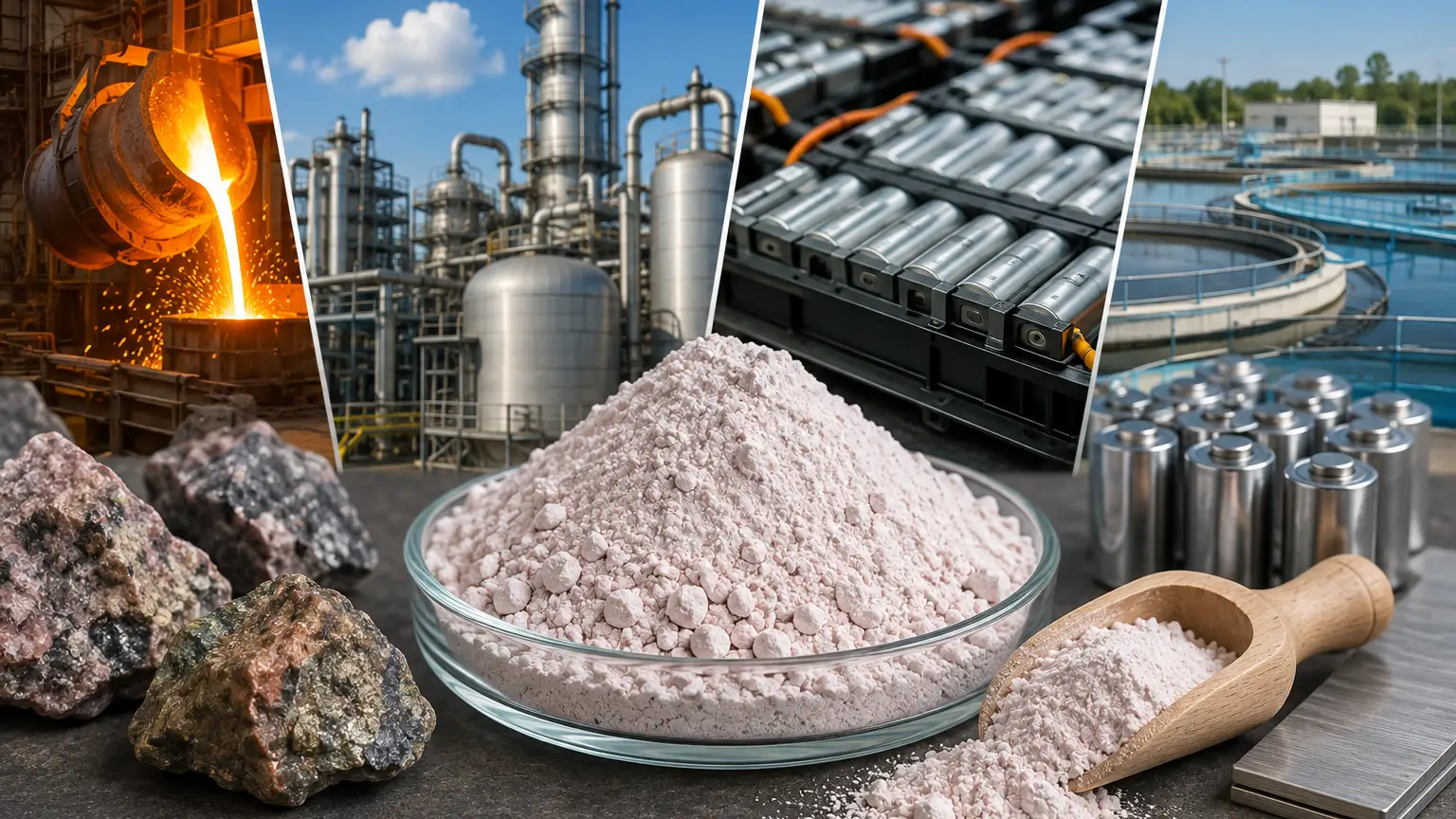
Borax Decahydrate is an inorganic salt with the chemical formula Na2B4O7·10H2O. It typically appears as white crystalline granules or powder, with a molecular weight of approximately 381.37 g/mol. One of its defining characteristics is its ability to act as a mild alkaline buffer, with a pH of about 9.2–9.3 in a 1% aqueous solution at 25°C. This buffering capacity is particularly valuable in water treatment formulations that require stable, slightly alkaline conditions to optimize the performance of corrosion inhibitors and certain biocides.
From a specification standpoint, industrial-grade Borax Decahydrate for water treatment applications commonly features a B2O3 content around 36–37%, with sodium oxide (Na2O) content near 16–17%. Typical moisture content corresponds to the decahydrate form, though storage conditions must be controlled to avoid caking or partial dehydration. Impurity levels—such as chloride, sulfate, and heavy metals—are important for sensitive systems like boiler feedwater or electronics cooling, where contamination can cause scaling, corrosion, or product quality issues. Buyers often request certificates of analysis (CoA) and compliance with relevant standards, and reputable suppliers, including chemtradeasia, can provide detailed test reports aligned with customer specifications.
Physical handling characteristics also matter to industrial buyers. Borax Decahydrate is moderately soluble in water (about 4.7 g/100 mL at 20°C, increasing significantly with temperature), which supports its use in liquid formulations and on-site solution preparation. It is generally supplied in 25 kg or 50 kg bags, big bags, or bulk for large-volume users. For water treatment formulators, understanding dissolution behavior, compatibility with other ingredients (such as phosphonates, molybdates, or organic dispersants), and storage stability is critical to designing robust products. Technical data sheets (TDS) and safety data sheets (SDS) from suppliers should always be consulted to ensure proper handling and integration into formulations.
Industrial Water Treatment Applications and Benefits
In industrial water treatment, Borax Decahydrate is primarily valued for its buffering capacity, borate chemistry, and synergistic effects with other treatment components. In closed cooling water systems, such as those used in power plants, district cooling networks, and large commercial buildings, borate-based buffers help maintain a stable, slightly alkaline pH. This environment minimizes corrosion of carbon steel and copper alloys while supporting the performance of nitrite, molybdate, or organic corrosion inhibitors. Borax Decahydrate can be incorporated into multi-component formulations that balance pH control, scale inhibition, and microbiological management.
Another application area is in metalworking and industrial cleaning processes, where borate-containing water treatment formulations help stabilize emulsions, control microbial growth, and protect equipment. For example, in certain metalworking fluids and alkaline cleaners, borates contribute to corrosion protection and pH stability, which in turn extend fluid life and reduce maintenance costs. When these process fluids are circulated through cooling or rinse systems, the water treatment program must account for the borate contribution to overall water chemistry, making consistent, quality-controlled Borax Decahydrate supply important.
From a benefits perspective, the use of Borax Decahydrate in water treatment can offer several advantages: improved pH stability over time, reduced need for frequent pH adjustment chemicals, potential synergy with biocides (some microorganisms are sensitive to borate levels), and enhanced corrosion control in specific system designs. While it is not a universal solution and must be evaluated case by case, these benefits can support longer equipment life, lower unplanned downtime, and more predictable water chemistry. As regulatory and economic pressures push industrial operators to optimize total cost of ownership, such performance advantages gain importance in procurement decisions.
Buyer Profiles, Sourcing Strategies, and the Role of chemtradeasia
The primary buyers of Borax Decahydrate for water treatment are not typically end users themselves, but rather water treatment chemical formulators, blending companies, and integrated specialty chemical producers. These organizations purchase Borax Decahydrate as a raw material to produce finished products such as closed-loop corrosion inhibitor packages, multifunctional treatment blends for HVAC systems, and process water conditioning agents. Secondary buyers include large industrial facilities with in-house water treatment capabilities—such as power plants, refineries, and pulp and paper mills—that may procure Borax Decahydrate directly for custom dosing programs.
For these buyers, sourcing strategy revolves around reliability, quality consistency, and regulatory compliance. Volatility in mining output, logistics disruptions, and regional trade policies can all affect borate supply. To mitigate risk, many buyers prefer to work with global distributors and trading platforms that maintain diversified sourcing networks and inventory positions across regions. This is where chemtradeasia plays a significant role, connecting producers in key borate-producing countries with water treatment formulators and industrial users worldwide. By aggregating demand, managing logistics, and providing documentation support, such intermediaries help buyers secure stable supply at competitive pricing.
In addition, buyers increasingly demand value-added services beyond simple product delivery. These may include assistance with regulatory documentation (e.g., REACH registration in Europe, TSCA compliance in the United States), support in navigating local import regulations, and guidance on product selection and specification alignment. Platforms like chemtradeasia can provide up-to-date market intelligence, comparative product options (such as different grades or particle sizes of Borax Decahydrate), and multi-modal shipping solutions tailored to buyer needs. For global water treatment companies operating across multiple regions, consolidating Borax Decahydrate procurement through a trusted international partner helps standardize quality and streamline supply chain management.
Conclusion
As the industrial water treatment sector continues to evolve under the combined influences of regulatory pressure, sustainability goals, and cost optimization, Borax Decahydrate will maintain a relevant role in specialized applications that require robust pH buffering and corrosion control. While it is only one component within complex water treatment formulations, its performance characteristics and compatibility with other chemistries make it a valuable tool for formulators and plant operators seeking stable, reliable system performance. By 2026, incremental growth in closed-loop cooling, process water recycling, and advanced treatment programs is expected to support steady demand for Borax Decahydrate in this niche but important segment.
For buyers, the key success factors will be securing consistent product quality, ensuring regulatory and safety compliance, and optimizing total cost of ownership in their water treatment programs. Strategic partnerships with experienced suppliers and distributors, such as chemtradeasia, can help navigate supply chain complexity, provide access to multiple sourcing origins, and offer documentation and logistical support. As global markets become more interconnected and risk-sensitive, leveraging such partnerships will be increasingly important for water treatment chemical companies and large industrial users alike.
This article is intended solely for informational and market insight purposes and does not constitute technical, safety, engineering, or professional advice. Users should independently verify all information with qualified experts, consult official documentation such as MSDS/SDS and regulatory guidelines, and contact their suppliers or our team directly for guidance on specific applications, system designs, and safe handling practices.