Introduction Borax Decahydrate
The global industrial landscape increasingly depends on reliable, high-purity chemicals to support critical operations such as water treatment, mining, metal processing, and power generation. Among these chemicals, borax decahydrate plays a strategic yet often underappreciated role. As industries tighten environmental standards and optimize operational costs, securing a stable and compliant supply of borax decahydrate for industry water treatment chemicals has become a key focus for procurement, supply chain, and technical teams worldwide.
Water-intensive sectors such as oil and gas, thermal power, textiles, and food processing rely on consistent water quality to protect equipment, meet regulatory norms, and ensure process efficiency. Borate-based compounds, particularly borax decahydrate, contribute to corrosion control, pH buffering, and microbial management in specific formulations. This creates a direct link between chemical supply chain reliability and the operational resilience of industrial facilities.
This article provides a comprehensive, globally oriented overview of the supply chain for borax decahydrate in industrial water treatment applications. It covers product fundamentals, logistics and sourcing challenges, quality and regulatory considerations, and the role of specialized distributors such as chemtradeasia in connecting producers with end-users. The aim is to equip decision-makers with structured insight to support strategic procurement and risk management.
Understanding Borax Decahydrate in Industrial Water Treatment
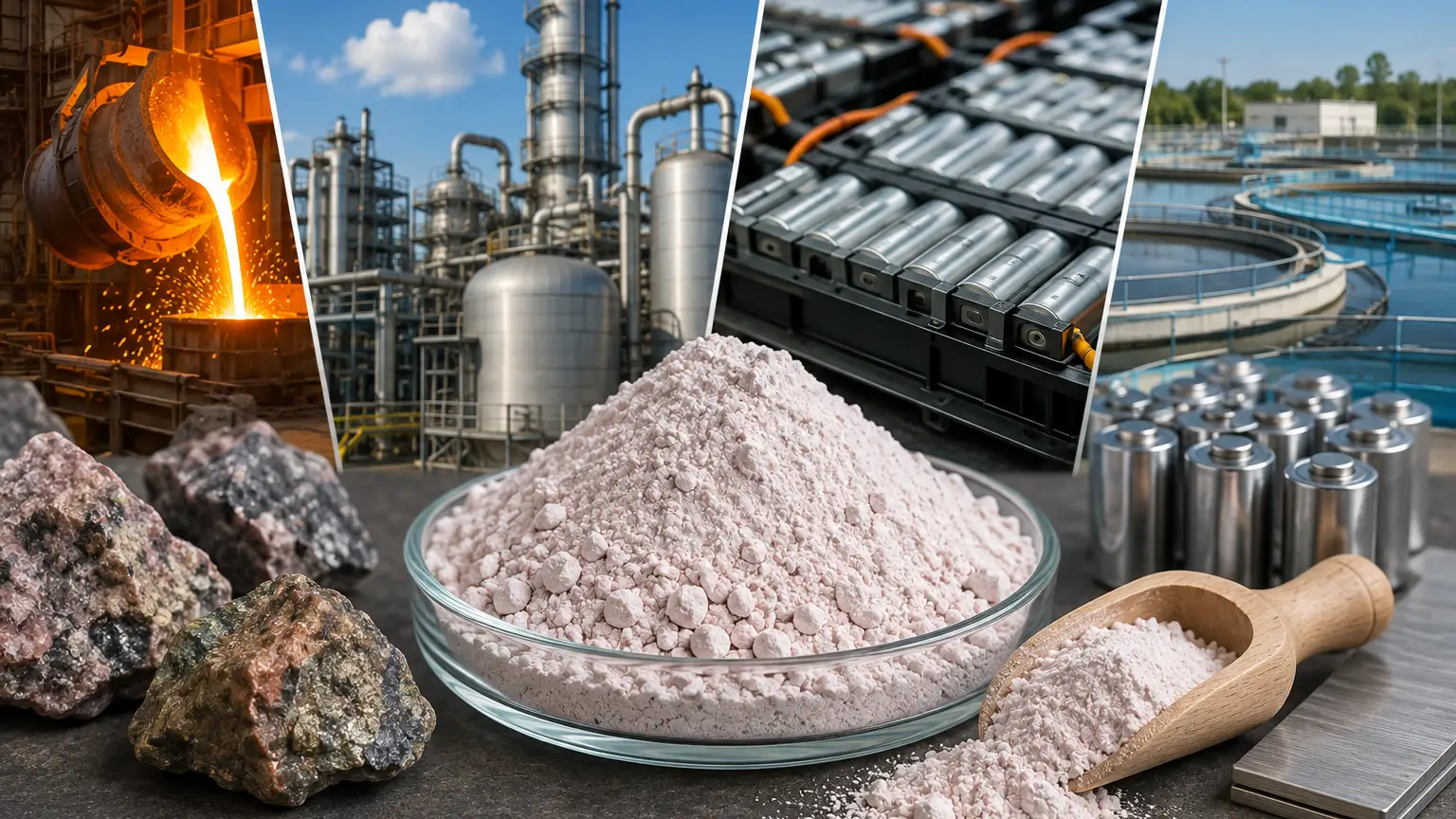
Borax decahydrate (sodium tetraborate decahydrate, typically written as Na2B4O7·10H2O) is a white crystalline salt widely used as a source of boron in industrial applications. It is derived primarily from boron-bearing minerals such as tincal and kernite, with major deposits located in countries like the United States (notably California), Turkey, Argentina, and China. Commercial grades are commonly supplied as granules or fine powders with controlled particle size distribution to enhance handling and dissolution.
In water treatment, borax decahydrate is not typically used as a standalone treatment chemical but as a key component in formulated products. It functions as a buffering agent, mild alkaline source, and boron donor in certain corrosion inhibitors and closed-loop cooling water treatment blends. Its ability to stabilize pH in a moderately alkaline range and to interact with metal surfaces in the presence of other additives can contribute to reduced corrosion rates in recirculating systems.
Industrial water treatment formulations that may incorporate borax decahydrate include closed cooling water inhibitors, certain boiler water auxiliaries, and specialty cleaners used in pre-operational system flushing. Although its share of the total water treatment chemicals market is smaller than commodities like caustic soda, phosphonates, or biocides, borax decahydrate’s niche functions make it a critical additive for specific applications where controlled alkalinity, buffering capacity, and boron chemistry are required.
Global Supply Chain Dynamics for Borax Decahydrate
The supply chain for borax decahydrate is shaped by the geographic concentration of boron reserves and a relatively small number of large-scale producers. Globally, boron production is dominated by Turkey and the United States, which together account for a substantial share of refined borate output. These upstream producers convert ore into refined borates such as borax decahydrate, boric acid, and other derivatives, which are then exported to regional distributors and industrial users.
From a logistics perspective, borax decahydrate is typically shipped in bulk bags (e.g., 500–1,000 kg FIBCs) or 25–50 kg multiwall bags by sea freight for international trade. Port infrastructure, container availability, and freight rate volatility all influence landed cost. Disruptions such as port congestion, geopolitical tensions affecting trade routes, or spikes in energy prices can significantly impact both lead times and pricing. For water treatment chemical blenders and end-users, this underscores the importance of diversified sourcing and inventory planning.
In many regions, industrial users do not source directly from the miners or primary refiners. Instead, they rely on specialized distributors and trading companies with strong regional networks. Companies like chemtradeasia play a vital role in aggregating demand from multiple customers, optimizing shipments, managing regulatory documentation, and providing local warehousing. This intermediary layer helps smooth seasonal demand fluctuations and mitigates the risk of stockouts for water treatment formulators operating on tight production schedules.
Key Features, Specifications, and Quality Requirements
For industrial water treatment applications, the suitability of borax decahydrate is determined by its chemical purity, physical form, and compliance with relevant regulations. Typical industrial-grade borax decahydrate contains around 99–99.5% Na2B4O7·10H2O with controlled levels of impurities such as chlorides, sulfates, and heavy metals. Excessive impurities can interfere with sensitive formulations, contribute to scaling, or raise environmental and health concerns when discharged.
Product specifications often include parameters such as bulk density, particle size distribution, solubility at given temperatures, and moisture content. Water treatment formulators may prefer granular material for easier handling and reduced dust, while fine powders can offer faster dissolution in automated dosing systems. Packaging integrity is also critical, as borax decahydrate can cake or absorb moisture if stored in high-humidity environments, negatively affecting dosing accuracy and process consistency.
Quality requirements extend beyond the chemical itself to documentation and traceability. Industrial buyers increasingly request certificates of analysis (COA), safety data sheets (SDS/MSDS), and where applicable, REACH registration or other regional compliance confirmations. Suppliers such as chemtradeasia typically maintain standardized documentation packages and quality assurance protocols, helping end-users demonstrate compliance with internal quality systems (e.g., ISO 9001) and external regulations governing chemical usage and environmental discharge.
Market Trends, Sourcing Strategies, and the Role of chemtradeasia
The global market for boron compounds, including borax decahydrate, is influenced by demand from glass, ceramics, agriculture, detergents, and flame retardants. Water treatment is a smaller but steadily growing end-use segment, driven by industrial expansion in Asia-Pacific, stricter environmental regulations, and increased focus on equipment life-cycle management. As emerging economies invest in power generation, manufacturing, and infrastructure, the need for reliable water treatment programs—and the borate-based additives that support them—continues to rise.
Procurement teams managing borax decahydrate sourcing are adopting strategies that balance cost efficiency with resilience. These strategies include qualifying multiple suppliers across regions, negotiating longer-term contracts to buffer price volatility, and working with global distributors to secure buffer stocks in regional warehouses. Digitalization is also playing a role: more buyers are using online platforms and data-driven forecasting to align borax decahydrate purchases with water treatment production plans and seasonal demand cycles.
Within this context, distributors such as chemtradeasia provide value beyond simple product delivery. With a diversified portfolio of water treatment chemicals and borate products, chemtradeasia can coordinate shipments of borax decahydrate alongside complementary chemicals such as caustic soda, sodium carbonate, phosphonates, and polymers. This consolidation reduces per-unit logistics costs, simplifies documentation, and enhances supply chain visibility. Additionally, established networks in Asia, the Middle East, Africa, and other regions allow chemtradeasia to bridge time zone, language, and regulatory gaps between global producers and local industrial consumers.
Conclusion
The supply chain for borax decahydrate in industrial water treatment is a microcosm of broader chemical distribution dynamics: geographically concentrated raw materials, a limited number of primary producers, and a globally dispersed base of end-users with diverse technical requirements. As industries worldwide intensify their focus on water efficiency, asset protection, and regulatory compliance, the importance of stable access to high-quality borax decahydrate as a formulation component is likely to grow.
To navigate this environment effectively, industrial buyers must integrate market intelligence, supplier diversification, and robust quality assurance into their sourcing strategies. Working with experienced distributors like chemtradeasia can help align supply with demand, ensure consistent product specifications, and reduce the operational risks associated with logistics disruptions or single-source dependency. Ultimately, a well-managed borax decahydrate supply chain supports not only cost control but also long-term reliability and performance of industrial water treatment programs across global markets.
This article is intended solely for informational and market insight purposes and does not constitute technical, safety, or professional advice. Users should independently verify all information with qualified experts, consult official product documentation such as MSDS/SDS, and, where appropriate, contact our team or other professional advisors before applying borax decahydrate or related water treatment chemicals in specific industrial processes.