China's petrochemical industry is often characterized by its enormous commodity capacity and the resulting pressure from oversupply. But Sinopec's latest investment in high-end polyvinyl alcohol (PVA) highlights a different strategy: using scale to move further into specialized, higher-value materials.
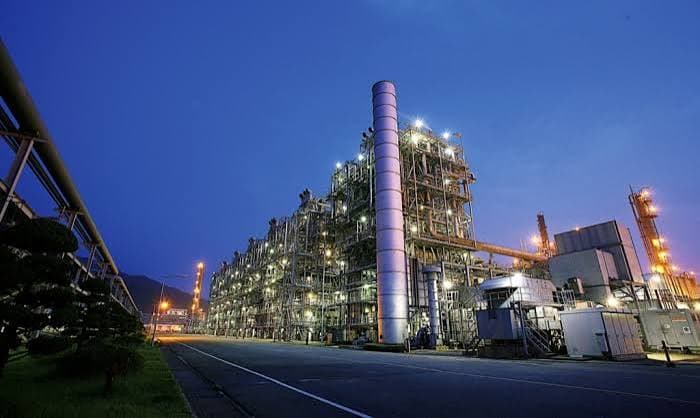
In August 2026, Sinopec's Chongqing SVW Chemical commissioned a 50,000-tonne-per-year specialty PVA resin facility, increasing the site's total PVA capacity to 210,000 tonnes per year. The expansion makes the Chongqing site the world's largest single-site base for high-end PVA production. (Sinopec)
The development offers an important counterpoint to the broader narrative of Chinese petrochemical overcapacity: China is not only adding commodity production, but also attempting to capture more value through specialty grades.
Why High-End PVA Matters
PVA is used across a range of industrial applications, including:
Adhesives
Films
Coatings
Textiles
Paper processing
Construction materials
Photovoltaic applications
Specialty PVA grades can offer more specific performance characteristics than standard commodity products, allowing producers to compete through technical specifications rather than volume and price alone.
This makes high-end PVA strategically attractive in a market where commodity petrochemicals face intense margin pressure.
Sinopec's Scale Advantage
The Chongqing expansion demonstrates how China's large chemical producers can combine scale, integration, and specialty-product development.
Instead of treating overcapacity simply as a reason to reduce production, producers can attempt to redirect capacity toward higher-value applications.
The 50,000-tonne expansion therefore supports several strategic objectives:
Increase specialty PVA availability
Improve product differentiation
Support downstream advanced applications
Strengthen domestic supply
Reduce reliance on imports for specialized grades
Expand China's position in high-value polymer markets
Reuters described the facility as part of Sinopec's effort to expand high-end PVA production and reduce dependence on imports.
A Different Response to China's Overcapacity
China's petrochemical sector continues to face substantial capacity pressure, particularly in commodity products.
However, specialty expansion represents another possible response:
Commodity overcapacity → Higher-value applications → Product upgrading → Better utilization
This strategy does not eliminate oversupply, but it can potentially improve the economics of selected production assets.
The distinction is increasingly important for global competitors. Chinese producers may compete not only through lower-cost commodity production but also through increasingly sophisticated specialty grades.
Market Implications
Sinopec's investment could influence the global PVA market in several ways:
Greater availability of high-end Chinese PVA
Increased competition for specialty suppliers
Greater pressure on imported specialty grades
More domestic substitution in China
Potential export opportunities for advanced PVA grades
Increased investment in downstream PVA applications
For international buyers, the key question will be whether China's specialty PVA expansion translates into more competitive pricing, greater availability, or both.

Competitive Intelligence
Petrochemical buyers should monitor several indicators:
1. Specialty Capacity
Track whether other Chinese producers are adding specialty polymer capacity alongside commodity units.
2. Import Substitution
Monitor whether advanced PVA grades increasingly replace imported materials in China.
3. Export Activity
Higher specialty production could eventually increase China's presence in international PVA markets.
4. Downstream Applications
Photovoltaics, adhesives, coatings, and advanced films could become important demand centers.
5. Product Differentiation
The ability to produce multiple grades with specific performance characteristics will become increasingly important as commodity margins weaken.
Procurement Considerations
PVA buyers should evaluate suppliers based on more than headline production capacity.
Important factors include:
Grade and specification
Application performance
Quality consistency
Production scale
Technical support
Export availability
Regulatory documentation
Supply reliability
For specialty polymers, the cheapest supplier may not always provide the lowest total cost if formulation changes, inconsistent quality, or technical limitations create downstream problems.
Looking Ahead
Sinopec's Chongqing expansion illustrates how China's chemical industry may increasingly respond to oversupply through product upgrading rather than capacity growth alone.
The broader significance is that China's enormous petrochemical manufacturing base can provide the financial and infrastructure scale needed to move into increasingly specialized materials.
For global chemical producers, this means competition from China may increasingly extend beyond commodity petrochemicals into specialty polymers and performance-driven grades.
For buyers, the result could be a wider global supplier base for high-end PVA — and potentially greater pressure on established specialty producers to differentiate through technology, quality, and application support.
Key Takeaways
Sinopec commissioned a 50,000-tonne/year specialty PVA facility in Chongqing in August 2026.
The site's total PVA capacity has reached 210,000 tonnes/year.
The facility strengthens China's position in high-end PVA rather than purely commodity production.
Specialty PVA can serve higher-value applications where technical performance matters more than volume alone.
China's strategy increasingly combines massive production scale with product upgrading.
Global specialty polymer suppliers may face greater competition as Chinese producers expand into advanced grades.
Sources
https://www.chemengonline.com/business-news-september-2026/ https://www.sunsirs.com/commodity-news/petail-28420.html · https://cen.acs.org/business/petrochemicals/Deluge-petrochemicals-China-swamps-Asian/104/web/2026/01