Introduction
The global personal care industry is a dynamic and ever-evolving market, with bar soap remaining a cornerstone of daily hygiene for millions of American households and commercial establishments. Behind the familiar shapes, scents, and colors of these bars lies a critical, yet often overlooked, industrial intermediate: soap noodles. These small, dried pellets or flakes are the fundamental building block for the vast majority of bar soaps produced today. For manufacturers, understanding soap noodles is not just a matter of chemistry; it is a strategic business decision impacting efficiency, cost, product quality, and scalability.
This article serves as a comprehensive guide for business professionals, product developers, and procurement specialists in the American market. We will delve into the nature of soap noodles, explore their various types and specifications, outline the streamlined manufacturing process they enable, and highlight their significant commercial benefits. Furthermore, we will provide crucial insights into sourcing high-quality toilet soap base from reliable global suppliers, ensuring your production line is built on a foundation of excellence and consistency.
What Are Soap Noodles? Defining the Core Ingredient
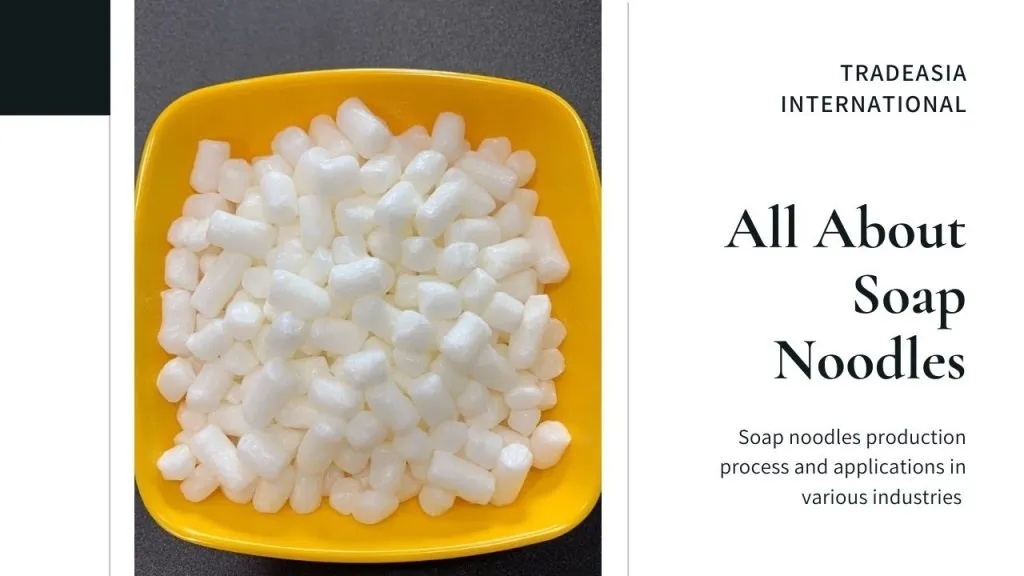
Soap noodles, also commonly referred to as toilet soap base, are a semi-finished product in the soap manufacturing chain. They are produced through the saponification of fats and oils (like palm oil, palm kernel oil, coconut oil, or tallow) with an alkali, typically sodium hydroxide. The resulting soap mass is then purified, dried, and extruded into uniform noodle-like strands, which are then cut into small pellets or flakes. This intermediate form is neutral, containing the core cleansing agents (surfactants) without added perfume, color, or specific additives.
The primary function of soap noodles is to serve as a ready-to-process base for soap makers. Instead of undertaking the complex, capital-intensive, and potentially hazardous process of handling raw oils and caustic alkalis from scratch, manufacturers can purchase these pre-saponified noodles. This shifts the core chemical processing upstream to specialized chemical producers, allowing soap manufacturers to focus on the value-added stages of production: blending, plodding, stamping, and finishing. This division of labor is a key efficiency driver in the modern chemical supply chain.
Key Types and Specifications of Soap Noodles
Not all soap noodles are created equal. Their properties vary significantly based on the raw materials and processes used, making the selection of the right type critical for the final product's characteristics. The two most fundamental classifications are based on the source of fatty matter and the production method. Tallow-based soap noodles, derived from animal fats, are known for producing a hard, long-lasting bar with stable, creamy lather. In contrast, vegetable oil-based noodles (primarily from palm oil and its derivatives) cater to the growing demand for vegan and plant-based products, offering good hardness and lather quality.
Beyond the base oil, specifications are paramount. Key parameters that buyers must verify include the Total Fatty Matter (TFM) content, which indicates purity and cleansing power (typically ranging from 78% to 85%), moisture content, free caustic alkali levels, and chloride content. The color is also a major differentiator: pure white soap noodles are used for premium, dye-free, or pastel-colored soaps, while off-white/cream noodles are standard for most applications. Furthermore, noodles can be unblended (pure coconut or pure palm) or custom-blended to achieve specific lather, hardness, and moisturizing profiles. Reputable suppliers like chemtradeasia.com provide detailed technical data sheets for each variant, ensuring transparency and enabling precise formulation.
The Manufacturing Process: From Noodles to Finished Bar
The use of soap noodles simplifies and accelerates the soap production line into a highly efficient, continuous process. It begins with the mixing phase, where the dried noodles are loaded into a mixer. Here, all desired additives are incorporated. This includes fragrances and essential oils for scent, pigments or dyes for color, moisturizing agents like glycerin or shea butter, opacifiers, and any specialty additives such as antibacterial agents (e.g., Triclosan, though its use is declining), exfoliants, or vitamins. The mixing must be thorough to ensure even distribution.
Next, the homogeneous mixture is fed into a plodder—a large, screw-type extruder. The plodder compacts the soap mass, removes entrapped air, and forces it through a die plate, emerging as a continuous, solid log of soap. This log is then cut into appropriately sized billets. These billets are immediately transferred to stamping presses, where they are molded into their final shape and embossed with branding. Finally, the stamped bars undergo cooling, conditioning, and packaging. This entire downstream process is significantly faster, safer, and requires less technical expertise than traditional kettle saponification, allowing for rapid production scaling and shorter time-to-market for new soap variants.
Major Benefits for Modern Soap Manufacturers
The adoption of soap noodles as a primary raw material confers a multitude of strategic advantages for manufacturers operating in the competitive American market. First and foremost is operational efficiency and cost reduction. By outsourcing the initial saponification, companies save substantially on capital expenditure for reaction kettles, neutralization tanks, and drying equipment. They also reduce energy consumption, labor costs associated with complex chemical handling, and waste treatment expenses. This model allows even mid-sized companies to compete effectively with large conglomerates.
Secondly, soap noodles offer unparalleled consistency and quality control. Specialized chemical suppliers maintain strict quality assurance protocols, delivering batches with uniform TFM, moisture, and chemical composition. This consistency translates directly to predictable performance in the finishing line and a reliable end-product for consumers. Furthermore, it provides tremendous formulation flexibility. A manufacturer can stock a few base types of noodles and create dozens of distinct final products simply by varying the additive mix, enabling quick responses to market trends for new scents, colors, or functional claims without altering the core production infrastructure.
Sourcing and Quality: Choosing the Right Supplier
Given that soap noodles form the backbone of the final product, selecting a trustworthy and capable supplier is a decision of paramount importance. The American market sources these intermediates from both domestic producers and major global exporters in regions like Southeast Asia (Indonesia, Malaysia), India, and Europe. When evaluating suppliers, businesses must look beyond price and consider several critical factors. Proven quality assurance systems (like ISO certifications), consistent availability of supply, and the ability to provide comprehensive technical documentation, including Material Safety Data Sheets (MSDS/SDS), are non-negotiable.
Leading global suppliers, such as those accessible through platforms like chemtradeasia.com, act as vital connectors in this supply chain. They offer access to a wide network of verified manufacturers, providing buyers with options across different specifications (TFM, color, base oil), grades (commercial, premium), and packaging (bags, bulk). They also facilitate crucial logistics, including reliable international shipping, customs clearance, and just-in-time delivery coordination. Partnering with such a supplier mitigates risk, ensures a steady flow of raw materials, and provides a single point of contact for technical support and market intelligence, which is invaluable for strategic procurement planning.
Conclusion
In summary, soap noodles represent a fundamental innovation in industrial soap making, enabling a lean, flexible, and highly efficient production model. From their core composition as saponified fats to their role as a customizable toilet soap base, they empower manufacturers to focus on branding, marketing, and innovation while relying on chemical specialists for a consistent, high-quality foundation. Understanding the types, specifications, and benefits of these intermediates is essential for any business seeking to optimize its operations and thrive in the personal care market.
As the demand for specialized soaps—including natural, organic, medicated, and luxury bars—continues to grow, the strategic sourcing of the right soap noodles will only increase in importance. By establishing partnerships with reputable suppliers who prioritize quality and reliability, American manufacturers can build a resilient supply chain capable of meeting evolving consumer preferences and seizing new market opportunities with agility and confidence.
Disclaimer: This article is provided for informational and market insight purposes only. It is not intended to serve as technical, safety, or professional advice for soap formulation or manufacturing. The information presented, including specifications and processes, should be verified independently. We strongly advise readers to consult directly with technical experts, refer to official product documentation such as Safety Data Sheets (SDS), and contact our team or qualified professionals for guidance on specific applications, regulatory compliance, and safe handling procedures.
Leave a Comment