Introduction Citric Acid Anhydrous
Industrial water treatment is a critical function across power generation, oil and gas, chemical processing, food and beverage, and many other sectors. As regulatory expectations rise and sustainability targets tighten, operators are increasingly looking for efficient, safer, and more environmentally compatible chemicals to manage scale, corrosion, and contaminants. Among the portfolio of industrial water treatment chemicals, citric acid anhydrous is gaining attention as a versatile chelating and cleaning agent that can support both operational reliability and greener process strategies.
Unlike some traditional inorganic acids and complexing agents, citric acid anhydrous offers a favorable safety and environmental profile while still delivering strong performance in scale dissolution, metal cleaning, and system passivation. Global buyers and procurement professionals are examining how this organic acid can be integrated into existing water treatment programs, from boiler and heat exchanger cleaning to membrane system maintenance and metal surface preparation.
For organizations operating worldwide, secure sourcing, consistent quality, and robust logistics are as important as the product itself. Platforms such as chemtradeasia connect industrial users with reliable producers of citric acid anhydrous, helping to balance cost, compliance, and availability. This article explores the properties, applications, benefits, and supply chain considerations for application buyers of citric acid anhydrous in industrial water treatment chemicals on a global scale.
Understanding Citric Acid Anhydrous for Water Treatment
Citric acid anhydrous is the water-free crystalline form of citric acid, a weak organic tricarboxylic acid (C6H8O7) widely used as a chelating agent, acidulant, and cleaning component. Industrial grades typically appear as colorless to white crystalline granules or powder, with assay values commonly above 99.5% on a dry basis. The anhydrous form has low moisture content, improved stability in storage, and predictable dissolution behavior, making it suitable for precise dosing in water treatment applications.
From a chemical standpoint, citric acid is an effective chelating agent for multivalent metal ions such as calcium (Ca2+), magnesium (Mg2+), iron (Fe2+/3+), and copper (Cu2+). This chelating capability enables it to dissolve and prevent the re-precipitation of mineral scales, particularly calcium carbonate and certain iron deposits. In water treatment formulations, citric acid anhydrous can be used alone or in combination with other acids, surfactants, and corrosion inhibitors to create tailored cleaning and conditioning solutions.
Industrial-grade citric acid anhydrous is generally manufactured via fermentation processes using carbohydrate feedstocks such as corn or sugar. Global production is concentrated in Asia, Europe, and North America, with large capacities in China and other Asian countries. Quality specifications for water treatment usage often reference standards similar to food or technical grades, focusing on purity, heavy metal limits, insoluble matter, and color. Buyers should review supplier certificates of analysis and, where applicable, compliance with ISO, GMP, or other quality management systems.
Key Applications in Industrial Water Treatment Systems
One of the most prominent uses of citric acid anhydrous in industrial water treatment is descaling of boilers, heat exchangers, condensers, and cooling systems. Over time, mineral scale reduces heat transfer efficiency, increases fuel consumption, and can lead to unplanned downtime. Citric acid solutions, often in the range of 5–15% by weight depending on system design and deposit severity, are circulated through equipment to dissolve calcium carbonate and certain iron-based scales. This approach is common in power plants, district heating networks, and process industries where controlled cleaning cycles are planned during maintenance shutdowns.
Another critical application is in the cleaning and maintenance of membrane systems, such as reverse osmosis (RO), nanofiltration, and ultrafiltration units. These systems are widely used in desalination, ultrapure water production, and wastewater reuse. Scaling and fouling of membranes can rapidly degrade performance. Citric acid anhydrous is used to formulate low-pH cleaning solutions that target inorganic scales and metal hydroxides without excessively attacking the membrane material. When combined with surfactants or biocides, citric acid-based cleaners help restore flux and extend membrane life, reducing operating costs.
Citric acid is also employed for passivation and pre-commissioning cleaning of stainless steel and other alloy systems in water treatment circuits. Its ability to remove iron oxides and light rust while promoting the formation of a stable passive film makes it an alternative to more hazardous acids such as nitric or hydrochloric acid in certain applications. In cooling water and closed-loop systems, citric acid may be used periodically as part of cleaning-in-place (CIP) or offline cleaning protocols to remove deposits from piping, coils, and auxiliary equipment, supporting consistent flow and heat transfer performance.
Benefits and Performance Characteristics for Buyers
From a buyer’s perspective, citric acid anhydrous offers a balance of performance, safety, and environmental compatibility that is increasingly valued in modern water treatment programs. Its chelating strength is adequate for many descaling and metal cleaning tasks, yet it is classified as a weak organic acid with relatively low corrosivity compared with strong mineral acids at equivalent pH levels. This can translate into lower risk of equipment damage when used under properly controlled conditions, especially for non-ferrous metals and stainless steels.
Environmental and regulatory considerations are another major benefit. Citric acid is biodegradable and has a favorable toxicological profile, which can simplify wastewater handling and reduce regulatory burdens compared with certain synthetic chelating agents or phosphonate-based products. In regions with strict discharge regulations and corporate sustainability commitments, substituting or partially replacing harsher chemicals with citric acid-based formulations can support environmental, social, and governance (ESG) goals while maintaining operational effectiveness.
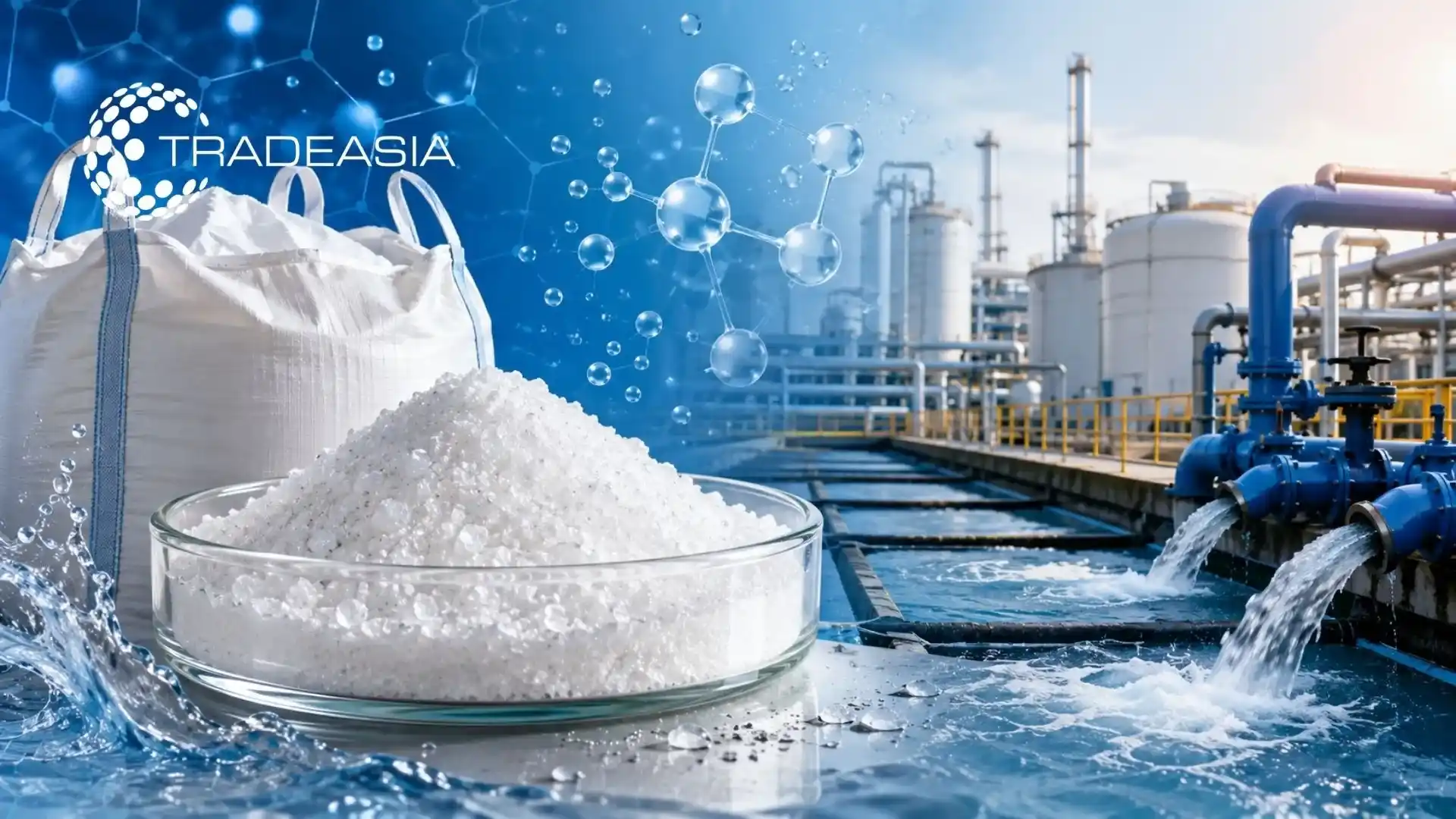
From an operational perspective, the anhydrous form of citric acid provides logistical and handling advantages. Its low moisture content and stable crystalline structure facilitate long-term storage in standard packaging such as 25 kg bags, 500–1000 kg big bags, or lined bulk containers. It dissolves readily in water, allowing for flexible on-site preparation of cleaning solutions at the required concentration. For buyers managing multi-site operations or global portfolios, the relatively benign hazard classification of citric acid anhydrous can also simplify transport, storage, and worker training compared with more aggressive acids.
Global Supply Chain, Sourcing, and chemtradeasia’s Role
The global market for citric acid anhydrous has expanded steadily, driven by its use in food, pharmaceuticals, detergents, and industrial applications such as water treatment. According to industry analyses, global citric acid demand has been growing at an approximate compound annual growth rate (CAGR) of 3–5%, with Asia-Pacific acting as both a major production hub and a fast-growing consumption region. This growth has increased the importance of resilient supply chains, quality consistency, and competitive pricing for industrial buyers.
Supply dynamics for citric acid are influenced by agricultural feedstock availability, energy costs, fermentation capacity, and trade policies. Buyers in water treatment must navigate these factors while ensuring that product specifications align with process requirements. Partnering with established distributors and trading platforms such as chemtradeasia can mitigate some of these risks. By aggregating supply from multiple qualified producers and maintaining regional warehouses, such platforms help ensure continuity of supply, reduced lead times, and options for alternative sourcing in case of disruptions.
chemtradeasia focuses on connecting global buyers with reliable manufacturers of citric acid anhydrous and related water treatment chemicals. Through its network, buyers can access technical data sheets, typical specifications (e.g., assay, moisture content, heavy metal limits), and packaging options tailored to industrial requirements. In addition, market insight services enable procurement teams to monitor price trends, freight conditions, and regulatory developments across key regions, supporting more informed purchasing strategies for citric acid and complementary treatment chemicals.
Practical Considerations for Application Buyers
When selecting citric acid anhydrous for industrial water treatment, buyers should first define the targeted application: boiler descaling, cooling system cleaning, membrane maintenance, or metal passivation. Each use case may require different solution concentrations, contact times, and temperature conditions. Collaboration between procurement, operations, and technical teams is essential to specify appropriate grades, packaging sizes, and supply frequencies that match plant maintenance schedules and storage capabilities.
Quality and consistency are central to successful implementation. Buyers should request and review certificates of analysis for each batch, focusing on assay, moisture, sulfated ash, and limits on heavy metals such as lead or arsenic, particularly if the treated water interacts with sensitive downstream processes. Compatibility with existing treatment chemistries, including corrosion inhibitors, biocides, and antiscalants, should be evaluated through lab testing or pilot trials to avoid unintended interactions or performance losses.
Cost evaluation should extend beyond the price per kilogram. Factors such as cleaning efficiency, required downtime, waste neutralization costs, and potential extension of equipment life all contribute to the total cost of ownership. Leveraging suppliers and trading partners like chemtradeasia for benchmarking, alternative sourcing options, and logistics optimization can help buyers achieve a balance between cost-effectiveness, reliability, and sustainability in their water treatment programs using citric acid anhydrous.
Conclusion
Citric acid anhydrous has established itself as a valuable component in the toolbox of industrial water treatment chemicals. Its ability to chelate metal ions, dissolve mineral scales, and support passivation processes, combined with a comparatively favorable safety and environmental profile, makes it attractive for applications ranging from boiler and heat exchanger cleaning to membrane system maintenance. As industries worldwide strive to improve efficiency and reduce environmental impact, citric acid-based formulations offer a pathway to align operational performance with regulatory and sustainability objectives.
For global application buyers, the successful use of citric acid anhydrous depends not only on product selection but also on robust supply chain management and technical integration into existing water treatment programs. Working with experienced partners such as chemtradeasia can provide access to consistent quality, diversified sourcing, and up-to-date market intelligence, helping organizations navigate price volatility, regional regulations, and changing demand patterns. By carefully evaluating specifications, compatibility, and total cost implications, buyers can position citric acid anhydrous as a strategic component of their long-term water treatment strategy.
This article is intended solely for informational and market insight purposes and does not constitute technical, safety, engineering, or professional advice. Users must independently verify all information with qualified experts, consult official documentation such as MSDS/SDS and relevant standards, and contact their technical advisors or our team for guidance on specific applications before implementing any product or process changes.

Leave a Comment