Introduction Polyaluminium Chloride
The global leather industry is under increasing pressure to improve environmental performance, reduce operating costs, and comply with stricter discharge regulations. Against this backdrop, Polyaluminium Chloride (PAC) has emerged as a critical auxiliary chemical, particularly in effluent treatment and certain process water conditioning stages. As tanneries modernize and relocate to emerging markets, understanding the evolving landscape of application buyers Polyaluminium Chloride for industry leather chemicals 2026 is essential for producers, traders, and procurement professionals alike.
Between raw hide preservation, liming, deliming, pickling, tanning, retanning, dyeing, and finishing, the leather value chain generates heavily contaminated wastewater rich in chromium, sulfides, fats, and suspended solids. Traditional coagulants like alum and ferric salts are increasingly being replaced or supplemented with Polyaluminium Chloride due to its higher charge density, better floc formation, and lower sludge volumes. This transition is reshaping demand patterns, pricing structures, and supplier–buyer relationships across major leather hubs in Asia, Europe, Africa, and Latin America.
By 2026, the intersection of environmental policy, technology adoption, and global trade flows is expected to significantly influence how leather manufacturers source and apply PAC. International distributors such as chemtradeasia are playing a growing role in connecting PAC producers with tanneries, leather chemical formulators, and centralized effluent treatment plants (CETPs). This article examines market outlook, applications, technical features, and the evolving buyer ecosystem for Polyaluminium Chloride in leather chemicals on a global scale.
Global Market Outlook for Polyaluminium Chloride by 2026
The overall Polyaluminium Chloride market has been expanding steadily, driven primarily by municipal and industrial water treatment. Industry analyses have estimated global PAC demand growing at a compound annual growth rate (CAGR) in the range of 4–6% through the mid-2020s, with Asia-Pacific accounting for over 50% of consumption. While leather processing represents a smaller slice compared to municipal applications, it is one of the faster-growing industrial segments due to regulatory tightening and the consolidation of tanneries into organized clusters.
By 2026, growth in leather-related PAC consumption is expected to be concentrated in countries with large tanning bases and evolving environmental frameworks—such as India, China, Pakistan, Bangladesh, Vietnam, Brazil, and parts of Africa (notably Ethiopia and Kenya). Many of these regions are investing in common effluent treatment plants for tannery clusters, where Polyaluminium Chloride is used as a primary or secondary coagulant. As CETP capacities expand and older plants are upgraded, demand for higher-performance coagulants like PAC is projected to outpace overall leather production growth.
Another driver shaping the market outlook is the shift toward value-added and specialty leather products for automotive, footwear, and luxury goods. Brands and OEMs are imposing stricter discharge limits and sustainability standards on their supply chains, often referencing frameworks such as ZDHC, LWG (Leather Working Group), and ISO 14001. This trend incentivizes tanneries to adopt more efficient treatment chemistries, including optimized PAC grades. Global distributors such as chemtradeasia are increasingly asked not only to supply PAC but also to provide documentation, traceability, and support in meeting these buyer-driven compliance requirements.
Key Applications of Polyaluminium Chloride in Leather Chemicals
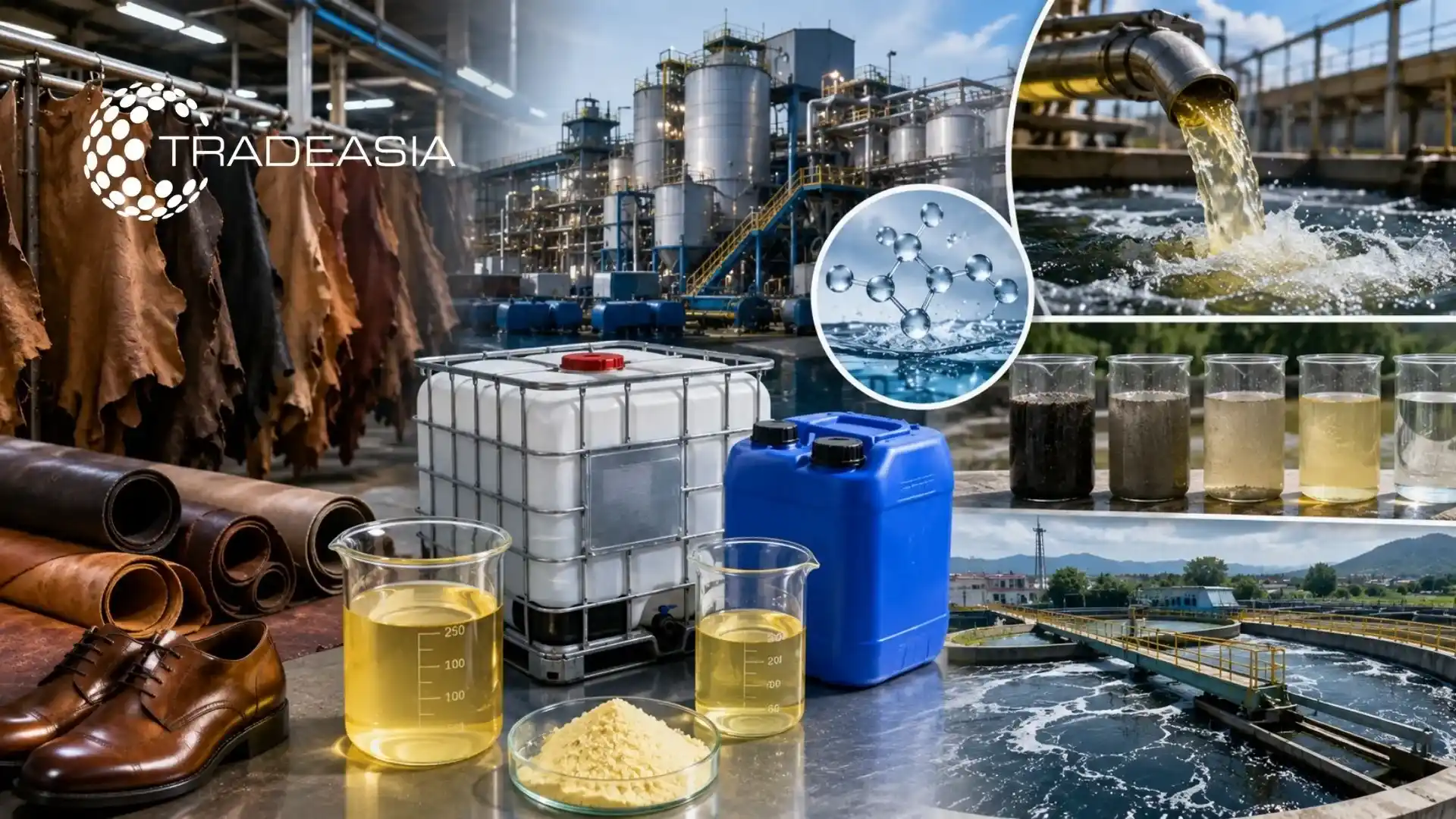
The primary application of Polyaluminium Chloride in the leather industry is in wastewater and effluent treatment. Tannery effluent typically contains high concentrations of total suspended solids (TSS), chemical oxygen demand (COD), biological oxygen demand (BOD), sulfides, fats and greases, and residual chromium from chrome tanning. When dosed correctly, PAC acts as a high-efficiency coagulant, neutralizing negative charges on colloidal particles and enabling their aggregation into larger flocs that can be removed by sedimentation or flotation. PAC is often used in combination with organic flocculants (e.g., polyacrylamides) to achieve deeper clarification.
In many modern plants, Polyaluminium Chloride is used at multiple stages: primary clarification to remove bulk solids and fats; secondary treatment to polish effluent before biological treatment; and, in some cases, tertiary treatment to meet stringent color and turbidity limits. For chrome-bearing effluent streams, PAC can assist in the coagulation and partial removal of trivalent chromium complexes when used alongside pH adjustment and precipitating agents. This multi-stage integration enables tanneries and CETPs to reduce sludge volumes, optimize polymer consumption, and achieve more stable plant performance.
Besides effluent treatment, certain leather chemical formulators and water engineers deploy PAC for process water conditioning, particularly where recycled water is used in soaking or liming operations. Enhanced clarification of recycled streams can reduce impurities that cause defects on hides or interfere with enzymes and surfactants. While PAC is not typically a direct leather processing agent like tanning or retanning chemicals, its role as a supporting chemical in water management is increasingly recognized as critical to consistent leather quality and operational reliability.
Technical Features and Specifications Relevant to Leather Processing
For buyers in the leather sector, understanding the technical characteristics of Polyaluminium Chloride is essential to selecting the right grade and optimizing treatment performance. Commercial PAC is usually supplied either as a yellowish liquid or as a light-yellow powder. Key specifications include basicity (the molar ratio of OH to Al³+), Al2O3 content, insoluble matter, pH, and heavy metal limits. Typical industrial grades used in effluent treatment for tanneries may have an Al2O3 content in the range of 10–18% for liquid PAC and 28–30% or higher for solid PAC, with basicity often between 40–85% depending on the formulation.
Higher basicity PAC grades generally offer better coagulation efficiency at lower dosages, especially for high-turbidity and colored effluents. However, the optimal grade depends on the specific effluent composition, pH, and upstream processes. For tannery wastewater, which can have highly variable loads and pH swings, robust jar testing and pilot trials are recommended before full-scale adoption. Buyers must also consider solubility, storage stability, and compatibility with existing dosing equipment. Liquid PAC is often preferred for large CETPs due to easier handling and automated dosing, whereas solid PAC can be advantageous in remote locations or where logistics favor high active content.
From a performance standpoint, Polyaluminium Chloride typically generates denser, faster-settling flocs compared to traditional alum, and it can operate effectively over a broader pH range (commonly 5.0–9.0). This flexibility is valuable in tannery operations where upstream processes like liming and chrome tanning cause significant pH variation. Reduced sludge generation is another important feature; lower sludge volumes translate into lower dewatering and disposal costs, which are substantial cost centers for large tanning clusters. Suppliers such as chemtradeasia often provide detailed technical data sheets (TDS) and can support buyers in matching PAC grades to their process constraints.
Buyer Landscape, Sourcing Strategies, and the Role of chemtradeasia
The buyer landscape for Polyaluminium Chloride in the leather industry is diverse, spanning individual tanneries, centralized effluent treatment plants, leather chemical formulators, and integrated industrial parks. In mature markets such as Europe and parts of East Asia, larger tanneries often operate in-house treatment plants and procure PAC directly from chemical distributors or producers under medium- to long-term contracts. In emerging markets, CETPs and industrial development corporations frequently act as primary buyers, aggregating demand for entire tannery clusters and negotiating bulk supply agreements.
Procurement strategies are influenced by several factors: price volatility of aluminum-based coagulants, logistics and freight costs, local regulatory requirements, and technical support availability. Many buyers seek to dual-source or multi-source PAC to ensure supply security, especially in regions prone to shipping disruptions or seasonal demand spikes. Quality consistency and documentation—such as certificates of analysis, REACH or local compliance statements, and safety data sheets—are increasingly critical, particularly where tanneries supply to international footwear and automotive brands that audit chemical management practices.
Global trading platforms and distributors like chemtradeasia play a central role in connecting PAC manufacturers with leather-industry buyers worldwide. By maintaining a network of production partners in key exporting countries and stocking hubs near major tanning clusters, such distributors can offer competitive pricing, flexible packaging options (drums, IBCs, bulk), and multi-modal logistics solutions. Beyond simple product supply, chemtradeasia and similar firms often support buyers with sample provision for jar testing, guidance on dosage optimization, and coordination with local engineering firms for plant upgrades. This integrated approach helps tanneries and CETPs reduce total cost of ownership rather than focusing solely on per-ton chemical prices.
Conclusion
As environmental expectations on the leather industry rise and regulatory frameworks tighten across major producing regions, Polyaluminium Chloride is cementing its position as a key enabling chemical for sustainable operations. By 2026, demand for PAC in leather-related applications is expected to grow faster than overall leather output, driven by the expansion and modernization of effluent treatment infrastructure and the push for higher-quality, value-added leather products. Buyers who understand PAC’s technical features, tailor grades to their effluent characteristics, and integrate it intelligently into their treatment trains can realize significant gains in compliance, cost efficiency, and operational stability.
The evolving buyer ecosystem, from individual tanneries to large CETPs and integrated industrial parks—will increasingly rely on experienced suppliers and distributors to navigate product selection, logistics, and regulatory documentation. Organizations such as chemtradeasia are well positioned to support this transition by offering a broad portfolio of Polyaluminium Chloride grades, global sourcing reach, and application-oriented support. As the market matures, procurement decisions will pivot from purely price-based criteria to a more holistic evaluation that includes performance, sludge management, energy savings, and alignment with sustainability standards demanded by global brands.
This article is intended solely for informational and market insight purposes and does not constitute technical, safety, engineering, or professional advice. Users should independently verify all information with qualified experts, consult official documentation such as MSDS/SDS and relevant regulations, and contact appropriate technical specialists or our team before selecting or applying Polyaluminium Chloride or any related leather chemicals in specific processes.