Introduction
As of 2026, the regulatory landscape for food additives within the Association of Southeast Asian Nations (ASEAN) is undergoing a significant and strategic transformation. For decades, the intra-regional trade of functional chemicals has been hampered by a layer of regulatory friction that economists call "The Halal Gap." This gap exists between the primary production hubs of Indochina (specifically Thailand and Vietnam), which are non-Muslim majority nations with robust chemical manufacturing infrastructure, and the primary consumption hubs of the Malay Archipelago (Indonesia and Malaysia), home to over 250 million Muslim consumers.
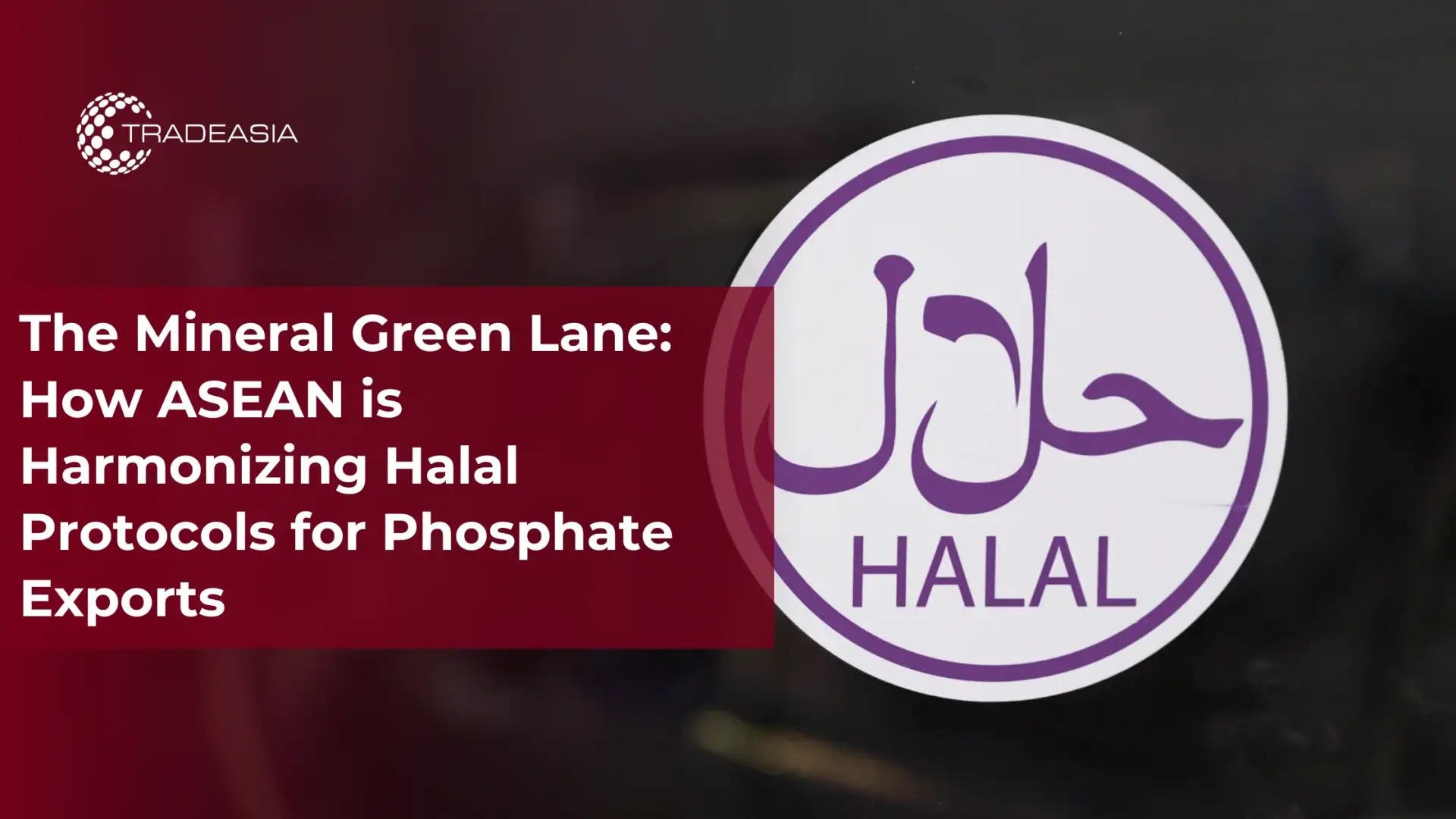
Historically, the trade of essential functional ingredients like Trisodium Phosphate (TSP) was slowed by complex, often redundant Halal certification processes. Shipments were frequently delayed by suspicion regarding purification methods, leading to supply chain inefficiencies that inflated costs for downstream food manufacturers. However, under the latest harmonization frameworks driven by MABIMS (The Informal Meeting of Ministers of Religion of Brunei, Indonesia, Malaysia, and Singapore), mineral-based food additives are being recategorized. This shift marks a critical maturation in the global Halal economy, moving from a defensive posture of "theological suspicion" to a streamlined system of "verified origin." By effectively creating a "Green Lane" for essential food chemicals, ASEAN is setting a new standard for how religious compliance and industrial efficiency can coexist.
The "Syubhat" Challenge: Bone Char and Purification Chemistry
To understand the significance of this regulatory shift, one must first understand the technical root of the problem. For decades, phosphate salts like Trisodium Phosphate occupied a precarious gray area in Halal compliance, often labeled as Syubhat (doubtful) during religious audits.
The theological concern is not with the mineral itself; phosphate is mined from geologic rock formations (apatite) and is inherently Halal. The risk lies in the purification process of the phosphoric acid precursor. Raw wet-process phosphoric acid is green or brown and laden with heavy metals and organic impurities. To refine this into Food-Grade Phosphoric Acid (the feedstock for TSP), manufacturers must filter it through activated carbon to remove color and impurities.
Historically, the most efficient filtration media was Bone Char—activated carbon derived from the charred bones of cattle. From a Halal perspective, this is a critical contamination point. If the cattle were not slaughtered according to Islamic rites, or if (in rarer, illicit cases) the bones were porcine in origin, the entire batch of phosphate would be rendered Najis (ritually impure). For years, Halal auditors had to assume the worst, requiring exhaustive documentation to prove that no animal-based carbon was used. This "guilty until proven innocent" approach meant that every shipment was subject to intense scrutiny.
The new ASEAN-aligned standards address this by emphasizing a rigorous "Source-Verification" protocol. Suppliers of TSP can now obtain a "Mineral-Origin Certification" that validates the entire supply chain is free from animal-derived filtration agents. By proving that the purification process utilizes only Synthetic or Vegetal Activated Carbon (derived from bituminous coal, wood, or coconut shells), manufacturers can clear the "Syubhat" status definitively. This shifts the burden of proof upstream to the chemical processing plant, allowing the final additive to flow through customs with the same low-risk status as salt or water.
Streamlining Compliance: The Role of Mutual Recognition
The operational core of this shift is the strengthening of Mutual Recognition Arrangements (MRAs) between the region's primary Halal authorities, specifically Indonesia's BPJPH (Halal Product Assurance Organizing Agency) and Malaysia's JAKIM.
In the pre-2025 landscape, a phosphate producer in Thailand might have needed to host separate audit teams from Jakarta and Kuala Lumpur to certify the same factory for export to both countries. This redundancy was costly, time-consuming, and operationally disruptive. The new framework allows for a "Single Audit, Regional Access" model for ingredients listed on the "Critical Mineral List."
Under this system, once a TSP manufacturer is certified by a recognized foreign Halal certification body (such as CICOT in Thailand or HCA in Vietnam) that adheres to the strict MABIMS standard, that certification is automatically accepted across the participating ASEAN borders.
-
Eliminating Non-Tariff Barriers: This is crucial for the chemical industry, which relies on continuous production processes.
-
Time-to-Market: It reduces the clearance time for imported ingredients from weeks to days.
-
Inventory Efficiency: This reliability allows meat processors in Indonesia to operate with "Just-In-Time" inventory systems, rather than hoarding months of buffer stock to protect against unpredictable customs delays caused by Halal paperwork discrepancies.
Fueling the "Instant" Economy
This regulatory ease arrives at a pivotal moment for the Southeast Asian food industry. The region is experiencing an explosion in the "Instant" and processed food sectors, driven by rapid urbanization and a rising middle class. Indonesian and Malaysian manufacturers are heavily dependent on imported TSP to provide the necessary texture for Halal-certified staples.
-
Meat Processing: In products like Bakso (beef meatballs) and sausages, TSP is essential for solubilizing muscle proteins to create a snappy, cohesive texture. Without it, these mass-market protein staples would be mushy and unpalatable.
-
Noodles: In the massive instant noodle market, phosphates are used in the seasoning packets and the noodle dough itself to improve elasticity and mouthfeel.
These are high-volume, low-margin products. They rely on the functional efficiency of phosphates to maintain quality and keep prices affordable for the mass market. By standardizing the Halal protocol for TSP, ASEAN regulators are effectively securing the supply chain for these national strategic foods. It prevents supply shocks that could lead to price inflation on basic grocery items, a key concern for regional governments.
The Economic "One Block" Strategy
Finally, this harmonization encourages increased direct investment in regional production. By treating the ASEAN Muslim market as a single, unified block rather than a fragmented patchwork of standards, the region becomes more attractive to multinational ingredient companies.
It allows a global chemical manufacturer to build a massive, state-of-the-art phosphate plant in Vietnam, knowing that they can seamlessly export their output to the Muslim populations of Indonesia, Malaysia, and Brunei without navigating a labyrinth of conflicting religious fatwas. This certainty ensures that the growing demand for convenience foods can be met with a steady, compliant, and cost-effective supply of functional additives, reinforcing ASEAN's position as a global powerhouse in the Halal food economy.
Conclusion
The establishment of the "Mineral Green Lane" represents a sophisticated evolution in the Halal industry. It moves the conversation beyond simple binary checks of "permissible vs. prohibited" toward a system of process validation and mutual trust. For the ingredient manufacturer, this offers a clear path to market expansion; for the food processor, it guarantees supply chain security.
In this new landscape, the ability to navigate the technicalities of "Mineral-Origin Certification" is a competitive advantage. Sourcing from partners who understand not just the chemistry of phosphates, but the theology of compliance, is essential for success in the ASEAN market.
Navigate the Halal Market with Confidence
At Food Additives Asia, we specialize in the intersection of chemical performance and religious compliance. We understand that in the ASEAN market, a Halal certificate is just as important as a Certificate of Analysis.
Our portfolio of Trisodium Phosphate and other mineral salts is fully certified under the latest MABIMS-recognized standards, ensuring "Green Lane" access to Indonesia and Malaysia. We guarantee 100% Mineral-Origin sourcing, free from bone char or animal-derived purification agents, providing you with the documentation needed to clear customs instantly.
Secure your compliant supply chain today. Visit our website to review our Halal certifications and technical specifications. Submit your inquiry now to partner with a distributor that speaks the language of the modern Halal economy.
Explore Our Halal-Certified Phosphates at foodadditivesasia.com