Introduction
Black pepper (Piper nigrum) is one of the most universally accepted spices in the global food system, functioning as a foundational flavor component across cultures, cuisines, and product categories. Unlike spices that are strongly tied to specific regional profiles, black pepper demonstrates remarkable compatibility, seamlessly integrating into diverse culinary traditions while maintaining a recognizable yet adaptable sensory identity. This unique versatility has positioned black pepper as both a culinary essential and an industrially strategic ingredient.
In modern food manufacturing, black pepper is valued not only for its pungency and warmth but also for its ability to enhance flavor perception, balance fat and salt levels, and support flavor consistency across processing conditions. Its compatibility extends from traditional home cooking to large-scale industrial food production, making it a critical ingredient in savory formulations worldwide. Understanding how black pepper performs across cuisines and product categories provides valuable insight for food developers aiming to deliver globally appealing products without sacrificing authenticity or functional performance.
Chemical Composition and Functional Attributes of Black Pepper
The functional versatility of black pepper is rooted in its chemical composition, particularly the presence of piperine, which typically accounts for 4–10% of the dried peppercorn. Piperine is responsible for black pepper’s characteristic pungency and lingering heat, delivering a warming sensation that builds gradually rather than overwhelming the palate. This delayed heat profile allows black pepper to complement rather than dominate other flavor components.
In addition to piperine, black pepper contains volatile oils such as limonene, pinene, and sabinene, which contribute citrusy, woody, and slightly floral notes. These compounds give black pepper aromatic complexity that enhances both savory and mildly sweet formulations. From a functional standpoint, the oil-soluble nature of many of these compounds allows black pepper to perform effectively in fat-rich systems, emulsions, and protein-based matrices, maintaining flavor integrity through processing and storage.
Sensory Versatility and Flavor Modulation
One of black pepper’s most significant strengths is its ability to modulate flavor perception. Rather than acting as a single-note spice, black pepper enhances overall flavor architecture by amplifying savory depth, sharpening aromatic clarity, and providing gentle heat that elevates taste complexity. In salt-reduced formulations, black pepper can enhance perceived saltiness, helping manufacturers meet sodium reduction targets without compromising palatability.
Black pepper’s heat profile is broadly accepted by consumers across regions, making it an effective tool for global product standardization. Its pungency is perceived as familiar and comforting rather than aggressive, allowing it to bridge diverse taste preferences. This sensory neutrality, combined with subtle complexity, explains why black pepper is often retained as a core seasoning even when other spices are localized or reformulated.
Cross-Cultural Compatibility in Global Cuisines
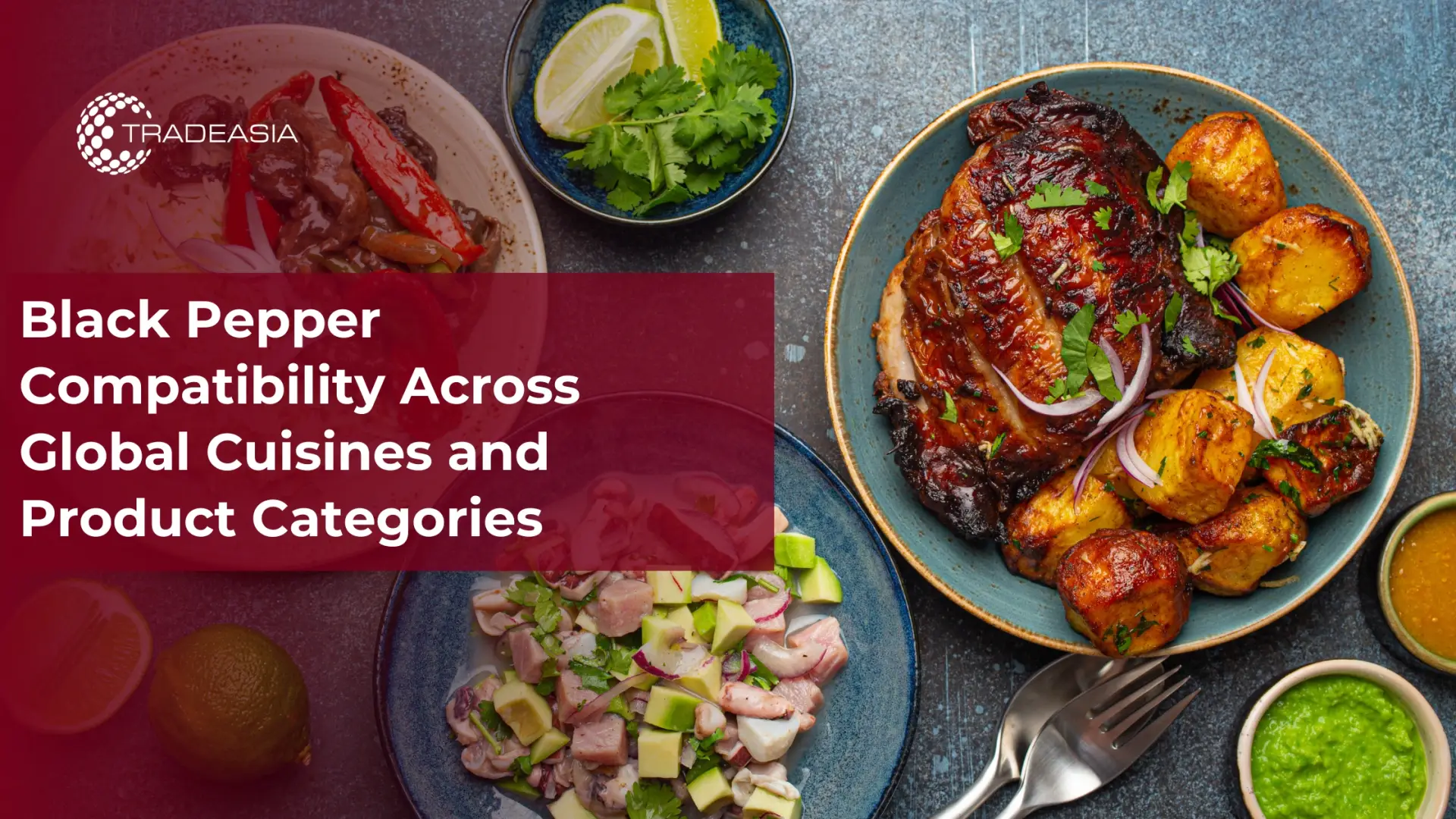
Black pepper’s compatibility across global cuisines is unparalleled. In European culinary traditions, it serves as a fundamental seasoning in soups, sauces, cured meats, and dairy-based preparations. French and Italian cuisines rely on black pepper to enhance richness and balance fat, particularly in cream-based sauces, cheeses, and charcuterie.
In South and Southeast Asia, black pepper plays a more assertive role, contributing warmth and aromatic depth to curries, stir-fries, and spice blends. In Indian cuisine, black pepper is often used alongside other spices to build layered heat, while in Indonesian and Malaysian cooking, it supports savory intensity in meat and seafood dishes. East Asian cuisines incorporate black pepper in marinades, soups, and modern fusion dishes, where it adds complexity without masking delicate flavors.
In Middle Eastern and African cuisines, black pepper complements earthy spices and proteins, contributing to slow-cooked stews and grilled meats. This broad cultural acceptance allows food manufacturers to develop products with global appeal while maintaining regional authenticity.
Functional Performance in Processed Food Systems
In industrial food systems, black pepper demonstrates reliable performance under mechanical, thermal, and storage stress. It retains pungency and aroma through cooking, baking, freezing, and reheating, making it suitable for ready meals, frozen foods, and shelf-stable products. Ground black pepper and standardized extracts enable consistent dosing, which is essential for maintaining flavor uniformity in large-scale production.
Black pepper also interacts positively with proteins and fats, enhancing mouthfeel and flavor release. In processed meats, it contributes to savory complexity while supporting a balanced flavor profile. In sauces and seasonings, black pepper provides structure to flavor systems, preventing formulations from tasting flat or overly sweet.
Application Across Food Product Categories
Black pepper is widely applied across numerous food categories, including processed meats, savory snacks, sauces, soups, ready meals, and plant-based products. In meat applications such as sausages, burgers, and cured products, black pepper enhances meaty notes and balances fat richness. In plant-based alternatives, it helps compensate for the absence of animal-derived umami, improving overall taste satisfaction.
In snack foods, black pepper delivers familiar heat that pairs well with fried or baked matrices, contributing to strong consumer acceptance. In sauces, gravies, and dressings, it adds aromatic sharpness and depth, while in bakery applications such as savory breads and crackers, it provides subtle warmth that enhances flavor complexity without overwhelming the product.
Stability, Processing Behavior, and Shelf-Life Interaction
Black pepper exhibits good thermal stability, retaining functional pungency after high-temperature processing. While some volatile aromatics may diminish over time, piperine remains stable, ensuring lasting heat perception throughout shelf-life. When properly stored and protected from excessive moisture and light, black pepper maintains quality and performance in dry mixes and finished products.
Its compatibility with other spices, herbs, and functional ingredients allows black pepper to serve as a backbone in seasoning systems. This stability and adaptability make it a preferred choice for formulations designed for extended distribution chains and diverse storage conditions.
Clean-Label Appeal and Formulation Strategy
From a clean-label perspective, black pepper is highly advantageous due to its natural origin, consumer familiarity, and long history of culinary use. It aligns well with transparent labeling strategies and supports flavor enhancement without synthetic additives. Food manufacturers increasingly leverage black pepper to reduce reliance on artificial flavor enhancers while maintaining robust sensory profiles.
Strategic formulation requires careful control of grind size, dosage, and dispersion to achieve consistent results. When used thoughtfully, black pepper enhances flavor systems across cultures and product categories, reinforcing its role as a universally compatible ingredient.
Conclusion
Black pepper’s enduring relevance in global food systems is driven by its exceptional compatibility across cuisines, processing environments, and product categories. Its balanced heat, aromatic complexity, and functional stability enable it to enhance flavor depth while supporting modern formulation goals such as clean labeling and global scalability. As food manufacturers continue to develop products for diverse markets, black pepper remains an indispensable ingredient that bridges cultural preferences with industrial performance.
For food manufacturers seeking consistent, food-grade black pepper for industrial applications, Tradeasia International provides reliable sourcing and tailored solutions to support diverse formulation needs. For inquiries and technical support, please contact food@chemtradeasia.com or visit foodadditivesasia.com to explore available products and supply options.