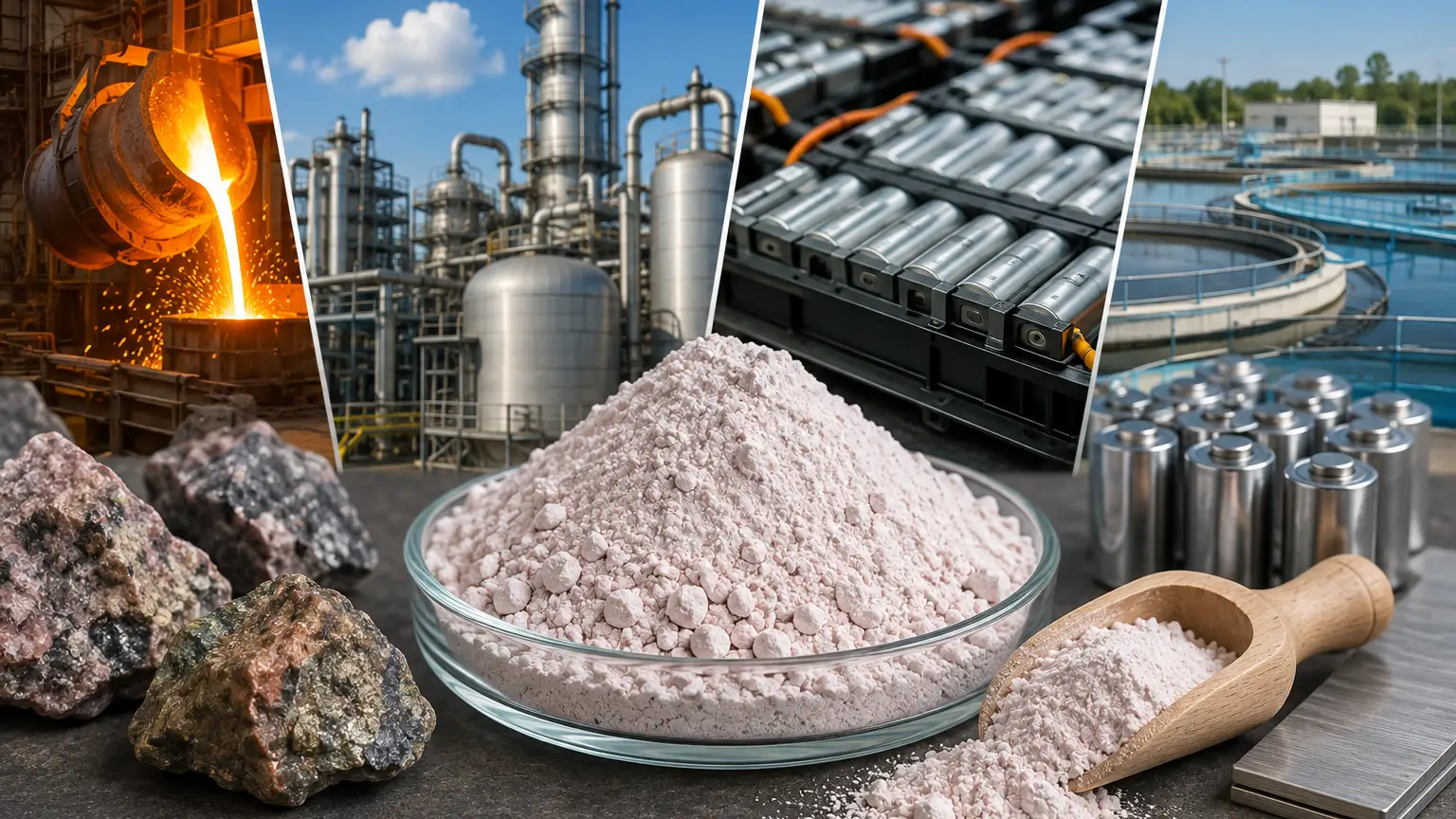
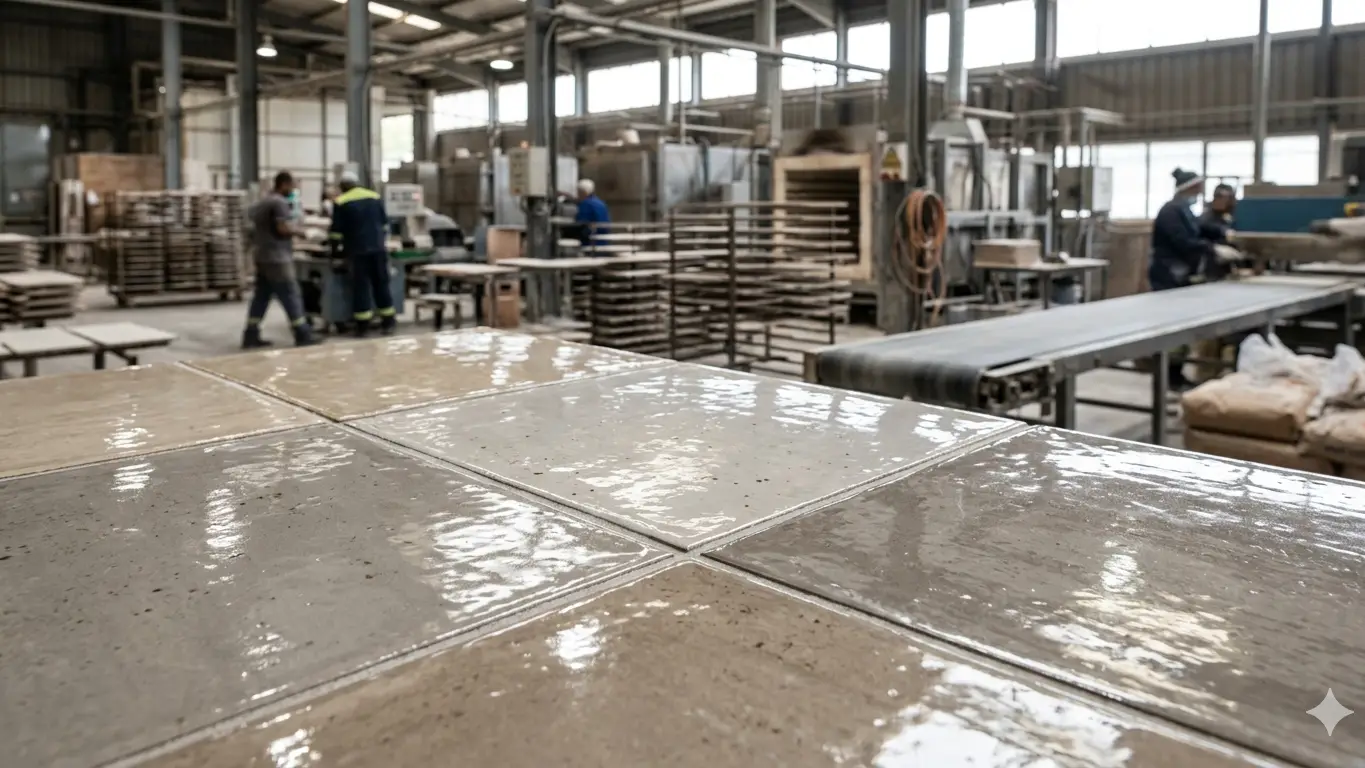
Borax pentahydrate (Na2B4O7-5H2O) is a critical fluxing and glass-forming agent used across ceramic tile, sanitaryware, tableware, and porcelain enamel production. Key buyers include ceramic frit manufacturers, tile producers, and sanitaryware brands. Demand is driven by rapid construction activity in Asia Pacific, the global shift to lead-free glaze formulations, and growing urbanization across emerging markets.
Core Applications of Borax Pentahydrate in Ceramics
| Application | Sector | Demand Share (Est.) | Trend | Buyer Type |
|---|---|---|---|---|
| Ceramic frit manufacturing | Ceramic tile, tableware, sanitaryware | ~35% of borax pentahydrate use | Growing | Frit manufacturers |
| Porcelain enamel (vitreous enamel) | Household appliances, cookware, steel coatings | ~15% | Stable | Appliance OEMs, enamel coaters |
| Glaze flux for tiles | Construction ceramics | ~20% | Growing | Tile manufacturers |
| Sanitaryware glazing | Bathroom fixtures | ~10% | Growing | Sanitaryware producers |
| Tableware glaze | Kitchenware, dinnerware | ~10% | Stable | Tableware manufacturers |
| Technical / advanced ceramics | Electronics, biomedical, aerospace | ~5% | Emerging fast | Specialty ceramic producers |
| Other industrial ceramics | Refractories, abrasives | ~5% | Stable | Industrial processors |
How Borax Pentahydrate Functions in Ceramic and Glaze Production
Borax pentahydrate improves ceramic and glaze production through several simultaneous mechanisms that no single alternative fully replicates:
As a flux: It lowers the melting temperature of silica and other glaze raw materials, reducing kiln energy consumption and enabling ceramic bodies and glazes to mature at lower firing temperatures. This is the primary reason ceramic frit formulators favor it.
As a glass former: Boric oxide (B2O3), released during firing, acts as a network former alongside silica -- one of only four oxides capable of forming glass independently. This dual role as both flux and glass former is unique to boron and gives glaze formulations superior flow control.
As a viscosity stabilizer: Borax pentahydrate reduces glass viscosity during firing, enabling the glaze to flow smoothly and form a uniform, defect-free surface without running excessively -- a critical performance requirement for tile and sanitaryware applications.
For surface quality and luster: Boron reduces surface tension in molten glaze, producing flatter, glossier surfaces. It also increases the refractive index of the finished glaze, enhancing visual brilliance -- directly relevant to premium tile and tableware producers competing on aesthetics.
For durability: Borate-modified glazes exhibit improved resistance to thermal shock, chemical attack, and mechanical abrasion. This is particularly important in floor tile, cookware enamel, and industrial ceramic coatings where functional durability is non-negotiable.
For color development: Borax pentahydrate acts as a solvent for coloring oxides such as cobalt, copper, and iron -- improving color uniformity and vibrancy in decorative glazes and digital inkjet ceramic printing applications.
Emerging Applications of Borax Decahydrate
Lead-Free Frit Formulations
The single most important structural shift in ceramic glaze demand is the global transition from leaded to lead-free frit. Regulatory pressure in North America, Europe, and increasingly in Asia is forcing ceramic manufacturers to reformulate glazes. Borax pentahydrate plays a central role in lead-free frit systems because boron can compensate for the lower fluxing capacity when lead oxide is removed, maintaining adequate firing temperatures and surface quality. Over 60% of global ceramic manufacturers are now moving away from traditional lead-based frits, creating substantial reformulation demand for borax pentahydrate. This shift is expected to accelerate through 2030.
Digital Inkjet Ceramic Printing
Digital inkjet printing has become the dominant decorative technology for ceramic tile, replacing screen printing in most modern production lines. Inkjet-compatible ceramic glazes and effects require precisely controlled frit compositions with specific viscosity profiles at firing -- areas where borax pentahydrate's glass-forming and viscosity-stabilizing properties are directly applicable. New product launches for inkjet-compatible frits have seen significant growth since 2024, particularly in Asia Pacific where tile design innovation is essential for export competitiveness.
Low-Temperature Firing Systems
A growing share of producers have launched low-temperature frits to meet energy-saving targets. Borax pentahydrate is a key enabler of these systems, as its fluxing action allows glaze maturation at temperatures 50 to 100 degrees Celsius below conventional firing ranges, directly reducing kiln energy consumption. This aligns with broader sustainability mandates across the ceramic industry and positions borax pentahydrate as a strategic input in energy-efficient production programs.
Technical and Advanced Ceramics
Advanced ceramic applications -- including biomedical implants, ceramic disk brakes, turbine components, and electronics substrates -- are a niche but fast-growing outlet for high-purity boron compounds. While borax pentahydrate's role here is less dominant than boric acid or anhydrous borax, the expansion of this segment represents an emerging demand vector for reagent-grade material.
Key Buyer Segments for Borax Pentahydrate in Ceramic and Glaze Markets
Ceramic Frit Manufacturers
The most direct and commercially significant buyer segment. Frit manufacturers blend borax pentahydrate with silica, alumina, and metal oxides, then fuse and granulate the mixture into a stable intermediate sold to tile, tableware, and sanitaryware producers. Boric oxide addition rates in fritted glaze systems can reach up to 25% by weight, making frit manufacturing the highest-volume single application for borax pentahydrate in ceramics. Major global frit producers include Ferro Corporation (now Prince International), Colorobbia, Esmalglass-Itaca, Fenzi, and Chinese manufacturers such as T&H Glaze and Yahuang Glazing. These buyers purchase on annual contracts, are highly spec-sensitive (B2O3 content, particle size, heavy metal purity), and are price-aware but prioritize consistency of supply and quality grades over spot price minimization.
Ceramic Tile Manufacturers
Tile producers -- particularly large-scale industrial manufacturers in China, India, Spain, Italy, Mexico, and Brazil -- are both direct buyers of borax pentahydrate for in-house frit production and indirect buyers through purchased frits. China alone represents over 65% of global ceramic frit consumption. Major tile groups including Mohawk Industries, Lamosa Group, Marco Polo, Dongpeng, and India's Kajaria and Somany Ceramics are significant indirect demand anchors. Tile manufacturing is overwhelmingly driven by construction activity and residential renovation spending. Buyers in this segment are volume-driven, contract-oriented, and highly sensitive to price movements relative to decahydrate alternatives.
Sanitaryware and Plumbing Fixture Producers
Manufacturers of toilets, sinks, bathtubs, and related bathroom ceramics require borate-modified glazes that provide high-gloss finishes, chemical resistance, and long-term surface durability. Global leaders include Roca Group, Kohler, Geberit, LIXIL (INAX/American Standard), and Toto. Sanitaryware is a premium segment with stricter quality requirements and lower price sensitivity than standard tile. Buyers in this segment often source via direct supply agreements with frit manufacturers, with borax pentahydrate several tiers upstream. Growth in this segment tracks urbanization rates and housing completions across Asia Pacific and the Middle East.
Tableware and Kitchenware Manufacturers
Producers of plates, bowls, mugs, and cookware glazes use borax pentahydrate as part of lead-free frit systems where food-contact safety regulations are increasingly strict. The tableware segment accounts for approximately 40% of the global ceramic frit market by volume. Consumer preferences for premium kitchenware and growing regulatory enforcement of lead-free standards in food-contact ceramics are the primary demand drivers. Buyers include both large branded manufacturers and smaller regional producers in Asia, Europe, and Latin America. Price sensitivity in this segment is moderate; quality and regulatory compliance are primary purchasing criteria.
Porcelain Enamel Coaters and Appliance OEMs
Vitreous enamel applied to steel substrates in appliances, cookware, storage tanks, and industrial equipment relies on borate-modified frit systems similar to ceramic glazes. Applications include oven interiors, washing machine drums, bathtub liners, and chemical reactor vessels. Buyers in this segment include major appliance manufacturers (Whirlpool, BSH, Electrolux, Midea) and specialist enamel coating contractors. Borax pentahydrate supports both ground coat adhesion and cover coat aesthetics in porcelain enamel, making it indispensable across consumer and industrial enamel markets. Purchasing is contract-based, spec-driven, and quality-sensitive.
Chemical Distributors and Traders
Distributors play a critical channel role, particularly for small and mid-sized ceramic producers, artisan studios, and specialty frit formulators that cannot purchase direct from primary producers like Rio Tinto, Eti Maden, or Dharamsi Morarji Chemical. Distributors buy in bulk and repackage into 25 kg, 50 kg, and 1 MT jumbo bag formats for SME buyers. They respond to spot market dynamics and arbitrage opportunities across origins (Turkish vs. US vs. Chinese material), and are important conduits in Southeast Asia, the Middle East, and Africa.
Demand Drivers and Market Outlook
Economic Linkage
Demand for borax pentahydrate in ceramics is directly correlated with construction activity -- specifically floor and wall tile installation rates, housing completions, and commercial real estate development. Approximately 60% of ceramic frit market growth is driven by the construction sector. Rapid urbanization across Asia Pacific (China, India, Indonesia, Vietnam), the Middle East (UAE, Saudi Arabia, Egypt), and Africa is the primary macroeconomic tailwind. Infrastructure development programs and expanding middle-class housing demand in these regions directly translate into higher tile and sanitaryware production volumes, and therefore higher borax pentahydrate consumption.
Sector Growth
The ceramic tile market, valued at USD 1.9 billion for frit alone in 2025, is growing at a 4.3% CAGR through 2033, with Asia Pacific commanding over 45% of global demand. India is the world's second-largest producer and consumer of ceramic tiles, with its industry expected to double in size by 2027, making it one of the fastest-growing national demand centers for borax pentahydrate globally. Southeast Asian nations are establishing domestic glass and ceramic production facilities to reduce import dependence, creating new demand pools. The lead-free frit transition is an additional structural growth driver, creating reformulation demand even in mature markets where total tile volumes are stable. The global borax pentahydrate market is projected to grow from USD 67.2 million in 2025 to USD 92.4 million by 2032 at a 5.5% CAGR, outpacing the broader borax market.
Substitution Risk
The primary substitution dynamic within ceramics is product-level: boric acid is an alternative boron source in glaze formulations that do not require simultaneous sodium input. For sodium-free frit systems, boric acid or colemanite may be preferred, and this partially constrains borax pentahydrate's addressable market. However, borax pentahydrate holds a cost and handling advantage over anhydrous borax, and its combined sodium-boron delivery makes it the preferred choice for the majority of mainstream frit formulations. The more material risk is regulatory: the EU's REACH classification of borates as substances of very high concern (SVHC) for reproductive toxicity has introduced compliance complexity in European markets and shapes buyer behavior in markets that follow EU standards. While this has not displaced borax pentahydrate from ceramic applications -- where it is classed as an essential industrial use -- it adds procurement and documentation burden for buyers in regulated markets.
Policy and Regulatory Drivers
The global regulatory shift away from lead-containing glazes is the single most positive policy driver for borax pentahydrate demand. Lead-free frit mandates in the United States, Europe, and progressively in China and ASEAN economies require reformulation using boron as a functional replacement for lead oxide's fluxing properties. Government infrastructure investment programs in India (Smart Cities Mission, PMAY housing scheme), Saudi Arabia (Vision 2030), and Indonesia (national infrastructure programs) are accelerating tile and sanitaryware demand. Energy efficiency directives in Europe are also driving demand for lower-temperature firing technologies, which rely on borax pentahydrate's enhanced fluxing performance.
Strategic Insight: Commercial Opportunities
Who drives demand today? Ceramic frit manufacturers and tile producers in China and India are the dominant current demand centers. China alone represents over 65% of global ceramic frit consumption, making Chinese frit manufacturers -- and the tile groups they supply -- the single most important buyer segment for borax pentahydrate in the ceramic sector today. Indian tile producers are the fastest-growing secondary anchor, with domestic tile production expected to double by 2027.
Where is growth coming from? Two vectors carry the strongest forward momentum. First, the lead-free frit transition is creating structural reformulation demand across all regional markets -- including in mature markets like Europe and North America where overall tile volumes are stable. Borax pentahydrate is the most commercially viable boron source for lead-free systems, giving it a direct commercial tailwind regardless of construction cycle dynamics. Second, Southeast Asian ceramic manufacturing expansion -- particularly in Vietnam, Indonesia, and Malaysia -- represents the next wave of direct buyer growth as regional producers build out domestic tile and sanitaryware capacity.
Where is risk concentrated? The highest concentration of demand risk is in dependence on Chinese construction activity. With China accounting for the dominant share of global ceramic frit consumption, any sustained contraction in the Chinese real estate and construction sector -- which has been under significant stress -- directly suppresses borax pentahydrate demand from this segment. The EU REACH regulatory framework poses a secondary, longer-term risk: if borate restrictions were to tighten beyond the current "essential use" exemption for ceramics, it would constrain the European market and potentially influence regulatory developments in aligned jurisdictions.
What does this mean for commercial strategy? The highest-priority buyer segment for commercial outreach is ceramic frit manufacturers in India and Southeast Asia (Vietnam, Indonesia, Malaysia). These producers are expanding capacity, increasingly quality-conscious, and in active search for reliable supply partners outside of the concentrated Chinese and Turkish supply base. Content and positioning built around borax pentahydrate's role in lead-free frit formulation -- specifically communicating its technical advantages in glaze viscosity control, surface quality, and lower firing temperature -- will resonate directly with technical procurement and R&D teams at frit manufacturers. This positions borax pentahydrate not as a commodity borate but as a performance ingredient with a clear value narrative aligned to the industry's most urgent regulatory transition.
Source Borax Pentahydrate with Confidence
If you're looking to source borax pentahydrate for ceramic frit, glaze, or enamel production, Tradeasia International offers reliable global supply backed by rigorous quality controls and end-to-end logistics capability. With over two decades of experience in chemical distribution and a network spanning Asia Pacific, the Middle East, the Americas, and Europe, Tradeasia delivers borax pentahydrate to frit manufacturers, tile producers, sanitaryware brands, and specialty ceramic processors worldwide. Contact us today to discuss your sourcing requirements, product grades, packaging formats, and lead times.