The latest open-web price proxies show borax markets ended 2025 on a firmer note, but the more important 2026 signal is not short-cycle feedstock inflation. It is mined-supply concentration. Public references show U.S. borax at about $1,140/MT in August 2025, Middle East export borax near $1,060/MT, and Europe broadly flat at that point, while borax pentahydrate-specific Q4 2025 averages ranged from about $512/MT FOB Los Angeles to about $558–603/MT FOB Turkey, depending on market and specification.
In 2026, the borax pentahydrate price outlook is biased upward because the borate market is unusually concentrated at mine level. Turkey reported 950,000 in reserves versus 48,000 for the United States in the latest USGS summary, while Turkey’s 2025 boron output of refined borates was listed at 1,500 thousand metric tons, far above other reported producing countries. Rio Tinto also states that its California borates operation alone supplies about 30% of global refined borate demand. That is not a flexible commodity system. It is a concentrated minerals system where outages, export prioritization, and logistics delays move price faster than most buyers expect.
Borax Pentahydrate Prices in 2026: Where the Market Stands Today
The exact current 2026 borax pentahydrate spot benchmarks are still mostly locked inside paid services, so public research has to use open proxies and the latest reported quarter averages. On that basis, the market entered 2026 from a firm late-2025 base. ChemAnalyst reported Q4 2025 average borax pentahydrate prices of about $511.67/MT FOB Los Angeles in the U.S., about $558.33/MT FOB Izmit in Turkey, and about $966.96/MT in India, with India tightening hardest because of import dependence and delayed arrivals.
That regional gap matters more than the headline number. The U.S. sits near origin supply. India pays the import premium. Turkey prices can look lower at origin, but when export bookings tighten, buyers farther down the chain inherit the freight and timing risk. Intratec’s broader borax series also showed August 2025 borax prices at $1,140/MT in the U.S., $1,120/MT in China, and $1,060/MT in Turkey-origin Middle East trade, which confirms the same message: delivered markets tighten first when supply concentration meets freight friction.
Why Mining Output Constraints Matter More Than Feedstock Costs
Borax pentahydrate is not a gas-linked commodity such as ammonia or methanol. The pricing logic is closer to a mined mineral with refining costs layered on top. USGS states that boron products are priced and sold based on boric oxide content, ore type, and sodium/calcium composition, while four borate minerals account for 90% of the borate minerals used by industry worldwide. In practical terms, the price floor is shaped by ore quality, mining output, and refining availability more than by a single transparent feedstock benchmark.
That framework is exactly why 2026 needs to be read as a supply-concentration market rather than a pure cost-pass-through market. The pricing methodology for commodity chemicals distinguishes between tight feedstock-linked products and looser, structure-driven products. Borates belong on the structure-driven side of that logic, where supply concentration and trade flows dominate the short-term price signal. Method note: this assessment follows the same feedstock/pass-through framework used in the pricing reference set.
Borax Pentahydrate Supply-Demand Balance: Tight, Balanced, or Oversupplied?
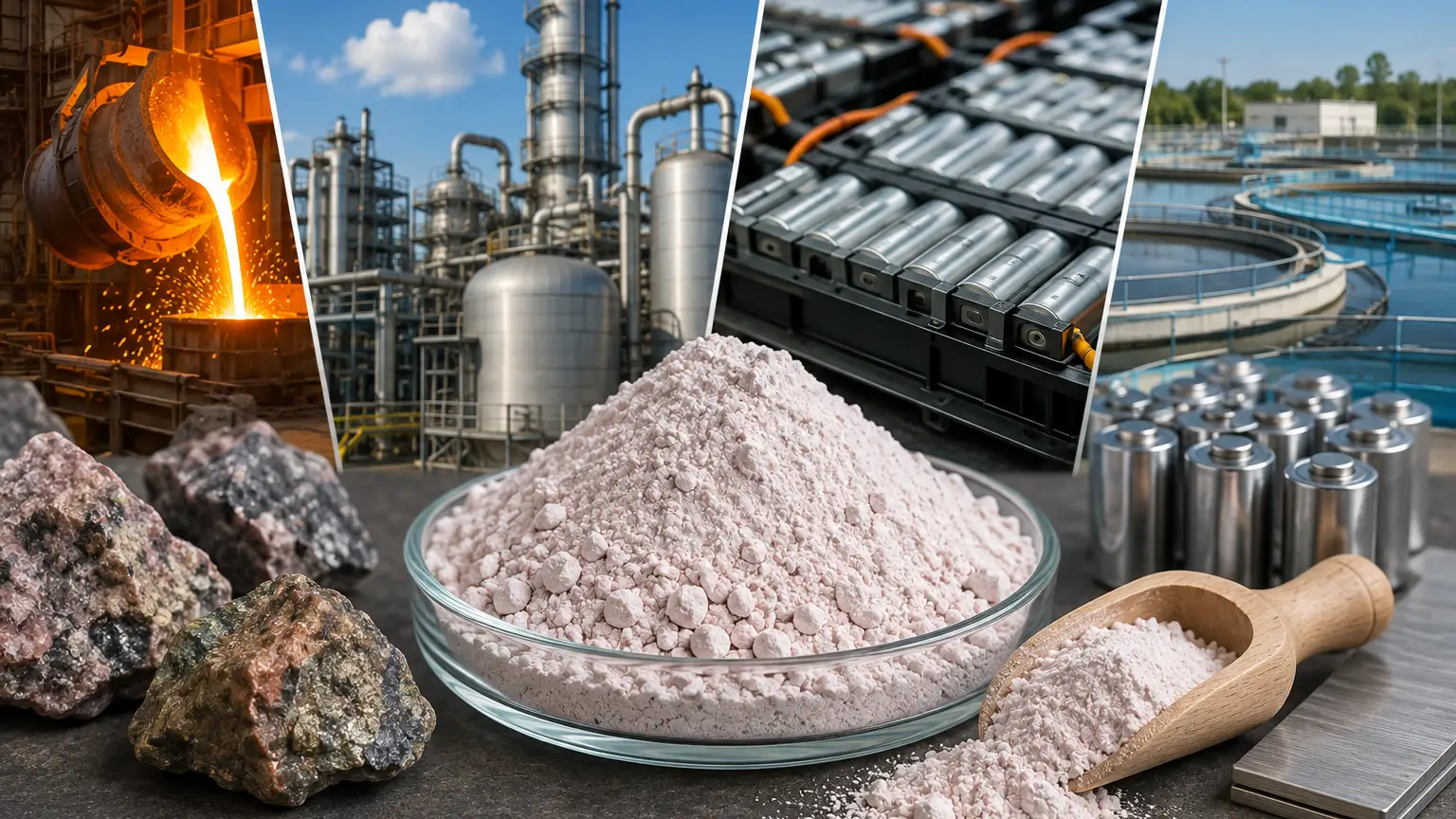
The global borate system looks balanced-to-tight in 2026, not structurally long. USGS shows Turkey far ahead in reserves and reported output, while U.S. data remain partly withheld because the producer base is so concentrated. On the demand side, more than three-quarters of world boron consumption goes into ceramics, detergents, fertilizers, and glass, and U.S. glass and ceramics remained the leading domestic uses in 2025. That means borax pentahydrate demand is anchored in industrial sectors that do not disappear quickly even when discretionary construction slows.
The most important tightening signal is origin concentration. Eti Maden’s 2024 boron sector report says the company sold about 2.5 million tons of boron products in 2024, including approximately 2.4 million tons of exports, and specifically identifies borax pentahydrate among its highest-volume products. When one Turkish state-backed producer is this central to world trade, even routine maintenance or export prioritization can tighten prompt availability in India, Southeast Asia, and Europe.
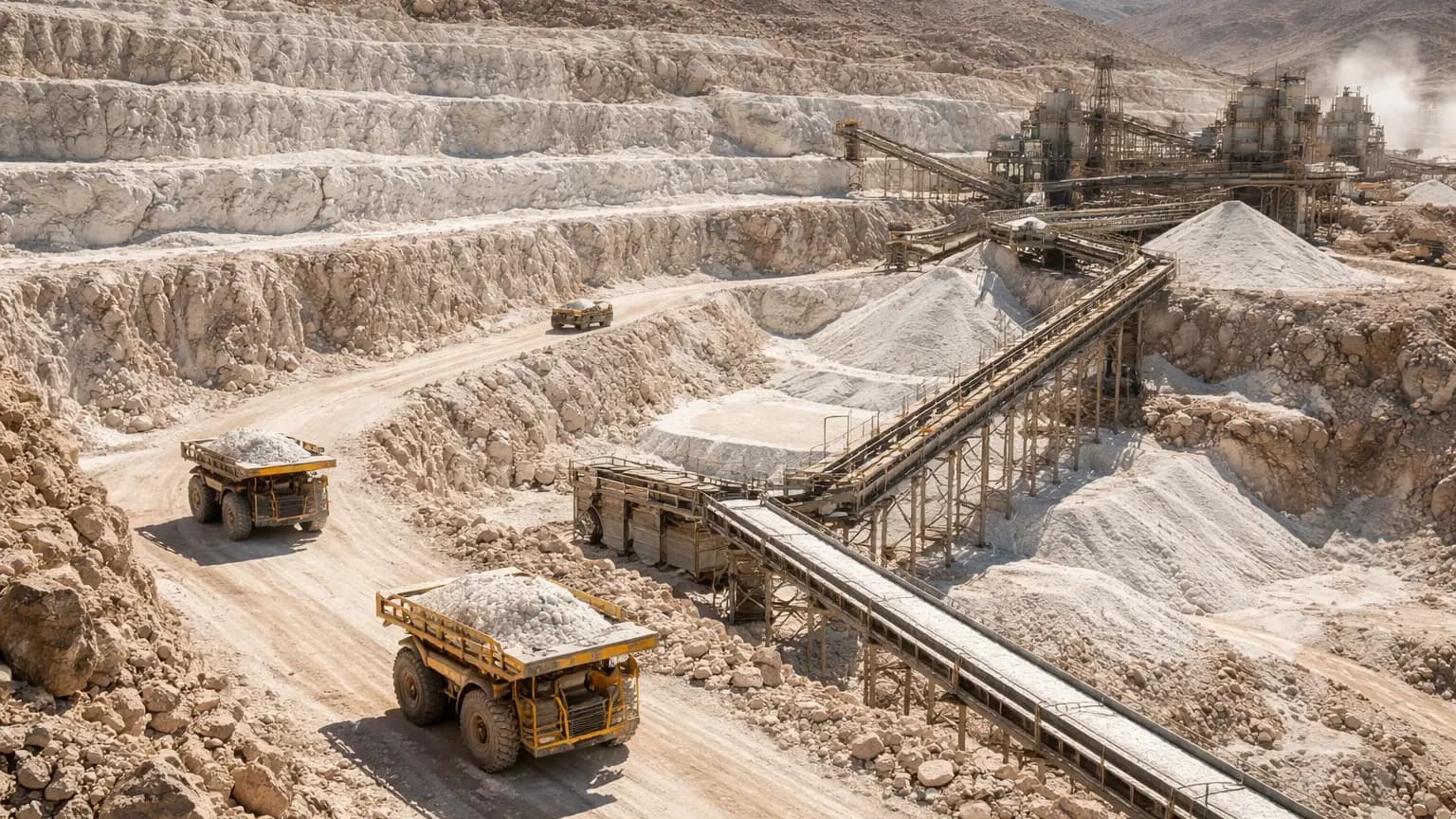
Rio Tinto adds the second pillar of that concentration risk. Its Boron, California operation is one of only two world-class borate deposits and produced 504 kt in 2024 at the site level, according to the company. Rio also says the operation supplies roughly 30% of global refined borates demand. A serious disruption at Boron, California or a prolonged tightening in Turkish export availability would not be easy to replace with spot tonnes from fringe suppliers.
Global Borate Market Pressure in 2026
China is the demand-side variable buyers should watch most closely. USGS says China has low-grade boron reserves and expects Chinese demand to rise, with imports from the United States expected to remain steady during the next several years. That is a direct bullish signal for exporters because it ties incremental Asian demand to a limited number of export-capable origins. If Chinese buying accelerates while Indian import demand stays firm, prompt cargoes tighten very quickly.
Policy is also becoming more supportive of firmer borate pricing. The U.S. added boron to its 2025 Critical Minerals list, and Rio notes boron is now considered a critical mineral or material in the U.S., EU, and UK. Critical-mineral designation does not automatically raise spot prices, but it does harden procurement behavior, increase supply-chain auditing, and make buyers less willing to run lean inventories. That usually puts a higher floor under contract prices.
There is new supply on the horizon, but not enough to kill the 2026 tightness story. USGS flagged Serbia’s Jadar project at an expected 286,000 tons per year of boric acid at full production and a Nevada byproduct project expected to produce about 170,000 tons per year of boric acid once completed, but those are not immediate 2026 spot-volume solutions. One Nevada project was delayed until March 2026 construction timing, with initial production expected only in 2028. Near-term buyers cannot rely on these projects to solve prompt borax pentahydrate availability.
Borax Pentahydrate Price Forecast 2026: Base Case, Upside, and Downside
Base case: prices stay firm to moderately higher through 2026
The base case is a firm market with selective upside. Public Q4 2025 pentahydrate references already showed import-tightness in India and export-led firmness in Turkey. With China expected to remain an importer, Turkey and the U.S. still dominating refined supply, and no major new low-cost tonnage arriving quickly, borax pentahydrate prices should remain supported through 2026, especially in import markets.
Upside risk: Turkish export tightening or U.S. operating disruption
The clearest upside scenario is not abstract “supply disruption.” It is a named-origin problem. If Eti Maden prioritizes domestic or higher-margin channels during a tight export window, or if Rio Tinto’s Boron operation sees a maintenance or logistics disruption, India and Southeast Asia could see a fast rise in landed premiums because replacement cargoes are limited. In that scenario, Turkey FOB and India landed prices would move first and hardest.
Downside risk: weaker glass demand plus smoother export flows
The downside case is softer glass and ceramics demand without a mining disruption. ChemAnalyst noted weak construction and glass demand were already visible in parts of 2025, especially in the U.S. If that weakness broadens while Turkish and U.S. export flows normalize, prices could flatten or retrace in origin markets. But the downside is limited by the sector’s concentrated supply base and the lack of abundant swing capacity.
How to Time Your Borax Pentahydrate Procurement in This Market
Current recommendation: partial forward coverage.
For buyers covering 2026 industrial demand, this is not the market to stay fully spot-exposed. The right stance is to cover roughly 50–70% of required volume on term or index-linked contracts now, then leave 30–50% for spot or short-cycle replenishment. That matches a balanced-to-tight market where upside risk is more dangerous than missing a modest correction.
Import-dependent buyers in India and Southeast Asia should be more aggressive than origin-adjacent buyers in the U.S. or Turkey. India already showed the sharpest late-2025 tightening because delayed imports and lower volumes lifted domestic assessments. If your plant cannot tolerate a 4–8 week arrival slip, secure base-load contract tonnes now and use spot only for top-up needs.
Dual-origin sourcing is the other obvious hedge. A buyer relying only on Turkey or only on U.S. Borax is accepting single-origin concentration risk in a market where two supply centers dominate. Split coverage where possible. It reduces both price exposure and availability risk.
Conclusion
Borax pentahydrate in 2026 is not a loose, forgettable inorganic. It is a concentrated borate market sitting on top of a narrow mining base. Turkey dominates reserves and refined output. Rio Tinto’s California system still covers about 30% of refined borate demand. China remains structurally import-reliant. That combination keeps the balance of risk skewed to the upside.
For procurement teams, the message is simple. Do not wait for a textbook price collapse that may never come. Lock in core 2026 volume now, diversify origin where possible, and keep only a controlled portion of demand exposed to spot. That is the lower-risk approach in a borate market where mining output, not marginal feedstock cost, is the real price trigger.