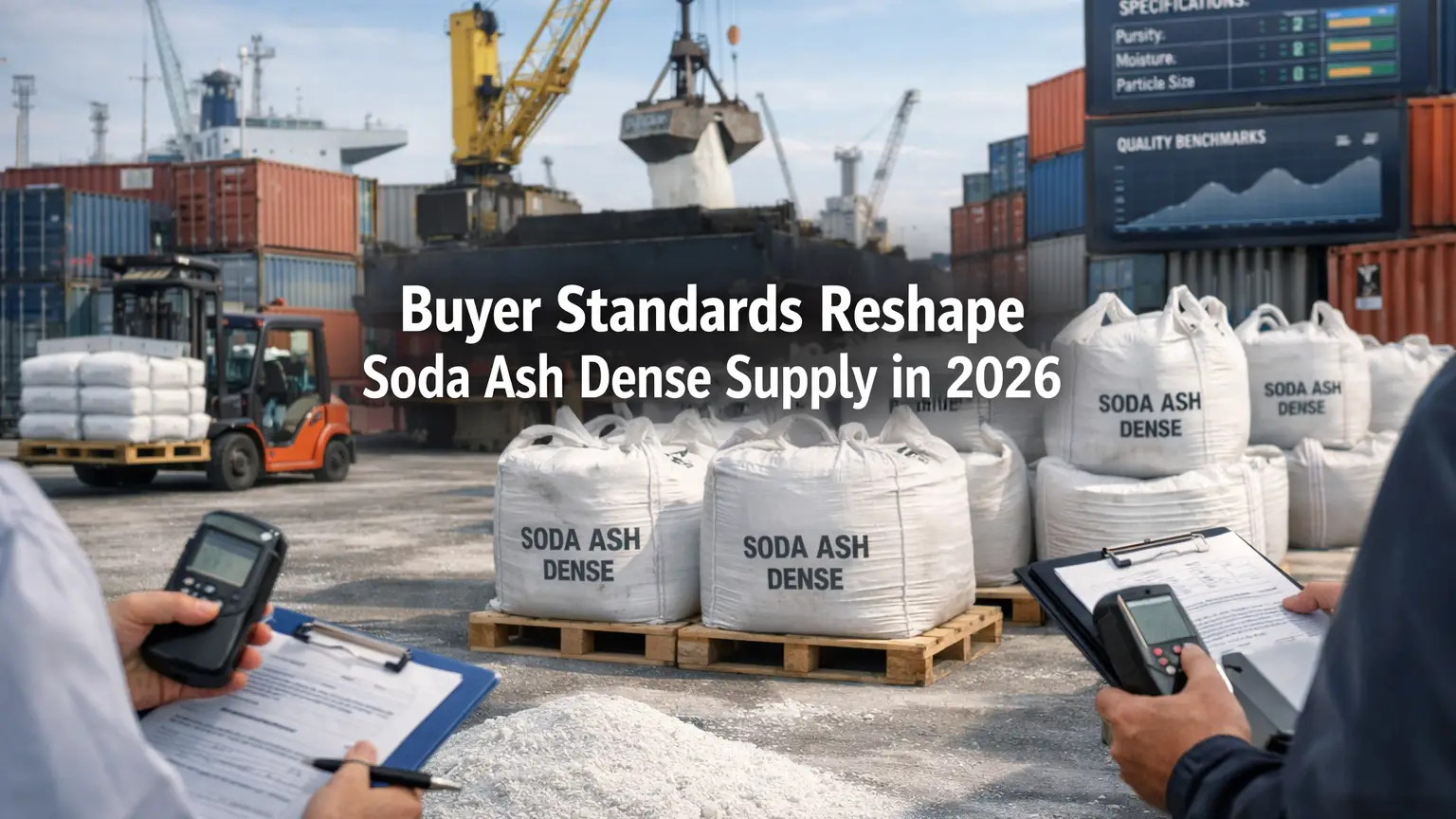
Soda ash dense supply in 2026 is no longer shaped only by capacity and price. Buyer standards, particularly from glass manufacturers and industrial users, are redefining how suppliers qualify, produce, and deliver material. As global capacity expands, procurement teams are raising expectations on purity, consistency, and traceability to protect production efficiency and product quality.
This shift is changing the soda ash dense market from volume driven sourcing to standards driven supply selection, with direct implications for pricing, lead times, and supplier availability.
What Makes Soda Ash Dense Critical for Industrial Users
Physical Characteristics That Affect Performance
Dense soda ash typically features a bulk density between 0.90 and 1.15 g per cubic centimeter, with controlled granulation in the 250 to 500 micron range. These properties reduce dusting, improve flow through silos, and minimize segregation during transport.
For glass producers, consistent physical properties translate into stable batch feeding and fewer furnace disruptions.
Chemical Purity and Glass Quality
High sodium carbonate content supports predictable melting behavior and stable glass chemistry. Impurities such as iron, chlorides, and insolubles can cause discoloration, inclusions, or increased emissions. As glass formulations become more precise, tolerance for variability continues to narrow.
How Tighter Standards Affect Supply Availability
A Smaller Pool of Qualified Suppliers
As buyers require ISO certified quality systems, third party testing, and documented process controls, fewer suppliers meet qualification criteria. This is particularly evident in regions with rapid capacity expansion but uneven quality investments.
Oversupply does not automatically translate into easier sourcing when compliance gaps exist.
Longer Lead Times and Approval Cycles
Supplier audits, trial shipments, and approval processes extend procurement timelines. Buyers must account for longer onboarding periods and plan inventories accordingly, especially when switching suppliers or entering new markets.
Operational Expectations Beyond Product Quality
Documentation and Traceability
Certificates of analysis, batch records, and regulatory documentation such as REACH compliance are now baseline requirements. Buyers increasingly request traceability from production through delivery to support audits and internal risk management.
Tamper resistant packaging and clear batch identification further reinforce accountability.
Packaging and Handling Standards
Packaging must protect material integrity during transport and storage. Moisture resistance, sealed containers, and bulk packaging compatible with dense soda ash handling systems are essential, particularly in humid climates.
Improper packaging can degrade product quality before it reaches the furnace.
Commercial Implications for Buyers and Suppliers
Price Differentiation Based on Compliance
High specification soda ash dense often carries a premium, reflecting investments in purification, testing, and quality systems. Buyers increasingly accept this differentiation as part of total cost optimization rather than focusing solely on unit price.
Lower priced material that fails specifications often leads to higher downstream costs.
Contract Structures Shift Toward Stability
Long term contracts with defined quality clauses and penalties for non compliance are becoming more common. These agreements provide supply security while reinforcing performance expectations.
Spot purchases remain relevant but are less favored for core volumes.
Regional Differences in Buyer Expectations
Asia Pacific Markets
Rapid growth in glass capacity across China, India, and Southeast Asia has accelerated standardization. Buyers increasingly favor suppliers that can demonstrate consistent synthetic soda ash production with verified specifications.
Import dependent markets face additional pressure to qualify suppliers carefully due to longer supply chains.
Europe and North America
Mature regulatory environments emphasize traceability, environmental compliance, and audit readiness. Buyers focus on sustainability, emissions reporting, and long term supplier reliability alongside technical quality.
How Procurement Teams Are Adapting Their Sourcing Strategies
Buyers are balancing strict specifications with supplier diversification to reduce risk. Rather than relying on a single source, many now qualify multiple compliant suppliers across regions.
Long term partnerships are replacing transactional buying. This approach supports better planning, shared quality improvements, and more predictable supply in volatile markets.
Conclusion
In 2026, buyer standards are structurally reshaping soda ash dense supply. Higher quality requirements, stricter impurity limits, and deeper compliance expectations are narrowing the supplier landscape while increasing lead times and costs.
Procurement teams that adapt through early qualification, diversified sourcing, and long term partnerships will be better positioned to manage risk and maintain production stability. As a market aware sourcing partner, Chemtradeasia supports buyers with compliant soda ash dense supply, regional market insight, and supplier qualification support to navigate these evolving standards with confidence.