Introduction
In the current trajectory of the food and beverage industry, the concept of "Nutrition" is undergoing a fundamental redefinition. The era of "Reductionism"—where food value was calculated solely by isolated numbers of protein, fat, and carbs—is fading. It is being replaced by the era of Whole-Food Synergy. Modern consumers, and consequently modern formulators, are seeking ingredients that deliver dense, bioavailable nutrition within a recognizable, natural matrix.
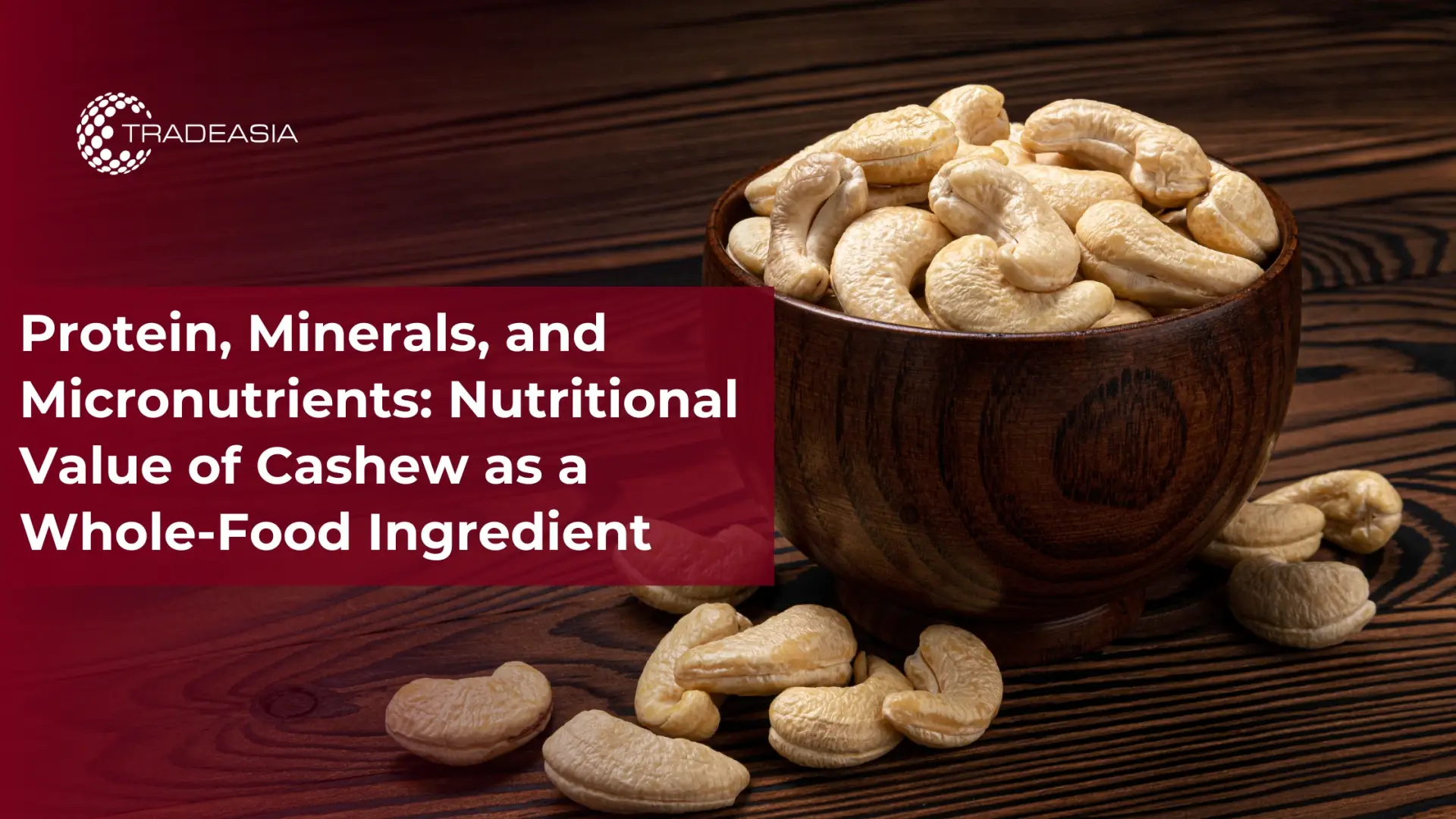
Within this paradigm shift, the Cashew (Anacardium occidentale) is emerging as a powerhouse ingredient that transcends its traditional role as a simple snack nut. While historically prized for its buttery texture and healthy lipid profile, a deeper nutritional analysis reveals that the cashew is a sophisticated functional system. It offers a competitive plant-based protein load, a critical density of metabolic minerals like Magnesium, and essential trace elements like Zinc and Copper. For the food scientist, the cashew is not just a flavor carrier; it is a "Clean Label" fortification strategy. This white paper explores the nutritional architecture of the cashew and its strategic value in the formulation of next-generation functional foods.
Nutrient-Dense Composition: Beyond Lipid Profile
Cashew is widely recognized for its balanced fat profile (primarily monounsaturated fatty acids like oleic acid). However, stopping the analysis at lipids ignores the structural value of the nut. As a whole-food ingredient, cashew provides a meaningful contribution of Plant-Based Protein, typically delivering around 18 grams per 100 grams.
This positions it competitively among tree nuts, rivaling almonds and surpassing walnuts and pecans in protein density. Unlike isolated protein powders (such as pea or soy isolates) which are chemically extracted and often carry bitter off-notes, cashew protein is delivered within a natural "Food Matrix."
-
The Matrix Effect: The protein in cashews is bound with dietary fiber (~3.3g/100g) and healthy fats. This structure alters digestion kinetics. It slows gastric emptying, leading to a more gradual release of amino acids into the bloodstream and a sustained feeling of satiety.
-
Amino Acid Profile: Cashews contain all nine essential amino acids, though like most legumes and nuts, they are limited in methionine. However, they are particularly high in Tryptophan, a precursor to serotonin, and large amounts of Glutamic Acid and Arginine. This integrated composition supports muscle maintenance and metabolic health while aligning perfectly with the "Minimal Processing" trend that is currently reshaping the grocery aisle.
Magnesium: The Metabolic Spark Plug
Perhaps the most significant micronutrient advantage of the cashew is its Magnesium content. Cashews are one of the richest natural sources of this mineral, providing approximately 292 mg per 100g—nearly 70-80% of the Daily Value (DV).
Magnesium is often called the "forgotten electrolyte," yet it is involved in over 300 enzymatic reactions in the human body. It is the biological spark plug required for:
-
ATP Production: Energy metabolism relies heavily on magnesium.
-
Muscle Function: It regulates muscle contraction and relaxation, crucial for preventing cramps in active consumers.
-
Glucose Control: It plays a vital role in insulin sensitivity.
From a formulation standpoint, this presents a massive opportunity. Manufacturers of "Energy Bars" or "Recovery Shakes" often rely on synthetic salts like Magnesium Oxide or Citrate to hit label claims. By incorporating cashew butter or flour, brands can achieve "Natural Fortification." They can claim a "Good Source of Magnesium" derived entirely from whole food, appealing to the health-conscious consumer who equates "synthetic" with "unhealthy." This is particularly attractive for products positioned around heart health, stress reduction, and active lifestyles.
Zinc and Copper: The Immunity and Antioxidant Shield
In the post-pandemic market, immunity remains a top priority. Cashew delivers a potent combination of Zinc and Copper, two trace minerals that function as the body's defensive shield.
-
Zinc (~5.8 mg/100g): Essential for immune cell development and communication. It plays a critical role in inflammatory response and protein synthesis. A single serving of cashews can provide a significant portion of daily zinc requirements without the metallic taste associated with zinc gluconate fortification.
-
Copper (~2.2 mg/100g): Often overlooked, copper is the synergistic partner to iron. It is required for iron transport and red blood cell formation (preventing anemia). Furthermore, copper is a key component of Superoxide Dismutase (SOD), one of the body's most powerful antioxidant enzymes that neutralizes free radicals.
The presence of both minerals within a single ingredient enhances its value in functional food formulations. It allows for a "Multi-Mineral" claim that feels organic to the product story. For a plant-based meal replacement or a children's nutrition bar, using cashews allows the manufacturer to clean up the ingredient deck, removing a laundry list of vitamin/mineral premixes while still delivering a robust nutritional panel.
The Starch Secret
Beyond nutrition, cashews possess a unique physicochemical attribute that sets them apart from almonds or walnuts: Starch Content. Cashews contain roughly 10-12% starch by weight. Most other tree nuts contain negligible starch.
This starch content is a functional superpower in processing. When cashews are blended with water and heated (as in the production of dairy-free sauces or soups), the starch gelatinizes. This provides a natural thickening effect and a creamy, viscous mouthfeel that other nuts cannot replicate without added gums.
-
Dairy Alternatives: In the explosion of plant-based cheeses and yogurts, cashew is the gold standard. Its protein and starch matrix creates a "curd-like" texture when fermented, producing vegan camemberts and spreads that slice and melt surprisingly like dairy.
-
Creamy Sauces: For "Clean Label" alfredo sauces or cream soups, cashew paste acts as both the fat source (for richness) and the thickener (starch), eliminating the need for modified corn starch or heavy cream.
Sensory Versatility
The flavor profile of the cashew is exceptionally mild, sweet, and milky. Unlike the distinct marzipan note of almonds or the tannins in walnuts, cashews are a "Blank Canvas."
-
Sweet & Savory: They integrate seamlessly into sweet applications (cookies, ice cream) without overpowering delicate vanilla or fruit notes. Simultaneously, they work in savory applications (curries, pesto, dips) where they provide body and richness. This versatility enables manufacturers to deploy a single ingredient SKU across a diverse product portfolio, simplifying supply chain complexity.
Conclusion
The cashew is far more than a commodity nut; it is a nutritional solution for the modern food system. As consumer interest irrevocably shifts toward nutrient-dense, recognizable ingredients, the cashew offers a rare convergence of benefits: high-quality plant protein, critical metabolic minerals, immune-supporting trace elements, and unique functional starch properties.
By utilizing cashews—whether whole, diced, pasted, or floured—manufacturers can solve texture challenges and clean up ingredient labels while delivering the "Whole-Food Nutrition" that defines the premium segment of the market today. It is a strategic building block for functional foods that prioritize both biological integrity and sensory indulgence.
Unlock the Power of Whole-Food Nutrition
At Food Additives Asia, we recognize that the future of food is natural, functional, and transparent. Whether you are formulating a high-protein vegan cheese, a magnesium-rich energy bar, or a premium dairy-free sauce, our portfolio of high-quality Cashew Ingredients is sourced to meet the most rigorous standards of purity and taste.
Elevate your nutritional profile naturally. We invite you to explore our technical specifications, including protein analysis and mineral content data. Visit our website to request samples of our Cashew Flour, Butter, and Kernels, and submit your commercial inquiry today. Let our team help you engineer a product that is as healthy as it is delicious.
Explore Our Cashew Portfolio & Inquire at foodadditivesasia.com