Citric acid monohydrate is produced almost entirely through microbial fermentation of corn or cassava starch, with China accounting for approximately 60–70% of global output. The monohydrate form holds roughly 50% of the total citric acid market by volume, priced FOB Shanghai at around USD 620–660/MT in Q3 2025. Buyers outside China face a trade landscape shaped by active anti-dumping duties in both the EU and the US — making origin selection and contract structure the two most consequential procurement decisions.
What Is Citric Acid Monohydrate and Why Does Its Supply Chain Matter?
Citric acid monohydrate (CAS No. 5949-29-1, HS Code 29181400) is the crystalline, water-containing form of citric acid, carrying one molecule of water within its crystal lattice. That single water molecule is not incidental: it determines handling behavior, solubility rate, hygroscopicity, and stability in humid environments — all of which matter for downstream processors in food, pharmaceuticals, and cleaning formulations. The monohydrate form is preferred in beverage acidulation, confectionery, and pharmaceutical tablet coatings precisely because its lower tendency to cake in ambient conditions makes it easier to handle at scale.
The supply chain matters to buyers for a structural reason that has nothing to do with quality: the market is almost entirely produced in one country, China, using one primary feedstock, corn, and traded under active anti-dumping and countervailing duty regimes in two of the world's largest import markets. Any buyer in Europe, North America, or the Middle East who treats citric acid monohydrate as a simple commodity is mispricing their exposure.
Key quality specifications buyers should specify:
| Parameter | Typical Specification |
|---|---|
| Purity | ≥ 99.5% (USP/FCC/BP/EP) |
| Appearance | White crystalline powder or granules |
| Water content | 8.5% (monohydrate form) |
| pH (5% solution) | Approximately 1.8 |
| Mesh range | 8–40 mesh (food/industrial), fine grades for pharma |
| Certifications | ISO, HACCP, Kosher, Halal, Organic (where required) |
Global Production: Who Makes Citric Acid Monohydrate and Where?
Production Geography and Capacity Distribution
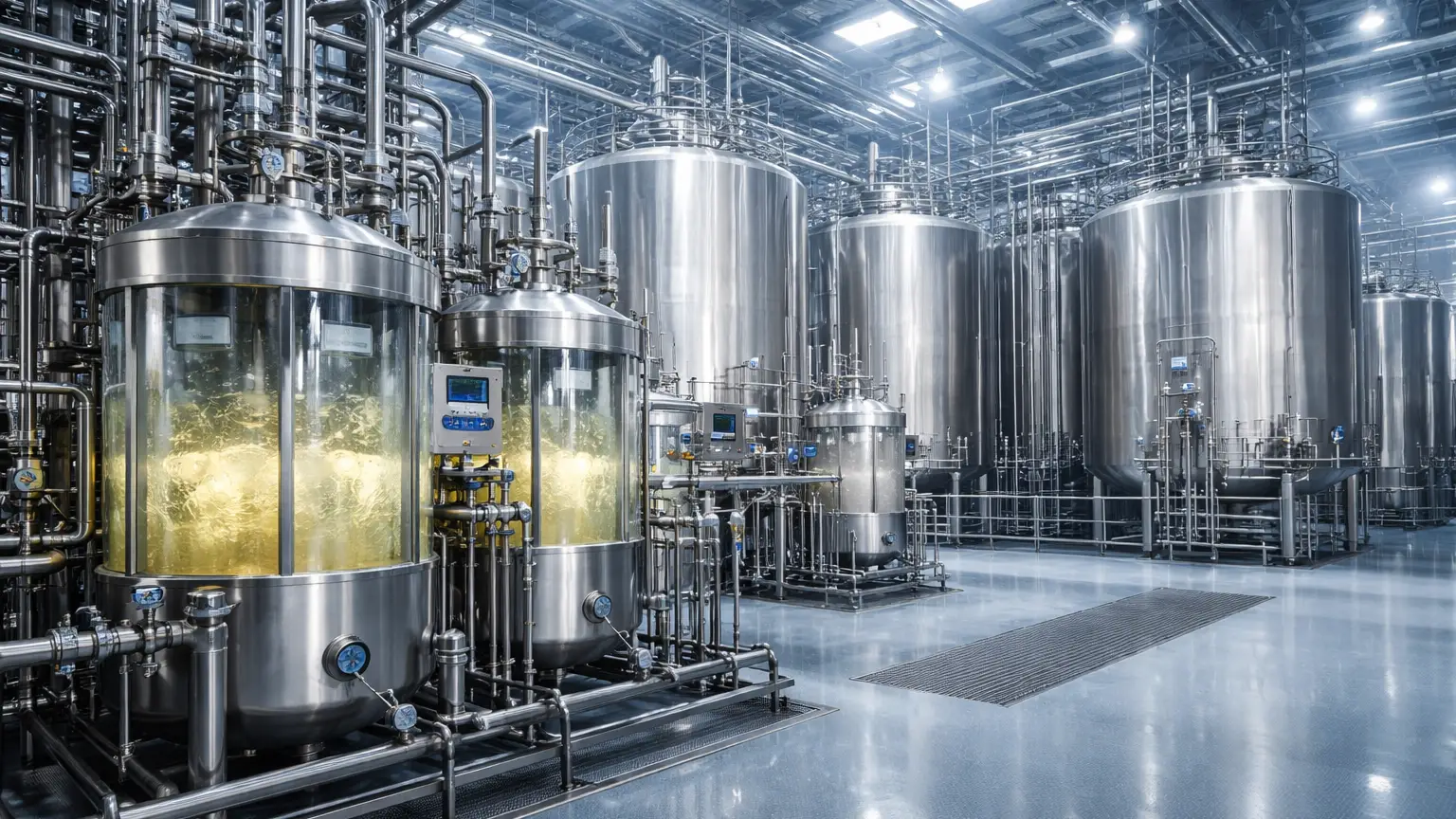
Citric acid is produced by microbial fermentation, specifically submerged fermentation using Aspergillus niger, a mold that converts carbohydrate substrates into citric acid at commercially viable yields. Approximately 80% of global production uses submerged fermentation technology. The remaining volume comes from surface fermentation, which is the method favored by European producers such as Citribel (formerly SA Citrique Belge) in Belgium, where sugar molasses serve as the primary feedstock.
| Country | Estimated Capacity Share (%) | Primary Feedstock | Production Technology | Trend |
|---|---|---|---|---|
| China | 60–70% | Corn (maize starch) | Submerged fermentation | Expanding |
| EU (Belgium, Austria) | 8–12% | Sugar molasses | Surface fermentation | Stable |
| United States | 6–9% | Corn | Submerged fermentation | Stable |
| India | 4–6% | Cassava, molasses | Submerged fermentation | Growing |
| Thailand/Southeast Asia | 2–4% | Cassava | Submerged fermentation | Growing |
| Russia (emerging) | <2% | Grain | Submerged fermentation | Under construction |
China's dominance is structural. Decades of state-backed investment in fermentation biotechnology, access to abundant corn from Shandong, Jilin, and Jiangsu provinces, and vertically integrated processing infrastructure have made Chinese producers cost leaders by a margin that no other region can close at scale. Between 2018 and 2025, China added substantial fermentation capacity across its established production clusters, creating persistent oversupply pressure on global spot prices.
China: 60–70% of Global Citric Acid Monohydrate Capacity
Chinese production is concentrated among five dominant producers. COFCO Biochemical operates what analysts widely describe as the world's most efficient citric acid fermentation network, exporting globally through established distribution agreements. RZBC Group (Rizhao Jiucheng Biochemical) ranks among the top three globally and holds quality certifications covering USP, FCC, BP, and EP — the standard requirements for pharmaceutical-grade supply into regulated markets. TTCA Co., Ltd. is a major supplier to Southeast Asian food processors. Weifang Ensign (Shandong) and Taihe Biochemical (Laiwu) round out the core production base, all concentrated in Shandong province, where corn infrastructure, rail access to ports, and established export logistics provide a compounding cost advantage.
Production volumes reflect these dynamics. In mid-2025, FOB Shanghai prices for citric acid monohydrate ranged between USD 623 and 656/MT, according to Price-Watch data — well below the levels that trigger profitability for most non-Chinese producers. The Chinese domestic market price hovered around 4,928 yuan/MT in June 2025, down approximately 2.4% year-on-year, per Ziochemical market data.
Non-Chinese Producers: Europe, the US, and India
Western producers operate at a permanent cost disadvantage on fermentation cost, but serve a market niche that Chinese producers cannot easily penetrate: pharmaceutical-grade supply with full EU/US regulatory traceability and no anti-dumping duty exposure.
Jungbunzlauer (Basel, Switzerland) operates biorefineries in Europe and North America and is the primary supplier of non-GMO, pharmaceutical-grade citric acid monohydrate to Western regulated industries. Its product complies with European Pharmacopoeia (Ph. Eur.), USP, FCC, and BP standards. Citribel (Belgium, formerly Citrique Belge) is the other European anchor producer, using a circular manufacturing model based on sugar molasses fermentation, with certifications covering food, pharma, and industrial applications. ADM (Archer Daniels Midland, Chicago) is the Western Hemisphere's largest integrated corn-to-citric acid producer, supplying food-grade and pharmaceutical citric acid to over 80 countries through its BioSolutions division.
India's citric acid sector is growing, led by Posy Pharmachem and HTMC Group, primarily targeting African and Middle Eastern buyers. Indian production primarily uses cassava and molasses as fermentation substrates, delivering a cost structure between Chinese and European levels.
Russia is investing in domestic capacity through the Citron plant (Voronezh region) and the Organic Acids plant (Tula region), both under construction as of 2025, with an aim to reduce import dependence by 2027.
New Capacity and Future Supply Direction
Chinese fermentation overcapacity is the defining structural fact of the 2026 citric acid market. Per Expert Market Research forecasts, global citric acid production reached 2.93 million MT in 2025 and is projected to grow to 4.38 million MT by 2035 at a 4.1% CAGR — with Chinese producers capturing the majority of new volume. This supply growth is running ahead of demand growth in most quarters, which is why the 2025 price trend was predominantly bearish across all regions: North America declined 12.63% cumulatively, Southeast Asia fell 15.55%, and even China's domestic market trended below its decade average.
The Fermentation-to-Crystal Process: What Buyers Need to Understand
Most buyers treat citric acid monohydrate as a finished chemical and never examine what sits upstream. That is a mistake, because the supply chain risk is embedded in the fermentation process, not the shipping container.
Feedstock Dependency: Corn, Cassava, and Molasses
Chinese and North American production runs on corn-derived glucose. Enzymatic hydrolysis converts corn starch into fermentable glucose, which is then converted to citric acid over a 5–7 day fermentation cycle using A. niger. The corn price transmission into citric acid cost is direct and approximately one quarter lagged: when corn prices rise, production costs increase within the same or next production cycle, and FOB prices follow within weeks.
In the first quarter of 2025, rising corn prices caused citric acid prices across Asia to move in parallel, per Procurement Resource pricing data. Corn prices in China averaged approximately 2,187 yuan/MT in H1 2025 — a modest year-on-year decline but still above the levels that make marginal Chinese capacity profitable at current FOB prices.
European producers (Citribel, Jungbunzlauer) use sugar molasses as their primary feedstock. Molasses-based fermentation is historically more expensive to purify due to heavy metal contamination from the molasses matrix, but delivers a different product positioning — specifically, the non-GMO and natural fermentation credentials that certain regulated food markets require.
Southeast Asian producers increasingly rely on cassava, which is abundant, competitively priced, and processed through solid-state or submerged fermentation. Thai and Indonesian citric acid capacity uses cassava as a cost hedge against corn price volatility.
| Feedstock | Primary Producer Region | Cost Position | Key Risk |
|---|---|---|---|
| Corn (maize starch) | China, USA | Low-medium | Seasonal corn price volatility |
| Sugar molasses | Belgium, Belgium/Austria | Medium-high | Sugar crop and energy costs |
| Cassava | Southeast Asia, India | Medium | Crop yield variability, logistics |
How Citric Acid Monohydrate Moves: Trade Routes and Logistics
Primary Transport Mode and Packaging
Citric acid monohydrate is a dry, crystalline solid that does not require specialized chemical tankers or temperature-controlled containers. It ships in standard 20-foot FCL containers, with product loaded in 25 kg composite paper-plastic bags or 3-ply kraft paper bags with PE liners, or in 500 kg to 1,000 kg PP woven jumbo bags. A standard 20-foot FCL carries approximately 25 MT. This packaging specification is consistent across Chinese, European, and Indian producers.
The product is hygroscopic (absorbs moisture from air) and must be stored in cool, dry conditions away from heat sources. Buyers receiving product in humid climates — Southeast Asia, West Africa, parts of South Asia — should specify moisture-barrier packaging and inspect humidity control in warehouse facilities.
Key Export Ports: Qingdao, Tianjin, and Shanghai
Chinese citric acid monohydrate exports primarily depart from three ports:
Qingdao (Shandong Province): The primary export gateway for Shandong-based producers including RZBC, Ensign, and Taihe. Qingdao is well-connected to major container shipping lines serving Southeast Asia, South Asia, the Middle East, and Europe.
Tianjin (Binhai New Area): The export hub for producers in northern China and Beijing-adjacent distribution. Several trading houses operating in the citric acid space are headquartered in Tianjin's Binhai logistics zone.
Shanghai: Serves producers in Jiangsu province and serves as an alternative port for consolidated shipments to Latin America and Europe.
Primary Trade Routes and Lead Times
| Origin | Destination | Transit Time | Primary Route | Chokepoint Risk |
|---|---|---|---|---|
| Qingdao / Tianjin | Southeast Asia | 7–14 days | South China Sea | Strait of Malacca |
| Qingdao / Tianjin | South Asia (India, Pakistan) | 14–21 days | Indian Ocean | Strait of Malacca |
| Shanghai | Europe (ARA ports) | 28–35 days | Suez Canal route | Suez Canal, Red Sea |
| Shanghai | US East Coast | 30–38 days | Transpacific (via Panama) | Panama Canal |
| Shanghai | US West Coast | 16–20 days | Transpacific | Port congestion risk |
| Belgium (Citribel) | EU buyers | 3–7 days | Road/rail | Minimal |
Red Sea disruption note: Since late 2023, Red Sea security incidents have rerouted a significant portion of Asia-to-Europe container traffic around the Cape of Good Hope, adding approximately 10–14 days of transit time and elevated freight costs to the Shanghai-to-ARA corridor. Buyers relying on Chinese citric acid monohydrate in European markets were directly affected by this, and it contributed to the temporary European price spike of +9.94% in Q2 2025, per Expert Market Research pricing data.
Port congestion on the US West Coast, particularly at Los Angeles/Long Beach, has periodically added 5–10 days to transpacific delivery timelines, a recurring risk for US buyers dependent on Chinese imports.
Citric Acid Monohydrate Supply Risk Assessment
Risk Summary Table
| Risk Dimension | Rating | Primary Trigger | Historical Precedent |
|---|---|---|---|
| Concentration Risk | HIGH | Single-country sourcing from China (60–70% share) | Price spikes when Chinese exporters cut production |
| Trade Policy Risk | HIGH (US/EU) | Anti-dumping duties; circumvention investigations | EU ADD 15.3–42.7%; US ADD up to 156.87% (China-wide) |
| Feedstock Risk | MEDIUM | Corn price volatility | H1 2025: corn-linked cost increases passed through within weeks |
| Logistics Risk | MEDIUM | Red Sea rerouting, port congestion | Q4 2023-present: +10–14 days on Asia-Europe routes |
| Regulatory/Quality Risk | MEDIUM (US/EU) | Grade compliance failures | Off-spec Chinese product requires third-party testing |
| Structural Overcapacity | LOW (short-term) | Ongoing Chinese capacity additions | 2025: bearish pricing across all regions |
Concentration Risk: HIGH
Approximately 60–70% of global citric acid monohydrate production originates in China. When Chinese domestic demand increases, energy costs spike, or regulators implement production restrictions, the global spot market tightens with limited alternative sourcing options. Non-Chinese capacity from Europe and the US covers less than 25% of total global consumption — insufficient to replace Chinese supply during a disruption event. This is the concentration risk buyers underestimate most. There is no quick alternative when a large Chinese production cluster goes offline.
Trade Policy Risk: HIGH for US and EU Buyers
The US has maintained antidumping (AD) and countervailing duty (CVD) orders on citric acid and certain citrate salts from China since May 2009, continuously renewed through expiry reviews. The China-wide ADD entity rate stands at 156.87% as of the 2023-2024 administrative review results published by the US Department of Commerce. Individual cooperating producers receive lower rates, but the China-wide rate applies to any non-cooperating entity. Buyers in the US procuring from Chinese producers must verify that their supplier holds a reviewed, cooperating-producer rate — or face landing costs that make Chinese citric acid completely uncompetitive.
The EU maintains ADD on Chinese citric acid at rates ranging from 15.3% to 42.7%, originally imposed in 2008 and renewed most recently via EU Regulation 2021/607. The EU has also extended these measures to imports consigned from Malaysia (following a circumvention investigation) and previously investigated Cambodia as a potential circumvention origin. EU importers of Chinese citric acid must confirm that their bill of origin is not subject to the Malaysia extension provision.
For buyers in Southeast Asia, South Asia, Latin America, and the Middle East — where no ADD regime applies — Chinese citric acid monohydrate remains the lowest-landed-cost option by a substantial margin.
Feedstock Risk: MEDIUM
Corn price volatility transmits directly into citric acid production costs within one production cycle, approximately 5–7 days of fermentation plus downstream processing. In 2025, Chinese domestic corn prices averaged approximately 2,187 yuan/MT in H1, with fluctuations of up to 337 yuan/MT in citric acid monohydrate market prices tracked between February and April. This is manageable but not negligible — buyers on tight margin formulations should monitor corn futures as a leading indicator for citric acid pricing.
European producers' exposure is to sugar molasses and energy costs rather than corn. When European energy prices spike — as they did in 2021–2022 — European production costs increase and European-origin citric acid carries a premium that widens further. Buyers who rely on European origin as an ADD-free alternative to Chinese supply should factor in this energy cost sensitivity.
Logistics Risk: MEDIUM
Red Sea rerouting remains the primary logistics risk for Asia-to-Europe citric acid shipments as of Q1 2026. The alternative Cape of Good Hope routing adds transit time and freight cost, affecting landed price and requiring buyers to extend their procurement lead times by at least 2 weeks to avoid stockouts. Buyers sourcing Chinese citric acid monohydrate into European markets should carry a minimum 6–8 weeks of inventory buffer rather than the pre-2024 standard of 4 weeks.
What Drives Citric Acid Monohydrate Prices?
Corn Feedstock Cost: The Primary Input Variable
Corn-derived glucose accounts for the dominant variable cost in Chinese citric acid production. Because approximately 42% of global citric acid production depends on corn-derived glucose, corn price fluctuations of 18% or more annually translate into meaningful cost pressure for producers. When corn prices rise sharply, Chinese producers reduce export discounting, FOB prices firm, and buyers on spot contracts feel the impact within 30–60 days.
Energy costs account for approximately 29% of operational costs in fermentation facilities, per industry data. Aeration, heating, and downstream processing are energy-intensive steps. In September 2025, Chinese utility curbs and brief feedstock inflation increased import landed costs into North America, per Chemanalyst pricing data.
Chinese Overcapacity: The Structural Bearish Force
The dominant price driver in 2025 and into 2026 is Chinese overcapacity. The 2025 price trend was bearish across all major regions: North America fell 12.63% cumulatively, Southeast Asia fell 15.55%, and Northeast Asia (including China) declined 8.06%, per Expert Market Research data. Chinese fermentation capacity additions have outpaced demand growth, and Chinese producers have maintained export volume to protect market share at low FOB prices, absorbing margin pressure rather than cutting production.
The 2026 forecast, per Expert Market Research, projects continued oversupply pressure through at least H1 2026, with gradual price stabilization from H2 as food and beverage demand recovers and inventory absorption progresses.
Current Price Reference Points (Q3 2025)
| Market | Price Level | Basis | Source |
|---|---|---|---|
| China domestic | ~4,929 CNY/MT (~USD 680/MT) | Ex-works | Ziochemical |
| FOB Shanghai (monohydrate) | USD 623–656/MT | FOB | Price-Watch |
| CFR Busan (South Korea) | ~USD 703/MT | CFR | Price-Watch |
| CFR Europe (ARA) | ~USD 1,582–1,675/MT | CFR | Expert Market Research |
| India | USD 849–936/MT | CFR | Price-Watch |
The price gap between Asian and European CFR values reflects the EU anti-dumping duty burden on Chinese origin, plus Red Sea freight surcharges, plus the premium on European-origin (ADD-free) supply from Jungbunzlauer and Citribel.
How Buyers Procure Citric Acid Monohydrate: Channels and Strategy
Procurement Channel Options
Direct from Chinese producer (COFCO, RZBC, TTCA, Ensign): Available to established importers with sufficient volume (typically 25 MT per FCL minimum, most producers prefer 100+ MT per order for direct commercial terms). Requires buyer to manage quality verification independently, including third-party testing (SGS, Bureau Veritas) and independent Certificate of Analysis (CoA) validation. This is the lowest-cost channel for buyers in ADD-free markets.
Chinese trading house or export agent: Adds a margin layer but offers flexibility on minimum order quantity, payment terms (T/T or usance LC), documentation support, and multi-origin blending. Useful for buyers with irregular demand or insufficient volume for direct producer access.
Regional distributor (in-country): Appropriate for buyers purchasing less than one FCL per order. Higher per-unit cost but eliminates minimum order, currency, and logistics complexity. Typical markets: Southeast Asia, Middle East, South Asia.
Western producer direct (Jungbunzlauer, Citribel, ADM): Required for buyers in the US and EU who cannot absorb ADD exposure from Chinese origin, and for pharmaceutical applications requiring full EU/US traceability. Price is typically 30–60% above Chinese FOB equivalents landed in non-ADD markets.
Contract vs. Spot: Decision Framework
In a bearish, oversupplied market like the 2025–2026 citric acid monohydrate environment, buyers might be tempted to stay on spot. This is reasonable in the near term, because oversupply pressure limits upside price risk. However, buyers with stable, high-volume consumption in ADD-sensitive markets should consider annual term contracts with cooperating Chinese producers for two reasons: first, to lock in a known ADD rate (cooperating producer rates are significantly below the China-wide 156.87% US rate); second, to secure priority allocation if oversupply conditions reverse.
The corn market is the key forward-looking indicator. If global corn prices tighten due to poor North American or South American harvests, Chinese citric acid costs will rise within weeks and spot FOB prices will follow. Buyers who wait for that signal to lock in term supply will pay a material premium.
Origin Diversification Strategy
For US buyers, Chinese origin is economically unviable at current China-wide ADD rates. The practical sourcing options are ADM (domestic), Jungbunzlauer (US-produced volume), or third-country origins that do not carry US ADD — including European producers (Citribel, Jungbunzlauer Austria) and Indian producers, subject to verifying their specific US ADD status.
For EU buyers, Chinese citric acid monohydrate enters at ADD rates of 15.3–42.7% depending on the specific cooperating producer rate. Several Chinese producers hold individual rates at the lower end of this band, making Chinese origin competitive for non-pharma applications even after the duty. EU buyers sourcing from Malaysia should verify carefully against the circumvention extension provision in EU Regulation 2016/32.
For buyers in Southeast Asia, South Asia, the Middle East, and Latin America, where no ADD applies, Chinese origin is the default and lowest-cost option. Diversification into Indian or Thai production is appropriate as a supply resilience measure — not a cost-reduction strategy.
Inventory and Buffer Stock Guidance
Asia-Pacific buyers (Chinese origin, no ADD): Maintain 4–6 weeks of working inventory. Transit times from Qingdao to Southeast Asia are 7–14 days, and Chinese producers typically carry ready stock.
European buyers (Chinese origin, with Red Sea risk): Maintain 6–8 weeks of buffer inventory, up from the pre-2024 standard of 4 weeks, to account for Cape of Good Hope rerouting uncertainty and freight lead time variability.
US buyers (non-Chinese origin): Domestic sourcing from ADM or Jungbunzlauer US reduces logistics risk, but these producers operate to order with lead times of 2–4 weeks. Maintain 4–6 weeks of safety stock.
Frequently Asked Questions
What is the difference between citric acid monohydrate and citric acid anhydrous? Citric acid monohydrate (CAS 5949-29-1) contains one molecule of water within its crystal structure, representing approximately 8.5% of its molecular weight. Anhydrous citric acid (CAS 77-92-9) contains no water. Monohydrate is preferred in food and beverage applications for its handling stability in ambient conditions; anhydrous is preferred in moisture-sensitive applications such as effervescent tablets and dry beverage mixes, where any water content would trigger premature reaction. As of 2025, monohydrate holds approximately 50–58% of the combined citric acid market by volume.
Why does citric acid monohydrate carry anti-dumping duties in the EU and US? Anti-dumping duties were imposed because Chinese producers were found to be exporting citric acid at prices below fair market value, causing material injury to EU and US domestic producers (Jungbunzlauer, Citribel, and ADM). The EU first imposed duties in 2008 and has renewed them through successive expiry reviews, most recently in 2021. The US imposed AD and CVD orders in 2009, renewed through 2021 and subsequent reviews. These duties remain active in 2026.
What certifications should buyers require from a citric acid monohydrate supplier? For food-grade applications: FCC (Food Chemicals Codex) compliance, ISO 9001, HACCP, and Kosher/Halal certification where required by end-market. For pharmaceutical-grade applications: USP (US Pharmacopeia), EP (European Pharmacopoeia), and BP (British Pharmacopoeia) compliance, plus full batch traceability and Certificate of Analysis (CoA). Always request third-party test reports from SGS, Bureau Veritas, or equivalent for high-stakes pharmaceutical supply.
What are typical minimum order quantities (MOQ) for citric acid monohydrate from Chinese producers? A standard 20-foot FCL carries approximately 25 MT of product packed in 25 kg bags. Most Chinese producers require a minimum of one FCL (25 MT) for direct trading terms. Jumbo bag configurations (500 kg or 1,000 kg bags) are available for buyers with bulk unloading infrastructure, reducing packaging costs per MT. Smaller orders below one FCL are typically handled through regional distributors or trading companies.
Is citric acid monohydrate sourced from non-GMO feedstocks? European producers such as Jungbunzlauer and Citribel explicitly position their citric acid as non-GMO, which is a meaningful specification for organic food manufacturers and clean-label formulations. Chinese producers use corn that may be derived from GMO varieties, and most do not offer non-GMO certification. Buyers with non-GMO specification requirements should source from European producers and obtain supporting documentation.