From Water Binding to Texture Control Across Food Categories
Introduction: The Shift Toward Multi-Functional, Clean Label Ingredients
The global food industry is undergoing a structural shift driven by evolving consumer expectations, regulatory pressure, and the need for more efficient formulation strategies. Among the most influential trends shaping modern food production are the demand for clean label products, the rise of plant-based alternatives, and the need to optimize cost and performance in increasingly competitive markets. Within this context, ingredients that can deliver multiple functional benefits simultaneously are becoming highly valuable.
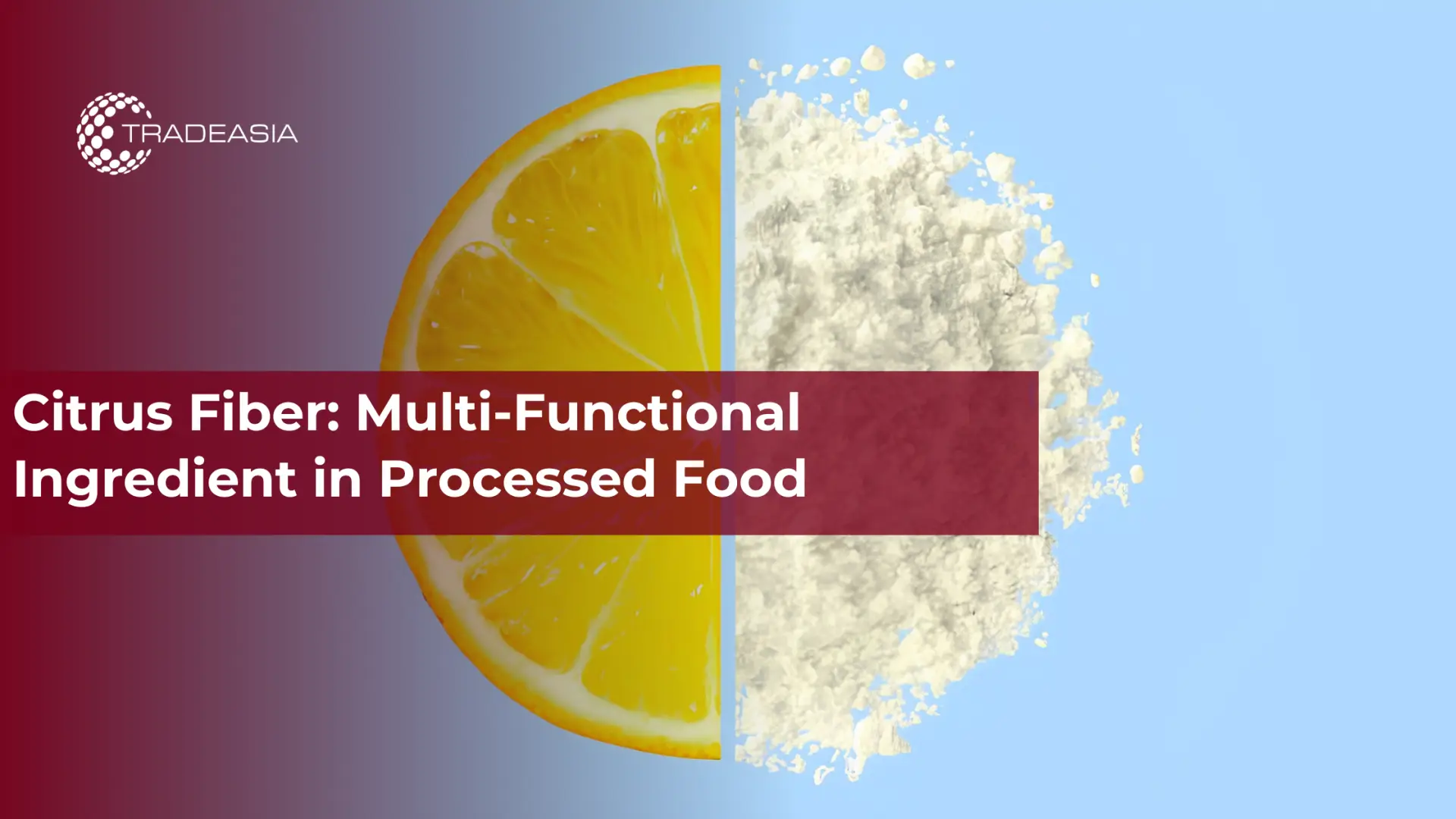
One such ingredient gaining significant traction is citrus fiber. Derived from citrus peel—a byproduct of juice processing—citrus fiber represents a convergence of sustainability, functionality, and clean label appeal. Unlike traditional additives that serve a single purpose, citrus fiber offers a range of functionalities, including water binding, emulsification, texture modification, and stabilization. This multi-functional profile allows food manufacturers to simplify formulations while maintaining or even improving product performance.
As processed food categories continue to expand globally, the need for versatile ingredients is becoming more pronounced. Manufacturers are no longer looking for isolated solutions but rather integrated functionalities that can address multiple formulation challenges simultaneously. Citrus fiber fits this requirement by providing both technological and commercial advantages, particularly in applications such as meat processing, bakery products, and sauces.
This article explores the role of citrus fiber as a multi-functional ingredient in processed foods, analyzing its core functionalities, application across key food categories, and the strategic implications for food manufacturers and buyers.
Understanding Citrus Fiber: Composition and Functional Mechanisms
Citrus fiber is primarily composed of dietary fiber fractions extracted from citrus peel, including both soluble and insoluble components. These include pectin, cellulose, and hemicellulose, which together form a complex matrix capable of interacting with water, fats, and other food components.
The functionality of citrus fiber is rooted in its unique microstructure. The porous, sponge-like structure enables high water absorption and retention, which is critical for maintaining moisture and improving texture in food systems. At the same time, the presence of natural pectin contributes to its ability to form weak gels and stabilize emulsions.
Unlike highly refined hydrocolloids, citrus fiber is minimally processed, allowing it to retain more of its natural structure and functionality. This not only enhances its performance but also supports its positioning as a clean label ingredient, as it can often be declared simply as “citrus fiber” rather than a chemically modified additive.
From a formulation perspective, citrus fiber acts as a multifunctional system rather than a single-function additive. It interacts with water, oil, and other components simultaneously, influencing texture, stability, and overall product quality.
Water Binding and Moisture Management: A Core Functional Advantage
One of the most important functionalities of citrus fiber is its ability to bind and retain water. This property plays a critical role in a wide range of processed food applications, where moisture management directly affects texture, shelf life, and yield.
In many food systems, water is both a functional component and a source of instability. Excess free water can lead to syneresis, microbial growth, and texture degradation, while insufficient water retention can result in dryness and reduced product quality. Citrus fiber addresses these challenges by absorbing water and holding it within its structure, reducing the mobility of water within the product.
This water-binding capacity is particularly valuable in processed foods that undergo thermal treatment, freezing, or extended storage. By retaining moisture, citrus fiber helps maintain product integrity and consistency over time. It also contributes to improved yield, as less water is lost during processing and cooking.
For manufacturers, this translates into both quality and economic benefits. Improved moisture retention enhances consumer perception, while higher yield reduces production costs and increases efficiency.
Texture Control and Mouthfeel Enhancement
Texture is a critical attribute in processed foods, influencing consumer acceptance and product differentiation. Citrus fiber plays a significant role in texture modification by providing structure, viscosity, and mouthfeel.
In liquid and semi-solid systems, citrus fiber can increase viscosity and improve suspension stability. This is particularly important in products such as sauces and dressings, where phase separation can negatively impact appearance and performance. The fiber’s ability to create a stable network helps maintain uniformity and consistency.
In solid and semi-solid foods, citrus fiber contributes to structure formation and mouthfeel. Its interaction with water and other components creates a cohesive matrix that enhances firmness, elasticity, and juiciness. This is especially valuable in products that require a balance between softness and structural integrity.
Another important aspect is its role as a fat mimetic. By binding water and creating a lubricating effect, citrus fiber can replicate some of the sensory properties of fat, allowing for fat reduction without compromising texture. This is particularly relevant in health-oriented products where calorie reduction is a priority.
Application in Meat and Processed Protein Products
The use of citrus fiber in meat and processed protein applications has grown significantly due to its ability to improve yield, texture, and stability. In these systems, water retention and fat binding are critical factors that influence both product quality and profitability.
Citrus fiber enhances water-holding capacity, reducing cooking loss and improving juiciness. This is particularly important in products such as sausages, patties, and deli meats, where moisture retention directly affects sensory attributes. By stabilizing the water and fat matrix, citrus fiber also helps maintain product shape and consistency during processing and storage.
In addition to its functional benefits, citrus fiber supports clean label positioning in meat products. As consumers become more aware of ingredient lists, manufacturers are seeking alternatives to synthetic binders and phosphates. Citrus fiber provides a natural solution that meets both functional and labeling requirements.
The economic impact is also significant. Improved yield means that more finished product can be obtained from the same amount of raw material, enhancing profitability. This makes citrus fiber an attractive option for meat processors operating in cost-sensitive markets.
Application in Bakery Products: Moisture Retention and Shelf Life Extension
In bakery applications, citrus fiber is primarily used to improve moisture retention, extend shelf life, and enhance texture. Baked goods are particularly susceptible to staling, a process driven by moisture redistribution and starch retrogradation. Citrus fiber helps mitigate these effects by retaining water and maintaining a softer texture over time.
The inclusion of citrus fiber can improve crumb structure, making products such as bread, cakes, and muffins more resilient and less prone to drying out. This is especially important in industrial baking, where products may undergo extended distribution and storage before consumption.
Another advantage is its ability to support fat reduction in bakery formulations. By contributing to moisture and mouthfeel, citrus fiber can partially replace fat without significantly affecting product quality. This aligns with consumer demand for healthier bakery products.
From a production perspective, citrus fiber also improves dough handling and stability. Its water-binding properties can enhance dough consistency, making it easier to process and shape. This contributes to more efficient manufacturing and consistent product quality.
Application in Sauces and Dressings: Emulsification and Stability
Sauces and dressings represent one of the most dynamic application areas for citrus fiber, particularly in the context of clean label reformulation. Traditional formulations often rely on emulsifiers and stabilizers such as modified starches and synthetic gums to maintain consistency and prevent phase separation.
Citrus fiber offers a natural alternative by providing both emulsification and stabilization. Its ability to interact with water and oil phases allows it to create stable emulsions without the need for synthetic additives. This is particularly valuable in products such as mayonnaise, salad dressings, and cooking sauces.
In addition to stability, citrus fiber contributes to viscosity and mouthfeel, enhancing the overall sensory experience. It can also help suspend particulates, ensuring even distribution of ingredients throughout the product.
For manufacturers, the use of citrus fiber in sauces and dressings supports clean label claims while maintaining functional performance. This is a key advantage in a market where consumers increasingly scrutinize ingredient lists.
Multi-Category Adoption: A Strategic Ingredient for Food Manufacturers
One of the defining characteristics of citrus fiber is its versatility across multiple food categories. Unlike specialized ingredients that are limited to specific applications, citrus fiber can be used in a wide range of products, making it a strategic choice for multi-category manufacturers.
This versatility allows companies to streamline their ingredient portfolios, reducing complexity and improving efficiency. By using a single ingredient to address multiple functional needs, manufacturers can simplify procurement, formulation, and production processes.
For large food companies operating across different product lines, this represents a significant advantage. It enables greater consistency in product development and facilitates faster innovation cycles. In addition, the ability to leverage the same ingredient across multiple categories can lead to cost savings and improved supply chain management.
Clean Label and Sustainability: Driving Market Demand
The growing demand for citrus fiber is closely linked to broader trends in clean label and sustainability. Consumers are increasingly seeking products with simple, recognizable ingredients, and citrus fiber aligns well with this preference.
As a byproduct of citrus processing, citrus fiber also supports sustainability by contributing to waste reduction and resource efficiency. This adds an additional layer of value for manufacturers looking to enhance their environmental credentials.
In many markets, clean label positioning is no longer optional but a competitive necessity. Citrus fiber enables manufacturers to replace synthetic additives while maintaining product performance, making it a key enabler of clean label reformulation.
Conclusion: A Multi-Functional Solution for Modern Food Systems
Citrus fiber has emerged as a highly versatile and strategically important ingredient in the processed food industry. Its ability to deliver multiple functionalities—ranging from water binding and texture control to emulsification and stability—makes it an attractive solution for manufacturers seeking to optimize both performance and efficiency.
Across applications in meat, bakery, and sauces, citrus fiber addresses critical formulation challenges while supporting clean label and sustainability goals. Its adoption reflects a broader shift toward integrated ingredient solutions that can meet the complex demands of modern food systems.
For food manufacturers and buyers, the value of citrus fiber lies not only in its technical capabilities but also in its ability to align with market trends and consumer expectations. As the industry continues to evolve, ingredients that offer such a combination of functionality, flexibility, and sustainability will play an increasingly central role in shaping the future of food production.
For businesses seeking high-quality Citrus Fiber or other food ingredients products and reliable sourcing solutions, visit foodingredientsasia.com for more information about specifications, applications, and supply capabilities. For direct inquiries, product details, or customized requirements, please contact food@chemtradeasia.com. Our team is ready to assist you with professional support and comprehensive solutions tailored to your needs.