Introduction: The Most Expensive Fat in the World
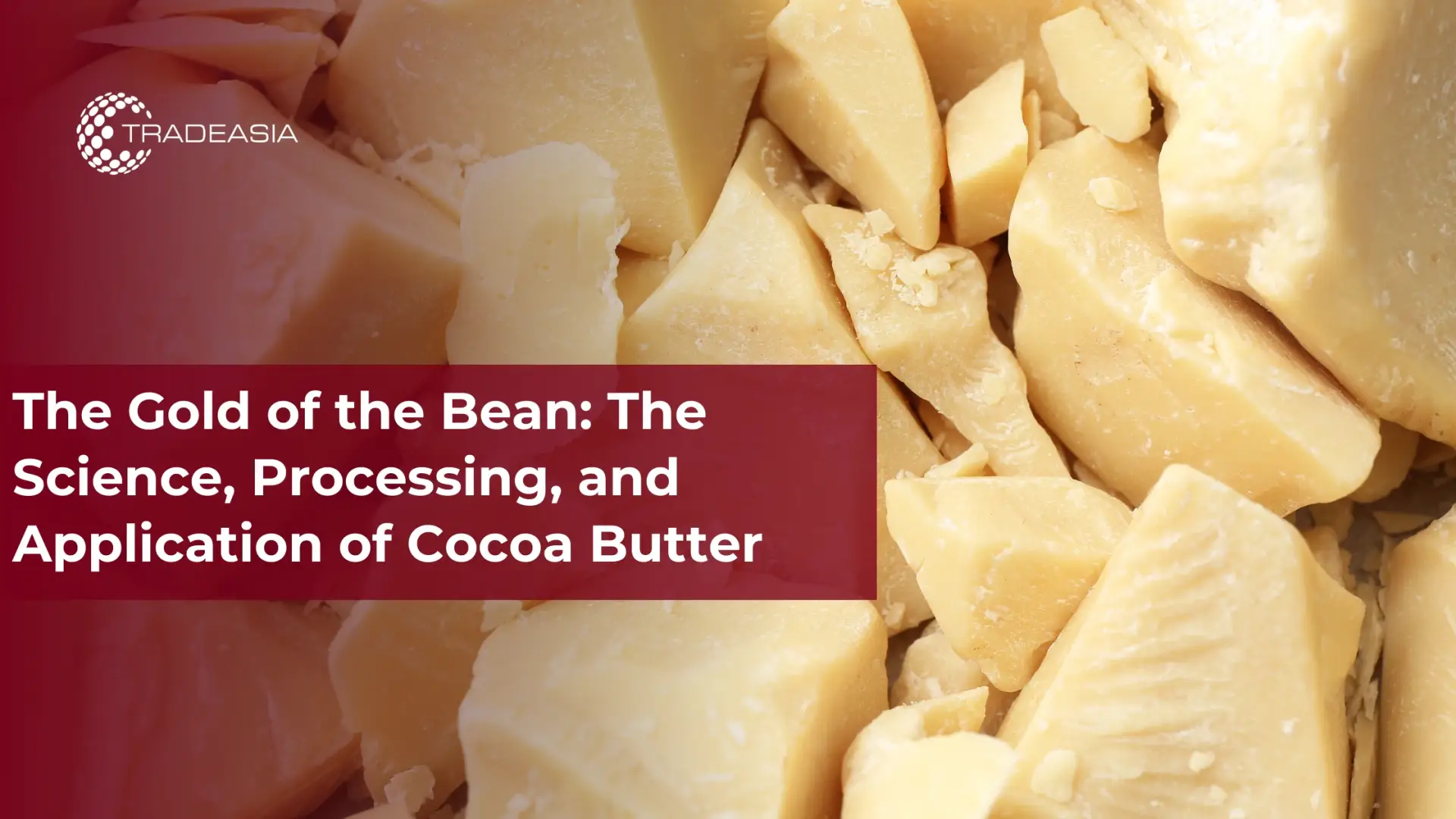
In the confectionery industry, Cocoa Butter is the defining ingredient of quality. It is the edible fat extracted from the cocoa bean, and it is responsible for the unique sensory experience of chocolate: the solid "snap" at room temperature and the smooth, cooling melt at body temperature.
Technically, it is a triglyceride fat. Economically, it is the driver of the chocolate market. The price of chocolate is largely dictated by the price of cocoa butter. Because it is so valuable (often 2-3 times the price of cocoa powder), manufacturers often look for alternatives, but for "Real Chocolate," there is no substitute for the unique chemical architecture of pure cocoa butter.
From Press to Block: The Manufacturing Process
Cocoa butter is produced simultaneously with cocoa powder. It is a separation process that splits the Cocoa Liquor (the ground bean) into two streams: Solids (Powder) and Fat (Butter).
The Hydraulic Press
The process begins with Cocoa Liquor, which is roughly 50-55% fat. This liquid mass is pumped into massive horizontal hydraulic presses. Under immense pressure (up to 550 bar), the fat is squeezed out of the solids through fine mesh screens.
-
The Yield: The golden liquid that flows out is Crude Cocoa Butter.
-
The Byproduct: The rock-hard disc left behind is the Press Cake (which becomes Cocoa Powder).
Filtration and Deodorization
The crude butter often has a strong, distinct taste and contains fine particulate matter.
-
Filtration: The butter is passed through paper filters to remove any remaining cocoa solids, ensuring a clear, golden liquid.
-
Deodorization: For most large-scale chocolate production, the butter is "Deodorized." It is treated with superheated steam under a vacuum. This strips away the volatile flavor compounds (and free fatty acids).
-
Why Deodorize? Deodorized cocoa butter is neutral in flavor. This allows the manufacturer to control the flavor of the chocolate using the cocoa liquor, without the butter interfering. It is also essential for White Chocolate, ensuring it tastes like milk and vanilla, not like cocoa beans.
-
The Physics of Melt: Polymorphism and Tempering
The most technically challenging aspect of cocoa butter is its Polymorphism. This means the fat crystals can arrange themselves in different molecular shapes (forms) as they cool.
Cocoa butter has six distinct crystal forms (Form I through Form VI).
-
Unstable Forms (I - IV): If you cool melted chocolate uncontrollably, the butter forms unstable crystals. The chocolate will be soft, dull, and will melt in your hand instantly. It will also develop "Fat Bloom" (white streaks) within days.
-
Stable Form (Form V - Beta Crystals): This is the gold standard. Form V crystals pack tightly together in a dense lattice. They give chocolate its glossy shine, its hard "snap," and its resistance to melting until it hits the mouth.
-
Tempering: This is the process of heating, cooling, and agitating the chocolate to force the cocoa butter to crystallize specifically into Form V. Without tempering, cocoa butter is chemically unstable.
Applications: Beyond the Chocolate Bar
While confectionery is the primary user, the unique melting curve of cocoa butter makes it valuable elsewhere.
Confectionery (Real Chocolate)
Cocoa butter is the continuous phase in chocolate. It suspends the sugar and cocoa particles. Its primary role is texture. It allows the chocolate to remain solid in the package but melt completely and cleanly in the mouth, releasing the flavor volatiles.
Cosmetics and Pharmaceuticals
Cocoa butter is a premium ingredient in skin creams and lip balms.
-
Melting Point: Because it melts at body temperature (34–38°C), it rubs into the skin perfectly without feeling greasy.
-
Occlusive Properties: It forms a barrier on the skin that holds in moisture, making it an excellent moisturizer.
-
Suppositories: Historically, it was the base for medical suppositories because it is solid at room temperature but melts safely inside the body.
Cocoa Butter vs. The Alternatives: The Compound Debate
Because cocoa butter is expensive and requires complex tempering, the industry developed alternatives known as Cocoa Butter Substitutes (CBS) and Replacers (CBR).
The Difference in Impact
-
Real Chocolate (Cocoa Butter):
-
Sensory: Sharp snap, quick melt, cooling sensation on the tongue.
-
Handling: Requires tempering. Difficult to use in hot climates.
-
-
Compound Chocolate (Vegetable Fats like Palm Kernel Oil):
-
Sensory: Waxy texture. It does not melt cleanly at body temperature; it often leaves a greasy film in the mouth because its melting point is higher. It lacks the "flavor release" of real butter.
-
Handling: Does not require tempering (Non-Temp fats). It sets simply by cooling. This makes it ideal for coating cookies or donuts where ease of use is prioritized over premium texture.
-
The "Waxy" Factor: The primary complaint with cheap chocolate is waxiness. This occurs when the alternative fat has a melting point above 37°C. The fat literally stays solid in your mouth, coating the tongue and preventing you from tasting the cocoa and sugar. Cocoa butter never does this.
Quality Parameters and Storage Stability
For an industrial buyer, specifying cocoa butter requires looking beyond just the price. Two chemical parameters dictate the quality and shelf-life of the fat.
Free Fatty Acids (FFA)
This is the primary indicator of bean quality. High FFA levels indicate that the fat has begun to break down (hydrolysis), usually due to poor storage of the beans or high humidity.
-
The Standard: Premium cocoa butter typically has an FFA content of less than 1.75% (expressed as oleic acid).
-
The Risk: High FFA butter has a lower melting point (making it softer) and is more prone to developing rancid off-flavors. It can also interfere with the tempering process, making the chocolate harder to crystallize.
Iodine Value (IV)
The Iodine Value measures the "hardness" of the fat based on its unsaturation level.
-
The Range: Typical cocoa butter has an IV between 33 and 42.
-
Regional Variation: This is critical for global formulation. Cocoa butter from Malaysia and Indonesia is typically harder (lower IV) and melts at a higher temperature. Cocoa butter from Brazil or West Africa is typically softer (higher IV).
-
Application: In hot climates, manufacturers prefer harder (Asian) butters to prevent the chocolate from melting on the shelf. In cold climates, softer (Brazilian) butters are preferred to prevent the chocolate from being too hard to bite.
Storage and Odor Absorption
Cocoa butter is essentially a "flavor sponge." It will absorb any odor in the warehouse. Ideally, it should be stored in a cool, dry environment (15-20°C) away from spices, cleaning chemicals, or high-humidity areas. If stored properly, deodorized cocoa butter is remarkably stable, with a shelf life of up to 24 months.
Conclusion
Cocoa butter is the functional engine of the chocolate industry. It is a rare fat that combines a precise melting point with a crystalline structure that provides a satisfying snap. While vegetable fat substitutes offer convenience and cost savings for mass-market coatings, they cannot replicate the sensory sophistication of pure cocoa butter.
For the premium confectioner, the cost of cocoa butter is an investment in the consumer's experience—delivering the gloss, the snap, and the "melt-in-mouth" sensation that defines luxury chocolate.
Partner with Food Additives Asia for Premium Cocoa Butter
Whether you are crafting high-gloss pralines or premium white chocolate, the quality of your butter dictates the quality of your finish. At Food Additives Asia, we supply strictly premium-grade Cocoa Butter:
-
Prime Pressed Deodorized: The industry standard for neutral flavor and perfect crystallization.
-
Natural (Undeodorized): For applications requiring the full, raw cocoa aroma.
-
Regional Specifications: Sourcing options for High-Melting Point (Asian) or Soft (West African) profiles to suit your climate.
Perfect your melt profile today. Contact us for current pricing, specification sheets (FFA/IV), and samples of our pure Cocoa Butter at foodadditivesasia.com.