Introduction
The global coconut oil market is projected to reach USD 5.6 billion by 2026, driven by rising demand for natural and organic products in food, cosmetics, and pharmaceuticals. As international trade expands, regulatory compliance becomes paramount, particularly in labeling. The year 2026 introduces updated labeling rules that affect exporters, importers, and distributors worldwide. This article provides a detailed analysis of coconut oil labeling rules for international trade, focusing on key markets such as the United States, European Union, and Southeast Asia. Understanding these regulations is critical for businesses leveraging platforms like chemtradeasia.com, chemtradeasia.in, chemtradeasia.co.id, chemtradeasia.ae, and chemtradeasia.sg to streamline global operations.
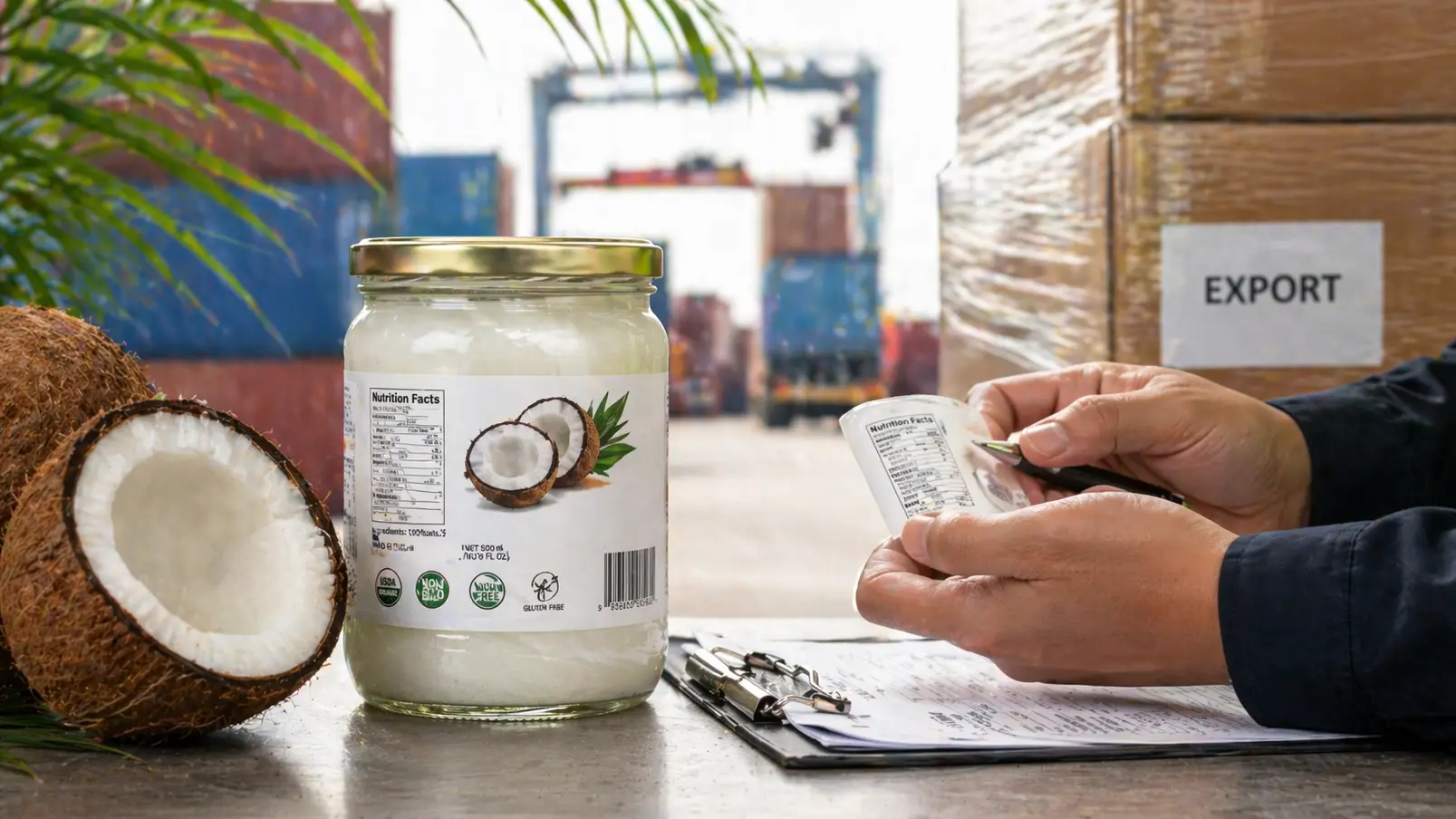
Labeling rules are not merely bureaucratic hurdles; they serve to protect consumer health, ensure product authenticity, and facilitate fair trade. For coconut oil, which is often marketed as virgin, refined, or organic, precise labeling is essential to avoid misrepresentation. In 2026, new requirements around allergen declarations, nutritional facts, and country-of-origin labeling are expected to harmonize across regions, though local variations persist. This article will guide you through the complexities, offering actionable insights for compliance.
Global Regulatory Landscape for Coconut Oil in 2026
The international framework for coconut oil labeling in 2026 is shaped by organizations like the Codex Alimentarius, which sets voluntary standards for food products, and regional bodies such as the European Food Safety Authority (EFSA) and the U.S. Food and Drug Administration (FDA). These entities have updated guidelines to address emerging concerns like sustainability claims, GMO status, and allergen cross-contamination. For instance, the EU's Regulation (EU) No 1169/2011 on food information to consumers has been revised to include mandatory front-of-pack nutrition labeling for oils high in saturated fats, which directly impacts coconut oil due to its high saturated fat content.
In Asia, major producers like Indonesia and the Philippines have strengthened their export certification processes. Indonesia, which supplies over 50% of global coconut oil, now requires exporters to adhere to SNI (Standar Nasional Indonesia) standards, including specific labeling for iodine value and free fatty acid content. Meanwhile, the U.S. FDA's 2026 update emphasizes "added sugars" labeling, which affects coconut oil blends used in baked goods. Businesses using chemtradeasia.co.id and chemtradeasia.sg must stay updated on these regional nuances to avoid trade disruptions.
Additionally, the rise of e-commerce and direct-to-consumer sales has prompted stricter rules for online product descriptions. The Global Trade Alert database shows that 34 new labeling-related trade measures were implemented in 2025 alone, a trend expected to continue in 2026. Exporters must now provide digital labels that match physical packaging, a requirement that platforms like chemtradeasia.com help manage through integrated compliance tools.
Key Labeling Requirements Across Major Markets
In the European Union, coconut oil labeling in 2026 must include clear allergen warnings for tree nuts, as coconut is increasingly classified as a tree nut allergen under EFSA guidelines. The label must also display the origin of the oil, whether it is "virgin" or "refined," and the percentage of saturated fat per serving. For organic coconut oil, the EU organic logo is mandatory, along with the code of the certifying body. Non-compliance can result in fines up to 10% of annual turnover, as seen in recent cases involving mislabeled coconut oil from Sri Lanka.
In the United States, the FDA's updated Nutrition Facts panel requires coconut oil to list "calories from fat" prominently. The term "virgin" is strictly regulated; it can only be used if the oil is extracted from fresh coconut meat without chemical refining. The USDA also mandates country-of-origin labeling (COOL) for imported coconut oil, which must be displayed on the front of the package. For businesses trading via chemtradeasia.ae and chemtradeasia.in, these rules are critical for entering the North American market.
In Southeast Asia, the ASEAN Economic Community has introduced a harmonized labeling scheme for edible oils, including coconut oil. This requires a standardized nutrition table in both local language and English, with specific thresholds for trans-fat content (less than 0.5g per serving). Indonesia and Malaysia also enforce halal certification labeling for coconut oil exported to Muslim-majority countries, which must be verified by accredited bodies. Failure to comply can lead to shipment rejections at ports, as reported in 2025 for a major Thai exporter.
Product Specifications and Compliance for Coconut Oil
Coconut oil is categorized into several types, each with distinct labeling requirements. Virgin coconut oil (VCO) must be labeled with its extraction method (cold-pressed or expeller-pressed) and free fatty acid content (typically below 0.5%). Refined, bleached, and deodorized (RBD) coconut oil requires labeling of its smoke point (around 177°C) and iodine value (6-11). For organic variants, the certification number and issuing body must appear on the label. On chemtradeasia.com, product listings for coconut oil include these specifications, helping buyers verify compliance.
Use cases for coconut oil vary widely: in food manufacturing, it is used as a frying medium or dairy alternative; in cosmetics, as a moisturizer; and in pharmaceuticals, as a carrier oil. Each application demands specific labeling. For example, cosmetic-grade coconut oil must list INCI (International Nomenclature of Cosmetic Ingredients) names, such as "Cocos Nucifera Oil," and avoid claims like "therapeutic" without FDA approval. In the EU, cosmetic labeling must include the product's function, batch number, and shelf life. Platforms like chemtradeasia.in provide detailed product sheets that align with these requirements.
Comparisons between virgin and RBD coconut oil are essential for compliance. Virgin oil commands a premium price (up to 40% higher) due to its natural antioxidants, but it must be labeled with a "best before" date of 12-18 months. RBD oil, with a longer shelf life of up to 24 months, requires labeling of any additives like antioxidants (e.g., BHT). Real-world data from the International Coconut Community shows that mislabeling of oil type led to 12% of trade disputes in 2024, emphasizing the need for accurate product descriptions on platforms like chemtradeasia.co.id.
Benefits of Proper Labeling for International Trade
Proper labeling of coconut oil offers significant commercial advantages. First, it builds consumer trust. A 2025 survey by Nielsen found that 73% of global consumers prefer products with clear, transparent labels, especially for health claims. For coconut oil, which is often marketed as a "superfood," accurate labeling of saturated fat content (around 90%) prevents misleading marketing and potential lawsuits. Second, compliance reduces trade barriers. The World Trade Organization reports that labeling-related disputes cost businesses an average of $2.3 million per case, but adherence to local rules can expedite customs clearance by up to 30%.
Third, proper labeling enhances market access. For example, coconut oil labeled with organic certification from the USDA or EU can enter premium markets in Europe and North America without additional testing. This is particularly beneficial for small-scale producers in Indonesia and the Philippines who use chemtradeasia.ae to reach Middle Eastern buyers. Fourth, it supports sustainability claims. Labels indicating "rainforest alliance certified" or "fair trade" can increase product value by 15-20%, as seen in the 2026 Global Organic Trade report.
Finally, accurate labeling mitigates legal risks. In 2025, a U.S. court fined a coconut oil importer $1.5 million for failing to label trans-fat content accurately. By using compliance tools offered by chemtradeasia.sg and chemtradeasia.com, businesses can automate label verification, reducing human error. These platforms also provide updates on regulatory changes, ensuring that labels remain current in a dynamic trade environment.
How Tradeasia Supports Compliance and Market Access
Tradeasia, through its regional platforms chemtradeasia.com, chemtradeasia.in, chemtradeasia.co.id, chemtradeasia.ae, and chemtradeasia.sg, offers comprehensive solutions for coconut oil exporters and importers. These platforms provide access to a network of verified suppliers, each with detailed product specifications that include labeling data such as nutritional facts, certification numbers, and origin details. For instance, a buyer on chemtradeasia.co.id can filter coconut oil by "virgin," "organic," or "RBD," with each listing showing compliance with local labeling laws.
Additionally, Tradeasia integrates regulatory intelligence into its services. The platform's compliance team monitors updates from the FDA, EFSA, and ASEAN bodies, providing alerts to subscribers. For example, in early 2026, a change in EU labeling rules for saturated fat was communicated to all users of chemtradeasia.sg within 48 hours. This proactive approach helps businesses adjust labels before shipments, avoiding costly delays. Tradeasia also offers documentation support, including MSDS and certificate of analysis, which are essential for customs clearance.
Furthermore, Tradeasia facilitates market entry by connecting buyers with local experts. Through chemtradeasia.in, Indian importers can access guidance on FSSAI labeling requirements for coconut oil, while chemtradeasia.ae provides insights into Gulf Cooperation Council (GCC) standards, such as the mandatory Arabic language on labels. This localized support, combined with a global network, makes Tradeasia a trusted partner for navigating the 2026 labeling landscape.
Conclusion
The coconut oil labeling rules for international trade in 2026 are intricate but navigable with the right knowledge and tools. From the EU's strict allergen declarations to the US's saturated fat labeling and ASEAN's harmonized standards, compliance is essential for market access and consumer trust. By understanding product specifications—whether for virgin, refined, or organic coconut oil—businesses can avoid costly disputes and capitalize on growing demand. Platforms like chemtradeasia.com, chemtradeasia.in, chemtradeasia.co.id, chemtradeasia.ae, and chemtradeasia.sg offer invaluable support, from supplier verification to regulatory updates, ensuring that your coconut oil products meet global standards.
This article is provided for informational and market insight purposes only. It is not intended as technical, safety, or professional advice. Readers are strongly advised to verify all labeling requirements independently with qualified experts, consult official documentation such as Material Safety Data Sheets (MSDS) or Safety Data Sheets (SDS), or contact our team for specific applications. Regulatory landscapes vary by jurisdiction and product type, and compliance is the sole responsibility of the importer or exporter. Tradeasia and its affiliates disclaim any liability for actions taken based on this content.
Leave a Comment