Introduction
The Asian food and beverage industry is undergoing rapid transformation, driven by changing consumer lifestyles, urbanization, and a growing preference for convenient, packaged, and functional foods. Within this dynamic landscape, dextrose monohydrate has emerged as a critical ingredient for manufacturers seeking reliable sweetness, fermentation support, and texturizing properties. As a simple sugar derived mainly from corn or tapioca starch, dextrose monohydrate is widely used across bakery, confectionery, beverages, dairy, meat processing, and nutraceutical applications.
By 2026, Asia is expected to account for a significant share of global demand for dextrose-based sweeteners, supported by high-growth markets such as China, India, Indonesia, Vietnam, and other ASEAN countries. These markets are expanding their processed food and beverage production capacities, not only for domestic consumption but also for export. In this context, secure access to high-quality dextrose monohydrate has become a strategic priority for food manufacturers and formulators.
B2B platforms and regional distributors such as chemtradeasia.in and chemtradeasia.co.id play a vital role in connecting Asian food producers with dependable sources of dextrose monohydrate and related food ingredients. Understanding the emerging application trends, quality requirements, and logistics considerations will help procurement teams, R&D departments, and business strategists make informed decisions as they plan for 2026 and beyond.
Rising Demand for Dextrose Monohydrate in Asia’s Food Industry
Demand for dextrose monohydrate in Asia is closely linked to the expansion of the processed food sector. According to industry analyses, Asia-Pacific has been one of the fastest-growing markets for sweeteners, with overall food-grade dextrose consumption rising in line with bakery, confectionery, and beverage output. Population growth, rising disposable incomes, and the rapid expansion of modern retail and e-commerce in countries like India and Indonesia are fueling higher consumption of packaged foods, all of which require consistent sweetening and functional ingredients.
Another driver of demand is the shift from traditional sucrose to alternative sweeteners and carbohydrate sources in formulations. Dextrose monohydrate offers advantages such as a relatively clean taste profile, high fermentability, and compatibility with other sweeteners and polyols. For manufacturers, it can partially replace sucrose to optimize cost, processing behavior, and product stability. In high-volume segments like soft drinks, instant beverages, and baked goods, this flexibility is particularly valuable.
In addition, the growth of nutraceuticals, sports nutrition, and medical foods in Asia is creating new application niches for dextrose monohydrate. Its rapid absorption and high glycemic index make it suitable for energy drinks, oral rehydration salts (ORS), and performance nutrition products. As more Asian consumers adopt active lifestyles and seek convenient energy sources, formulators are turning to dextrose as a reliable carbohydrate base, further amplifying demand toward 2026.
Key Applications of Dextrose Monohydrate in Food and Beverages
In bakery and confectionery, dextrose monohydrate serves multiple functional roles beyond sweetness. In bread, cakes, and pastries, it acts as a fermentable sugar that supports yeast activity, improving dough rise, crumb structure, and overall volume. Its reducing sugar properties contribute to Maillard browning, enhancing crust color and flavor development. In cookies and biscuits, dextrose can influence spread, texture, and crispness, allowing formulators to fine-tune sensory attributes while managing production costs.
Confectionery manufacturers across Asia use dextrose monohydrate in hard candies, gummies, chewing gum, and chocolate-based products. It helps control crystallization, improves mouthfeel, and can reduce stickiness in certain formulations. In combination with sucrose, glucose syrup, or polyols, it allows for tailored sweetness profiles and texture optimization. For example, gummy producers in markets like Thailand and China rely on dextrose to adjust chewiness and clarity, while minimizing hygroscopicity during storage in humid climates.
In beverages and dairy, dextrose monohydrate is used in powdered drink mixes, flavored milk, yogurt drinks, and fermented beverages. Its high solubility and relatively neutral taste make it suitable for instant beverage powders and ready-to-drink formulations. In dairy-based products, it supports fermentation by lactic acid bacteria and can improve body and mouthfeel. In functional drinks and sports beverages, dextrose is valued for its rapid energy release, making it a common ingredient in isotonic drinks, energy gels, and ORS formulations marketed throughout Asia.
Product Features, Specifications, and Quality Requirements
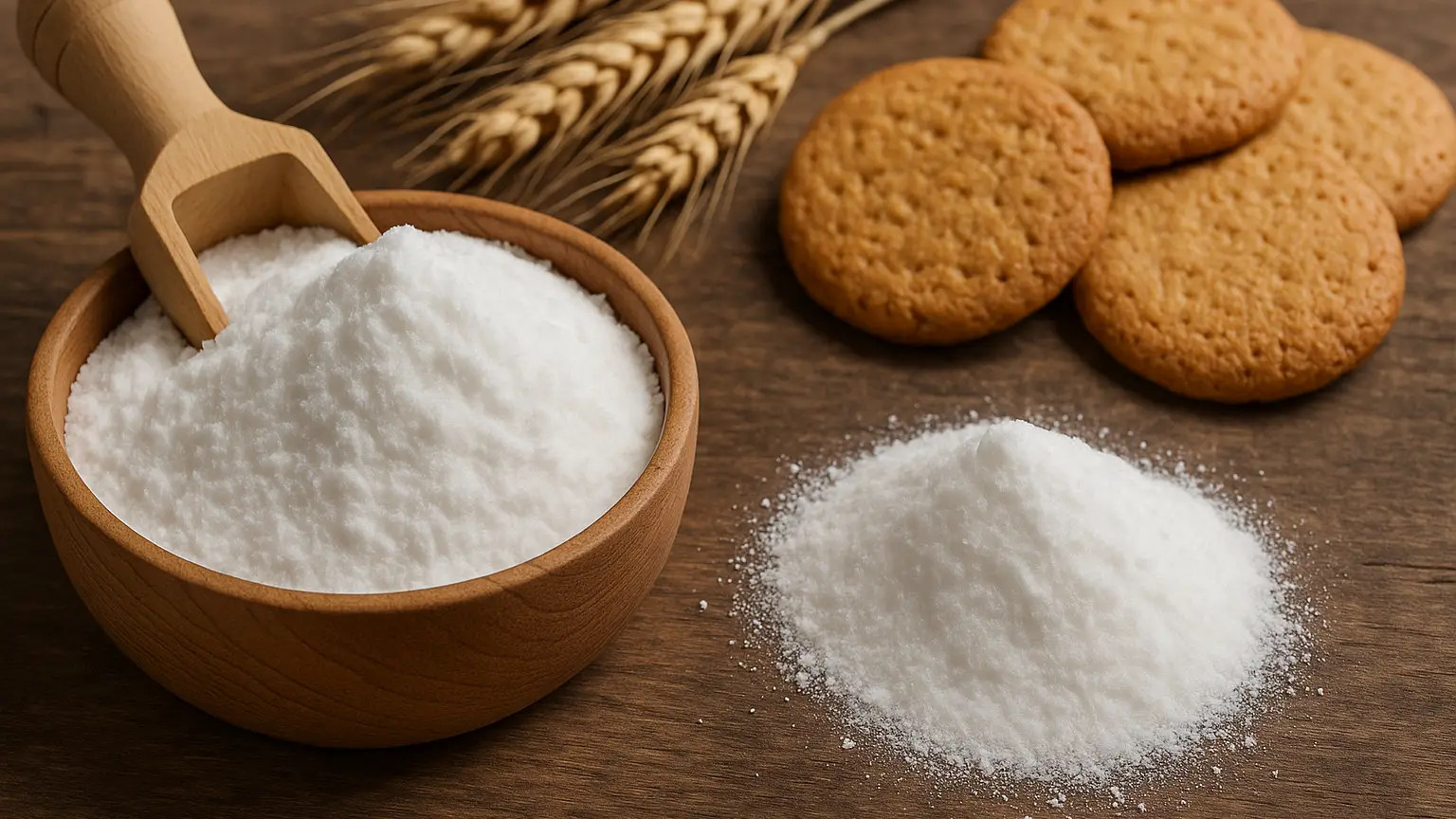
The performance of dextrose monohydrate in food applications depends heavily on product specifications and quality standards. Food-grade dextrose monohydrate is typically supplied as a white, crystalline powder with a purity of around 99.5% on a dry basis. Moisture content is controlled to ensure free-flowing behavior and to minimize caking during storage and transportation. Particle size distribution is another key parameter; fine grades are preferred for quick dissolution in beverages and instant mixes, while coarser grades may be used in certain confectionery and bakery applications.
From a regulatory and safety perspective, food manufacturers in Asia increasingly require compliance with international standards such as the Food Chemicals Codex (FCC), EU regulations, and relevant national food safety laws. Certificates such as ISO, HACCP, FSSC 22000, Halal, and Kosher are often essential for cross-border trade and for supplying multinational brands. Low levels of impurities, controlled microbial counts, and absence of foreign matter are critical for ensuring product stability and consumer safety, especially in sensitive categories like infant nutrition, medical foods, and pharmaceutical-adjacent applications.
Suppliers and distributors like chemtradeasia.in and chemtradeasia.co.id support buyers by providing detailed technical data sheets (TDS), certificates of analysis (COA), and regulatory documentation. This transparency allows R&D teams to accurately model sweetness, osmolarity, and processing behavior during formulation. In addition, consistent lot-to-lot quality is crucial for high-speed production lines common in Asia’s large-scale bakery, beverage, and confectionery plants. Variability in particle size or purity can impact mixing times, dissolution rates, and final product appearance, making dependable sourcing a core requirement.
Regional Supply, Distribution, and the Role of chemtradeasia.in & chemtradeasia.co.id
Asia’s dextrose monohydrate supply chain is anchored by major starch-processing and corn-refining hubs in countries such as China, India, and some ASEAN nations. However, not all food manufacturers are located close to production centers, and many rely on regional distributors to bridge gaps in logistics, documentation, and local market knowledge. This is where platforms like chemtradeasia.in (serving India and nearby regions) and chemtradeasia.co.id (serving Indonesia and Southeast Asia) provide strategic value.
As B2B chemical and food ingredients distributors, these platforms aggregate demand from multiple food producers, negotiate with global and regional manufacturers, and manage shipping, customs, and warehousing. For buyers, this means improved access to competitive pricing, flexible order quantities, and multi-origin sourcing options for dextrose monohydrate. In markets where demand is volatile or seasonally driven—such as confectionery spikes during festive periods—having a reliable distributor that can adjust supply quickly is essential to avoid production disruptions.
Furthermore, chemtradeasia.in and chemtradeasia.co.id support technical and commercial decision-making by offering product comparisons, alternative grades, and related food additives Asia such as glucose syrup, maltodextrin, sorbitol, citric acid, and other sweeteners and acidulants. This portfolio approach enables formulators to redesign recipes, manage cost-in-use, and respond to changing regulatory or labeling requirements. By 2026, as more Asian manufacturers integrate digital procurement into their operations, such B2B platforms are expected to become even more central to dextrose monohydrate sourcing strategies.
Future Outlook and Conclusion
Looking ahead to 2026, the outlook for dextrose monohydrate in Asia’s food ingredients industry remains strongly positive. Continued urbanization, the rise of middle-class consumers, and the expansion of organized retail will sustain growth in packaged foods, beverages, and functional nutrition products. At the same time, manufacturers will face pressure to optimize formulations for cost, taste, texture, and shelf life, all areas where dextrose monohydrate offers proven functional benefits.
Trends such as clean label, reduced sugar, and better-for-you products will also influence how dextrose is used. While it is not a low-calorie sweetener, its compatibility with high-intensity sweeteners and polyols allows formulators to design hybrid systems that balance sweetness, bulk, and caloric content. In parallel, advances in starch processing and ingredient technology may lead to more specialized grades of dextrose monohydrate tailored for specific applications, such as instant dissolution for beverages or controlled crystallization for confectionery.
For food manufacturers, partnering with reliable distributors and platforms like chemtradeasia.in and chemtradeasia.co.id will be essential to secure consistent, compliant, and cost-effective supplies of dextrose monohydrate and complementary food ingredients. By understanding regional market dynamics, product specifications, and evolving application trends, stakeholders across Asia can leverage dextrose monohydrate to enhance product quality, support innovation, and capture new growth opportunities in the fast-evolving food and beverage landscape.
Leave a Comment