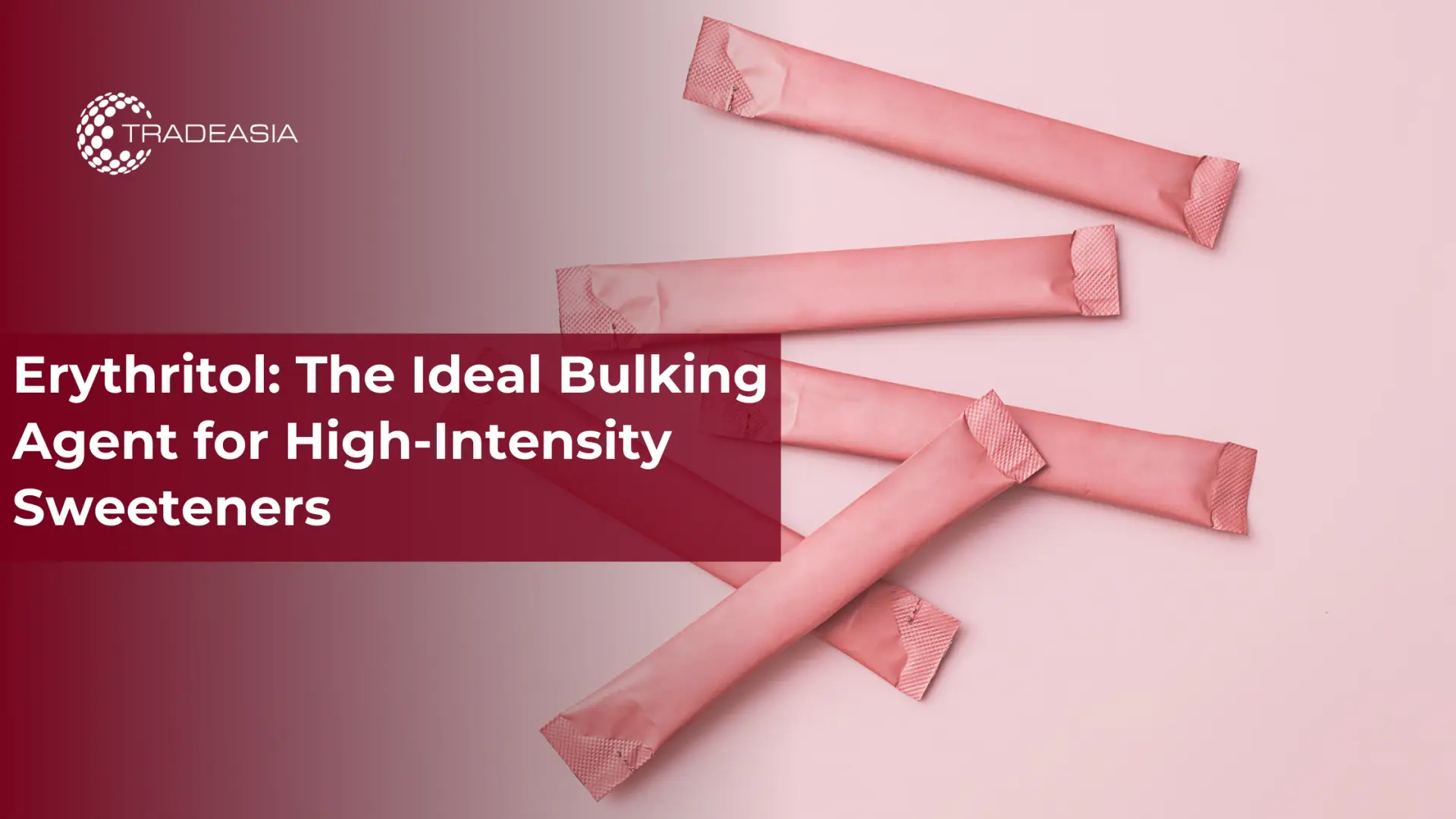
Introduction: The "Empty Cup" Challenge in Sugar Reduction
In the modern landscape of food formulation, High-Intensity Sweeteners (HIS) like Stevia (Rebaudioside A/M) and Monk Fruit (Mogrosides) are nothing short of miraculous. They offer natural, zero-calorie sweetness that is 200 to 300 times more potent than sucrose. However, this extreme potency creates a significant physical problem known in the industry as "The Loss of Mass."
If a standard bakery recipe calls for 1000 grams of sugar, replacing that sweetness requires only about 4 grams of pure Stevia extract. This leaves a 996-gram void in the formulation. In a cake, this missing mass means the structure collapses; there is no bulk to hold the air bubbles, resulting in a dense, rubbery puck. In a beverage or tabletop packet, it means the consumer receives an invisible dusting of powder rather than a substantial spoonful. You effectively have sweetness without substance. To solve this, manufacturers require a Bulking Agent—an ingredient that fills the volume of sugar without adding the metabolic baggage. While cheap fillers like Dextrose or Maltodextrin exist, they spike blood glucose, negating the "Diabetic Friendly" or "Keto" claims that drive the category. This is where Erythritol has emerged as the undisputed industry standard.
The Perfect Carrier: Why Erythritol Wins Over Maltodextrin
Erythritol (C4H10O4) is a sugar alcohol (polyol) produced via natural fermentation. Unlike other bulking agents, it possesses a unique set of physical properties that allow it to mimic sucrose almost perfectly.
The primary advantage is its Crystallinity. Unlike Allulose (which is often syrupy) or Maltodextrin (which is powdery and sticky), Erythritol crystallizes into clean, white granules that look, pour, and crunch exactly like table sugar. This visual and tactile familiarity is crucial for consumer acceptance. Furthermore, Erythritol is Non-Hygroscopic. It does not easily absorb moisture from humid air. This is a critical logistical advantage over other polyols like Sorbitol or Xylitol, which can turn into sticky clumps in the warehouse or in the consumer's sugar bowl. Erythritol remains free-flowing, ensuring that a "Stevia Blend" packet opens cleanly every time. From a stability standpoint, it is heat-stable up to 160°C, meaning it can be used in cookies and cakes without breaking down or caramelizing too aggressively, preserving the intended color of the baked good.
Sensory Engineering: The Temporal Masking Effect
Beyond simple volume, Erythritol solves the flavor defects inherent in high-intensity sweeteners. The biggest consumer complaint regarding Stevia is its lingering, licorice-like bitterness. Monk Fruit, while cleaner, can sometimes carry a "melon-rind" off-note.
Erythritol acts as a Flavor Masking Agent through a mechanism called "Temporal Synergy." Erythritol has a rapid, clean sweetness onset that hits the tongue instantly, whereas Stevia and Monk Fruit tend to have a delayed onset and a long, lingering finish. When blended, Erythritol fills in the "front" of the sweetness curve, while the high-intensity sweetener fills the "back." The result is a rounded, full-bodied sweetness profile that is remarkably close to sucrose. Additionally, when Erythritol dissolves, it creates a mild endothermic reaction (a cooling sensation). This cooling effect helps to distract the palate and "cut" the lingering bitterness of the Stevia, resulting in a cleaner, more refreshing taste profile.
Digestive Tolerance: The Key to Consumer Retention
For brand owners, the risk of using cheaper polyols like Maltitol, Sorbitol, or Xylitol is consumer rejection due to gastrointestinal distress. These older polyols are notorious for causing gas, bloating, and laxative effects when consumed in quantity.
Erythritol avoids this pitfall due to its small molecular size. Approximately 90% of ingested Erythritol is absorbed rapidly in the small intestine and excreted unchanged in the urine within 24 hours. Because it leaves the digestive tract so quickly, it does not reach the colon in significant amounts, meaning it does not ferment and create gas. It has the highest digestive tolerance of all polyols (approximately 0.7g per kg of body weight). This allows consumers to eat a generous slice of Keto cake or a full serving of sugar-free ice cream without physical regret, which is essential for driving repeat purchases and brand loyalty.
Application Strategy: Particle Size and Blending Ratios
For product developers, the success of the final blend depends heavily on selecting the correct particle size. The physical form of the Erythritol must match the application to prevent separation or grittiness.
18-60 Mesh (Granular) is the standard for tabletop packets, baking blends, and coffee sweeteners. It mimics the particle size of granulated sugar, ensuring it flows easily through packaging machinery and dissolves at a familiar rate in hot beverages. Conversely, 100 Mesh (Powder/Icing) is mandatory for applications involving fat systems, such as chocolate manufacturing, fondants, or frostings. In these low-moisture environments, granular Erythritol will not dissolve and will leave a "gritty" sandy texture. The 100-mesh powder disperses smoothly, creating a creamy mouthfeel essential for confectionery.
A Buyer’s Guide to Quality Specifications
When procuring Erythritol for industrial blending, relying on a generic name is insufficient. Buyers must rigorously audit the Certificate of Analysis (COA) to ensure the ingredient will perform consistently in the blend.
The primary parameter is Purity (Assay), which should strictly exceed 99.5%. Any result lower than this implies the presence of fermentation byproducts or residual starches that can alter the taste or caloric profile. Moisture Content (Loss on Drying) is equally critical and should be kept below 0.2%. Since Erythritol is often blended with hygroscopic Stevia powder, any excess moisture in the Erythritol can cause the final blend to clump or cake inside the packaging. Furthermore, buyers must verify the Reducing Sugars content is less than 0.3%. This ensures the ingredient is truly non-glycemic and safe for Keto or Diabetic claims. Finally, purely for marketing and compliance reasons, certifications such as Non-GMO, Halal, and Kosher are virtually mandatory in the modern sweetener market to meet the expectations of clean-label consumers.
Conclusion
Erythritol is more than just a sweetener; it is the structural backbone of the modern sugar-free industry. It solves the three critical problems of sugar reduction: it provides the necessary physical bulk, it masks the metallic aftertaste of high-intensity extracts, and it offers the digestive tolerance required for a pleasant consumer experience.
For the buyer, the decision is straightforward. While other bulking agents may be cheaper, Erythritol is the only solution that offers the "Clean Label" status and functional performance required to build a premium Zero-Sugar brand that consumers trust.
Partner with Food Additives Asia for Sweetener Solutions
Blending high-intensity sweeteners requires precision and high-quality substrates. At Food Additives Asia, we supply a premium range of Erythritol tailored for blending applications:
-
Granular Grade (18-60 Mesh): Free-flowing crystals optimized for sachet packing and baking blends.
-
Powder Grade (100 Mesh): Ultra-fine powder designed for smooth chocolate and confectionery.
-
Certified Quality: All our stock is Non-GMO, Halal, and Kosher certified, ensuring your label claims remain compliant.
Formulate the perfect zero-sugar blend.
Contact us for samples, technical data sheets, and competitive bulk pricing at foodadditivesasia.com.