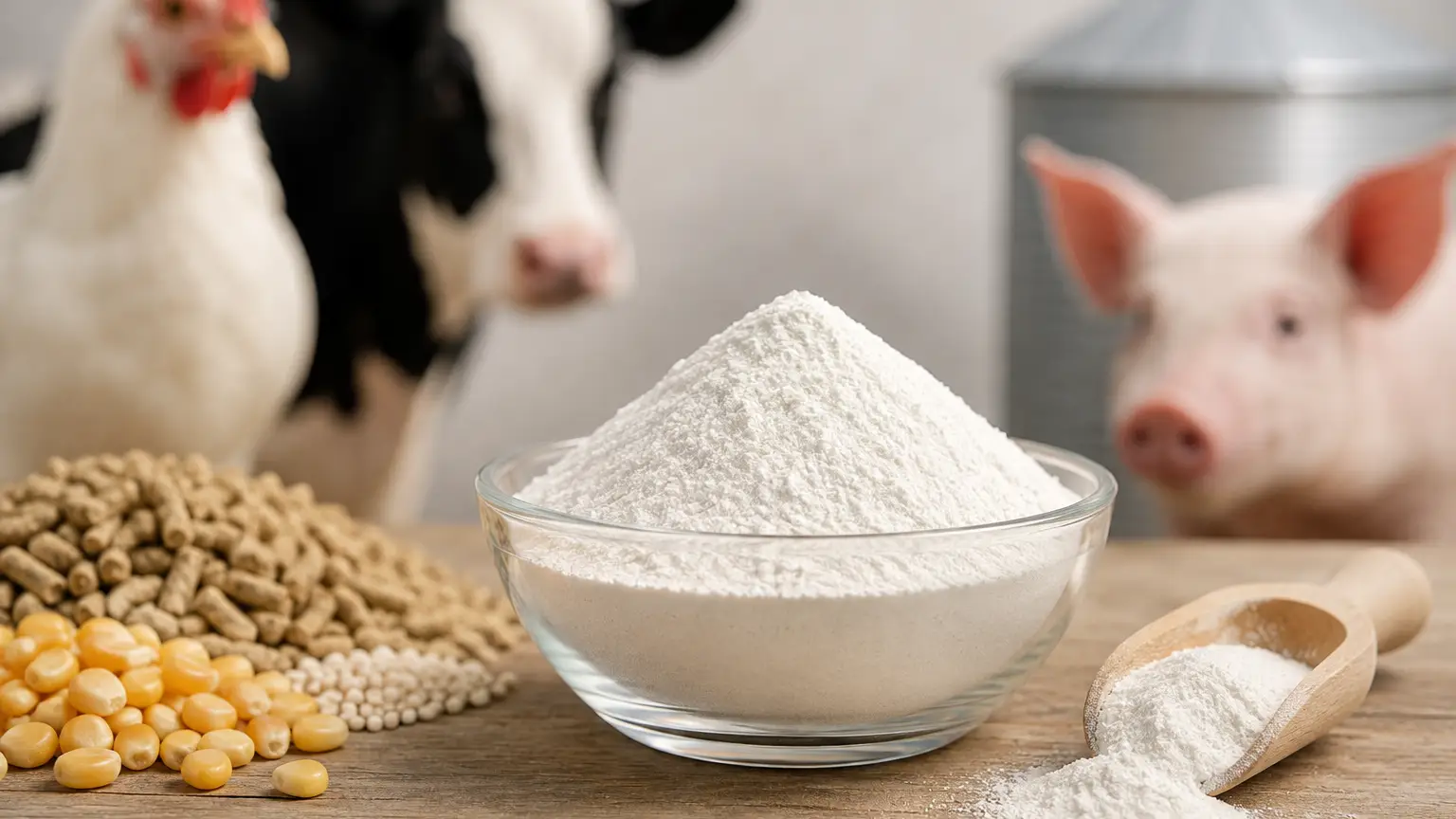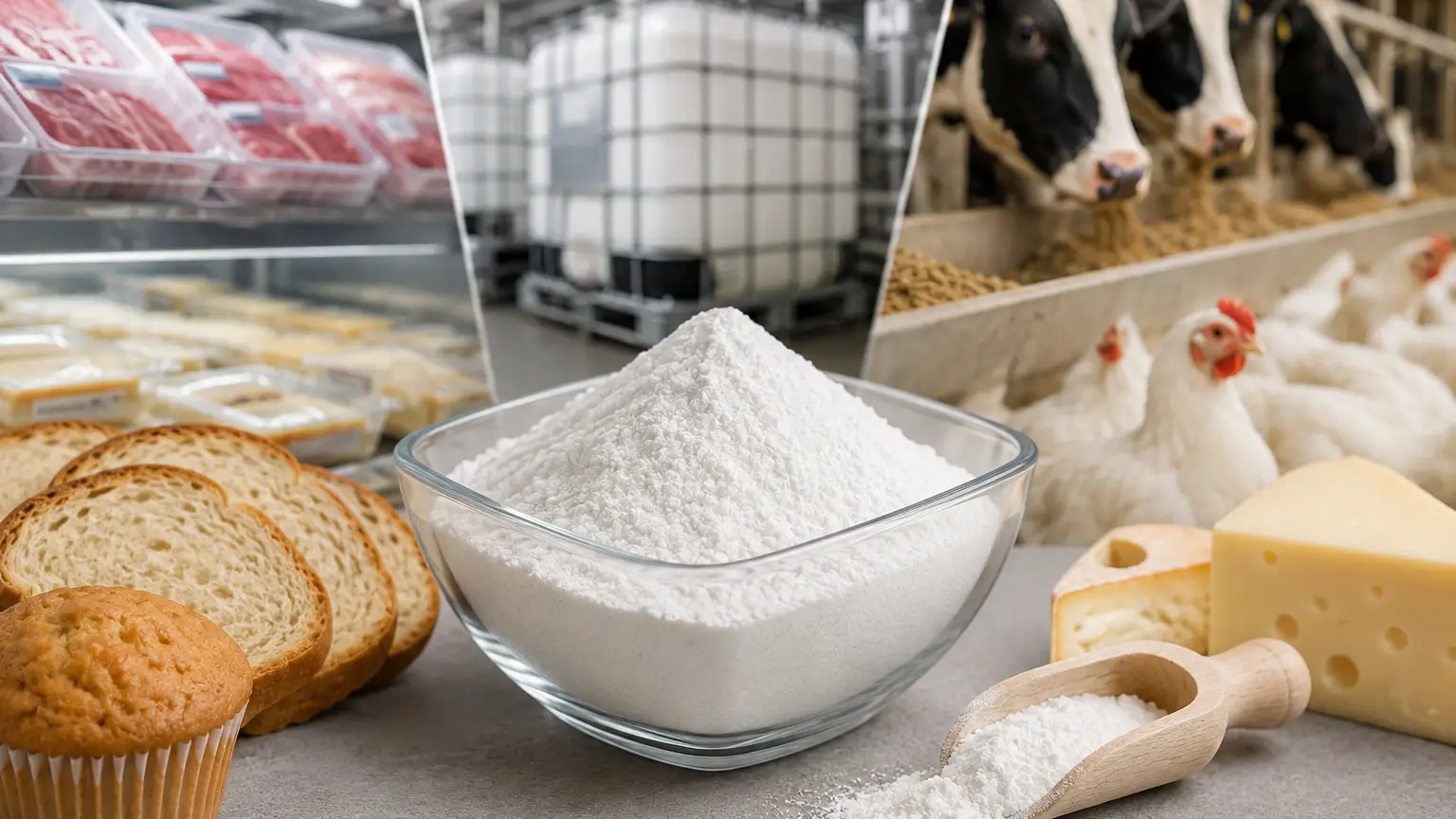
Feather meal is primarily used as a high-protein feed ingredient in poultry, ruminant, and aquaculture diets, valued for its crude protein content of 80–87% and low cost relative to fishmeal and soybean meal. Key buyers in the Middle East & Africa include compound feed manufacturers, integrated poultry processors, and aquaculture feed producers. Demand is driven by rising protein costs, expanding poultry production, and a regional push for feed self-sufficiency.
Feather meal is emerging as a commercially significant protein supplement in the Middle East & Africa animal feed sector, riding a structural shift away from costly imported fishmeal and soybean meal. The MEA animal feed market reached approximately 45.78 million tons in 2025 and is projected to grow at a 1.50% CAGR through 2035, with poultry feed as the dominant segment. Hydrolyzed feather meal (HFM), which achieves digestibility above 72%, is gaining traction as feed manufacturers seek cost-effective, locally sourced protein alternatives. However, the market remains import-dependent in the Gulf, and local production capacity for feather meal is still nascent across much of sub-Saharan Africa.
Core Applications of Feather Meal in MEA Animal Feed
| Application | Sector | Demand Share (Global) | Trend | Buyer Type |
|---|---|---|---|---|
| Broiler & Layer Poultry Feed | Poultry Production | ~40% | Growing ↑ | Integrated processors, feed mills |
| Ruminant Feed (Dairy & Beef Cattle) | Livestock / Dairy | ~20% | Stable → | Dairy farmers, compound feed manufacturers |
| Aquaculture Feed (Catfish, Tilapia, Seabream) | Aquaculture | ~15% | Growing ↑ | Aquafeed mills, fish farm operators |
| Swine Feed | Pig Farming | ~8% | Stable → | Integrated pork producers (limited MEA relevance) |
| Organic Fertilizer (Horticulture) | Agriculture | ~17% | Growing ↑ | Horticultural distributors, organic farms |
Note: MEA-specific demand shares skew more heavily toward poultry and ruminant feed given the cultural and economic structure of regional livestock production. Aquaculture applications are early-stage but accelerating, particularly in Nigeria, Egypt, and the Gulf.
Emerging Applications
Aquaculture Feed Substitution (Nigeria, Egypt, Saudi Arabia) Research on Sobaity seabream (Sparidentex hasta) conducted at the Almarai Group in Saudi Arabia and digestibility trials across the region are validating feather meal's inclusion in marine and freshwater diets. Fermented feather meal has demonstrated good protein digestibility when processed appropriately, making it attractive for Nigeria's rapidly expanding catfish and tilapia sector, which grew over 20% in four years. Commercial viability at meaningful inclusion rates (15–30% of dietary protein) is within a 2–4 year horizon as milling infrastructure catches up.
Hydrolyzed Feather Meal as a Soybean Meal Partial Replacement in Broiler Diets New processing research published in 2025 confirms that enzyme- or bacteria-treated HFM can replace up to 33% of soybean meal in broiler diets without compromising carcass yield or protein digestibility. This is commercially significant in the Gulf, where broiler feed protein costs exceed 60% of total feed value and soybean meal is entirely imported. Saudi Arabia's government-backed expansion of domestic broiler production creates a direct pull for cost-reducing protein co-ingredients.
Ruminant Bypass Protein Supplement Hydrolyzed feather meal's low rumen-degradability classifies it as a rumen-escape protein, meaning the amino acid profile is delivered post-ruminally for efficient absorption. This is particularly relevant for high-producing dairy cattle in Egypt, Saudi Arabia, and Iran, where imported blood meal and fishmeal are the current premium bypass protein sources. HFM priced at EUR 200–600/tonne offers a meaningful cost advantage over fishmeal, which typically trades at EUR 1,200–1,800/tonne, driving growing evaluation by dairy nutritionists.
Key Buyer Segments for Feather Meal in MEA
Integrated Poultry Processors and Feed Mills
The most immediate and commercially material buyers. Companies such as Almarai Group (Saudi Arabia), Egypt's Wadi Group / A'laf Al Wadi, Alf Sahel (Morocco), and Astral Foods / Meadow Feeds (South Africa) operate vertically integrated poultry-to-feed operations. In Saudi Arabia, state-backed programs to expand broiler self-sufficiency are driving compound feed production growth, with the Middle East recording a 24.7% surge in total compound feed production between 2021 and 2022 alone. These buyers purchase protein co-ingredients via direct supply contracts and are highly price-sensitive. They evaluate feather meal on a cost-per-unit-protein basis and require pepsin digestibility certificates (minimum 75%) as a procurement prerequisite.
Buying behavior: Long-term supply contracts, direct procurement from renderers or importers, annual volume commitments. Price sensitivity: High. Protein cost optimization is a primary KPI.
Compound Feed Manufacturers (Independent Mills)
Standalone feed mills that supply smallholder and commercial farmers represent the broadest buyer base across Africa. Key players include Olam Agri (Nigeria, operating one of the country's largest poultry feed mills in Kaduna), Nutreco/Trouw Nutrition (Ibadan, Nigeria, with a USD 26.7 million facility opened April 2024), AFGRI Animal Feeds, Country Bird Holdings / Nutri Feeds, and Quantum Foods / Nova Feeds (South Africa). These mills formulate least-cost rations for broiler, layer, and ruminant customers and will incorporate feather meal when it offers a protein cost advantage over soybean meal or fishmeal. Layer feed is the dominant output category in Nigeria (2.7 million tons of the country's 5.5 million ton total), while broiler feed leads in South Africa and Egypt.
Buying behavior: Spot and short-term contract purchasing, price-driven reformulation, distributor-reliant supply for smaller mills. Price sensitivity: Very high. Least-cost formulation is standard practice.
Aquaculture Feed Producers
A rapidly growing niche buyer segment, concentrated in Nigeria and Egypt. Olam Agri operates a dedicated freshwater aquafeed plant in Kwara State, the first of its kind in sub-Saharan Africa, supplying over 15,000 catfish and tilapia farmers. Nigeria's aquaculture sector grew over 20% in four years, and feather meal is being actively trialed as a partial fishmeal replacement in catfish and tilapia diets. In the Gulf, Saudi Arabia's ARASCO supplies commercial aquafeed mills evaluating alternative proteins including feather meal and poultry by-product meal. As fishmeal prices remain elevated, aquafeed mills are under formulation pressure to identify terrestrial protein alternatives that meet digestibility thresholds.
Buying behavior: Spot and formula-based purchasing, quality-spec driven. Price sensitivity: Medium-high. Buyers are willing to pay a modest premium for verified digestibility.
Distributors and Specialist Protein Ingredient Traders
An important supply chain intermediary, particularly in markets where direct mill-to-renderer relationships are underdeveloped. In Saudi Arabia, Protein Resources Trading Est. operates specifically in feather meal, blood meal, poultry fat, and related rendered co-products. Gulf free-zone hubs (Khalifa Industrial Zone, UAE) attract premix blenders who serve both local customers and re-export markets across South Asia and Africa. These distributors buy on spot or short-term terms, are arbitrage-aware, and are responsive to landed cost differentials between import origins (Brazil, EU, US) and local production.
Buying behavior: Spot purchases, opportunistic volume accumulation. Price sensitivity: High. Margin is derived from the spread between purchase and resale price.
Government and Institutional Programs
Increasingly relevant as MEA governments invest in feed security. Saudi Arabia revised its animal feed subsidy program to support domestic broiler expansion. Nigeria's Lagos State government launched a 25% feed subsidy program for poultry and fish farmers in January 2025. The IFC announced collaboration with Bar Magen Ltd.'s Nigerian subsidiary to enhance livestock feed production in Africa. These programs do not directly purchase feather meal, but they structurally expand the downstream demand pool for all feed protein ingredients, including feather meal, by subsidizing end-user feed costs.
Demand Drivers and Market Outlook
Economic Linkage
Feather meal demand in MEA tracks directly against poultry meat consumption and compound feed production volumes. The MEA region's rising urban middle class is driving sustained growth in animal protein consumption, with poultry being the dominant, cost-accessible protein source. In Africa, QSR expansion led by KFC's more than 1,000 outlets requires standardized broiler supply programs that lock in volume commitments to feed mills. This creates predictable, recurring demand for protein co-ingredients. Protein costs represent more than 60% of feed value in Gulf poultry complexes, making cost-competitive alternatives like feather meal structurally attractive.
Sector Growth
Poultry is the fastest-growing protein segment in both the Middle East and Africa, supported by halal acceptability, affordability relative to red meat, and QSR demand. Saudi Arabia's government initiative to expand domestic broiler production directly expands the feather meal addressable market. Aquaculture is the most dynamic emerging demand sector. Nigeria's aquaculture sector grew over 20% in four years, and Olam Agri's aquafeed capacity expansion doubled the country's processing throughput. As aquaculture scales regionally, feather meal will capture an increasing share of protein formulation given fishmeal supply constraints.
Substitution Risk
Feather meal faces three distinct substitution pressures:
- Black Soldier Fly (BSF) meal is attracting venture investment across Nigeria, Kenya, and South Africa and may displace rendered protein meals in high-value aquaculture and pet food diets within 3–5 years, given superior digestibility and amino acid balance. Research suggests BSF can replace up to 50% of fishmeal in some diets.
- Soybean meal remains the dominant plant protein and is often the incumbent in least-cost formulations. However, soybean is 100% imported into the Gulf and faces price volatility. This structural weakness works in feather meal's favor as a co-protein diversifier.
- Insect and single-cell proteins are emerging research-stage alternatives but face cost and scale barriers that limit commercial relevance in MEA before 2030.
The critical near-term risk is digestibility inconsistency. Standard (non-hydrolyzed) feather meal shows below 40% digestibility versus 72%+ for properly processed HFM. Poor processing quality is still common among nascent local renderers and undermines buyer confidence, driving reformulation away from feather meal. This is the primary technical barrier that suppliers must address in MEA market development.
Policy and Regulatory Drivers
Saudi Arabia: Government subsidies and self-sufficiency targets for broiler production are the single most powerful policy demand driver in the GCC. The Kingdom's feed policy directly increases compound feed volumes and creates downstream pull for all protein co-ingredients.
Nigeria: The 25% Lagos State feed subsidy (January 2025) partially offsets import-driven input cost inflation (soybean meal, vitamin premixes) and expands the effective demand pool for lower-cost protein alternatives.
South Africa: Structured feed manufacturing regulation and traceability standards require suppliers to provide quality certifications including pepsin digestibility values. This raises the bar for feather meal importers and favors premium-grade, verified product.
Regional halal compliance: Feather meal derived from poultry is broadly halal-compliant in the GCC and North Africa (absent cross-contamination with pork derivatives), which removes the main religious barrier to adoption in these markets.
Strategic Insight: Commercial Opportunities
1. Who drives demand today?
Compound feed manufacturers and integrated poultry processors are the dominant buyers. Specifically, feed mills serving broiler and layer sectors in Saudi Arabia, Egypt, Nigeria, and South Africa collectively account for the majority of addressable feather meal demand in the region. Egyptian broiler feed alone reached 2.3 million tons annually, and South Africa and Saudi Arabia both operate sophisticated, vertically integrated systems that set ingredient procurement standards for the broader region.
2. Where is growth coming from?
The strongest forward momentum is in two segments. First, Gulf poultry feed expansion, driven directly by Saudi government self-sufficiency programs, is generating rapid growth in compound feed volumes. Feather meal's protein cost advantage over soybean meal is becoming a procurement argument that Gulf nutritionists are increasingly receptive to, especially given soybean's complete import dependency. Second, Nigeria and Egypt aquaculture presents a fast-moving opportunity: Nigeria's catfish and tilapia sector is scaling rapidly and actively seeking fishmeal alternatives. Feather meal with demonstrated digestibility data is positioned to capture meaningful inclusion levels (10–20% of protein) in freshwater aquafeed formulations over the next two to four years.
3. Where is risk concentrated?
The highest risk is concentrated in standard (non-hydrolyzed) feather meal sold to price-sensitive smallholder feed mills without digestibility verification. If quality is inconsistent, buyers reformulate away. Negative formulation experiences spread quickly through small feed mill networks. In the aquaculture segment specifically, research from Saudi Arabia's Almarai-linked digestibility trials found that unprocessed feather meal underperformed versus fermented or hydrolyzed variants. Suppliers bringing commodity-grade product without hydrolysis credentials into MEA aquafeed markets will face rejection. There is also long-term competitive risk from BSF proteins in niche high-value applications.
4. What does this mean for commercial strategy?
Priority buyer segment: Target independent compound feed mills in Nigeria and Egypt first. These markets have the highest feed production volumes, the greatest price sensitivity (strongest pull for a soybean/fishmeal alternative), and the least established feather meal supply chains. This is where volume can be built fastest. In parallel, qualify with Gulf integrated poultry groups (Saudi Arabia, UAE) through technical service. These buyers move slower but sign larger contracts and set regional specification standards.
Content and positioning: Build content around feather meal as a verified fishmeal and soybean meal partial replacement with documented digestibility and cost-per-unit-protein data. The MEA market does not yet have strong supplier-side education. Early-mover content addressing formulation guidelines, inclusion rate limits, and amino acid supplementation requirements (lysine, methionine) will establish credibility with nutritionists.
Risk to monitor: Track Black Soldier Fly investment and capacity build-out across Nigeria and Kenya. If BSF achieves commercial scale before 2029, it will directly compete for the aquaculture application slot where feather meal is still building its case. Lock in aquaculture buyer relationships now while the BSF cost curve is still unfavorable.
Where to Source Feather Meal?
If you're looking to source feather meal for your animal feed operations in the Middle East or Africa, Tradeasia International offers reliable global supply backed by rigorous quality controls and end-to-end logistics capability. With over two decades of experience in chemical and ingredient distribution and a network spanning Asia Pacific, the Middle East, the Americas, and Europe, Tradeasia delivers feed-grade and hydrolyzed feather meal to compound feed manufacturers, integrated poultry processors, and aquaculture feed producers across the MEA region. Contact Tradeasia today to discuss your sourcing requirements, digestibility specifications, pricing, and lead times.