Feather meal in 2026 is no longer treated as a simple poultry byproduct. It has become a strategic, high-protein ingredient used across animal nutrition and organic agriculture. With global demand for alternative protein sources rising, the feather meal market continues to expand steadily. Industry estimates place market value at roughly USD 480 million in 2024, with projections approaching USD 650 to 700 million by 2030, reflecting moderate but stable annual growth.
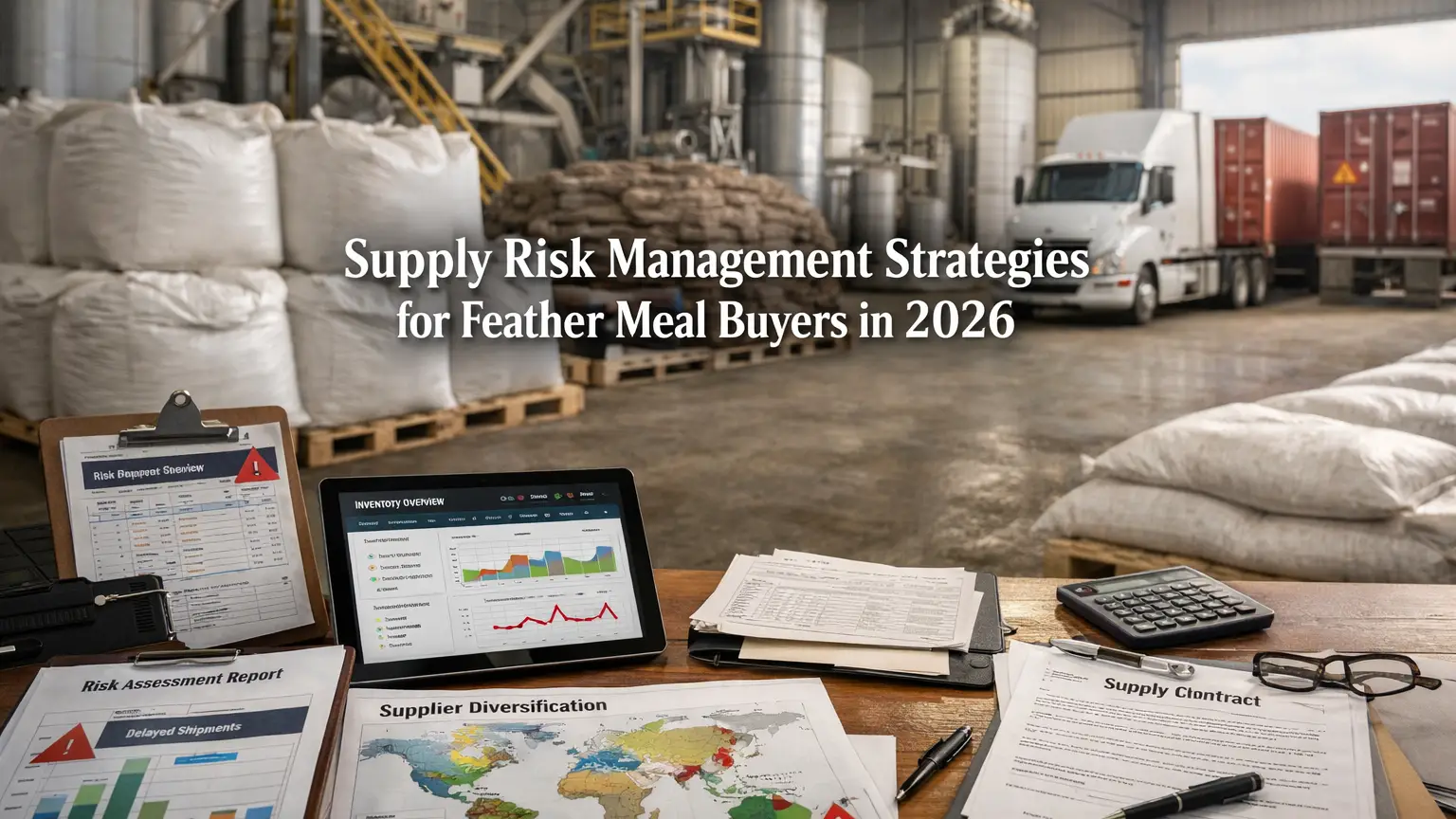
At the same time, supply risks are intensifying. Biological disruptions, infrastructure bottlenecks, and sustainability regulations are reshaping procurement dynamics. Buyers who rely on spot purchases alone face margin compression and supply uncertainty. Strategic planning, diversification, and financial discipline are now essential for secure sourcing in 2026.
Why Feather Meal Supply Risk Is Increasing in 2026
Feather meal production is directly linked to poultry slaughter volumes. Any disruption in poultry output immediately affects raw material availability. Unlike soybean meal or corn, feather meal cannot be expanded through acreage increases. Supply depends on biological cycles and processing capacity.
The most prominent structural risk remains Highly Pathogenic Avian Influenza, commonly referred to as HPAI. Outbreaks in major poultry-producing regions continue to reduce flock populations and temporarily halt processing plants. Even short-term disease outbreaks tighten feather meal availability because rendering volumes fall alongside slaughter rates.
A one percent reduction in national poultry throughput translates almost directly into reduced feather meal supply. For buyers operating on tight margins, these fluctuations can significantly affect formulation costs.
In addition to disease pressures, hatchery data in some regions show slower breeder replacement cycles. Lower pullet placements today translate into constrained production capacity several months later. Procurement teams must therefore monitor poultry production indicators closely, not only feed markets.
Navigating Biological and Structural Supply Risks
Diversifying Geographic Origins
The most effective protection against localized poultry disruptions is multi-origin sourcing. Buyers should avoid concentrating procurement in a single country or region vulnerable to disease outbreaks or processing shutdowns.
Sourcing from multiple poultry hubs across Asia, North America, and Latin America spreads biological risk. Even if one region experiences production cuts, alternative origins can stabilize supply continuity.
Evaluating Rendering Infrastructure
Not all feather meal suppliers operate under the same structure. Integrated rendering facilities located within poultry processing plants often provide more stable output and better traceability. Standalone rendering operations may depend on multiple third-party processors and are therefore more exposed to logistics interruptions.
Procurement teams should assess:
-
Integration level of the supplier
-
Annual processing capacity
-
Quality consistency across batches
-
Historical on-time delivery performance
Structural reliability is as important as price.
Financial Risk Management Without a Futures Market
Unlike soybean meal or corn, feather meal does not have a dedicated futures market. This creates pricing exposure when supply tightens. However, sophisticated buyers increasingly apply cross-hedging strategies using soybean meal futures.
Understanding Price Correlation
Research in feed markets shows a strong price relationship between animal protein meals and soybean meal futures. While the exact correlation fluctuates by region and time period, soybean meal contracts on CBOT often serve as a useful proxy for hedging exposure to protein ingredient volatility.
When feather meal prices rise alongside broader protein markets, gains in soybean meal futures positions can offset higher cash purchasing costs.
Dynamic Hedging Instead of Static Coverage
In 2026, more feed manufacturers are adopting dynamic hedging models rather than fixed hedge ratios. These models adjust hedge coverage based on updated market forecasts, crush margins, and protein demand signals.
A practical operational rule is to maintain hedge coverage when futures prices exceed forecasted cash levels, adjusted for basis. This approach requires disciplined monitoring but can significantly reduce cost shocks during supply disruptions.
Cross-hedging does not eliminate biological risk, but it reduces financial exposure.
Strategic Sourcing and Contract Design
Traditional purchasing based purely on historical seasonal patterns is less reliable in 2026. Climate volatility, disease outbreaks, and trade disruptions require more structured contract strategies.
Balancing Forward Contracts and Spot Buying
A balanced procurement model covers approximately 40 to 60 percent of anticipated volume under forward contracts spanning six to twelve months. The remaining portion can be sourced through spot purchases when market conditions soften.
This approach combines supply security with flexibility. Overcommitting during high-price periods reduces cost competitiveness, while under-contracting exposes buyers to allocation shortages.
Leveraging Formulation Flexibility
Nutrition teams play an important role in risk management. Least-cost formulation software allows partial substitution when feather meal prices spike.
Potential alternatives include:
-
Canola meal
-
Distillers dried grains with solubles
-
Poultry meal
-
Soybean meal
Feather meal contains high crude protein and sulfur amino acids, particularly cysteine. Substitutions must account for amino acid balance to maintain performance. Dynamic formulation provides an important buffer against supply-driven price spikes.
Operational Best Practices for 2026
Feather meal buyers can strengthen supply resilience through several practical measures:
-
Monitor poultry production data, hatchery placements, and disease reports.
-
Diversify suppliers across regions and infrastructure types.
-
Apply cross-hedging strategies using soybean meal futures when appropriate.
-
Maintain buffer inventory during high-risk biological seasons.
-
Align procurement strategy with nutrition and formulation teams.
-
Secure sustainability documentation before regulatory deadlines.
Companies that integrate biological, financial, and operational perspectives are better positioned to manage volatility.
Turning Volatility Into Competitive Advantage
The feather meal market in 2026 requires more sophisticated management than in previous years. Biological constraints, logistics pressures, and regulatory oversight create a complex risk environment.
Buyers who rely solely on short-term spot markets expose themselves to allocation shortages and margin compression. Those who combine geographic diversification, structured contracts, financial hedging, and formulation flexibility gain leverage over competitors.
Working with experienced sourcing partners improves visibility into poultry production trends, rendering capacity, and regional availability. Chemtradeasia supports feed manufacturers and agricultural buyers with structured feather meal sourcing across Asia-Pacific and global markets. Through diversified supplier networks and market insight, Chemtradeasia helps procurement teams secure reliable volumes while managing cost exposure.
Conclusion
Supply risk management for feather meal buyers in 2026 requires more than reacting to price changes. It demands structural awareness of poultry production cycles, disciplined contract strategy, cross-commodity financial tools, and sustainability compliance.
The companies that bridge biological realities with financial precision will secure stable supply and protect margins. In a market shaped by disease pressures and regulatory scrutiny, proactive strategy separates resilient buyers from reactive ones.