Introduction
The Asia-Pacific region stands as the undisputed powerhouse of the global animal feed industry, accounting for over a third of worldwide production. This dominance is fueled by a rapidly growing population, rising disposable incomes, and a consequent surge in demand for animal protein. As the industry intensifies to meet this demand, the focus on precision nutrition and optimized feed efficiency has never been sharper. Within this complex matrix of feed formulation, micronutrients like iron play a non-negotiable role in ensuring animal health, welfare, and productivity.
Among the various iron sources available, Ferrous Sulfate Monohydrate has emerged as a cornerstone ingredient in modern feed mills across Asia. Its high bioavailability, cost-effectiveness, and proven efficacy make it the go-to choice for preventing iron deficiency anemia, particularly in young livestock such as piglets and calves. This article provides a comprehensive analysis of the Asia market for Ferrous Sulfate Monohydrate in animal feed, examining current applications, regional dynamics, and a detailed forecast of trends leading up to 2026. We will also explore the critical importance of sourcing high-quality, feed-grade ingredients from established suppliers to ensure safety and consistency in the feed chain.
The Critical Role of Iron in Animal Nutrition
Iron is an essential trace mineral involved in fundamental physiological processes. Its primary function is as a core component of hemoglobin, the protein in red blood cells responsible for transporting oxygen from the lungs to tissues throughout the body. Without adequate iron, animals cannot synthesize sufficient hemoglobin, leading to iron deficiency anemia. This condition manifests as lethargy, reduced feed intake, pale mucous membranes, stunted growth, and increased susceptibility to disease. In sows, anemia can compromise reproductive performance and lead to weaker offspring.
The requirement for supplemental iron is most acute in neonatal animals. Piglets, for instance, are born with very low iron reserves (approximately 50 mg) while their rapid growth demands nearly 7-16 mg of iron per day. Sow's milk alone provides only about 1 mg per day, creating a significant deficit. A standard practice in modern swine production is the administration of an iron dextran injection within the first few days of life. However, ongoing dietary supplementation through feed ingredients like Ferrous Sulfate Monohydrate is crucial to maintain optimal iron status through the weaning and growing phases. Beyond preventing anemia, adequate iron supports immune function, enzyme systems, and overall metabolic efficiency.
Spotlight on Ferrous Sulfate Monohydrate: A Premier Feed Additive
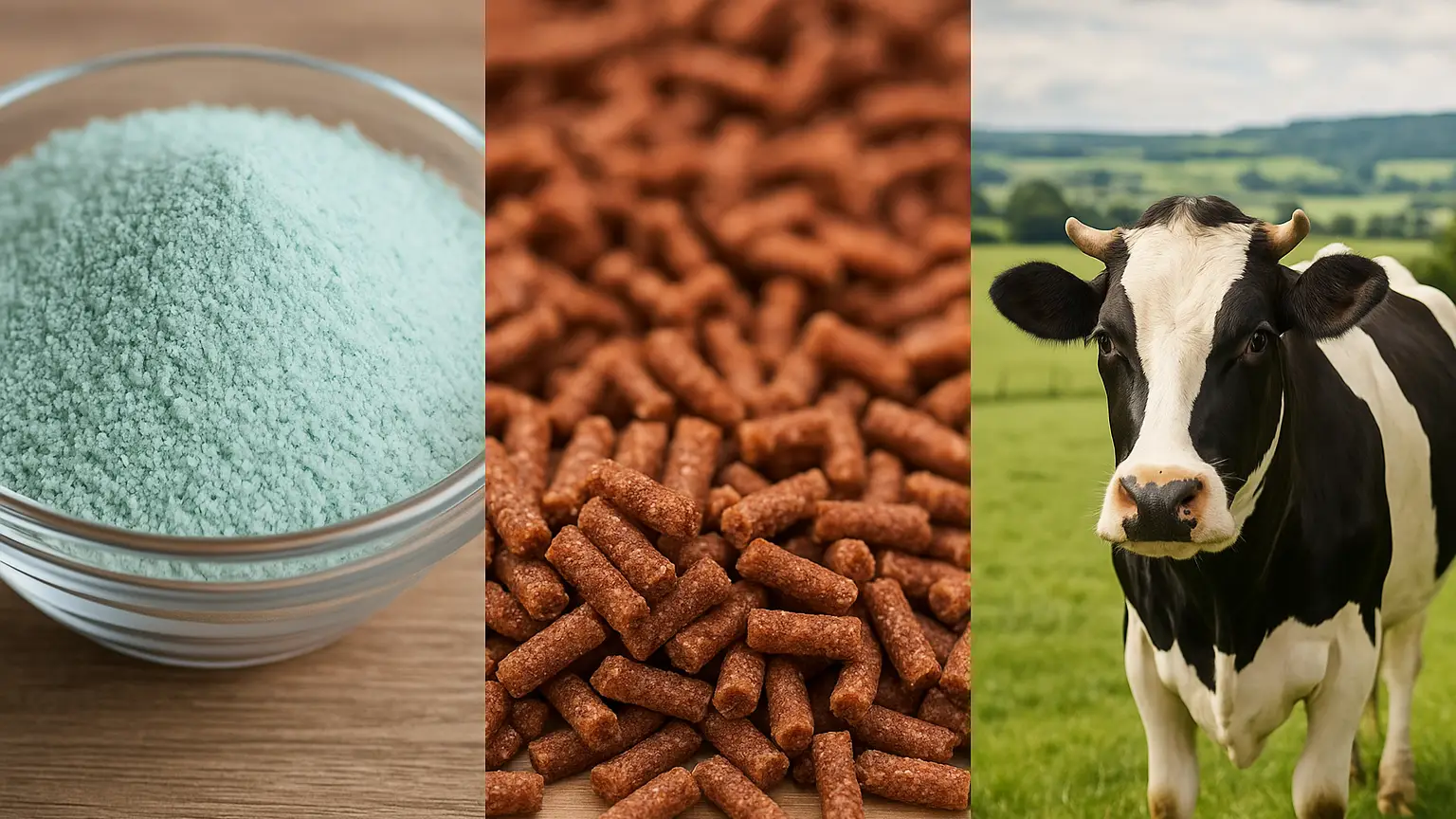
Ferrous Sulfate Monohydrate (FeSO₄·H₂O) is the hydrated form of ferrous sulfate, containing approximately 30-32% elemental iron. It is produced as a light green to grayish-green crystalline powder specifically processed to meet feed-grade purity standards. Its dominance in the animal feed ingredients market is attributed to its superior biological availability compared to other inorganic iron sources like ferric oxide or ferrous carbonate. The iron in the ferrous (Fe²⁺) state is more readily absorbed in the animal's intestine, making it a highly efficient supplement.
In practical feed formulation, Ferrous Sulfate Monohydrate is valued for its consistency and ease of handling. It mixes uniformly into premixes and complete feeds, ensuring even distribution. Key specifications for feed-grade material include controlled levels of heavy metals (like lead and arsenic), low moisture content to prevent caking, and appropriate particle size for optimal blendability. Compared to the heptahydrate form (FeSO₄·7H₂O), the monohydrate is preferred for its higher iron concentration and better stability, reducing the risk of oxidizing other sensitive vitamins and fats in the feed. Its primary use case is in swine, poultry, and ruminant diets, with inclusion rates carefully calculated by nutritionists based on species, life stage, and basal diet composition.
Furthermore, its role extends beyond mere nutrition. Adequate iron supplementation with a bioavailable source like Ferrous Sulfate Monohydrate directly impacts production economics. Healthier animals with robust oxygen-carrying capacity exhibit better feed conversion ratios (FCR), reach market weight faster, and have lower mortality rates. This direct link between a specific feed additive and key performance indicators (KPIs) solidifies its indispensable position in intensive livestock production systems prevalent across Asia.
Asia's Animal Feed Industry: Current Landscape and Growth Drivers
Asia's feed industry is a study in scale, diversity, and rapid evolution. China is the world's largest feed producer, followed closely by other regional giants like India, Japan, Vietnam, Thailand, and Indonesia. The sector is characterized by a mix of large, integrated agribusinesses and a vast number of small-to-medium-scale feed mills. The primary driver remains the protein consumption shift, with poultry and aquaculture leading growth, followed by pork and dairy. According to the Alltech Global Feed Survey, Asia consistently shows year-on-year production increases, reflecting the region's dynamic agricultural economy.
Several interconnected trends are shaping the demand for high-quality feed ingredients. First, the intensification and consolidation of livestock farming require standardized, scientifically-formulated feeds that maximize output. Second, rising consumer awareness about food safety and animal welfare is pushing producers to adopt better nutritional practices, including optimal mineral supplementation. Third, the ongoing battle against antimicrobial resistance (AMR) has led to a reduction in prophylactic antibiotic use in feed, placing greater emphasis on supporting innate immunity through nutrition—where minerals like iron are vital. These factors collectively create a robust and growing market for reliable, efficacious additives like Ferrous Sulfate Monohydrate.
Market Forecast and Key Trends Toward 2026
The market for Ferrous Sulfate Monohydrate in Asia is projected to experience steady growth through 2026, with a Compound Annual Growth Rate (CAGR) estimated between 3.5% to 5%. This growth is underpinned by the continuous expansion of livestock production, especially in Southeast Asian nations like Vietnam, Indonesia, and the Philippines. The swine industry's recovery from disease outbreaks like African Swine Fever (ASF) is also a significant factor, as restocking and modernization efforts prioritize optimal nutrition from the start.
Key trends defining the forecast period include a heightened focus on feed ingredient quality and traceability. Feed mills and integrators are increasingly demanding certified, contaminant-free products with consistent specifications. Sustainability is another emerging theme, with interest in the environmental footprint of mineral supplementation. Furthermore, the trend towards precision nutrition and phase-feeding will drive more nuanced use of iron supplements, optimizing levels for specific growth phases to minimize waste and maximize bioavailability. The integration of digital tools in feed formulation may also lead to more dynamic and data-driven inclusion rates for additives like Ferrous Sulfate Monohydrate.
Sourcing Quality Feed Ingredients: The Importance of Reliable Partners
In an industry where consistency, safety, and efficacy are paramount, the choice of supplier for critical feed ingredients is a strategic decision. Variations in the purity, bioavailability, or contaminant levels of a mineral supplement can directly affect animal performance and, ultimately, the safety of the food chain. This makes partnering with established, reputable suppliers not just a procurement activity but a core component of risk management and quality assurance.
This is where specialized chemical distributors with deep regional expertise become invaluable. Companies like Chemtradeasia, with a strong presence in key Asian markets through platforms such as chemtradeasia.in for India and chemtradeasia.co.id for Indonesia, serve as crucial links between global manufacturers and local feed producers. They provide more than just product; they offer technical support, ensure logistical reliability, and guarantee that the Ferrous Sulfate Monohydrate supplied meets stringent feed-grade specifications. For feed mill operators across Asia, leveraging such partners ensures access to a consistent supply of high-quality iron supplement, backed by regulatory knowledge and market insight, thereby securing their production lines and safeguarding animal health.
Conclusion
The trajectory of Asia's animal feed industry points unequivocally towards growth, sophistication, and an ever-greater reliance on scientific nutrition. Within this framework, Ferrous Sulfate Monohydrate remains a fundamental and irreplaceable feed ingredient, essential for preventing iron deficiency and unlocking genetic potential in livestock. The market forecast toward 2026 is positive, driven by regional production expansion, recovery in key sectors, and evolving trends focused on quality and precision.
Success in this competitive landscape will depend on the ability of feed producers to formulate diets that are both economically efficient and nutritionally optimal. Sourcing high-grade, bioavailable Ferrous Sulfate Monohydrate from trusted suppliers is a critical step in this process. By partnering with established industry specialists who understand the regional nuances, feed manufacturers can ensure they are equipped with the right tools to contribute to a sustainable, productive, and profitable future for Asia's livestock sector.
Leave a Comment