Introduction
Food manufacturers and ingredient buyers across America are increasingly focused on understanding the true cost structure behind food grade tapioca starch. As demand for clean-label, allergen-friendly, and plant-based ingredients rises, tapioca starch has moved from a niche thickener to a strategic input in bakery, snacks, dairy alternatives, sauces, and ready-to-eat meals. In this context, having a clear price benchmark is essential for procurement teams, formulators, and brand owners who need to manage margins without compromising product quality.
This article provides a structured view of food grade tapioca starch pricing in the American market. It explores the main cost drivers, global supply trends, and typical price ranges seen in recent years, while also highlighting the role of reliable suppliers such as Chemtradeasia.com. Rather than focusing solely on spot prices, it aims to explain how specifications, quality certifications, contract terms, and logistics influence the final delivered cost to U.S. and Latin American buyers.
Because tapioca starch is largely produced in Southeast Asia and shipped to America, its price is shaped by international trade flows, currency movements, and freight conditions. By understanding these elements, buyers can negotiate better, select the right product grades, and design more resilient sourcing strategies. The following sections break down these aspects and offer practical, market-oriented insight into food grade tapioca starch price benchmarks.
Overview of Food Grade Tapioca Starch in America
Tapioca starch is a purified carbohydrate extracted from the cassava root, widely cultivated in Thailand, Vietnam, Indonesia, and Brazil. In food applications, it is valued for its neutral taste, high clarity in pastes, and smooth mouthfeel. In the American market, it competes with corn, potato, and wheat starches but stands out because it is naturally gluten-free and often perceived as more “label-friendly” than some modified starches derived from other crops.
From a trade perspective, the United States imports most of its tapioca starch requirements. According to UN Comtrade and industry reports, Thailand remains the dominant global exporter, with Vietnam and Indonesia contributing significant volumes. U.S. imports of tapioca and cassava starches have shown steady growth over the last decade, driven by their use in gluten-free bakery, snacks, and as a replacement for certain modified corn starches in clean-label formulations. Latin American markets, especially Mexico and Brazil, also import tapioca starch, supplementing their domestic cassava-based products.
In America, food grade tapioca starch is typically offered as native tapioca starch, pregelatinized (instant) tapioca starch, and various modified tapioca starches designed for specific processing conditions (e.g., freeze–thaw stability, high shear resistance, or acid stability). Buyers range from large multinational food corporations to mid-sized regional manufacturers and private-label producers. Their purchasing patterns—spot buying versus long-term contracts—also influence the price benchmarks observed across the market.
Key Price Drivers and Market Dynamics
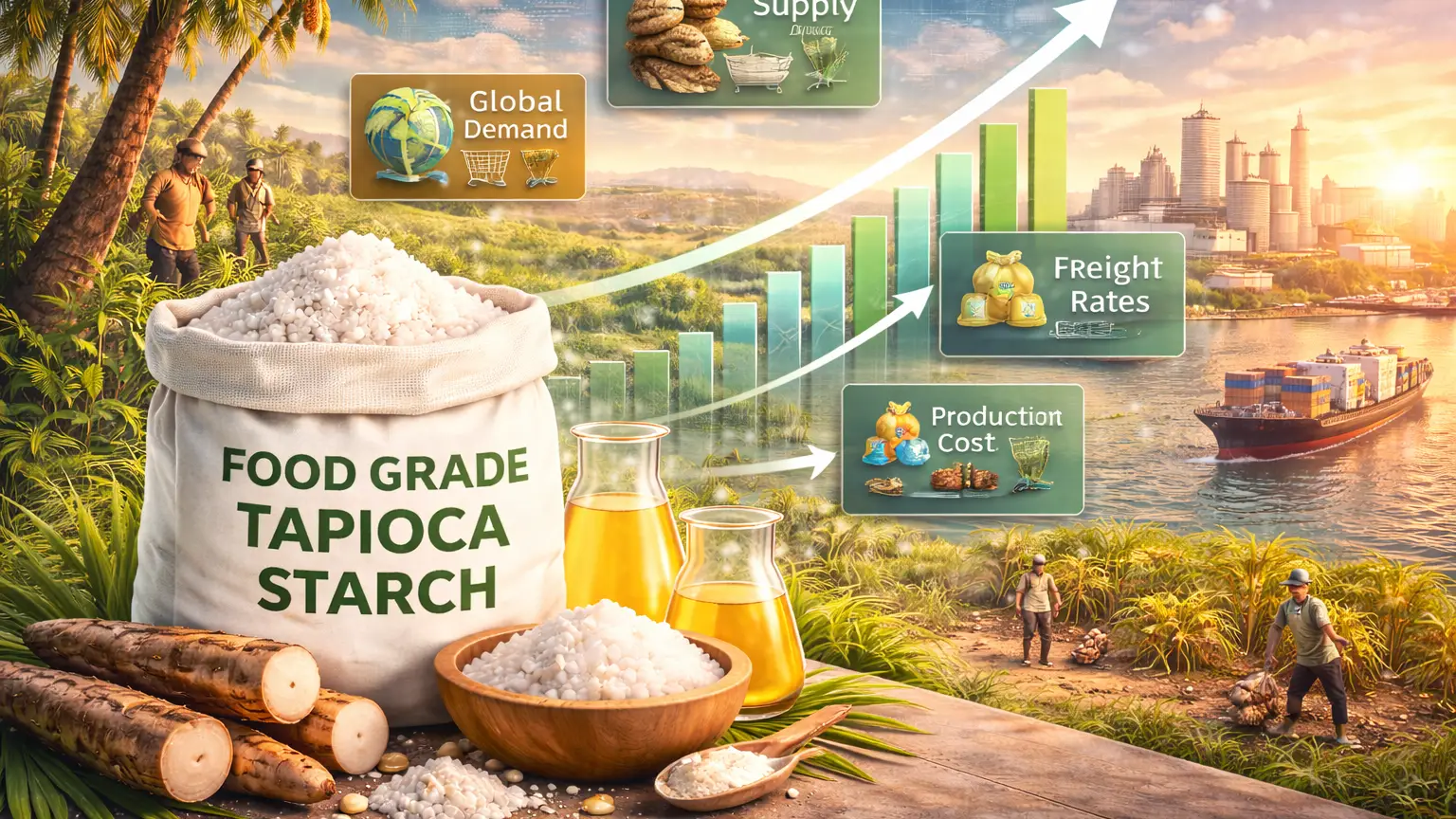
The price of food grade tapioca starch in America is primarily influenced by raw material availability, production costs in exporting countries, and international freight. Cassava yields in Southeast Asia are sensitive to weather patterns, disease outbreaks, and changes in planted area. When cassava supply tightens, starch processors face higher root prices, which translate into higher export offers. Conversely, favorable harvests and stable farming conditions typically create downward pressure on starch prices.
Another major driver is global demand. Tapioca starch competes with other starches, but it also benefits from structural trends such as the growth of gluten-free foods, plant-based dairy alternatives, and clean-label reformulations. When global demand from China, Japan, or the European Union spikes—especially in the sweeteners or industrial segments—exportable volumes for food-grade applications can become tighter, contributing to firmer prices. Exchange rates between the U.S. dollar and currencies like the Thai baht or Vietnamese dong also affect export competitiveness and the final CIF (Cost, Insurance, Freight) price into American ports.
Logistics and freight conditions have become particularly important since the COVID-19 pandemic. Container shortages, port congestion, and higher fuel costs have periodically raised shipping rates from Asia to North and South America. In some years, freight can represent a significant portion of the landed cost of tapioca starch. Buyers working with partners such as Chemtradeasia.com often seek to mitigate this volatility through consolidated shipments, optimized routing, or longer-term logistics arrangements. As a result, price benchmarks should always be interpreted in the context of Incoterms (FOB, CFR, CIF) and actual delivery points.
Product Profile: Food Grade Tapioca Starch from Chemtradeasia.com
Chemtradeasia.com is an international B2B trading platform that connects buyers in America with reliable tapioca starch producers in Asia. For food applications, the company offers a range of food grade tapioca starch products, including native, pregelatinized, and selected modified grades. These products are sourced from certified manufacturers who comply with international quality and safety standards such as ISO, HACCP, and in many cases, Halal and Kosher certifications, which are important for serving diverse consumer segments in the U.S. and Latin America.
Typical specifications for food grade native tapioca starch supplied via Chemtradeasia.com include moisture content around 12–13%, pH in the range of 5.0–7.0, high whiteness, and minimal ash content. Granule size distribution and viscosity profiles are controlled to ensure consistent performance in industrial food processes. For specialized applications, modified tapioca starches are available with tailored properties such as improved freeze–thaw stability (for frozen meals and desserts), high shear resistance (for sauces and dressings), and enhanced clarity (for beverages and transparent fillings).
From a pricing standpoint, Chemtradeasia.com focuses on competitive, transparent offers based on up-to-date market data and close relationships with producers. Buyers can request quotes for various packaging formats, including 25 kg bags, 50 lb bags, and bulk options like big bags, depending on plant requirements. The platform also supports different Incoterms, from FOB Asian ports to CIF major American ports, allowing procurement teams to compare benchmarks effectively. While exact prices fluctuate with market conditions, working through a structured platform helps buyers understand the cost breakdown and negotiate supply agreements that balance price, quality, and delivery reliability.
Applications, Benefits, and Quality Considerations
Food grade tapioca starch is widely used across multiple segments of the American food industry. In bakery and snacks, it improves dough handling, contributes to a light and crispy texture, and supports gluten-free formulations when combined with rice flour, sorghum, or other alternative grains. In confectionery, tapioca starch can be used as a gelling or thickening agent in gummies, fillings, and coatings, providing clarity and a pleasant chew. Dairy and non-dairy manufacturers use tapioca starch to stabilize yogurts, puddings, and plant-based drinks, enhancing body and mouthfeel without imparting off-flavors.
One of the key benefits of tapioca starch is its clean sensory profile. It has a neutral taste and odor, which allows flavors to stand out. Its pastes are typically clear and glossy, making it ideal for fruit preparations, glazes, and transparent sauces. For formulators seeking to reduce or replace modified corn starches, native or lightly modified tapioca starch can support “simpler” ingredient lists that appeal to health-conscious consumers. In addition, tapioca starch is naturally gluten-free and generally non-allergenic, which is crucial for brands that must address celiac disease, wheat allergies, or broader consumer preferences for gluten-free products.
Quality considerations, however, are critical when benchmarking prices. Buyers should evaluate not only the quoted price per metric ton but also the functional performance and consistency of the product. Parameters such as microbiological limits, heavy metal content, and compliance with U.S. FDA and local regulatory requirements must be verified. Reputable suppliers like Chemtradeasia.com provide detailed technical data sheets and, where applicable, MSDS/SDS for safe handling and storage. A slightly higher-priced starch with better consistency, certification coverage, and technical support can often deliver lower total cost of use compared with a cheaper but less reliable alternative.
Conclusion
Establishing a realistic price benchmark for food grade tapioca starch in America requires a holistic view of the market. Raw material conditions in cassava-growing regions, global demand patterns, currency movements, and logistics costs all play a role in shaping the final landed price. At the same time, product specifications, functional performance, and certification requirements significantly influence the value that a particular grade of tapioca starch offers to food manufacturers and brand owners.
By partnering with experienced suppliers and trading platforms such as Chemtradeasia.com, buyers can gain better visibility into these variables and secure more stable, competitive sourcing arrangements. Structured procurement—supported by clear technical documentation, quality assurance, and flexible logistics options—enables manufacturers to leverage tapioca starch’s functional benefits while maintaining control over cost and supply risk. As the demand for clean-label and gluten-free products continues to grow across the U.S. and Latin America, understanding these dynamics will be increasingly important for strategic ingredient sourcing.
This article is provided solely for informational and market insight purposes and does not constitute technical, safety, or professional advice. Readers should independently verify all information with qualified experts, review official documentation such as MSDS/SDS and relevant regulations, or contact our team for guidance on specific formulations, processing conditions, or end-use applications.