
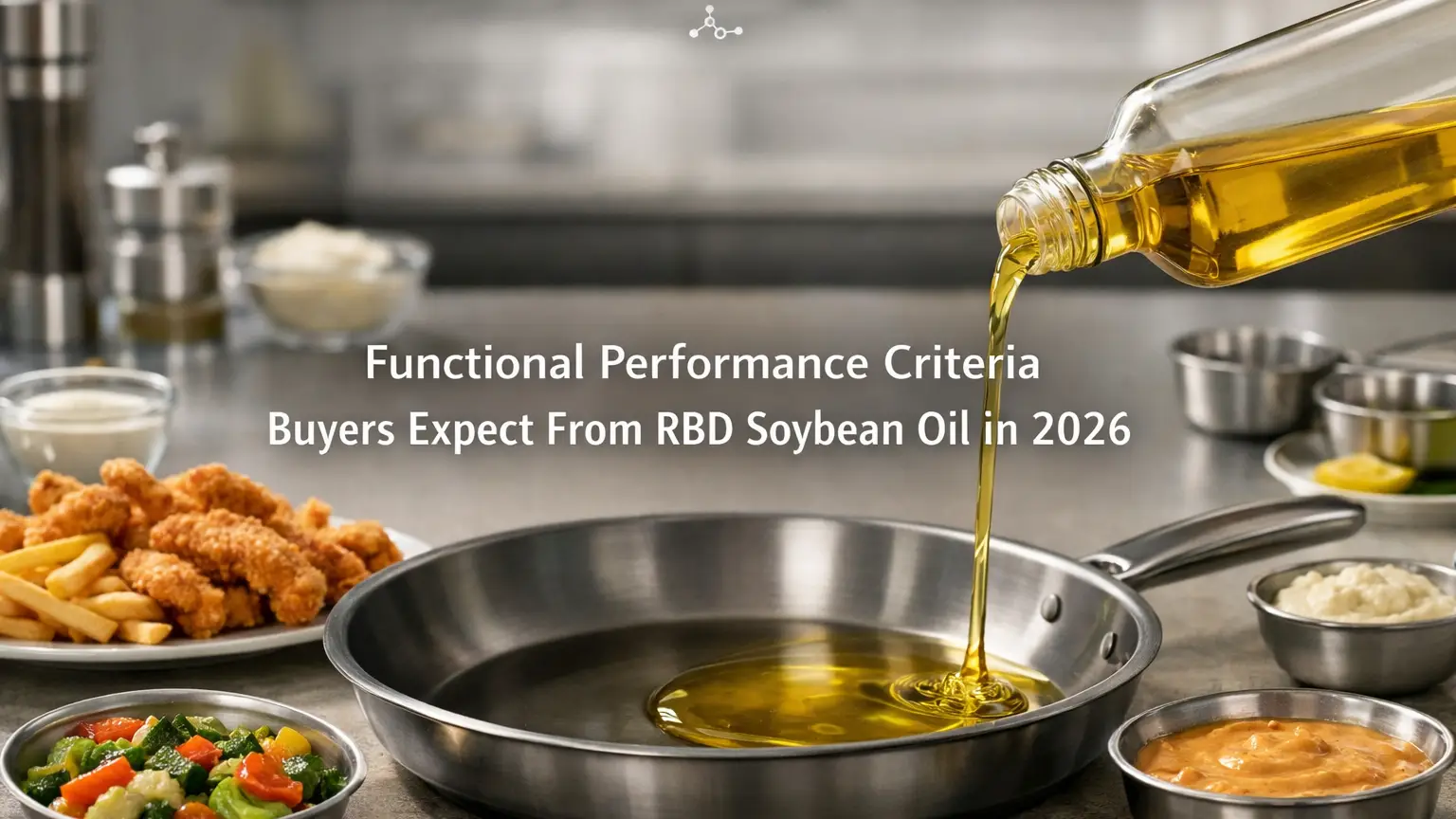
Why Functional Performance Matters More in 2026
RBD soybean oil buyers in 2026 are placing stronger emphasis on functional performance rather than basic specification compliance. Rising feedstock costs, tighter margins, and higher penalties for production downtime mean inconsistent oil quality now carries greater financial risk than price fluctuations alone.
Manufacturers are also facing stricter food safety, sustainability, and traceability requirements. As a result, procurement teams increasingly evaluate how RBD soybean oil behaves during storage, heating, and processing, not just whether it meets minimum standards on paper.
Overview of RBD Soybean Oil and Its Applications
RBD soybean oil is refined, bleached, and deodorized from soybean seeds and typically contains a fatty acid profile dominated by linoleic acid, followed by oleic and linolenic acids. This composition makes it suitable for a wide range of applications.
Key End-Use Segments
- Food manufacturing such as frying, bakery, snacks, and dressings
- Oleochemical processing for fatty acids, surfactants, and emulsifiers
- Industrial and biofuel applications requiring consistent viscosity and reactivity
Each application places different performance demands on the oil, which explains why buyers now segment specifications more tightly in 2026.
Core Functional Performance Criteria Buyers Evaluate
Oxidative Stability and Shelf-Life Performance
Oxidative stability is one of the most critical criteria for buyers. In 2026, most procurement teams expect low peroxide values at delivery and stability that supports six to twelve months of storage without flavor or odor deterioration.
Poor oxidative resistance leads to rancidity, off-notes, and reduced frying life. Because soybean oil naturally contains linolenic acid, buyers increasingly require antioxidant systems or blending strategies to ensure stable performance across storage and use cycles.
Flavor and Odor Neutrality
Flavor neutrality remains non-negotiable for food-grade RBD soybean oil. Buyers expect a clean sensory profile with no detectable odor or taste impact on finished products.
Inadequate deodorization can cause flavor reversion during storage, especially in snacks and bottled oils. Suppliers that consistently meet strict sensory thresholds are preferred, as failed sensory panels can result in batch rejection and production delays.
Color and Visual Appearance Standards
Visual consistency matters, particularly for products packaged in transparent formats. Buyers typically specify tight Lovibond color limits to ensure clarity and brand consistency.
Excess color often forces additional bleaching, increasing processing costs and delivery delays. In 2026, buyers favor refiners that achieve stable color targets without frequent reprocessing.
Thermal and Processing Performance Requirements
High-Temperature Frying Stability
For frying applications, buyers evaluate how well the oil performs under repeated high-temperature cycles. Desired performance includes stable viscosity, controlled formation of polar compounds, and minimal foaming.
Oils that degrade quickly increase oil consumption and interrupt production. As a result, buyers closely monitor frying life and reject suppliers whose products show early breakdown during trials.
Performance in Baking and Food Processing
In baking and extrusion processes, buyers look for oils that maintain consistent flow behavior and do not introduce flavor changes under heat. Stable iodine values and predictable viscosity help ensure smooth production runs.
Suppliers with reliable batch consistency often receive long-term contracts, as formulation stability is critical in high-volume bakery operations.
Consistency and Batch-to-Batch Reliability
Specification Stability Across Shipments
Consistency across deliveries has become a decisive supplier selection factor. Buyers expect tight control of free fatty acids, moisture, and acid value to prevent hydrolysis and oxidation.
Even small deviations can trigger off-spec classifications, forcing rework or rejection. In 2026, buyers increasingly request detailed Certificates of Analysis and historical quality data to verify reliability.
Impact of Inconsistency on Manufacturing Operations
Inconsistent oil quality can increase downtime in continuous operations such as fryers and mixers. Scrap rates rise when formulation adjustments are required mid-run.
Procurement teams now track supplier deviation rates and prioritize those with predictable performance histories, even when pricing is slightly higher.
Functional Criteria for Industrial and Oleochemical Buyers
Reactivity and Fatty Acid Profile Requirements
Oleochemical buyers focus on fatty acid balance and conversion efficiency. The ratio of oleic to linoleic acid affects hydrolysis performance and downstream yields in fatty acid and alcohol production.
Oils with unstable profiles or high impurity levels reduce process efficiency and raise operating costs, making performance consistency critical for industrial buyers.
Compatibility With Processing Systems
Low impurity content supports smooth pumping and reduces fouling in reactors and biodiesel systems. Predictable iodine values and clean processing behavior are essential for industrial applications.
Sustainability documentation increasingly influences industrial sourcing, particularly for biodegradable lubricants and specialty chemical markets.
Food Safety, Compliance, and Traceability Expectations
Regulatory Compliance and Food-Grade Standards
Buyers expect compliance with Codex standards, local food regulations, and trans fat limits. Heavy metal and contaminant controls are closely monitored, as non-compliance carries significant recall and liability risks.
Traceability and Sustainability Documentation
In 2026, traceability is no longer optional. Non-GMO verification, deforestation-free sourcing, and responsible soy certifications are frequently required, especially by multinational brands.
Suppliers that provide transparent documentation and traceable supply chains gain a competitive advantage in tenders and long-term agreements.
How Functional Performance Influences Pricing and Supplier Selection
Buyers increasingly evaluate RBD soybean oil using total cost of ownership rather than spot price alone. Oils with better stability, longer frying life, and lower rejection rates reduce waste and protect production efficiency.
As a result, higher-performing oils often justify price premiums, while inconsistent products are phased out despite lower nominal costs.
Regional Differences in Buyer Expectations
Asia-Pacific Buyer Priorities
High-volume buyers in Asia-Pacific often emphasize cost stability and frying performance. Minor visual variations may be tolerated if throughput and oil life remain consistent.
Europe and North America Quality Benchmarks
Buyers in Europe and North America typically apply stricter standards for color, non-GMO status, and sustainability documentation. High-oleic variants and extended frying life are more commonly specified in these regions.
Conclusion
In 2026, RBD soybean oil buyers prioritize functional performance over price alone. Oxidative stability, processing reliability, batch consistency, and traceability now define supplier competitiveness across food and industrial markets.
For companies sourcing RBD soybean oil for demanding applications, Chemtradeasia supports access to vetted suppliers that meet performance-driven specifications and documentation requirements. By sharing your application, target specs, and delivery region, the Chemtradeasia team can help identify supply options that balance quality, compliance, and cost efficiency for your 2026 procurement strategy.