Introduction
Glacial acetic acid is a cornerstone intermediate in the global chemicals value chain, feeding into sectors as diverse as vinyl acetate monomer (VAM), purified terephthalic acid (PTA), adhesives, textiles, pharmaceuticals, and food processing. As we move through Q2 2026, procurement teams are navigating a complex mix of changing feedstock economics, evolving trade flows, and stricter environmental and safety regulations. Understanding how these factors shape glacial acetic acid sourcing strategies is essential for buyers seeking cost stability, supply security, and quality consistency.
Between 2021 and 2025, the global acetic acid market grew at an estimated compound annual growth rate (CAGR) of around 5–6%, driven by robust demand in packaging, construction, and consumer goods. By 2026, global consumption of acetic acid, including glacial grades, is projected to exceed 20 million metric tons, with Asia-Pacific accounting for more than 60% of demand. This expansion places pressure on procurement teams to diversify suppliers, optimize logistics, and leverage digital platforms for better price discovery and contract management.
Within this context, distributors such as Tradeasia, operating through platforms like chemtradeasia.com, chemtradeasia.in, chemtradeasia.co.id, chemtradeasia.ae, and chemtradeasia.sg, play an increasingly strategic role. They bridge producers and end-users across multiple regions, offering standardized glacial acetic acid grades, tailored packaging, and integrated logistics solutions. This article analyzes global procurement trends for glacial acetic acid in Q2 2026, with a focus on industry-specific dynamics and how professional distributors can support resilient sourcing strategies.
Global Supply–Demand Dynamics for Glacial Acetic Acid in Q2 2026
Global supply of glacial acetic acid in Q2 2026 is shaped by capacity utilization in major producing regions, particularly China, North America, and Western Europe. China remains the largest producer, with several large-scale plants based on methanol carbonylation technology. In the past few years, environmental inspections and energy-efficiency mandates in China have periodically constrained operations, creating short-term supply tightness and price volatility. By mid-2026, some of these constraints have eased due to technology upgrades, but buyers still factor in regulatory risk when structuring long-term contracts.
On the demand side, downstream sectors such as VAM, PTA, and solvents continue to absorb the bulk of glacial acetic acid volumes. VAM, used in adhesives, paints, and coatings, has seen steady demand in construction and packaging, while PTA demand is linked to PET resin for beverage bottles and polyester fibers. When construction and consumer spending accelerate, glacial acetic acid demand tends to firm, tightening supply. Conversely, any slowdown in textiles or packaging can temporarily soften demand. In Q2 2026, moderate growth in packaging and infrastructure projects, particularly in Asia and the Middle East, supports a balanced-to-firm demand outlook.
Freight and logistics remain crucial determinants of effective supply. Container availability and freight rates, which surged in 2021–2022, have stabilized but still sit above pre-pandemic norms. Buyers in regions with limited local production—such as parts of Africa, Latin America, and some Middle Eastern markets—are increasingly relying on regional distribution hubs. Platforms like chemtradeasia.sg and chemtradeasia.ae facilitate shipments from Asian and Middle Eastern producers to these demand centers, allowing procurement teams to compare FOB and CIF options and select the most cost-effective logistics routes.
Industry-Specific Procurement Trends and Buyer Behavior
Procurement strategies for glacial acetic acid vary significantly by industry. In the VAM and PTA sectors, where acetic acid is a major raw material with high volume consumption, buyers typically pursue long-term contracts with indexed pricing formulas to manage exposure to feedstock fluctuations. These large-volume buyers often require multiple qualified suppliers across different regions to mitigate geopolitical and logistics risks. During Q2 2026, many of these industrial buyers are renegotiating contracts to include more flexible delivery schedules and optional volumes, reflecting lessons learned from earlier supply chain disruptions.
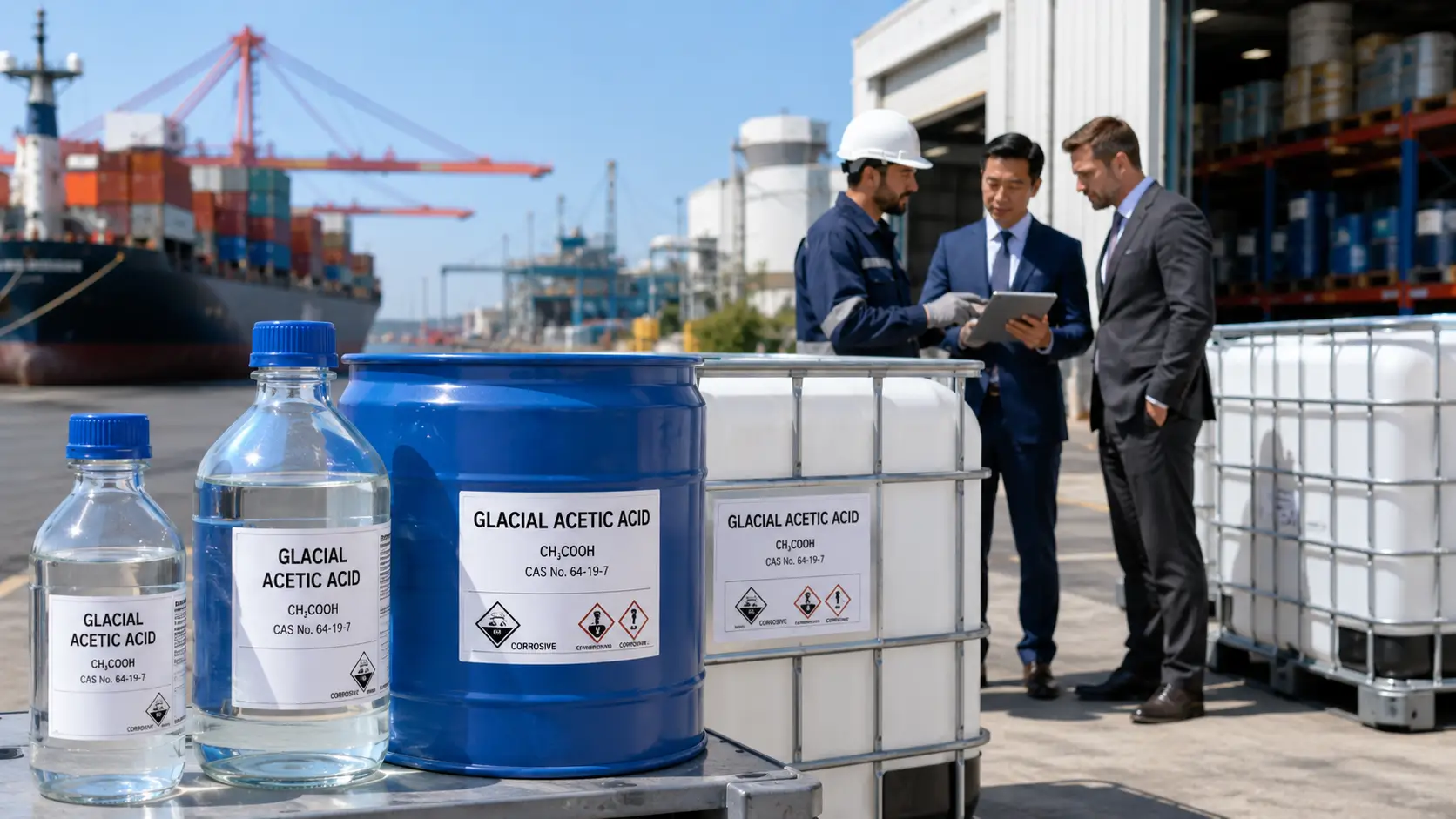
In specialty chemicals, pharmaceuticals, and food ingredients, glacial acetic acid is consumed in lower volumes but with more stringent quality and documentation requirements. Buyers in these segments prioritize suppliers who can provide full traceability, batch-level quality certificates, and compliance with pharmacopeial or food-grade standards where applicable. They may also require specific packaging formats, such as smaller drums or IBCs, to fit into cleanroom or GMP-compliant production environments. Distributors like Tradeasia support these needs by offering multiple packaging configurations and robust documentation through chemtradeasia.com and regional sites.
Smaller and mid-sized manufacturers—such as regional adhesive producers, textile dyeing operations, and flexible packaging converters—tend to combine spot purchases with short-term contracts. Their procurement teams are increasingly using digital tools to track price movements and compare offers from different origins. In Q2 2026, there is a noticeable shift towards multi-sourcing strategies, where buyers maintain relationships with both local distributors and international platforms like chemtradeasia.in and chemtradeasia.co.id. This approach helps them hedge against local supply disruptions, currency risk, and seasonal demand spikes.
Product Features, Specifications, and Key Applications
Glacial acetic acid is typically supplied at a purity of ≥ 99.5%, with water content below 0.5% and low levels of impurities such as formic acid, aldehydes, and heavy metals. Industrial-grade material is suitable for most chemical synthesis and industrial applications, while higher-purity or specially certified grades may be required for pharmaceuticals, food, or electronic chemicals. Buyers routinely request specifications such as assay (GC or titration), color (APHA), acidity, and specific gravity, along with standard compliance to ISO or relevant national standards. Tradeasia’s network sources glacial acetic acid from producers that maintain consistent quality control, and product data sheets are typically made available via chemtradeasia.com and regional portals.
The largest application for glacial acetic acid is the production of vinyl acetate monomer (VAM), which in turn is used to make polyvinyl acetate (PVA) and polyvinyl alcohol (PVOH). These polymers find use in adhesives, binders, paints, coatings, and paper sizing. Another major outlet is the manufacture of purified terephthalic acid (PTA), an essential intermediate for PET and polyester. In both cases, the reliability and purity of glacial acetic acid directly affect process efficiency, catalyst life, and product quality, making stable sourcing and consistent specifications critical for plant operators.
Beyond these bulk outlets, glacial acetic acid is widely used as a solvent and reagent in the production of acetic anhydride, cellulose acetate, esters, and a variety of specialty chemicals. In textiles, it is used for pH control and dye fixation; in the food industry, appropriately certified grades serve as acidity regulators and preservatives (E260). Pharmaceutical and fine chemical manufacturers use glacial acetic acid as a reaction medium and building block in active pharmaceutical ingredient (API) synthesis. For these applications, buyers often require more detailed documentation, such as GMP-related certifications, allergen statements, and regulatory support. Tradeasia’s platforms, including chemtradeasia.sg and chemtradeasia.ae, facilitate access to such information alongside commercial quotations.
Digital Procurement Channels: Role of chemtradeasia.com and Regional Platforms
The digitalization of chemical procurement has accelerated since 2020, and glacial acetic acid is no exception. Buyers increasingly expect real-time access to product information, indicative pricing, and logistics options. The chemtradeasia.com platform serves as a global gateway, providing detailed product descriptions, typical specifications, safety information summaries, and inquiry forms. Procurement teams can submit requests for quotation (RFQs), specify required packaging (bulk, ISO tank, IBC, drums), and indicate delivery terms (FOB, CFR, CIF) directly through the portal, streamlining the initial negotiation stage.
Regional platforms such as chemtradeasia.in, chemtradeasia.co.id, chemtradeasia.ae, and chemtradeasia.sg complement the global site by addressing local regulatory, language, and logistics needs. For example, buyers in India may need support with local tax structures and port options, while Indonesian customers might prioritize domestic warehousing and rupiah-denominated quotations. Middle Eastern buyers using chemtradeasia.ae often focus on transit times from Asian origin plants and the availability of bonded warehousing. These regional sites allow Tradeasia to present localized content and contact points, making it easier for buyers to align procurement with domestic compliance and operational constraints.
Another key benefit of digital procurement channels is improved transparency and documentation management. Through these platforms, Tradeasia can share technical data sheets (TDS), typical certificates of analysis (CoA), and links to safety documentation, allowing buyers to perform preliminary evaluations quickly. While final decisions still require direct technical and commercial discussions, the ability to shortlist suppliers and products online reduces lead times and administrative workload. As Q2 2026 unfolds, many procurement teams are integrating such platforms into their internal sourcing workflows, using them alongside ERP systems and digital tendering tools to build more resilient and data-driven procurement strategies for glacial acetic acid.
Conclusion
Glacial acetic acid remains a vital raw material across multiple industries, and its procurement in Q2 2026 is influenced by a combination of regional supply dynamics, downstream demand trends, and evolving regulatory and logistics environments. Large-volume consumers in VAM and PTA prioritize long-term contracts and multi-origin sourcing, while specialty, pharmaceutical, and food-related buyers focus on stringent quality, documentation, and packaging requirements. Across all segments, the ability to secure reliable, competitively priced supply is closely tied to how effectively procurement teams manage risk, diversify supplier portfolios, and leverage market intelligence.
Distributors such as Tradeasia, operating through chemtradeasia.com, chemtradeasia.in, chemtradeasia.co.id, chemtradeasia.ae, and chemtradeasia.sg, play an increasingly strategic role in this landscape. By connecting producers and end-users across regions, offering standardized glacial acetic acid grades, and supporting flexible logistics solutions, they help buyers navigate price volatility and supply disruptions. As digital procurement channels mature, buyers can expect greater transparency, faster response times, and more tailored service offerings, enabling them to optimize both cost and reliability in their glacial acetic acid sourcing strategies.
This article is provided solely for informational and market insight purposes and does not constitute technical, safety, regulatory, or professional advice. Readers should independently verify all information with qualified experts, consult official documentation such as MSDS/SDS and applicable regulations, and contact our team or other competent professionals for guidance on specific applications, handling, and compliance requirements.
Leave a Comment