Introduction
The global market for Borax Decahydrate is entering a pivotal second quarter, marked by a complex interplay of supply chain disruptions, shifting demand patterns, and evolving regulatory landscapes. As a key derivative of the boron industry, Borax Decahydrate remains indispensable across sectors ranging from glass manufacturing and agriculture to metallurgy and detergents. Understanding the specific trade challenges and emerging opportunities in Q2 is critical for stakeholders navigating this volatile environment. This article provides a comprehensive analysis of the current market dynamics, offering actionable insights for buyers and suppliers leveraging platforms like chemtradeasia.com, chemtradeasia.in, chemtradeasia.co.id, chemtradeasia.ae, and chemtradeasia.sg.
The Q2 period often represents a transitional phase where post-winter restocking meets pre-summer production surges. However, 2024 has introduced unique variables, including geopolitical tensions affecting key shipping routes and fluctuating energy costs in major producing regions. For the boron industry, these factors directly impact the availability and pricing of Borax Decahydrate, a commodity that relies heavily on consistent raw material extraction and energy-intensive refining processes. This article will dissect these elements to provide a clear roadmap for the quarter ahead.
Current State of the Global Borax Decahydrate Market in Q2
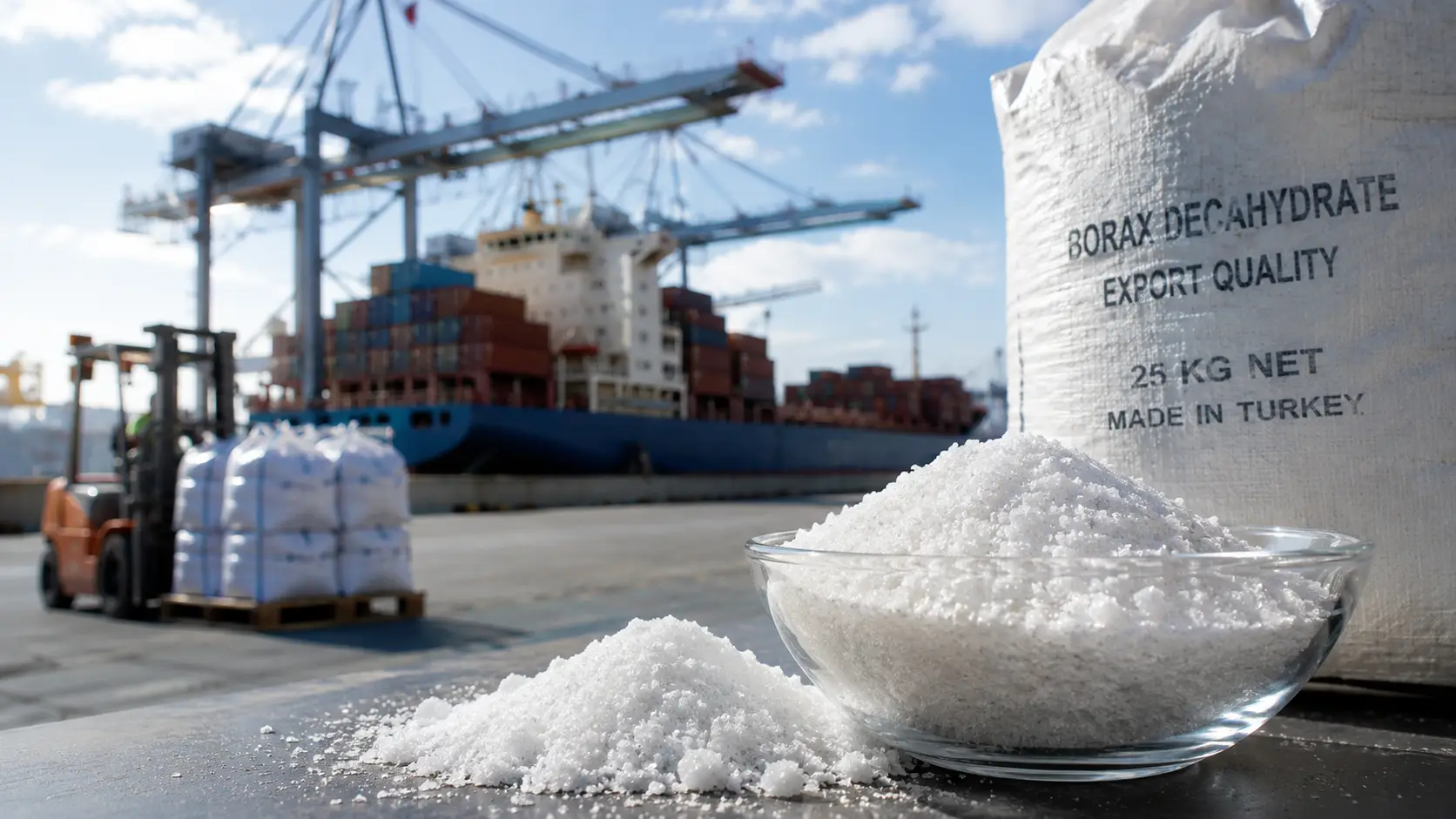
The global supply of Borax Decahydrate in Q2 is characterized by a delicate balance between stable production from major mines in Turkey and the United States and increasing logistical bottlenecks. Data from industry reports indicates that while production capacities remain largely intact, the cost of freight from major export hubs has risen by approximately 15-20% compared to Q1, driven by rerouting of vessels away from conflict zones. This has created a ripple effect, particularly for markets in Asia and the Middle East, which rely heavily on seaborne trade facilitated by networks like chemtradeasia.sg and chemtradeasia.ae.
Demand-side pressures are equally significant. The glass and ceramics industries, which account for over 50% of global Borax Decahydrate consumption, are experiencing a steady recovery in construction and automotive sectors. However, inventory levels among downstream users remain lean, as many firms adopted a just-in-time purchasing strategy during the high-inflation period of 2023. This has created a scenario where any supply disruption in Q2 could lead to spot price volatility. Platforms such as chemtradeasia.com and chemtradeasia.in are seeing increased activity as buyers seek flexible procurement options to hedge against potential shortages.
Key Trade Challenges Impacting the Boron Supply Chain
The most pressing challenge for the global boron industry in Q2 is the ongoing disruption to maritime logistics. The Red Sea crisis has forced many container and bulk carriers to take longer routes around the Cape of Good Hope, adding 10-14 days to transit times for shipments destined for European and Asian ports. For a product like Borax Decahydrate, which is often shipped in 25kg bags or bulk containers, this delay strains inventory management and increases demurrage costs. This is particularly acute for buyers in Southeast Asia and India, who depend on timely deliveries from chemtradeasia.co.id and chemtradeasia.in distribution networks.
Another significant challenge is the fluctuation in energy prices. The production of Borax Decahydrate is energy-intensive, particularly during the crystallization and drying stages. With natural gas prices in Europe remaining volatile and coal costs in Asia fluctuating, producers are facing margin compression. This has led to some smaller players reducing output, further tightening supply. Additionally, stricter environmental regulations in mining regions are increasing compliance costs, which are gradually being passed down the supply chain. For global buyers, this means that price negotiations in Q2 are becoming more complex, requiring a deep understanding of both raw material costs and logistical surcharges.
Emerging Opportunities for Borax Decahydrate in Q2
Despite the challenges, Q2 presents several strategic opportunities for stakeholders in the boron industry. One of the most promising trends is the increasing use of Borax Decahydrate in the production of boron-based flame retardants and insulation materials. As building codes become more stringent globally, particularly in the Middle East and Asia, the demand for fire-resistant materials is surging. This creates a new avenue for suppliers on platforms like chemtradeasia.ae and chemtradeasia.sg to diversify their product offerings and capture value-added segments.
Another opportunity lies in the agricultural sector. Boron is a critical micronutrient for crops such as cotton, soybeans, and fruit trees. With global food security concerns driving increased fertilizer application rates, the demand for high-purity Borax Decahydrate as a soil amendment is expected to grow by 5-7% in Q2 compared to the same period last year. This is particularly relevant for markets in India and Indonesia, where agricultural output is a key economic driver. By leveraging the logistics capabilities of chemtradeasia.in and chemtradeasia.co.id, suppliers can efficiently reach these high-growth agricultural regions. Furthermore, the trend toward nearshoring and regional supply hubs is creating opportunities for traders who can offer shorter lead times and localized stock.
Product Spotlight: Specifications and Industrial Applications of Borax Decahydrate
Borax Decahydrate (Na₂B₄O₇·10H₂O) is a white, crystalline, water-soluble mineral salt that serves as a fundamental building block in the boron industry. Its standard specifications typically include a purity of 99.5% minimum, with a B₂O₃ content of approximately 36.5%. It is available in various particle sizes, ranging from fine powder to granular forms, to suit different industrial processes. For instance, the glass industry often requires a coarse granular form to prevent dusting during mixing, while the agricultural sector prefers a fine powder for easier dissolution in spray tanks.
The applications of Borax Decahydrate are diverse and critical. In the glass and ceramics industry, it acts as a flux, reducing the melting temperature and improving the thermal and mechanical properties of the final product. It is essential in the production of borosilicate glass, fiberglass, and enamel frits. In metallurgy, it is used as a flux in welding and soldering to remove metal oxides. In the detergent and cleaning sector, it serves as a buffer and a stain remover. Furthermore, it is a key raw material for manufacturing other boron compounds, such as boric acid and perborates. Understanding these specific use cases helps buyers on platforms like chemtradeasia.com and chemtradeasia.sg select the right grade for their exact requirements, optimizing both cost and performance.
Strategic Recommendations for Buyers and Suppliers
For buyers of Borax Decahydrate, the primary recommendation for Q2 is to secure long-term contracts with flexible delivery terms. Given the volatility in freight rates and potential supply bottlenecks, relying on spot purchases can be risky. Engaging with established suppliers on chemtradeasia.in or chemtradeasia.co.id that offer warehousing solutions in multiple regions can provide a buffer against logistical delays. Buyers should also consider standardizing on a single grade of Borax Decahydrate where possible, as this simplifies inventory management and reduces the risk of stockouts.
For suppliers, the focus should be on transparency and value-added services. Providing detailed quality certificates, packing options (such as jumbo bags or heat-sealed small bags), and real-time tracking information can differentiate a supplier in a crowded market. Platforms like chemtradeasia.ae and chemtradeasia.sg are increasingly used by sophisticated buyers who expect digital integration. Suppliers should also invest in market intelligence to anticipate regional demand shifts, such as the seasonal uptick in agricultural applications in Q2. By aligning product availability with these cyclical demands, suppliers can maximize their market share and build long-term customer loyalty.
Conclusion
The second quarter of the year presents a complex but navigable landscape for the global Borax Decahydrate market. While logistical disruptions and cost pressures pose significant challenges, the growing demand from diverse sectors—from construction and agriculture to flame retardants—offers substantial opportunities for agile and informed stakeholders. By leveraging robust supply chain networks and understanding product specifications, businesses can turn these market dynamics into competitive advantages. Whether you are a buyer seeking reliable supply or a supplier looking to expand your reach, staying informed and adaptable is key to success in the evolving boron industry.
Disclaimer: This article is provided for informational and market insight purposes only and does not constitute technical, safety, or professional advice. The analysis and trends discussed are based on publicly available data and general market observations as of Q2 2024. Readers are strongly advised to independently verify all information with qualified experts, consult official documentation such as Material Safety Data Sheets (MSDS/SDS), and contact our team at chemtradeasia.com or any of our regional platforms for specific application guidance. Reliance on this information without independent verification is undertaken at the reader's own risk.
Leave a Comment