Raw Materials, Production Dynamics, Trade Flows, and Cost Drivers of Glycerol Monostearate
Introduction
In modern food manufacturing, emulsifiers play a critical role in ensuring product stability, texture, and shelf life. Among the most widely used emulsifiers is Glycerol Monostearate (GMS), a compound that has become indispensable across bakery, dairy, confectionery, and processed food industries. While GMS is often viewed simply as a functional ingredient, its production and availability are deeply rooted in a complex global supply chain that begins with agricultural commodities and extends through chemical processing, regional manufacturing hubs, and international trade networks.
The supply chain of GMS is unique because it bridges two major industries: the oleochemical sector, which processes natural fats and oils, and the food ingredient industry, which requires high levels of consistency, purity, and functionality. At its core, GMS production relies heavily on upstream raw materials such as vegetable oils—particularly palm oil—and glycerol, both of which are subject to global market fluctuations, environmental conditions, and geopolitical influences.
Understanding the supply chain of GMS is therefore essential for food manufacturers, traders, and procurement specialists who must navigate price volatility, supply risks, and sustainability pressures. From plantation-level dynamics in Southeast Asia to industrial esterification processes in large-scale chemical plants, every stage of the GMS supply chain contributes to its final cost, quality, and availability.
This article provides a comprehensive analysis of the GMS supply chain, exploring upstream raw material sourcing, chemical production processes, regional manufacturing concentration, logistics and trade flows, and the key cost and risk drivers shaping the global market.
Upstream Raw Materials: Palm Oil and Glycerol Dependency
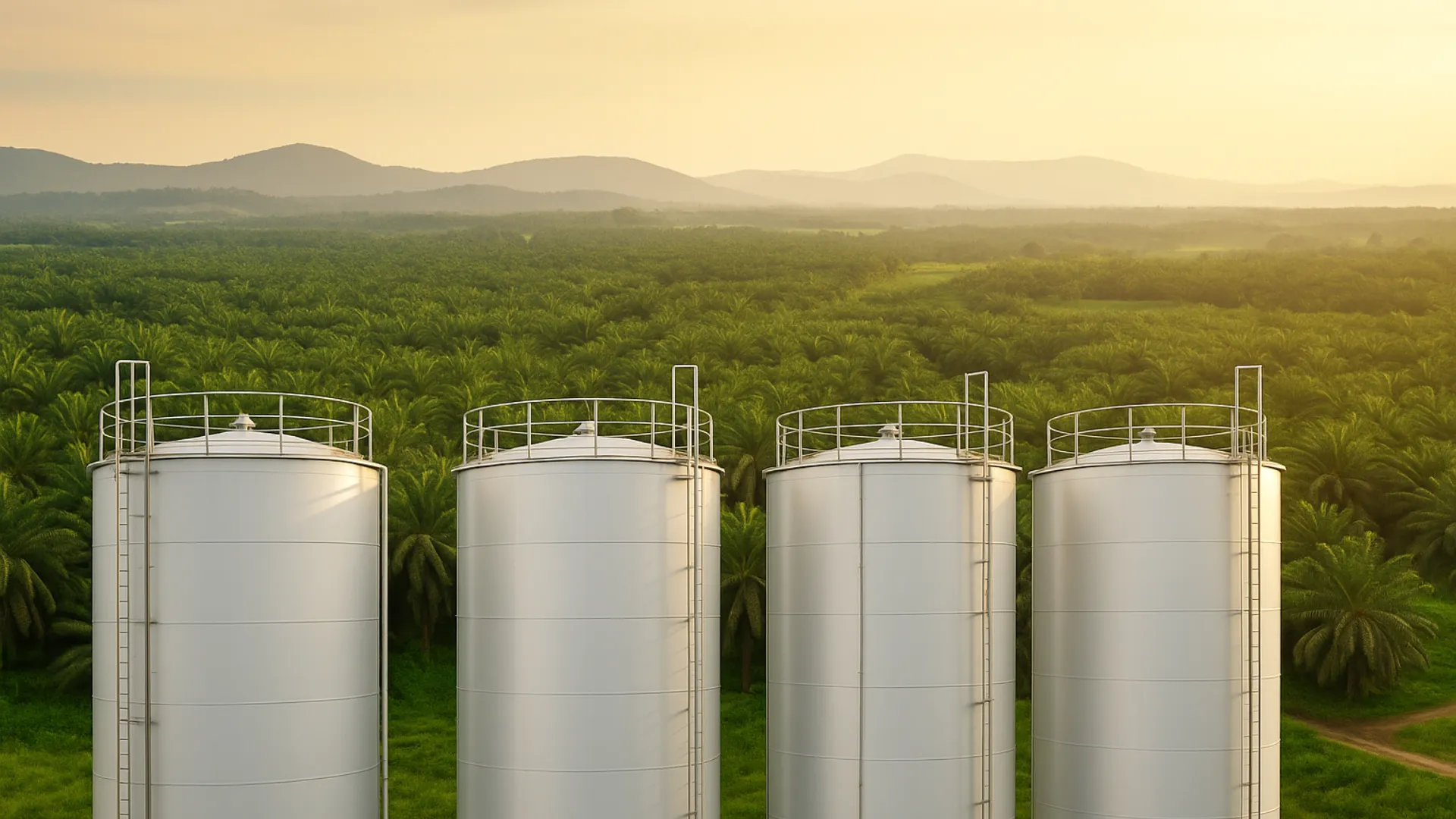
The foundation of the GMS supply chain lies in its two primary raw materials: fatty acids derived from vegetable oils and glycerol. Among these, palm oil has emerged as the dominant feedstock due to its high yield, cost efficiency, and widespread availability. Major producing countries such as Indonesia and Malaysia account for the majority of global palm oil production, making Southeast Asia a critical upstream region for GMS manufacturing.
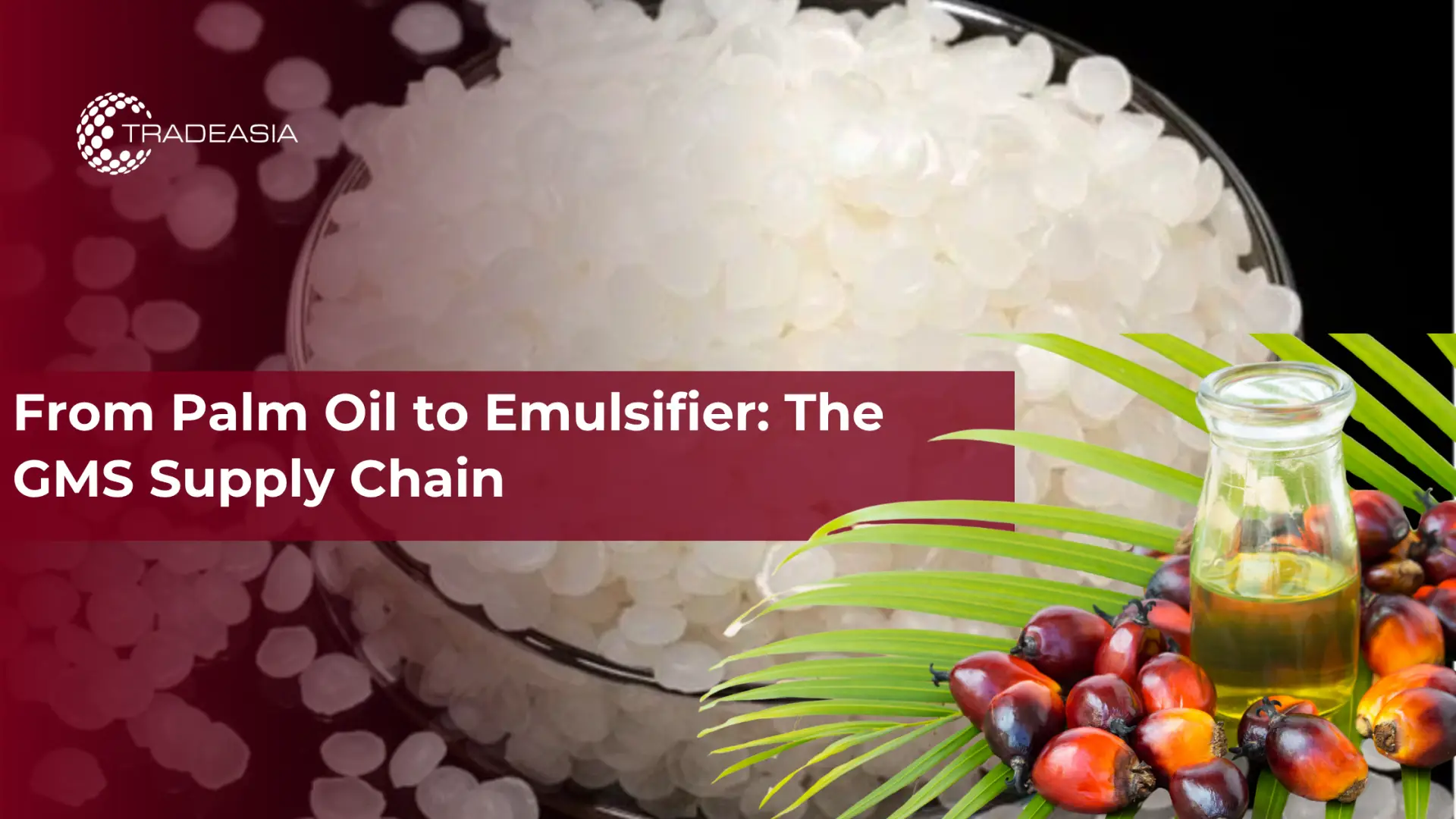
Palm oil is processed into refined fractions such as stearic acid, which serves as the fatty acid component in GMS production. The availability and pricing of stearic acid are directly linked to crude palm oil markets, which are influenced by a range of factors including weather conditions, labor availability, government policies, and global demand for edible oils and biofuels. Seasonal variations, particularly those associated with El Niño and La Niña weather patterns, can significantly affect palm oil yields, leading to supply fluctuations and price volatility.
Glycerol, the second key raw material, is primarily produced as a byproduct of biodiesel and soap manufacturing. Its supply is therefore closely tied to the biofuel industry, which is influenced by energy prices, government mandates, and sustainability policies. Periods of high biodiesel production typically lead to increased glycerol supply and lower prices, while declines in biofuel demand can tighten glycerol availability.
The dual dependency on palm oil and glycerol creates a complex cost structure for GMS production. Any disruption in these upstream markets—whether due to environmental factors, regulatory changes, or geopolitical tensions—can have cascading effects on the availability and pricing of GMS.
Chemical Processing: Esterification and Production Technology
The transformation of raw materials into glycerol monostearate occurs through a chemical process known as esterification. In this process, glycerol reacts with fatty acids, typically stearic acid, under controlled temperature and pressure conditions to form mono- and diglycerides. The resulting mixture is then refined and purified to achieve the desired composition and functional properties.
Esterification is a critical stage in the GMS supply chain because it determines the quality, consistency, and performance of the final product. Manufacturers must carefully control reaction parameters such as temperature, catalyst usage, and reaction time to ensure optimal yields and minimize the formation of unwanted byproducts.
The production process also involves downstream steps such as distillation, crystallization, and drying, which are used to produce GMS in various physical forms, including powders, flakes, and beads. These forms are tailored to different applications and customer requirements, with factors such as solubility, dispersibility, and melting behavior playing a key role in product selection.
Technological advancements have improved the efficiency and sustainability of GMS production. Modern facilities often incorporate energy recovery systems, automated process controls, and advanced purification techniques to reduce costs and environmental impact. However, the capital-intensive nature of these technologies means that production is concentrated among a relatively small number of large-scale manufacturers.
Regional Production Hubs and Global Manufacturing Landscape
The global production of GMS is highly concentrated in regions with strong oleochemical industries and access to key raw materials. Asia, particularly China, Indonesia, and Malaysia, has emerged as the dominant production hub due to its proximity to palm oil resources and its well-established chemical manufacturing infrastructure.
China plays a particularly significant role as both a major producer and exporter of GMS. Its large-scale manufacturing capacity, competitive labor costs, and integrated supply chains allow it to produce GMS at relatively low cost. This has positioned China as a key supplier to global markets, including Europe, North America, and emerging economies.
In Southeast Asia, Indonesia and Malaysia benefit from direct access to palm oil feedstock, enabling them to integrate upstream and downstream operations. This vertical integration enhances cost efficiency and supply reliability, making the region a strategic hub for GMS production.
Other regions, including Europe and North America, also produce GMS, but their production is often focused on high-value or specialty grades. These regions face higher production costs due to labor, energy, and regulatory factors, which can limit their competitiveness in bulk commodity markets.
The concentration of production in a few key regions creates both efficiencies and risks. While it allows for economies of scale and cost advantages, it also increases vulnerability to regional disruptions, such as environmental regulations, trade restrictions, or geopolitical tensions.
Logistics and Trade Flows in the GMS Supply Chain
The distribution of GMS from production hubs to global markets involves a complex network of logistics and trade flows. As a relatively stable and non-perishable product, GMS can be transported in bulk over long distances, making it well-suited for international trade.
Shipping routes from Asia to major consumption markets in Europe and North America are critical components of the supply chain. These routes are influenced by factors such as freight costs, port infrastructure, and geopolitical stability. Disruptions to key shipping lanes, such as those caused by conflicts or logistical bottlenecks, can lead to delays and increased transportation costs.
Packaging and storage also play important roles in maintaining product quality. GMS is typically transported in bags or bulk containers, with careful attention to moisture control and temperature conditions to prevent caking or degradation.
The rise of global trade has also led to the development of regional distribution networks, with warehouses and distribution centers strategically located near major consumption hubs. These networks enable faster delivery times and greater flexibility in responding to market demand.
Cost Structure and Price Volatility Drivers
The cost of GMS is influenced by a combination of raw material prices, production costs, and logistics expenses. Among these factors, the prices of palm oil and glycerol are the most significant drivers, accounting for a large portion of total production costs.
Energy costs also play a critical role, particularly in the esterification process, which requires high temperatures and controlled conditions. Fluctuations in energy prices can therefore have a direct impact on manufacturing costs.
Logistics costs, including freight rates and port charges, add another layer of complexity. In recent years, global shipping disruptions and rising fuel prices have contributed to increased transportation costs, affecting the overall pricing of GMS.
Currency exchange rates can also influence trade dynamics, particularly for exporters operating in regions with volatile currencies. Changes in exchange rates can affect competitiveness and profit margins, adding another dimension to cost management.
Supply Chain Risks and Sustainability Considerations
The GMS supply chain is exposed to a range of risks, including environmental, economic, and regulatory factors. One of the most significant challenges is the sustainability of palm oil production, which has been the subject of increasing scrutiny due to concerns about deforestation, biodiversity loss, and carbon emissions.
Certification schemes such as RSPO (Roundtable on Sustainable Palm Oil) have been developed to address these concerns, promoting responsible sourcing practices and improving supply chain transparency. Many global buyers now require RSPO-certified inputs, making sustainability compliance an important consideration for GMS producers.
Geopolitical tensions and trade policies can also affect supply chain stability. Export restrictions, tariffs, and trade disputes can disrupt the flow of raw materials and finished products, leading to supply shortages and price volatility.
Climate change represents another long-term risk, as changing weather patterns can affect agricultural yields and disrupt raw material supply. These risks highlight the importance of diversification and resilience in supply chain management.
Strategic Implications for Buyers and Manufacturers
For food manufacturers and ingredient buyers, understanding the GMS supply chain is essential for effective procurement and risk management. The interconnected nature of raw material markets, production processes, and global trade flows requires a strategic approach to sourcing.
Diversifying suppliers across different regions can help mitigate risks associated with supply disruptions. Establishing long-term partnerships with reliable suppliers can also enhance supply security and improve cost predictability.
Monitoring market trends, including palm oil prices, energy costs, and regulatory developments, is critical for anticipating changes in GMS availability and pricing. Buyers who actively track these factors are better positioned to make informed procurement decisions.
Sustainability considerations are also becoming increasingly important, as consumers and regulators demand greater transparency and environmental responsibility. Aligning sourcing strategies with sustainability standards can enhance brand reputation and ensure compliance with evolving regulations.
Conclusion
The supply chain of glycerol monostearate is a complex and interconnected system that spans agricultural production, chemical processing, and global trade. From its origins in palm oil plantations to its role as a key emulsifier in food products, GMS reflects the intricate relationships between raw materials, industrial processes, and market dynamics.
Understanding this supply chain is essential for navigating the challenges of price volatility, supply risk, and regulatory pressure. By analyzing upstream dependencies, production technologies, regional dynamics, and logistics networks, stakeholders can gain valuable insights into the factors shaping the global GMS market.
As demand for processed foods and functional ingredients continues to grow, the importance of efficient and resilient supply chains will only increase. Glycerol monostearate, as a critical component of modern food systems, will remain at the center of these developments, highlighting the need for strategic sourcing and informed decision-making in an increasingly complex global market.