Introduction
For American food, beverage, and pharmaceutical manufacturers, liquid glucose is a foundational ingredient, prized for its sweetness, texture enhancement, and shelf-life extension properties. However, the globalized nature of today's supply chains presents both opportunity and complexity. Buyers are no longer limited to domestic corn syrup producers; they can source from a diverse array of suppliers across Asia, Europe, and the Americas. This expansion of choice necessitates a sophisticated, multi-faceted comparison framework. American procurement teams must weigh not just price per ton, but a matrix of factors including product specifications, consistency, logistical efficiency, geopolitical stability, and total cost of ownership.
The decision of where to source liquid glucose directly impacts production costs, product quality, and supply chain resilience. A supplier in Southeast Asia might offer attractive pricing, while a European producer could boast superior technical consistency, and a North American partner provides logistical simplicity. Navigating this landscape requires a clear understanding of the product itself, the strengths and weaknesses of each producing region, and the modern tools available for supplier discovery and vetting. This article provides a detailed roadmap for American buyers tasked with this critical comparative analysis.
Understanding Liquid Glucose: A Product Deep Dive
Before comparing suppliers, buyers must have a firm grasp of the product specifications that matter most to their application. Liquid glucose, often used interchangeably with glucose syrup, is a purified, concentrated aqueous solution of nutritive saccharides obtained from starch. Its key defining characteristic is its Dextrose Equivalent (DE) value, which measures the degree of starch hydrolysis. A higher DE (e.g., 40-65) indicates a sweeter, more fermentable, and more hygroscopic syrup, while a lower DE (e.g., 20-38) provides more body, viscosity, and reduced crystallization in confections. Beyond DE, critical specs include dry solids content (typically 70-85%), pH level, color (expressed as RBU), ash content, and the presence of any preservatives like sulphur dioxide.
The source starch is another vital differentiator. In the Americas, corn syrup dominates, derived from abundant corn starch. In Asia, tapioca or rice-based glucose syrups are common, offering a clean, neutral flavor profile sometimes preferred in certain applications. European producers may utilize wheat or potato starch. Each source can impart subtle differences in flavor, clarity, and functional behavior under processing conditions like high heat or acidity. For a buyer comparing a Chinese tapioca glucose with an American corn syrup of the same DE, the functional outcome in a final product—be it a hard candy, a bakery filling, or a fermented beverage—may differ, making lab testing essential.
Applications drive specification requirements. In the confectionery industry, liquid glucose prevents sucrose crystallization in gums and jellies. In breweries, it acts as a fermentable adjunct. In pharmaceuticals, it serves as a binder and sweetener in syrups and tablets, demanding exceptionally high purity standards. A supplier catering primarily to industrial applications may not have the food safety certifications (like FSSC 22000 or BRCGS) required for a food manufacturer. Therefore, a thorough product deep dive is the first and most crucial step in creating a relevant supplier scorecard.
Key Criteria for Supplier Comparison
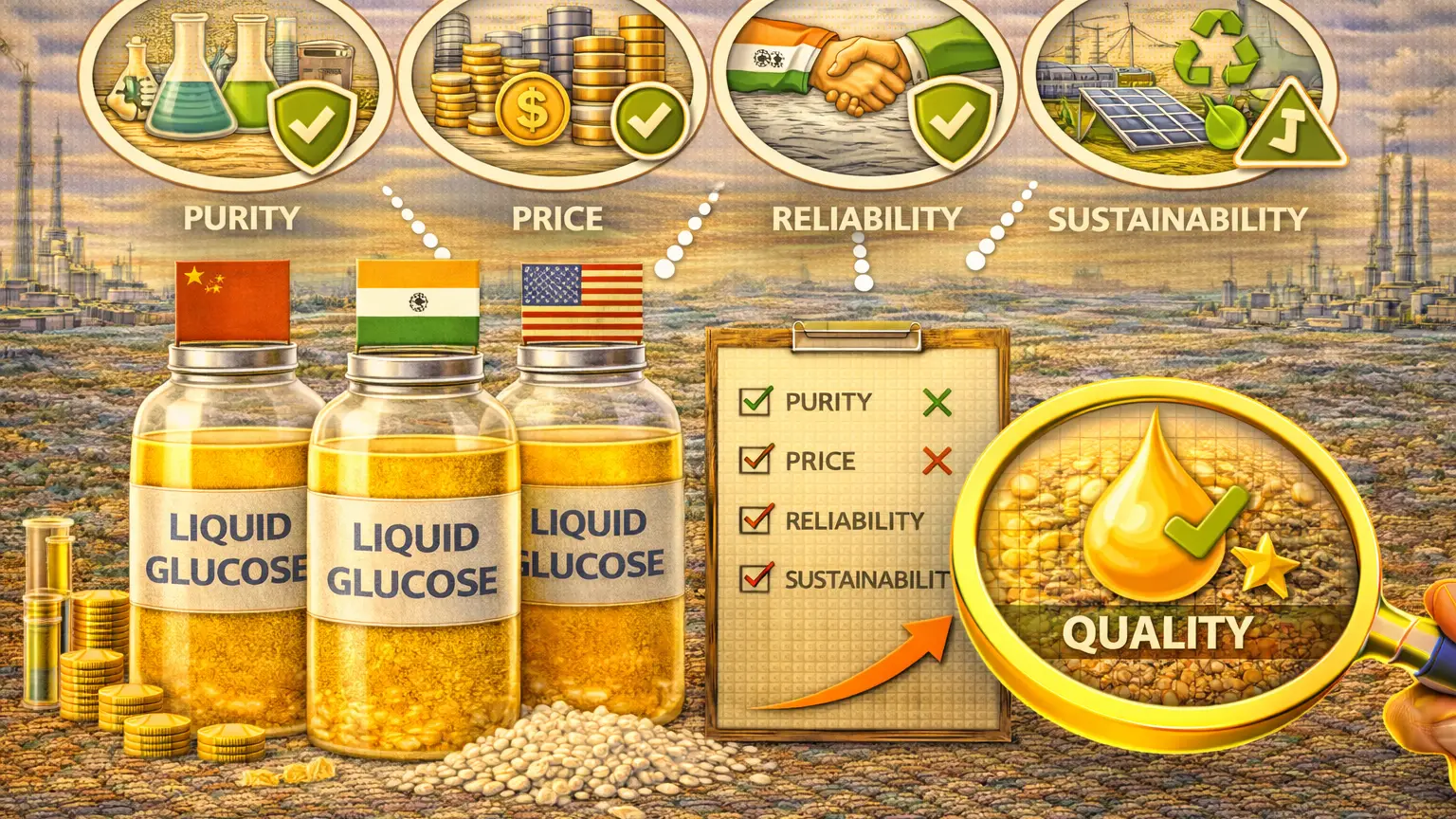
American buyers systematically evaluate potential liquid glucose suppliers across several core pillars. Quality and Consistency are paramount. This involves scrutinizing the supplier's quality management certifications (ISO, HACCP, GMP), their in-house lab capabilities, and their track record for batch-to-batch uniformity. Requesting samples and certificates of analysis (CoAs) for multiple production lots is a standard practice. The ability of a supplier to provide technical data sheets and application support is a strong indicator of professionalism and product understanding.
Cost Structure extends far beyond the FOB price. Buyers must calculate the Total Landed Cost, which includes the product cost, international freight, insurance, import duties (subject to Harmonized Tariff Schedule codes for glucose syrups), port fees, and inland transportation to the factory. A lower FOB price from Malaysia can be negated by high container shipping rates from Southeast Asia to the U.S. West Coast. Furthermore, payment terms (e.g., Letter of Credit vs. Telegraphic Transfer) and minimum order quantities (MOQs) impact cash flow and inventory holding costs, making them critical financial comparison points.
Reliability and Capacity form the backbone of supply chain security. Buyers assess a supplier's production capacity, current client portfolio, and historical performance regarding on-time, in-full (OTIF) delivery. Inquiries into their raw material sourcing (e.g., non-GMO corn, sustainable tapioca) and contingency plans for drought or crop failure are increasingly common. Finally, Communication and Service—responsiveness, English-language proficiency, transparency during issues, and flexibility in logistics coordination—can be the deciding factor between two otherwise equal suppliers, as smooth operations depend on clear, proactive partnership.
Analyzing Major Supply Origins: Asia, Europe, and the Americas
The global liquid glucose market is segmented into distinct regional hubs, each with competitive advantages. Asian Suppliers (notably from China, Thailand, and Indonesia) are often leaders on price competitiveness. They benefit from lower labor costs and access to alternative starch sources like tapioca, which can be marketed as allergen-free (non-corn, non-wheat). Countries like Thailand have developed sophisticated tapioca processing industries, producing high-quality glucose syrups. However, buyers must account for longer transit times (4-6 weeks by sea), potential language barriers, and navigate complex import documentation and customs clearance processes. Geopolitical tensions and trade policy shifts can also introduce volatility.
European Suppliers from nations like France, Germany, and the Netherlands are synonymous with high technical standards, rigorous food safety protocols, and exceptional product consistency, often derived from wheat or potato starch. They are ideal partners for pharmaceutical-grade glucose or high-value food applications where specification adherence is non-negotiable. The cost structure is typically higher, but the value lies in reduced quality risk. Logistics from Europe to the U.S. East Coast are generally reliable, with established shipping lanes. European suppliers often excel in providing detailed technical documentation and R&D collaboration.
American and Regional Suppliers (including the U.S., Canada, and Mexico) offer the advantages of proximity. Domestic corn syrup producers provide shorter, more predictable supply chains, lower freight costs, and alignment with regulatory standards (FDA). This translates to faster lead times, reduced inventory needs, and simpler logistics. While prices may be higher than Asian FOB quotes, the total landed cost can be competitive when all factors are considered. For companies prioritizing "Made in the USA" branding or seeking to minimize carbon footprint through shorter transport distances, regional sourcing is a compelling choice. NAFTA/USMCA facilitates trade with Mexico and Canada, adding another layer of regional flexibility.
The Role of Digital Platforms and B2B Marketplaces
In the digital age, the initial supplier discovery and comparison process has been revolutionized by B2B e-commerce platforms. These marketplaces, such as Chemtradeasia.com, aggregate thousands of chemical and ingredient suppliers onto a single, searchable interface. For an American buyer, this means the ability to efficiently scan and shortlist liquid glucose suppliers from multiple continents within minutes. These platforms provide structured company profiles, product listings with specifications, and often verified indicators like transaction history or on-site audit reports, which add a layer of vetting before first contact.
Beyond discovery, these platforms facilitate transparent comparison. Buyers can view multiple product listings for food-grade glucose with DE 40 side-by-side, noting differences in price, packaging (ISO tank, flexibag, drums), and key selling points. Many platforms offer request-for-quotation (RFQ) tools, allowing buyers to broadcast their specific needs (volume, specs, destination port) to a pre-qualified supplier base and receive competitive bids. This digital RFQ process creates a clear, auditable comparison of not just price, but also supplier responsiveness and willingness to engage—a valuable data point in itself.
However, savvy buyers use these platforms as a starting point, not an endpoint. The digital handshake must be followed by rigorous due diligence. This includes verifying certifications directly with issuing bodies, conducting video audits of manufacturing facilities, and insisting on referenced checks with existing clients, especially those in North America. Platforms like Chemtradeasia.com reduce the friction of global sourcing but do not replace the deep, relationship-based evaluation necessary for securing a reliable, long-term partnership for a critical bulk ingredient like liquid glucose.
Navigating Logistics, Duties, and Supply Chain Risks
The journey of liquid glucose from a foreign factory to a U.S. production line is a complex logistical operation. For bulk shipments, the choice between ISO tanks (reusable stainless steel containers) and flexibags (disposable bladders inside standard containers) has significant cost and environmental implications. ISO tanks are preferred for frequent, large-volume shipments but must be returned, creating a logistics loop. Flexibags eliminate return logistics but generate waste. Ocean freight rates are highly volatile, influenced by fuel costs, port congestion, and global demand. Building a strong relationship with a freight forwarder experienced in food-grade bulk liquids is essential for navigating this volatility and ensuring proper temperature control and hygiene during transit.
On arrival in the United States, the shipment must clear U.S. Customs and Border Protection (CBP). The correct classification under HTS code 1702.30 (Glucose and glucose syrup) is critical for determining the applicable duty rate. Furthermore, the Food and Drug Administration (FDA) requires prior notice of imported food shipments. The foreign supplier must be registered with the FDA, and the product must meet all relevant U.S. food additive regulations (GRAS status). Failure in compliance can lead to costly delays, detention, or refusal of the shipment. Many American importers work with licensed customs brokers to manage this regulatory maze.
Modern supply chain risk management extends beyond logistics. It involves monitoring for force majeure events like droughts affecting corn or tapioca yields, political instability in a sourcing region, or sudden changes in trade policy (e.g., tariffs). Leading procurement strategies now involve dual-sourcing or maintaining a validated secondary supplier in a different geographic region to build resilience. While this may seem to complicate the comparison process, it underscores the need to evaluate not just the best supplier today, but also a viable alternative for tomorrow, ensuring an uninterrupted flow of liquid glucose to production lines.
Conclusion
Comparing liquid glucose suppliers across different origins is a strategic exercise that balances cost, quality, risk, and reliability. For the American buyer, there is no universally "best" origin; the optimal choice is uniquely determined by the company's specific application, volume, risk tolerance, and total cost objectives. A price-sensitive confectioner may find value in a well-vetted Thai supplier, while a pharmaceutical company will likely prioritize a high-spec European partner. Domestic corn syrup offers unbeatable supply chain simplicity and speed.
The process demands a structured approach: define precise product specifications, develop a comprehensive supplier scorecard, leverage digital tools for efficient discovery, and then conduct deep, old-fashioned due diligence. Calculating the true total landed cost and building relationships with both suppliers and logistics partners are non-negotiable steps. In an era of global interconnectivity and localized disruption, the ability to expertly navigate this complex supplier landscape is a key competitive advantage, ensuring a stable, cost-effective, and high-quality supply of this essential industrial sweetener.
Ultimately, successful sourcing is about building partnerships, not just executing transactions. The most valuable liquid glucose supplier is one that acts as an extension of your quality and supply chain team, providing transparency, consistency, and collaborative problem-solving, regardless of the distance between your office and their plant.