Hydrogen peroxide (H2O2) is used across pulp & paper, textiles, water treatment, and electronics in Southeast Asia — but electronics manufacturers have emerged as the fastest-growing and highest-value buyer segment in 2026. Key buyers include semiconductor assemblers, PCB fabricators, and solar panel producers concentrated in Malaysia, Vietnam, Thailand, and Singapore. Demand is driven by the region's accelerating role in global chip supply chains and ongoing China+1 manufacturing diversification.
Electronics manufacturers have become the most commercially significant growth segment for hydrogen peroxide buyers in Southeast Asia, propelled by a regional surge in semiconductor assembly, PCB fabrication, and flat panel display production. While traditional applications in pulp & paper and textiles still account for the majority of total H2O2 volume in the region, the electronics segment commands substantially higher margins, stricter specification requirements, and structurally expanding demand tied to geopolitical supply chain realignment. With the Asia-Pacific region accounting for over 50% of global hydrogen peroxide consumption and Southeast Asia growing at a CAGR of approximately 5–6%, the electronics-driven demand vector is reshaping how suppliers should segment and serve this market.
Core Applications of Hydrogen Peroxide in Southeast Asia
| Application | Sector | Demand Share (Regional Est.) | Trend | Buyer Type |
|---|---|---|---|---|
| Pulp & paper bleaching | Paper & Packaging | ~30–35% | Stable → | Industrial manufacturers |
| Textile bleaching | Textiles & Apparel | ~20–25% | Declining ↓ | Fabric mills, garment manufacturers |
| Wastewater treatment | Municipal & Industrial | ~15% | Growing ↑ | Water utilities, industrial plants |
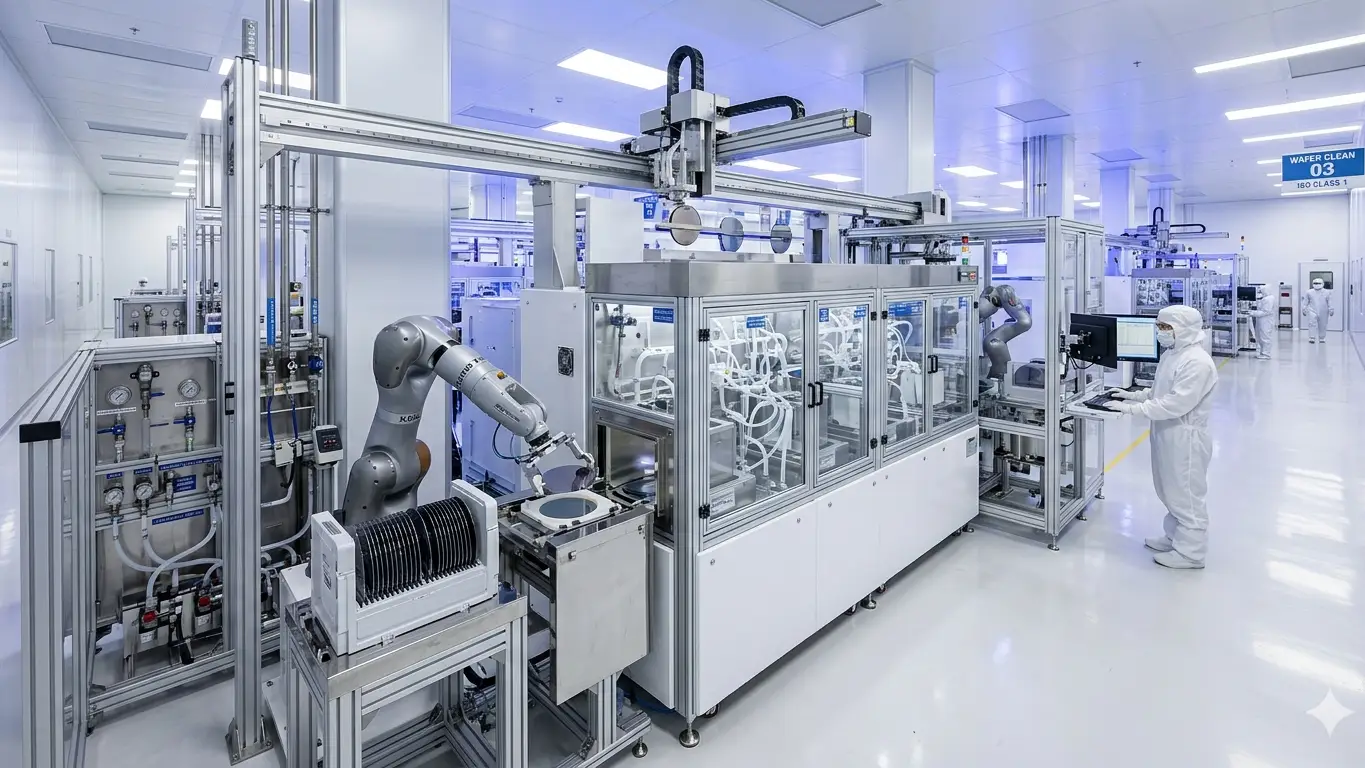
| Semiconductor wafer cleaning & etching | Electronics | ~10–15% | Fast growing ↑↑ | Semiconductor fabs, OSAT facilities |
| PCB fabrication (micro-etching) | Electronics | ~8–12% | Fast growing ↑↑ | PCB manufacturers, EMS companies |
| Solar panel manufacturing | Renewable Energy | ~3–5% | Growing ↑ | PV cell producers |
| Food & beverage sterilization | Food Processing | ~2–4% | Stable → | Food processors, packagers |
| Healthcare & disinfection | Healthcare | ~2–3% | Stable → | Hospitals, pharma manufacturers |
Emerging Applications
Advanced Semiconductor Packaging (FOWLP / 3D IC) Fan-out wafer-level packaging and 3D IC stacking are generating demand for customized hydrogen peroxide formulations with precisely controlled etch rates. As Southeast Asian OSAT facilities in Malaysia (AT&S, Ibiden, Simmtech) and Vietnam (Amkor, Intel) upgrade to advanced packaging, this sub-segment is becoming commercially meaningful. Specialty blends for these processes can command 30–50% premium pricing over standard electronic-grade product. This application is 1–3 years from meaningful volume in the region but is already a priority sourcing area for Penang-based substrate manufacturers.
Electronics Recycling and Precious Metal Recovery Hydrometallurgical processes using hydrogen peroxide for gold and silver recovery from PCB scrap are gaining traction alongside the region's growing electronics waste volumes. Vietnam and Thailand, both large-scale electronics assemblers, are beginning to develop formal e-waste processing infrastructure. This remains a niche application but represents a future demand vector aligned with ESG mandates and circular economy legislation.
Chemical Mechanical Planarization (CMP) Slurry Integration Hydrogen peroxide is increasingly incorporated into CMP slurries used in advanced chip fabrication for surface planarization between process steps. As Malaysia and Singapore push further into higher-value-added semiconductor manufacturing, CMP-grade H2O2 consumption is expected to grow in tandem with sub-10nm node activity.
Key Buyer Segments for Hydrogen Peroxide in Southeast Asia
Semiconductor Fabs and OSAT Facilities
Semiconductor assemblers and outsourced assembly and test (OSAT) operations represent the highest-specification and highest-margin buyer segment in the region. Malaysia is the most established hub, hosting Intel, Infineon, ASE, and packaging substrate manufacturers like AT&S and Ibiden in Penang. Vietnam is rapidly scaling, with Amkor investing over USD 1.6 billion in a Bac Ninh packaging plant expected to produce 3.6 billion units annually, and Hana Micron targeting USD 930 million in additional capacity by 2026. These buyers require electronic-grade hydrogen peroxide — typically 30% concentration with metallic impurities below 1 ppb (parts per billion) — and procure on long-term supply contracts. Price sensitivity is moderate to low; supply security and certified purity consistency are the primary procurement criteria. Grade certifications (SEMI G2 through G5) are non-negotiable.
PCB Manufacturers and Electronics Manufacturing Services (EMS) Companies
Thailand is Southeast Asia's largest PCB producer, with output forecast at approximately USD 3.26 billion in 2024, and remains the preferred destination for multilayer PCB investment from China, Japan, South Korea, and Taiwan. Vietnam and Malaysia are growing at roughly 15–20% annually in PCB production, driven by brands like Dell, HP, and Apple accelerating their supply chain diversification out of mainland China. Samsung Electro-Mechanics and Kyocera have established PCB and packaging substrate factories in Vietnam; Stars Microelectronics and Fabrinet are expanding in Thailand. PCB fabrication uses hydrogen peroxide for micro-etching copper surfaces, cleaning, and surface preparation prior to plating. These manufacturers buy standard-grade to electronic-grade H2O2 (50–70% concentration for etching; lower grades for cleaning), primarily through distributors or regional chemical traders, with semi-annual to annual contracts. Volume sensitivity is high, and logistics reliability matters given tight production schedules.
Solar Panel and PV Cell Manufacturers
Vietnam has emerged as one of the world's fastest-growing solar panel producers, driven by government export incentives and FDI from Chinese PV manufacturers relocating production to avoid trade barriers. Hydrogen peroxide is used in solar wafer texturing, passivation, and cleaning processes. PV manufacturers are typically medium-scale buyers of standard-grade H2O2 (35–50%) with moderate specification requirements compared to semiconductor users. Procurement is often through national chemical distributors with spot and short-term contract purchasing. This segment is growing but remains secondary to semiconductor and PCB demand in terms of margin contribution.
Flat Panel Display Producers
LCD and OLED panel manufacturing requires hydrogen peroxide for glass substrate cleaning and photoresist stripping. While Southeast Asia is not yet a primary hub for display panel fabrication (Taiwan, South Korea, and China dominate), Singapore has a presence in high-end precision electronics and flat panel component production. This is a stable, lower-growth segment in the region for now, but could expand if display manufacturing follows the broader electronics supply chain shift toward ASEAN.
Chemical Distributors and Specialty Traders
A substantial portion of H2O2 sold to electronics buyers in Southeast Asia flows through regional distributors who aggregate demand from SME-scale PCB shops, component manufacturers, and laboratory users. Distributors buy in bulk (often ISO tank), repackage or dilute to required concentrations, and sell to manufacturers who cannot access minimum order quantities from direct suppliers. This channel is particularly important in Vietnam and the Philippines, where smaller-scale electronics assembly is growing rapidly. Distributors are price-sensitive, arbitrage-aware, and responsive to spot market dynamics — they do not lock into long-term purity contracts the way direct fab buyers do.
Industrial and Institutional Buyers (Water Treatment, Textiles)
These remain the highest-volume segment by tonnage in Southeast Asia, but they are not the growth story. Textile mills in Vietnam, Indonesia, and Bangladesh use lower-grade H2O2 (35%) for bleaching; water utilities use it for advanced oxidation in wastewater treatment. Procurement is typically through tenders or national distributor agreements, driven primarily by price. This segment faces substitution pressure from alternative bleaching agents in some textile applications and provides limited margin differentiation for suppliers.
Demand Drivers and Market Outlook
Economic Linkage
Hydrogen peroxide demand from electronics buyers in Southeast Asia is directly correlated with semiconductor output volumes, PCB production growth, and electronics export value — not GDP alone. Vietnam's electronics exports exceeded USD 100 billion, making it among Asia's most significant electronics exporters; Malaysia's semiconductor and electronics sector generates a comparable scale of downstream chemical consumption. When global electronics output grows, so does H2O2 demand in the region. The key leading indicator to watch is quarterly semiconductor sales data from SIA (Semiconductor Industry Association), which tracks global wafer volumes and fab utilization rates.
Sector Growth: The China+1 and Supply Chain Realignment Effect
The single most powerful structural force reshaping hydrogen peroxide demand in Southeast Asia is the accelerating relocation of electronics manufacturing away from mainland China. ASEAN attracted a record USD 235 billion in FDI in 2024 — outpacing China for the first time — with manufacturing and electronics absorbing the largest share. Vietnam is the primary beneficiary: in the first eight months of 2025, the country attracted USD 26.1 billion in FDI, with semiconductors and high-tech manufacturing as priority sectors. Thailand has launched a 25-year National Semiconductor Strategy targeting THB 2.5 trillion (approximately USD 79 billion) in investment by 2050. Malaysia has deployed its National Semiconductor Strategy 2024 to move up the value chain from packaging and testing toward higher-complexity design activity. Each new fab, OSAT facility, or PCB plant that opens in the region is a new direct buyer of electronic-grade hydrogen peroxide.
Substitution Risk
The primary substitution risk for hydrogen peroxide in electronics applications is the adoption of dry-process alternatives — plasma cleaning, UV-ozone treatment, or dry etching — that reduce or eliminate wet chemical steps in semiconductor fabrication. As advanced nodes shrink below 5nm, some wet chemistry steps face pressure from dry alternatives in leading-edge fabs. However, this risk is concentrated in Taiwan and South Korea's frontier fabs; Southeast Asian facilities are predominantly focused on mature-node wafer processing, packaging, testing, and PCB fabrication, all of which remain reliant on wet chemistry and H2O2. In textile and pulp & paper applications, chlorine-based or enzymatic bleaching alternatives pose a more immediate substitution risk over the medium term.
Policy and Regulatory Drivers
Government-led semiconductor industrial policy is the strongest demand accelerator in the region. Vietnam's national chip strategy targets 100 chip design firms and multiple packaging and testing facilities by 2030. Malaysia's government committed to a 550 million ringgit joint investment in the semiconductor ecosystem in its 2026 budget. ASEAN launched the ASEAN Framework for Integrated Semiconductor Supply Chain (AFISS) in 2025 during Malaysia's chairmanship, creating a regional coordination structure that incentivizes electronics manufacturing concentration. Environmental regulations in the region are simultaneously driving growth in hydrogen peroxide for wastewater treatment — H2O2 is favored as an eco-compatible oxidizer that breaks down into water and oxygen, positioning it well relative to chlorine-based alternatives under tightening environmental compliance.
Strategic Insight: Commercial Opportunities
Who drives demand today? By volume, pulp & paper and textile manufacturers remain the largest H2O2 buyers in Southeast Asia. But by margin and growth rate, PCB fabricators and semiconductor assemblers in Thailand, Malaysia, and Vietnam are the dominant commercial opportunity. These buyers require high-specification product, build long-term supplier relationships, and are less exposed to price-only competition.
Where is growth coming from? The clearest demand growth vector is the electronics manufacturing buildout in Vietnam and Malaysia, driven by supply chain diversification from China. Vietnam's semiconductor packaging sector alone has attracted multi-billion-dollar FDI commitments from Intel, Amkor, and Hana Micron, all of which represent new or expanding demand for electronic-grade H2O2. PCB production growth in Thailand and Vietnam — growing at 15–20% annually — adds further volume. These are not cyclical trends; they are structural relocations of manufacturing capacity tied to geopolitical realities.
Where is risk concentrated? The highest structural risk lies in the traditional textiles and paper sectors, where H2O2 demand is flat to declining in some subsegments and faces substitution pressure. For electronics demand, the key near-term risk is the pace of fab ramp-ups: new OSAT facilities in Vietnam have faced short-term utilization headwinds (some below 50% in early 2025 quarters) as operators manage equipment depreciation and workforce scaling. Demand acceleration will lag new capacity additions by 12–24 months.
What does this mean for commercial strategy? Suppliers and distributors should prioritize qualification with PCB manufacturers and OSAT facilities in Penang (Malaysia), Bac Ninh and Dong Nai (Vietnam), and Ayutthaya (Thailand) — these are the highest-density pockets of electronics-grade H2O2 demand and are actively seeking reliable, specification-certified regional supply chains. Given that over 33% of electronic-grade hydrogen peroxide consumed in Asia-Pacific is still imported, there is a clear opportunity for regional distributors capable of managing dangerous goods logistics, providing grade certification documentation, and offering consistent purity across delivery cycles. Content and marketing should target procurement and process chemistry teams at EMS companies, PCB fabs, and OSAT operators — not just general industrial buyers.
If you are looking to source hydrogen peroxide for electronics manufacturing, semiconductor processing, or industrial applications across Southeast Asia, Tradeasia International offers reliable regional supply backed by rigorous quality controls and end-to-end logistics capability. With over two decades of experience in chemical distribution and a network spanning Asia Pacific, the Middle East, the Americas, and Europe — including dedicated Southeast Asia operations through chemtradeasia.sg and chemtradeasia.co.id — Tradeasia delivers hydrogen peroxide in the grades and concentrations required by electronics manufacturers, PCB fabricators, and industrial processors. Contact us today to discuss your sourcing requirements, grade specifications, pricing, and lead times.