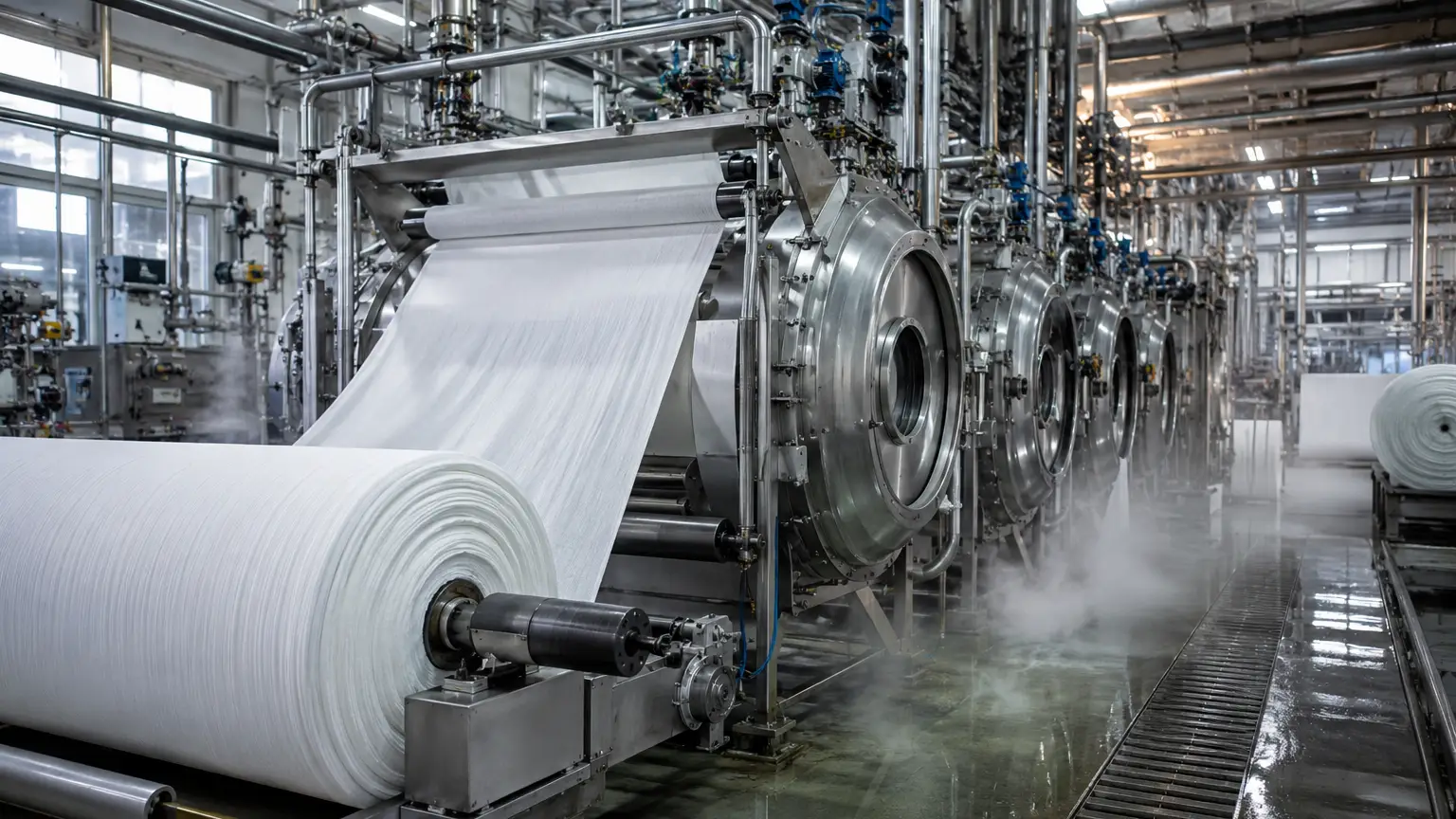
Textile bleaching is the second largest application for hydrogen peroxide globally, second only to pulp and paper, and it is structurally irreplaceable in the manufacturing of white and dye ready natural fiber fabrics. As the global textile industry accelerates its transition away from chlorine based bleaching agents, driven by regulatory pressure, sustainability commitments from apparel brands, and increasingly stringent effluent discharge standards, hydrogen peroxide has consolidated its position as the bleaching agent of choice across cotton, linen, wool, and natural fiber blend manufacturing worldwide. For B2B buyers in textile manufacturing and chemical procurement, understanding how hydrogen peroxide functions in textile processing, what concentrations are required, and how global buyer demand is distributed across production regions is the starting point for effective raw material sourcing.
What Is Hydrogen Peroxide and Why Does It Matter to Textile Manufacturers
Hydrogen peroxide (H2O2) is a clear, pale blue liquid compound composed of two hydrogen and two oxygen atoms, characterized by an oxygen-oxygen single bond that makes it a powerful and reactive oxidizing agent. Commercially, it is produced almost exclusively through the anthraquinone oxidation (AO) process, a catalytic hydrogenation-oxidation cycle that converts anthraquinone and hydrogen into hydrogen peroxide with high selectivity and scalability. The reaction produces hydrogen peroxide as an aqueous solution, commercially supplied at concentrations of 27.5%, 35%, 50%, and 60% by weight for industrial applications, with 35% and 50% the most commonly used grades in textile processing.
The functional relevance of hydrogen peroxide to textile manufacturing rests on three properties. First, as an oxidizing agent, it attacks and destroys the chromophoric groups in naturally occurring pigments present in raw cellulose fibers, converting brown, yellow, or off-white greige fabric into the bright white substrate required for undyed white goods or as the neutral base for reactive and vat dyeing. Second, it decomposes into water and oxygen after reaction, leaving no chlorinated organic byproduct residues that would contaminate effluent, damage fibers, or create compliance problems under wastewater discharge regulations. Third, it is effective at alkaline pH levels typical of textile processing conditions, making it compatible with the caustic soda and sodium silicate systems already standard in textile preparation sequences.
The bleaching segment accounted for approximately 36.3% of global hydrogen peroxide demand by function in 2026, with the textile industry representing the second largest application sector within that segment after pulp and paper. The global hydrogen peroxide market was valued at USD 3.49 to 7.07 billion in 2024, varying by market scope definition, growing at a CAGR of 5 to 5.7% through 2033 to 2034, with textile bleaching constituting a structurally significant and growing share of that demand.
How Hydrogen Peroxide Is Used in Textile Bleaching
Preparation and Scouring
Before bleaching commences, raw natural fiber fabric undergoes a preparation sequence that includes desizing (removing starch based sizing agents applied during weaving), scouring (removing natural waxes, oils, pectin, and other non-cellulosic impurities from the fiber), and optionally singeing and mercerizing. Hydrogen peroxide is often applied in a combined scouring-bleaching step, particularly on cotton, where it simultaneously oxidizes natural pigments and assists in the removal of residual impurities when applied alongside alkali and stabilizer systems. This combined process reduces water consumption, energy use, and processing time compared to sequential separate steps, making it economically attractive for high throughput continuous processing lines.
Cotton Bleaching: The Core Application
Cotton is the dominant fiber for hydrogen peroxide bleaching by volume globally, reflecting cotton's position as the world's most widely used natural textile fiber. Raw cotton contains natural pigments, primarily flavonoids and carotenoids, that give it a characteristic cream to yellow color. These pigments must be oxidized and destroyed to achieve the whiteness levels required for undyed white goods or to provide a neutral base for accurate color development in subsequent dyeing steps.
The standard hydrogen peroxide bleaching process for cotton involves treating the fabric with an alkaline bath containing hydrogen peroxide, typically 2 to 5 g/L at 35% concentration, sodium hydroxide (NaOH) as the activating alkali, sodium silicate as a stabilizer to prevent premature H2O2 decomposition, and optionally sequestrants to complex trace metal ions, particularly iron and manganese, that would catalytically decompose hydrogen peroxide and cause uneven bleaching or fiber damage.
Process conditions vary by equipment type. Continuous open width bleaching in J-boxes or steam chambers operates at 90 to 105°C with residence times of 15 to 45 minutes. Cold pad-batch bleaching, increasingly popular for energy savings and reduced water consumption, applies the bleach liquor at ambient temperature and allows the padded fabric to dwell on a rotating batching roller for 12 to 24 hours at room temperature, achieving comparable whiteness to hot bleaching with significantly lower energy input. This cold pad-batch process has been adopted by sustainability focused textile mills across Asia and Europe as a primary method to reduce the carbon footprint of the preparation sequence.
The whiteness level achieved by hydrogen peroxide bleaching on cotton, typically measured by the CIE whiteness index, is sufficient for most commercial textile applications. For ultra high whiteness requirements including optical white shirting, medical textiles, and premium household textiles, a secondary optical brightening agent (OBA) treatment after hydrogen peroxide bleaching elevates the whiteness index to the target level.
Linen and Other Cellulose Fibers
Linen (flax fiber) is significantly more difficult to bleach than cotton due to its higher natural pigment content and the presence of lignin residues that resist oxidative removal. Multi stage bleaching sequences are typically required for linen, often combining an initial chlorite treatment where regulations permit or an extended alkaline hydrogen peroxide stage followed by a second hydrogen peroxide treatment, to achieve acceptable whiteness without excessive fiber damage. The transition away from chlorite based bleaching in European textile markets has increased the hydrogen peroxide loading in linen bleaching sequences, as processors compensate for the removal of the more aggressive chlorite stage by extending the peroxide stage.
Hemp and ramie fibers, gaining commercial significance as sustainable textile alternatives to cotton, also undergo hydrogen peroxide bleaching preparation and represent emerging demand segments for textile grade hydrogen peroxide as brands expand their natural fiber alternative programs.
Wool and Protein Fiber Bleaching
Wool bleaching uses hydrogen peroxide under different chemical conditions than cotton bleaching. Wool is a protein fiber (keratin) rather than a cellulose fiber, and it is sensitive to the alkaline conditions used in cotton bleaching because strong alkali causes fiber damage and yellowing rather than whitening. Wool is bleached with hydrogen peroxide at near neutral to slightly acidic pH (5.5 to 7.0), typically using a buffered system with citric acid or ammonium sulfate to maintain pH control, at temperatures of 40 to 50°C with extended dwell times of several hours.
The wool bleaching market is concentrated in Europe, Australia, and China, the primary production centers for worsted and woolen fabric manufacturing. Australia's significant Merino wool processing industry, China's large scale wool textile manufacturing, and European specialty wool fabric producers collectively represent the core buyer base for wool grade hydrogen peroxide at the precise pH control and stabilizer compatibility specifications required for protein fiber processing.
Synthetic and Blended Fiber Processing
While hydrogen peroxide bleaching is primarily applicable to natural fibers, blended fabrics including cotton-polyester, cotton-viscose, and cotton-nylon require bleaching of the natural fiber component while ensuring the synthetic fraction is not degraded. This is managed through careful pH and concentration control in the bleaching bath and is a standard process requirement for the large polyester-cotton blend segment that dominates mass market apparel and workwear production globally.
Who Buys Hydrogen Peroxide for Textile Bleaching Globally
Asian Textile Manufacturers: The Dominant Buyer Base
Asia-Pacific accounted for approximately 45.70% of the global hydrogen peroxide market in 2025, with textile bleaching as a primary demand driver alongside pulp and paper. China, India, Bangladesh, Vietnam, and Indonesia, the five most significant global garment and textile exporting nations, together represent the largest regional buyer base for textile grade hydrogen peroxide globally.
China's textile industry, the world's largest by production volume, consumes substantial hydrogen peroxide across its cotton, polyester-cotton blend, and synthetic fiber processing operations. India's textile sector, concentrated in Gujarat (Surat, Ahmedabad), Tamil Nadu, and Maharashtra, is the second largest buyer, with large scale cotton processing mills consuming hydrogen peroxide in both continuous and cold pad-batch bleaching configurations. The India hydrogen peroxide market was projected to reach USD 0.16 billion by 2026, reflecting the country's dual role as both a major textile producer and an expanding H2O2 manufacturing base.
Bangladesh, as the world's second largest ready-made garment (RMG) exporter, operates a large scale woven fabric processing industry that bleaches cotton fabric for both export grade garment manufacturing and domestic consumption. Hydrogen peroxide is the standard bleaching agent across Bangladesh's dyeing and finishing sector, with procurement handled through domestic chemical distributors sourcing from Indian, Chinese, and regional producers.
Vietnam and Indonesia, both with rapidly expanding export oriented textile manufacturing bases, are growing buyers of hydrogen peroxide as their domestic textile value chains upgrade from assembly only to full package production, a transition that requires fabric preparation capability including bleaching. Vietnam's hydrogen peroxide demand from textiles is growing alongside its expanding woven fabric dyeing and finishing sector, which services both domestic garment production and regional supply chains.
European Textile Processors: Specification Intensive Buyers
Europe is the second largest consuming region for hydrogen peroxide globally, with the hydrogen peroxide market valued at approximately USD 0.55 billion in 2025. European textile manufacturers, concentrated in Italy, Germany, Portugal, Turkey, and the United Kingdom, consume hydrogen peroxide for high specification fabric preparation across premium cotton, linen, wool, and technical textile categories.
European buyers operate under the most stringent environmental regulatory framework for textile bleaching globally, including the EU's REACH regulation requirements for chemical safety documentation, effluent discharge limits under the Water Framework Directive, and sustainability certifications required by European apparel brands and retail chains including GOTS, OEKO-TEX, and bluesign. These requirements effectively mandate hydrogen peroxide as the bleaching agent of choice because chlorine based alternatives are incompatible with these certification frameworks, while simultaneously requiring full regulatory documentation from chemical suppliers.
European textile processors are among the most specification demanding buyers of hydrogen peroxide globally. They require product purity documentation including stabilizer types such as phosphonate or silicate stabilizers and stabilizer levels, as some stabilizers interact negatively with fiber processing auxiliaries. They also require supply chain sustainability documentation, increasingly including carbon footprint declarations per tonne of hydrogen peroxide, as textile brands subject their chemical suppliers to Scope 3 emissions audits. Nouryon's March 2025 launch of Eka HP Puroxide, a low carbon hydrogen peroxide product reducing Scope 3 emissions by up to 90%, was specifically targeted at this sustainability driven European buyer demand.
North American Textile and Laundry Chemical Buyers
North America contributed approximately USD 0.34 billion to the global hydrogen peroxide market in 2025, with textile bleaching demand concentrated among industrial laundry operations, institutional linen services, and specialty textile processors rather than the large scale greige fabric processing that characterizes Asian markets. The US domestic textile manufacturing base has contracted significantly over the past three decades, with most fabric production having relocated to Asia. The remaining North American textile hydrogen peroxide demand is concentrated in industrial laundry including institutional textile services for healthcare, hospitality, and food service, specialty cotton processors in the Carolinas and Georgia, and technical textile manufacturers producing medical and defense materials.
North American buyers consumed hydrogen peroxide at prices that reached approximately USD 0.37/kg (USD 370/MT for concentrated industrial grade) in December 2025, with stable procurement conditions reflecting the region's balanced supply-demand environment supported by domestic production from Evonik, Solvay, and other regional suppliers.
Hydrogen Peroxide Grades and Specifications for Textile Bleaching
The most commonly used hydrogen peroxide concentration for textile bleaching is 35% by weight, which dominates the market with the largest commercial share at 35.5% of global demand in 2026. The 35% grade offers the optimal balance between bleaching efficacy, safe handling, and logistics cost because it delivers sufficient active oxygen to achieve textile whiteness targets at standard application concentrations without the additional hazmat requirements associated with higher concentration grades such as 50% and above.
For high throughput continuous bleaching operations, including large scale woven fabric mills with J-box or steam range equipment, 50% hydrogen peroxide is increasingly used because its higher concentration reduces liquid volume per unit of active oxygen, lowering the freight cost per unit of bleaching effect and reducing the volume of liquid handled at the mill. The 30% to 50% concentration segment is projected to grow at a CAGR of 6.7% through 2033, driven precisely by this application in industrial textile bleaching.
Key specification parameters that textile buyers should require from hydrogen peroxide suppliers include assay, meaning active H2O2 content within ±0.5% of stated concentration, stabilizer system identification including sodium pyrophosphate, sodium stannate, or silicate stabilizers because each interacts differently with textile processing auxiliaries, acidity (pH of neat product, typically 1.5 to 4.0 for stabilized industrial grade), iron content with a maximum of 0.5 ppm because trace iron catalytically decomposes H2O2 causing uneven bleaching and fiber damage, and heavy metals content according to regulatory requirements. A Certificate of Analysis (COA) per delivery lot and an up to date Safety Data Sheet (SDS) with transport classification are baseline documentation requirements.
Tradeasia International supplies industrial grade hydrogen peroxide, including 35% and 50% concentrations, to textile mills, dyeing and finishing processors, and chemical distributors globally, with multi origin sourcing, full regulatory documentation including COA and SDS, and both spot and contract procurement options. Textile manufacturers seeking to qualify a reliable hydrogen peroxide supply source or evaluate pricing for their specific consumption volumes can contact Tradeasia's industrial chemicals team to discuss grade specifications, delivery logistics, and procurement terms.
The Regulatory and Sustainability Driver Behind Global Demand Growth
The structural force that has made hydrogen peroxide the dominant textile bleaching agent globally, and will sustain its demand growth through 2034, is the global regulatory and commercial pressure to eliminate chlorine based bleaching. Sodium hypochlorite, chlorine gas, and sodium chlorite were historically used in textile preparation for their aggressive bleaching power and low cost, but they generate chlorinated organic compounds (AOX) in effluent that are environmentally persistent, ecotoxic, and subject to increasingly strict discharge limits in Europe, parts of Asia, and progressively in emerging markets.
Hydrogen peroxide addresses the chlorine free bleaching requirement directly and comprehensively because its oxidative mechanism does not produce chlorinated byproducts, it decomposes cleanly into water and oxygen, and its effluent compatibility with biological wastewater treatment systems is well established. Major apparel brands including H&M, Inditex, Patagonia, and Nike now require their textile suppliers to use hydrogen peroxide based bleaching as part of their supplier chemical management programs, effectively mandating H2O2 adoption across their supply chains regardless of local regulatory requirements.
The GOTS (Global Organic Textile Standard) and bluesign certification frameworks, both widely required by premium and sustainable apparel brands, explicitly permit hydrogen peroxide in textile processing while prohibiting most chlorine based bleaching agents. This certification driven mandate is particularly significant in Asia, where textile manufacturers supplying European and North American retail chains are undergoing systematic chemical substitution programs to achieve certification compliance. Textile regulations are increasingly accelerating substitution toward peroxide based bleaching globally, with this trend expected to continue strengthening through 2030 as more brands expand their restricted substances lists and adopt chemical compliance auditing of their supplier base.
Outlook: Global Textile Hydrogen Peroxide Demand Through 2034
The global hydrogen peroxide market is projected to grow from USD 6.69 to 7.07 billion in 2024 to 2025 to approximately USD 11.54 billion by 2034, advancing at a CAGR of 5 to 5.7%. Textile bleaching will remain the second largest application segment through this period, with demand growth driven by three converging forces: the continued expansion of textile manufacturing capacity in South and Southeast Asia, the accelerating phase out of chlorine based bleaching driven by brand chemical compliance requirements, and the gradual adoption of energy efficient cold pad-batch bleaching processes that extend hydrogen peroxide usage across mill types previously limited to hot continuous processing.
The capacity investments being made in hydrogen peroxide production across Asia, including Evonik's Fuhua joint venture in Sichuan, DCM Shriram's 52,000 tpa plant in Gujarat, and Solvay's Shandong Huatai expansion, are partly a response to rising textile sector demand in the region, ensuring that regional supply will be available to match Asia's growing bleaching needs without the logistics cost and security concerns of long haul import dependence. For textile buyers, this regional supply development means improving procurement optionality and potentially more competitive pricing relative to historically import dependent markets.