1. Introduction: Asia’s Rising Role in Sodium Sulphate Demand
The sodium sulphate market in 2026 is increasingly shaped by demand from India and Southeast Asia. These regions are experiencing rapid industrialization, infrastructure investment, and urban development, all of which directly support sodium sulphate consumption. As mature markets stabilize, Asia becomes the primary growth engine.
India’s manufacturing push and Southeast Asia’s infrastructure boom create sustained demand rather than short-term spikes. Sodium sulphate plays a supporting but essential role across construction materials, detergents, glass, and chemical processing. This broad application base strengthens demand resilience.
According to Springer-published industrial mineral research, sodium sulphate demand closely correlates with construction output and industrial activity in emerging economies. This relationship is now clearly visible across Asia-Pacific markets.
Commercial supply into these regions is supported by standardized grades such as Sodium Sulphate Anhydrous, which remains the preferred form for industrial buyers.
2. Infrastructure Expansion Fuels Consumption Growth
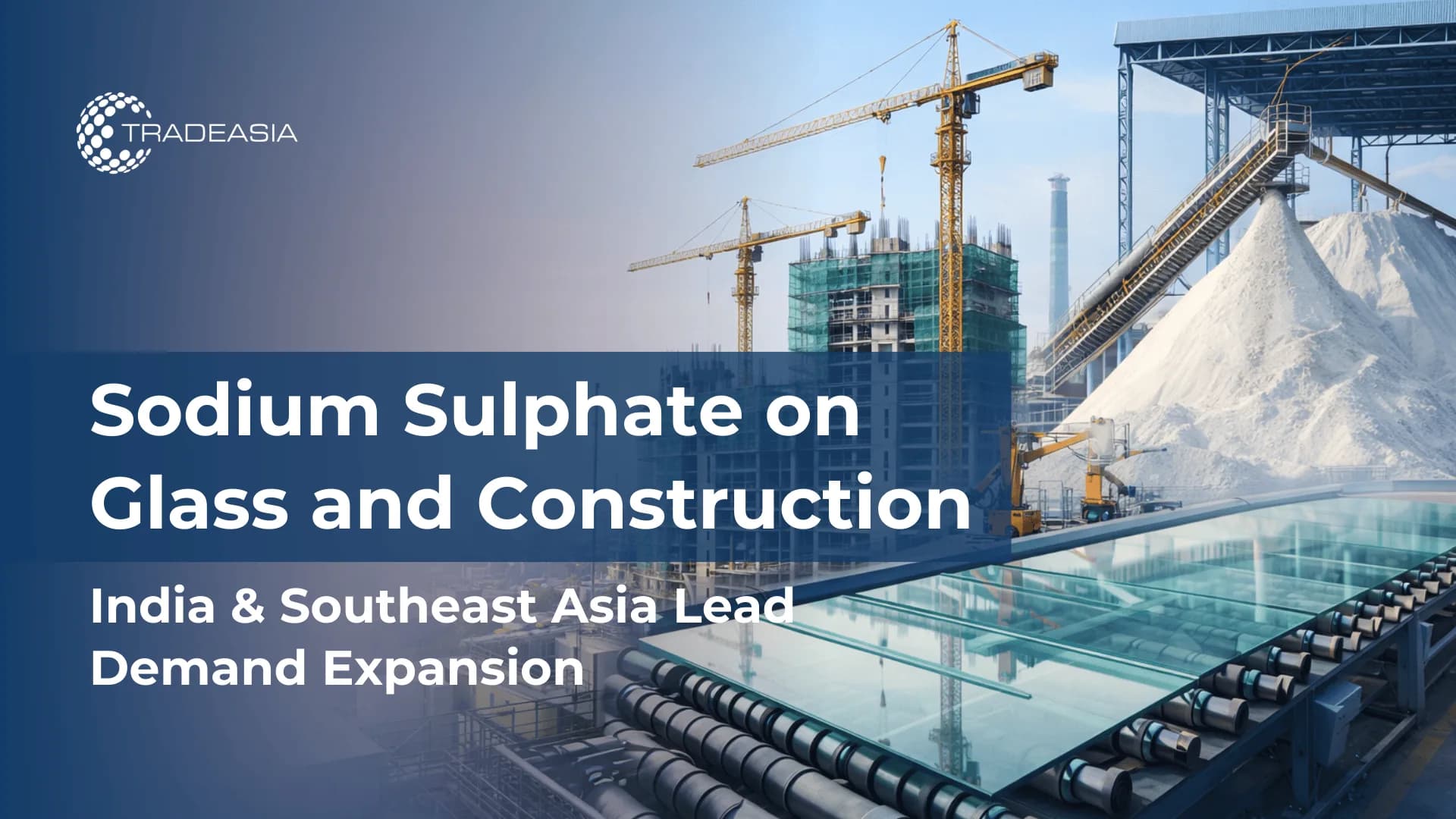
Infrastructure development is one of the strongest demand drivers for sodium sulphate in 2026. Large-scale projects across roads, housing, industrial parks, and public utilities require construction materials that indirectly rely on sodium sulphate inputs. This trend is particularly visible in India and Vietnam.
Government-led infrastructure budgets in India and ASEAN countries continue to prioritize cement, glass, and insulation industries. Sodium sulphate supports these value chains through its use in glass manufacturing and specialty construction compounds. Demand growth is therefore structurally anchored.
Wiley industry studies note that sodium sulphate consumption grows steadily alongside cement and flat glass output rather than fluctuating with commodity cycles. This creates predictable long-term demand profiles for suppliers.
Regional market analysis from SNS Insider confirms that Asia-Pacific leads global sodium sulphate growth, driven primarily by India and Southeast Asia’s infrastructure momentum .
3. Construction Materials and Industrial Applications
Beyond infrastructure, sodium sulphate is increasingly integrated into construction-related manufacturing processes. It is used in glass melting, cement additives, and thermal insulation materials that support modern building standards. These applications expand alongside urbanization.
Southeast Asia’s focus on affordable housing and industrial estates further supports steady sodium sulphate demand. Unlike niche chemicals, sodium sulphate benefits from volume-driven applications that scale with construction output. This keeps demand stable even during economic adjustments.
ScienceDirect research on industrial minerals highlights sodium sulphate’s role as a process stabilizer in glass and construction materials manufacturing. Its functional value ensures continued relevance across multiple industries.
As construction materials production rises across Asia, sodium sulphate becomes a strategic supporting input rather than a discretionary purchase.
4. Supply Dynamics and Regional Trade Flows
Supply dynamics in 2026 reflect growing intra-Asia trade for sodium sulphate. Producers increasingly target India and Southeast Asia due to consistent offtake and improving logistics infrastructure. This reduces dependency on distant export markets.
China remains a major supplier, but diversified sourcing is becoming more common. Buyers seek supply security, consistent quality, and reliable delivery rather than opportunistic pricing. This shifts market competition toward service reliability.
Elsevier-published logistics studies show that regionalized supply chains reduce volatility in bulk industrial chemicals. Sodium sulphate trade flows within Asia now reflect this broader structural change.
For buyers, supplier transparency and documentation access—supported through tools like the Download Center—are becoming part of procurement decision-making.
5. Procurement Strategy for Bulk Buyers
For procurement teams, the 2026 sodium sulphate market favors long-term planning over short-term speculation. Stable demand growth allows buyers to align sourcing contracts with production schedules. This reduces exposure to logistics disruptions and spot market volatility.
India and Southeast Asia buyers increasingly prioritize reliable sodium sulphate suppliers with regional distribution capabilities. Consistency of supply and technical compliance outweigh marginal price differences in bulk procurement decisions.
MDPI research on industrial procurement strategies highlights that predictable demand environments reward supplier partnerships rather than transactional sourcing. Sodium sulphate fits this profile in 2026.
Engaging directly with suppliers through channels such as Contact Us enables customized supply planning aligned with construction and manufacturing cycles.
6. Conclusion: Strategic Outlook for 2026
India and Southeast Asia are clearly driving sodium sulphate market growth in 2026 through infrastructure development, construction materials demand, and expanding industrial bases. This growth is structural, not cyclical. Demand visibility remains strong.
For suppliers and buyers alike, the opportunity lies in stability rather than volatility. Sodium sulphate’s role as a foundational industrial mineral ensures consistent offtake across multiple sectors. Market participants benefit from disciplined supply planning.
Strategic sourcing from established products like Sodium Sulphate Anhydrous, supported by regional market intelligence from SNS Insider , strengthens procurement resilience. Access to technical documentation via the Download Center and direct engagement through Contact Us further supports informed decision-making.
As 2026 progresses, sodium sulphate remains a reliable industrial input for construction-driven economies across India and Southeast Asia.