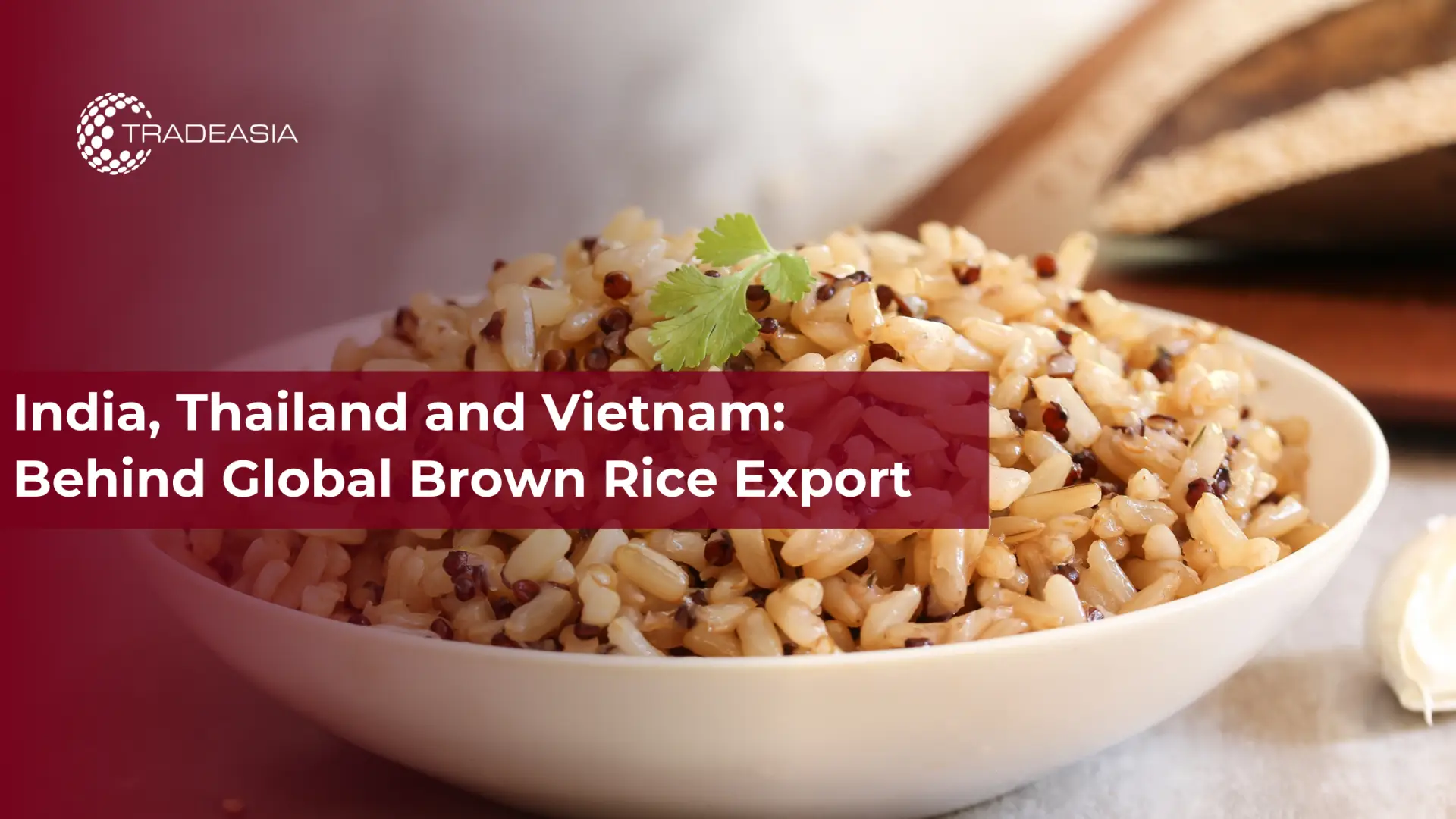
Introduction: Brown Rice in the Era of Health, Policy, and Geopolitical Trade
Brown rice occupies a unique and increasingly strategic position within the global grain trade. While white rice continues to dominate international volumes due to its longer shelf life and price competitiveness, brown rice has carved out a premium niche aligned with global trends toward whole grains, functional nutrition, and minimally processed foods. However, the global brown rice export market is far from geographically diversified. Instead, it is structurally concentrated around three dominant exporting nations: India, Thailand, and Vietnam.
These three countries collectively anchor global rice trade flows, influencing availability, pricing structures, supply chain reliability, and policy volatility. Their production scale, milling capacity, logistics infrastructure, and regulatory frameworks determine the rhythm of global rice markets—including brown rice. Understanding the supply chain dynamics of these nations is therefore essential for importers, traders, institutional buyers, and food manufacturers seeking stability in a highly politicized and climate-sensitive commodity environment.
This article provides a comprehensive and in-depth analysis of how India, Thailand, and Vietnam shape the brown rice export market. It examines production concentration, domestic consumption pressures, export policy interventions, logistics competitiveness, climate vulnerabilities, quality positioning, and long-term structural risks.
The Global Rice Economy and Brown Rice’s Position Within It
Global rice production consistently exceeds 500 million metric tons annually (milled equivalent). However, only around 10–12 percent of total production enters international trade. The majority is consumed domestically in producing countries. Brown rice represents an even smaller share of internationally traded volumes, largely because global consumers traditionally prefer polished white rice due to its appearance, cooking characteristics, and longer storage stability.
Brown rice is produced by removing only the husk from paddy rice, retaining the bran and germ layers. This minimal processing preserves fiber, vitamins, minerals, and natural oils, making it attractive to health-conscious markets in North America, Europe, Japan, South Korea, Australia, and increasingly urban Southeast Asia. However, the retained bran layer also introduces storage sensitivity due to higher lipid content, which can oxidize and reduce shelf life.
From a structural standpoint, brown rice production is technically possible in any rice-producing country. Yet export competitiveness depends on consistent grain quality, moisture control, milling precision, port infrastructure, and compliance with international standards. In this context, India, Thailand, and Vietnam dominate not only white rice exports but also the brown rice trade due to their scale and integration into global food supply chains.
India: The Volume Giant and Policy Bellwether
India stands as the world’s largest rice exporter, often accounting for over 40 percent of global rice trade in certain years. Its production base exceeds 130 million metric tons of paddy annually, supported by diverse agro-climatic zones ranging from Punjab and Haryana to Andhra Pradesh and West Bengal. This immense scale gives India unparalleled leverage in global rice pricing.
Production Strength and Variety Portfolio
India produces both basmati and non-basmati rice varieties. Brown basmati rice has become particularly popular in premium Western markets due to its aromatic qualities and health positioning. Meanwhile, non-basmati brown rice caters to more price-sensitive segments.
The ability to supply large volumes allows Indian exporters to offer competitive pricing. Lower labor costs and economies of scale in milling reduce per-unit processing costs compared to many competitors.
Domestic Consumption and Government Procurement
India’s rice sector is deeply intertwined with government policy. The Public Distribution System (PDS) and the Food Corporation of India maintain substantial stockpiles to ensure domestic food security. Government procurement at Minimum Support Prices (MSP) stabilizes farmer incomes but also shapes export availability.
When domestic inflation rises or food security concerns intensify, the government may impose export bans, minimum export prices, or quotas. These measures can directly or indirectly impact brown rice exports. Even when brown rice is not explicitly restricted, policy shifts affecting overall rice supply tighten global availability and increase prices.
Policy-Driven Volatility
India’s frequent policy interventions create global ripple effects. For instance, export restrictions introduced to manage domestic price inflation have historically triggered price spikes in international markets. Importers dependent on Indian supply must navigate sudden regulatory changes, often adjusting procurement strategies rapidly.
India’s role as a policy bellwether means that its domestic political decisions significantly influence global brown rice trade flows.
Thailand: Premium Positioning and Quality Leadership
Thailand’s rice sector is globally recognized for quality differentiation, particularly in Jasmine (Hom Mali) rice. Although Thailand’s total export volume is lower than India’s, it commands strong brand equity in premium segments.
Quality-Centric Export Strategy
Thai brown rice exports often focus on high-value categories, including organic and specialty varieties. The country’s advanced milling systems ensure consistent grain integrity, moisture control, and packaging standards suitable for high-income markets.
Thailand’s exporters benefit from established relationships with buyers in Europe, Japan, and the United States. The premium positioning allows Thai brown rice to command higher FOB prices compared to more commoditized origins.
Climate Sensitivity and Water Dependency
Unlike India’s geographically diverse production zones, Thailand’s rice cultivation relies heavily on monsoon rainfall and irrigation systems. Drought cycles, particularly those influenced by El Niño patterns, can significantly reduce output. Reduced harvests tighten export availability and elevate prices.
Currency and Cost Dynamics
The Thai baht’s exchange rate influences competitiveness. A stronger baht increases export prices in USD terms, potentially reducing demand from price-sensitive buyers. Conversely, a weaker baht enhances competitiveness.
Thailand’s policy environment is generally more stable than India’s, but government price support schemes and farmer subsidy programs still influence market conditions.
Vietnam: Efficiency, Infrastructure, and Strategic Adaptability
Vietnam has rapidly expanded its influence in global rice trade over the past two decades. Production is concentrated in the Mekong Delta, one of the world’s most productive rice-growing regions.
Export Efficiency and Logistics Advantage
Vietnam’s port infrastructure and proximity to major shipping lanes provide logistical advantages. Exporters are known for rapid contract fulfillment and competitive freight access to Asian and Middle Eastern markets.
Brown rice exports from Vietnam are smaller compared to white rice volumes but have grown in response to rising demand from health-conscious markets.
Climate Change Risks in the Mekong Delta
The Mekong Delta faces long-term climate threats, including salinity intrusion and sea-level rise. These environmental risks may gradually impact production capacity. Investment in water management and climate-resilient varieties is essential to sustain export growth.
Policy Environment
Vietnam’s government maintains a relatively market-oriented approach but may introduce export management measures during supply concerns. Compared to India, policy interventions are typically shorter in duration but still influence market sentiment.
Export Concentration and Global Dependency Risk
India, Thailand, and Vietnam collectively account for a substantial share of global rice exports. This concentration creates systemic vulnerability. When one country experiences production shortfalls or imposes export restrictions, demand shifts to the remaining exporters, driving price increases.
Importing nations with limited domestic production—such as countries in the Middle East, parts of Africa, and certain European markets—depend heavily on these three exporters.
Diversification efforts toward other producing countries exist but have yet to significantly alter global concentration patterns.
Price Formation and Premium Sustainability
Brown rice generally commands a premium over white rice due to minimal processing and health positioning. However, this premium fluctuates based on overall rice supply conditions.
During global shortages, the price gap may narrow as white rice prices surge. Conversely, in surplus years, brown rice premiums may widen.
Price formation depends on production volume, stock levels, government policy signals, and freight rates.
Logistics, Freight, and Supply Chain Resilience
Container availability, port congestion, and freight rate fluctuations significantly impact brown rice trade. During periods of global shipping disruption, smaller-volume brown rice shipments may face proportionally higher freight costs compared to bulk white rice shipments.
Infrastructure efficiency in India’s major ports (such as Kandla and Chennai), Thailand’s Laem Chabang, and Vietnam’s Ho Chi Minh City determines shipment reliability.
Sustainability, Organic Certification, and Value-Added Growth
Brown rice aligns closely with sustainability and whole-grain consumption narratives. Organic certification and non-GMO positioning enhance export opportunities in Europe and North America.
Value-added products such as brown rice flour, bran oil, and functional ingredient derivatives create additional revenue streams beyond whole grain exports.
Long-Term Outlook: Structural Stability or Persistent Volatility?
The long-term outlook for brown rice exports remains positive due to rising health awareness and dietary shifts. However, climate volatility, water scarcity, and policy unpredictability introduce structural risk.
Technological improvements in storage and packaging may extend shelf life and reduce oxidation risks, enabling expanded export volumes.
Diversification of supply sources could reduce dependency concentration, but India, Thailand, and Vietnam are likely to remain dominant players for the foreseeable future.
Conclusion: Strategic Powerhouses Shaping Global Brown Rice Trade
India, Thailand, and Vietnam are more than leading exporters; they are strategic architects of global brown rice supply dynamics. Their production scale, policy decisions, climate exposure, and infrastructure efficiency shape international availability and pricing.
For importers and traders, monitoring developments in these three nations is essential for risk management. In a world increasingly influenced by climate change and food security politics, the brown rice market reflects both opportunity and vulnerability—anchored firmly by the strategic decisions of its three dominant powerhouses.
For businesses seeking high-quality brown rice products and reliable sourcing solutions, visit foodadditivesasia.com for more information about specifications, applications, and supply capabilities. For direct inquiries, product details, or customized requirements, please contact food@chemtradeasia.com. Our team is ready to assist you with professional support and comprehensive solutions tailored to your needs.