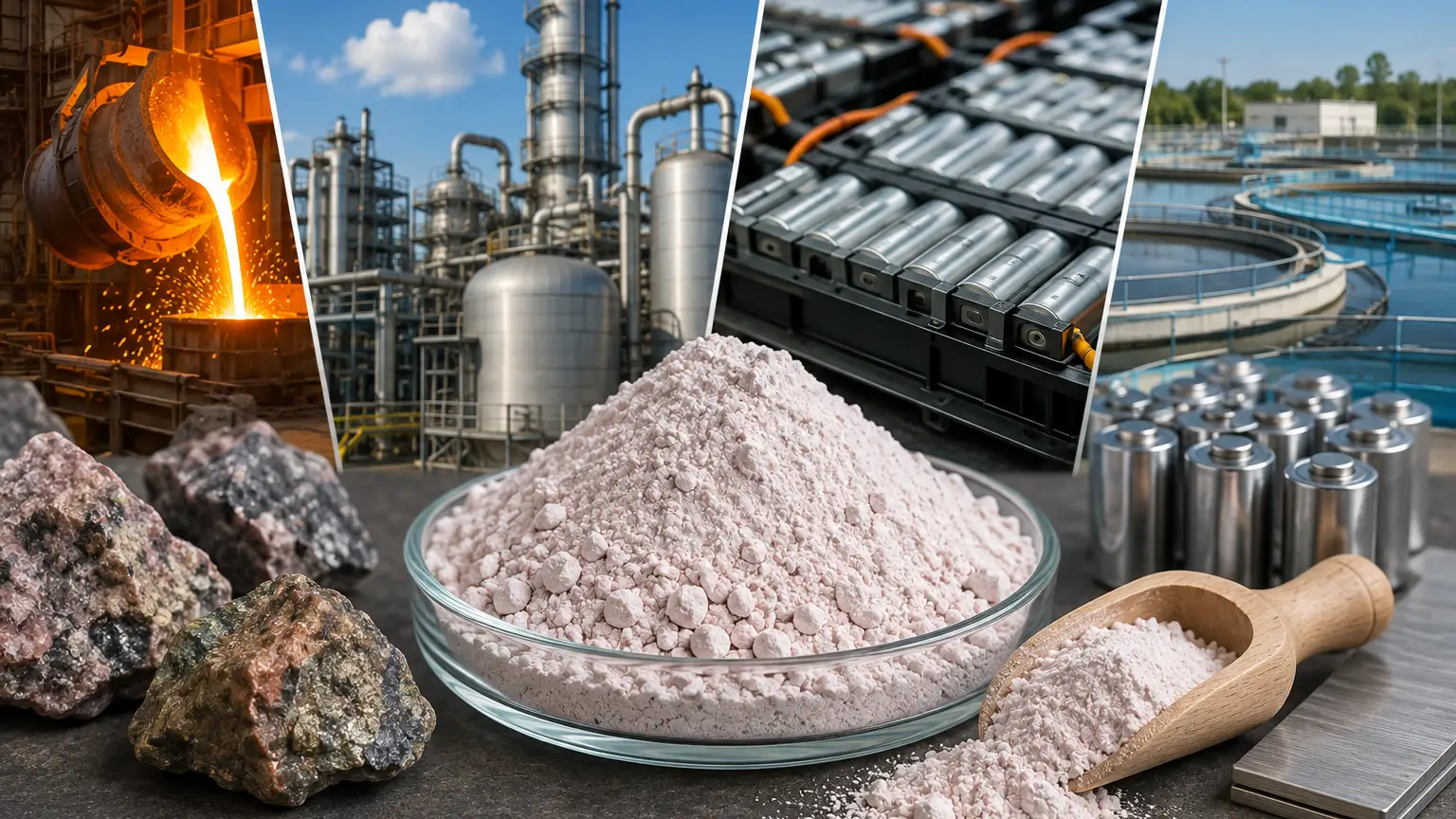
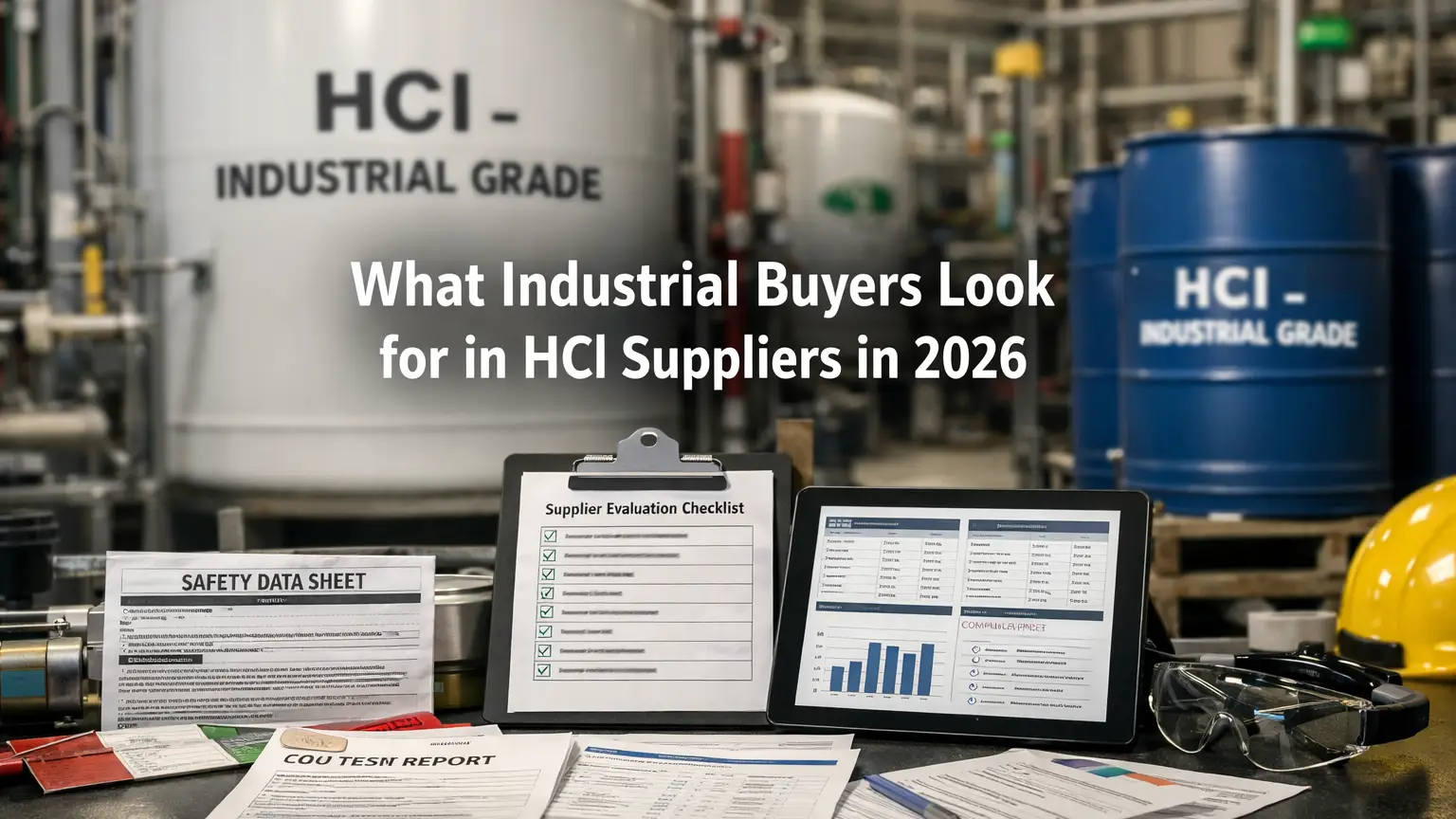
Hydrochloric acid remains one of the most widely used industrial chemicals, supporting critical processes in steel, water treatment, chemicals, mining, and manufacturing. In 2026, industrial buyers are far more selective when choosing HCl suppliers. Price alone no longer defines supplier value. Instead, buyers prioritize consistency, safety, regulatory compliance, and supply reliability as operating risks and environmental scrutiny continue to rise.
For industries where HCl interruptions can halt production or create safety incidents, supplier selection has become a strategic decision rather than a transactional one.
Why HCl Supplier Choice Matters More in 2026
Hydrochloric acid is both essential and high risk. Variations in concentration, impurities, or delivery timing can cause equipment corrosion, off-spec production, or regulatory violations. At the same time, geopolitical disruptions, energy cost volatility, and stricter chemical regulations are reshaping supply chains.
In 2026, industrial buyers increasingly favor suppliers that can demonstrate resilience, transparency, and operational discipline over those offering the lowest short-term price.
Key Industrial Applications That Shape Buyer Expectations
Metal Pickling, Cleaning, and Surface Treatment
In steel and metal processing, HCl is used to remove oxides and scale prior to rolling or coating. Buyers require precise acid strength and predictable reactivity to avoid over-etching, excessive metal loss, or damage to pickling lines.
Batch-to-batch inconsistency leads to production slowdowns, rework, and increased maintenance. As a result, buyers expect suppliers to deliver stable concentrations supported by verified testing and quality controls.
Water Treatment and Chemical Manufacturing
In water treatment, HCl is used for pH adjustment and regeneration of ion exchange systems. Even small impurity levels, such as iron or organics, can foul membranes or interfere with downstream treatment processes.
Chemical manufacturers rely on high-purity HCl as a feedstock or catalyst component. Contaminants can poison catalysts or compromise reaction yields, making impurity control a critical selection criterion.
Quality and Specification Requirements Buyers Expect
Concentration Accuracy and Product Stability
Industrial HCl is commonly supplied at concentrations between 30 and 37 percent. Buyers typically require tight tolerances, often within plus or minus 0.5 percent, to ensure consistent process control.
Suppliers must also ensure product stability during transport and storage. Crystallization, phase separation, or degradation increases handling risk and complicates dosing operations.
Impurity Control and Testing Standards
Limits on impurities such as iron, heavy metals, and organic residues are closely monitored. Excess iron accelerates corrosion and discolors products, while other contaminants can violate discharge permits or internal quality standards.
Industrial buyers increasingly request third-party laboratory analysis alongside supplier certificates of analysis to verify compliance before approving long-term supply.
Safety, Handling, and Regulatory Compliance
Hazardous Material Transport and Storage
Hydrochloric acid handling requires strict adherence to safety standards. Buyers expect suppliers to provide appropriate packaging options, including ISO tanks, lined tankers, HDPE drums, or intermediate bulk containers with secondary containment.
Transport and storage systems must comply with UN, DOT, and local hazardous material regulations. Proper segregation, labeling, and spill prevention measures are essential to minimize incident risk.
Compliance Documentation and Audit Readiness
Suppliers are expected to provide complete safety data sheets, regulatory registrations, and quality certifications such as ISO 9001 and ISO 14001. For multinational buyers, compliance with frameworks such as REACH or TSCA is often mandatory.
Audit readiness is no longer optional. Buyers routinely conduct supplier audits to assess documentation, traceability, and environmental controls.
Supply Reliability and Logistics Capability
Delivery Performance and Lead Time Control
Industrial operations often rely on just-in-time chemical supply. Buyers look for suppliers that consistently achieve on-time delivery rates above 95 percent and can manage lead times effectively even during market disruptions.
Real-time shipment tracking, fleet visibility, and proactive communication reduce uncertainty and support uninterrupted operations.
Local Production Versus Imported Supply
Local or regional HCl production offers advantages in lead time, reduced freight risk, and lower exposure to port congestion or geopolitical disruptions. Imported supply can be cost-competitive but carries higher logistics and compliance risk.
In 2026, many buyers prefer suppliers with multi-site production or diversified sourcing models to improve resilience.
Commercial and Contracting Expectations
Transparent Pricing and Cost Structures
Buyers increasingly favor pricing models that reflect underlying cost drivers such as energy prices and chlor-alkali market dynamics. Indexed or formula-based pricing reduces disputes and improves budgeting accuracy.
Volume-based discounts and clear cost pass-through mechanisms are preferred over opaque spot pricing.
Contract Flexibility and Risk Sharing
Industrial demand can fluctuate. Buyers expect contracts to allow reasonable volume adjustments without penalties and include force majeure provisions that reflect real-world risks.
Trial orders are commonly used to validate quality, service levels, and commercial terms before committing to longer-term agreements.
Technical Support and Service Quality
On-Site Support and Application Expertise
Beyond supply, buyers value technical support. Suppliers that provide training on safe handling, dosing optimization, and process improvement help reduce incidents and improve efficiency.
This level of engagement strengthens long-term partnerships and reduces total cost of ownership.
Responsiveness During Disruptions
When disruptions occur, response speed matters. Buyers expect clear communication within hours, not days, along with actionable contingency plans to maintain supply continuity.
Suppliers with established emergency response protocols gain a significant advantage in buyer evaluations.
How Industrial Buyers Evaluate and Shortlist HCl Suppliers
Most buyers follow a structured evaluation process. Initial pre-qualification screens certifications, capacity, and financial stability. Trial shipments over several months validate product consistency and delivery performance.
Suppliers are then monitored through scorecards tracking key performance indicators such as on-time delivery, quality deviations, and response times. Annual audits reinforce accountability and continuous improvement.
Conclusion
Industrial buyers in 2026 expect far more than acid delivered at a competitive price. They seek suppliers that offer consistent quality, strong safety practices, regulatory compliance, reliable logistics, and responsive technical support.
Procurement teams that adopt structured supplier evaluation frameworks and diversify sourcing reduce operational risk and improve long-term cost control. For companies sourcing hydrochloric acid across Asia-Pacific and global markets, Chemtradeasia supports industrial procurement with reliable supply networks, compliance-ready documentation, and regional market expertise, helping buyers secure dependable HCl supply in an increasingly complex environment.