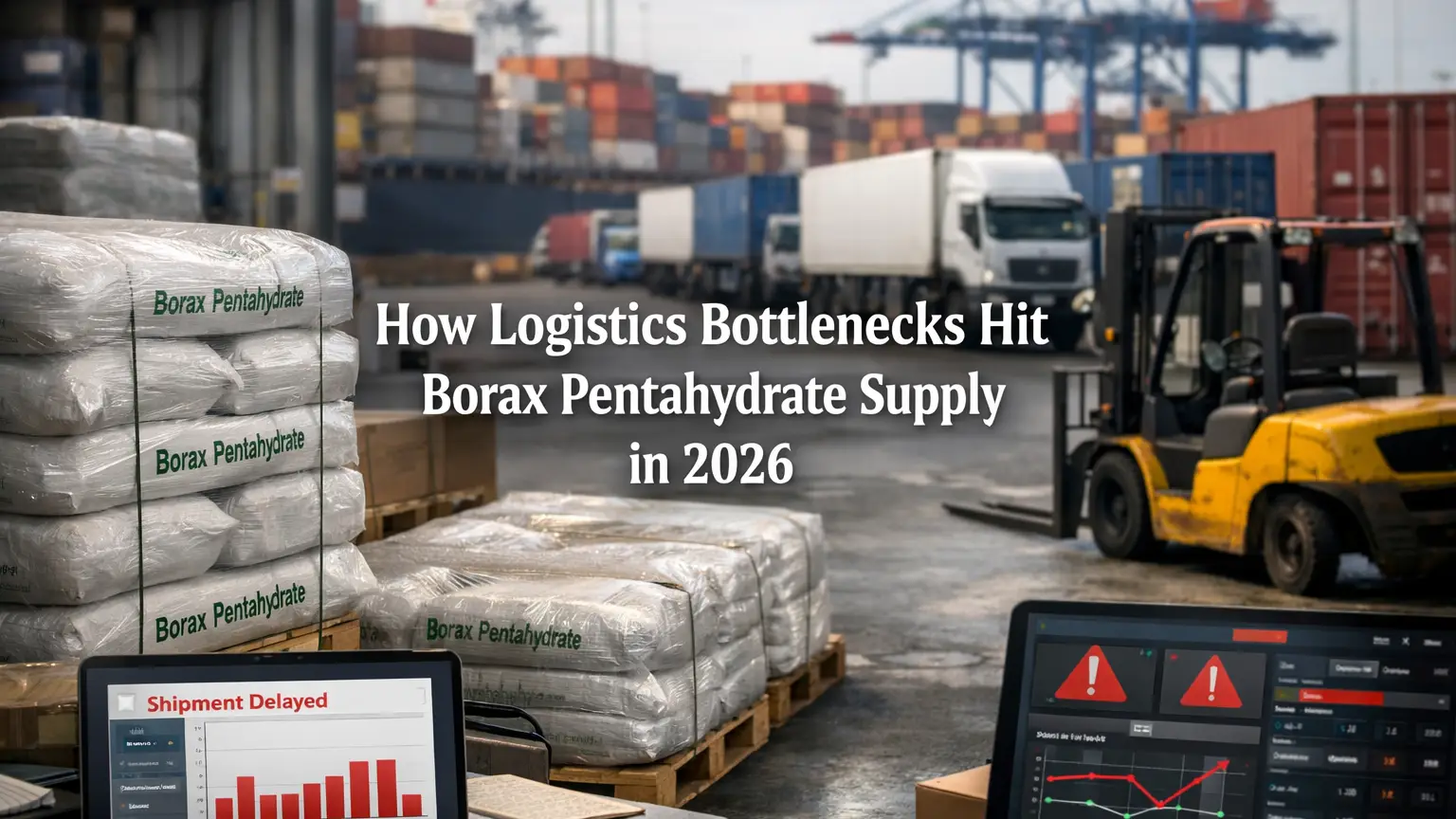
Borax pentahydrate supply in 2026 is being shaped less by mining capacity and more by logistics constraints. Port congestion, inland transport limitations, and higher freight costs are extending lead times and increasing delivered price volatility. For buyers in glass, ceramics, detergents, and specialty chemicals, logistics reliability has become as critical as product quality.
As boron supply remains geographically concentrated, disruptions along transport corridors now represent the largest operational risk.
How the Borax Pentahydrate Supply Chain Works
Mining, Refining, and Packaging
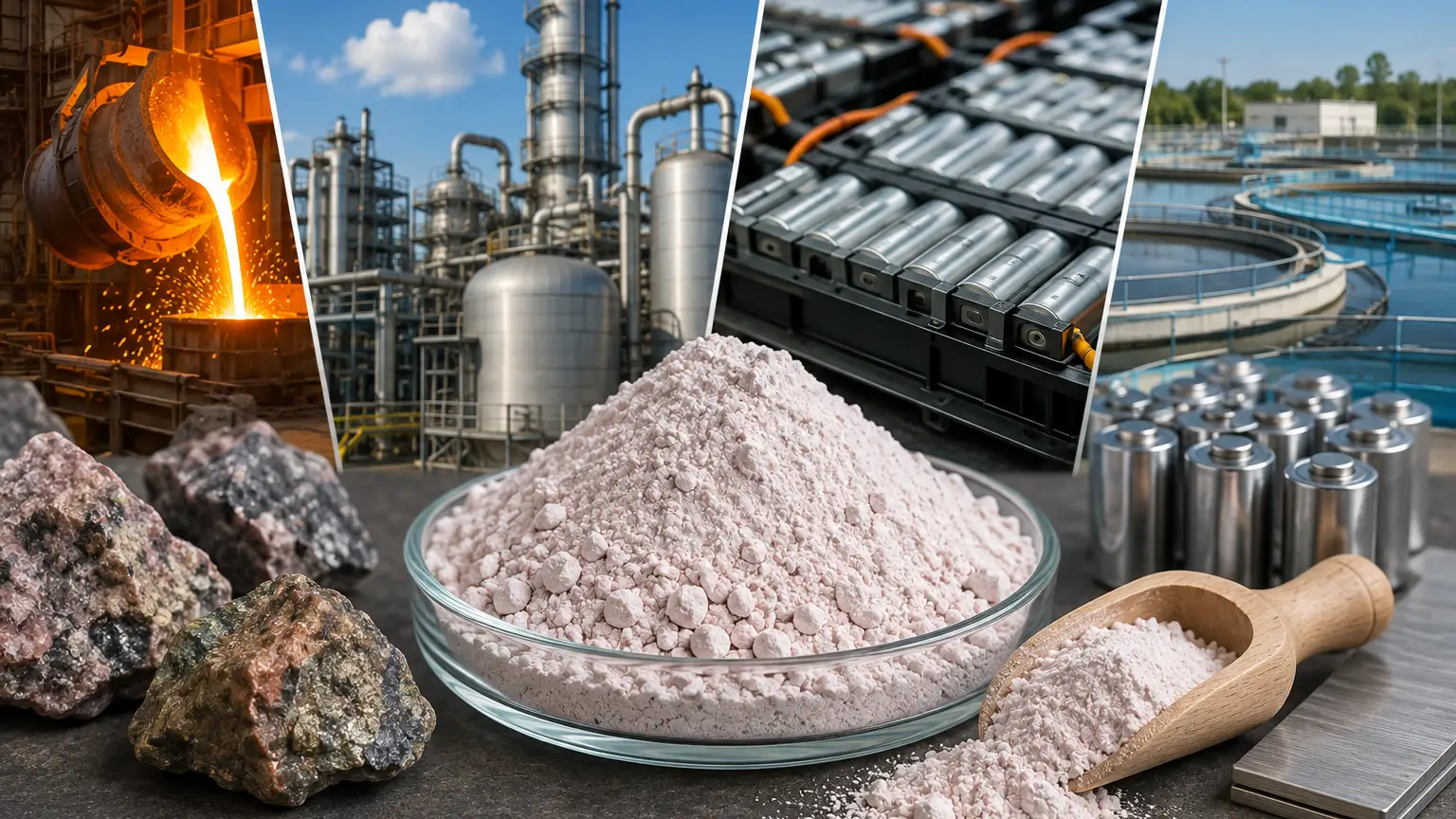
Production begins at inland mining sites such as Boron, California, the world’s largest borax mine, and large deposits in Turkey that together account for the majority of global reserves. These sites rely on truck and rail transport to reach refining and packaging facilities.
Any disruption at this stage, including fuel shortages or labor constraints, delays downstream processing and export availability.
Export Oriented Trade Routes
Most borax pentahydrate is shipped internationally in bulk or bagged form through ports on the U.S. West Coast and Turkey. Key destination markets include China, India, Southeast Asia, and parts of Europe.
These export routes expose borax shipments to congestion at major container and bulk ports, as well as volatility in ocean freight schedules.
Key Logistics Bottlenecks Affecting Supply
Inland Transport and Rail Constraints
Inland transport remains a major pressure point. Truck driver shortages in North America and parts of Latin America limit haulage capacity from mines to ports. Rising diesel prices further increase transport costs and discourage spot availability.
Rail networks face their own challenges. Aging infrastructure, competing freight priorities, and weather related disruptions reduce reliability for bulk mineral shipments. In drought affected regions, low water levels also restrict barge movements, cutting inland capacity.
Port Congestion and Shipping Delays
Port congestion continues into 2026 across Asia Pacific and North America. High yard utilization at ports such as Shanghai, Ningbo Zhoushan, and Los Angeles increases vessel wait times and demurrage risk for chemical cargo.
Borax pentahydrate shipments often compete for space with higher value consumer goods, pushing bulk minerals lower in loading priority during peak periods.
Why Borax Pentahydrate Is Especially Sensitive to Logistics
Bulk Density and Packaging Requirements
Borax pentahydrate has relatively low bulk density and requires moisture controlled packaging to prevent caking and degradation. These characteristics increase handling complexity and raise the risk of damage or delays in congested logistics environments.
Compared with denser chemicals, borax shipments are more exposed to cost increases per ton when freight capacity tightens.
Limited Substitution in Key Applications
In glass manufacturing, ceramics, and detergents, borax pentahydrate performs specific roles as a flux, buffer, or water softener. Substitutes often compromise product performance or require reformulation.
This limited substitutability increases buyer urgency when logistics disruptions occur, amplifying the impact of delays.
Regional Logistics Challenges in 2026
Asia Pacific and Emerging Markets
Asia Pacific remains the largest import region for borax pentahydrate. Congestion at major Chinese ports, combined with inland infrastructure constraints in India and Southeast Asia, increases lead times and landed costs.
Infrastructure gaps and regulatory checks add an estimated 15 to 20 percent to logistics costs for bulk chemical imports in some emerging markets.
Europe and North America
In Europe and North America, stricter environmental regulations, driver shortages, and shifts in rail freight priorities add pressure. Compliance requirements for hazardous and specialty minerals increase administrative steps, slowing cargo movement.
U.S. ports continue to experience intermittent backlogs, especially during peak import seasons.
Impact on Buyers and Downstream Industries
Longer Lead Times and Inventory Risk
Logistics bottlenecks extend lead times beyond historical norms, disrupting just in time production models. Glass and detergent manufacturers that rely on steady boron input face inventory gaps when shipments are delayed.
Unplanned shutdowns or production rescheduling increase operational costs and reduce output efficiency.
Delivered Cost Volatility
Freight surcharges, fuel price increases, and demurrage charges contribute to delivered cost swings. In recent cycles, logistics related factors alone have driven price variations of several percent, even when ex works prices remain stable.
Budget forecasting becomes more difficult as logistics costs fluctuate independently of raw material pricing.
How Buyers Can Mitigate Logistics Risks
Inventory Buffering and Forward Planning
Maintaining two to three months of safety stock helps bridge inland and port disruptions. Forward booking of freight and longer term contracts reduce exposure to spot market volatility.
Inventory strategies should be aligned with seasonal demand and known congestion periods.
Supplier and Route Diversification
Diversifying supply across multiple origins and export ports reduces reliance on a single logistics corridor. Buyers increasingly favor suppliers that can offer alternative routing options or regional stock points.
This flexibility improves resilience when specific routes become constrained.
Conclusion
In 2026, logistics bottlenecks represent a structural risk for borax pentahydrate supply. Concentrated mining origins combined with vulnerable inland and port infrastructure make transport reliability a decisive factor in availability and cost.
Buyers that adopt diversified sourcing, inventory buffering, and proactive logistics planning are better positioned to maintain continuity. Chemtradeasia supports borax pentahydrate buyers with market aware sourcing, regional logistics insight, and supply diversification strategies, helping manufacturers navigate complex boron supply chains with greater confidence.