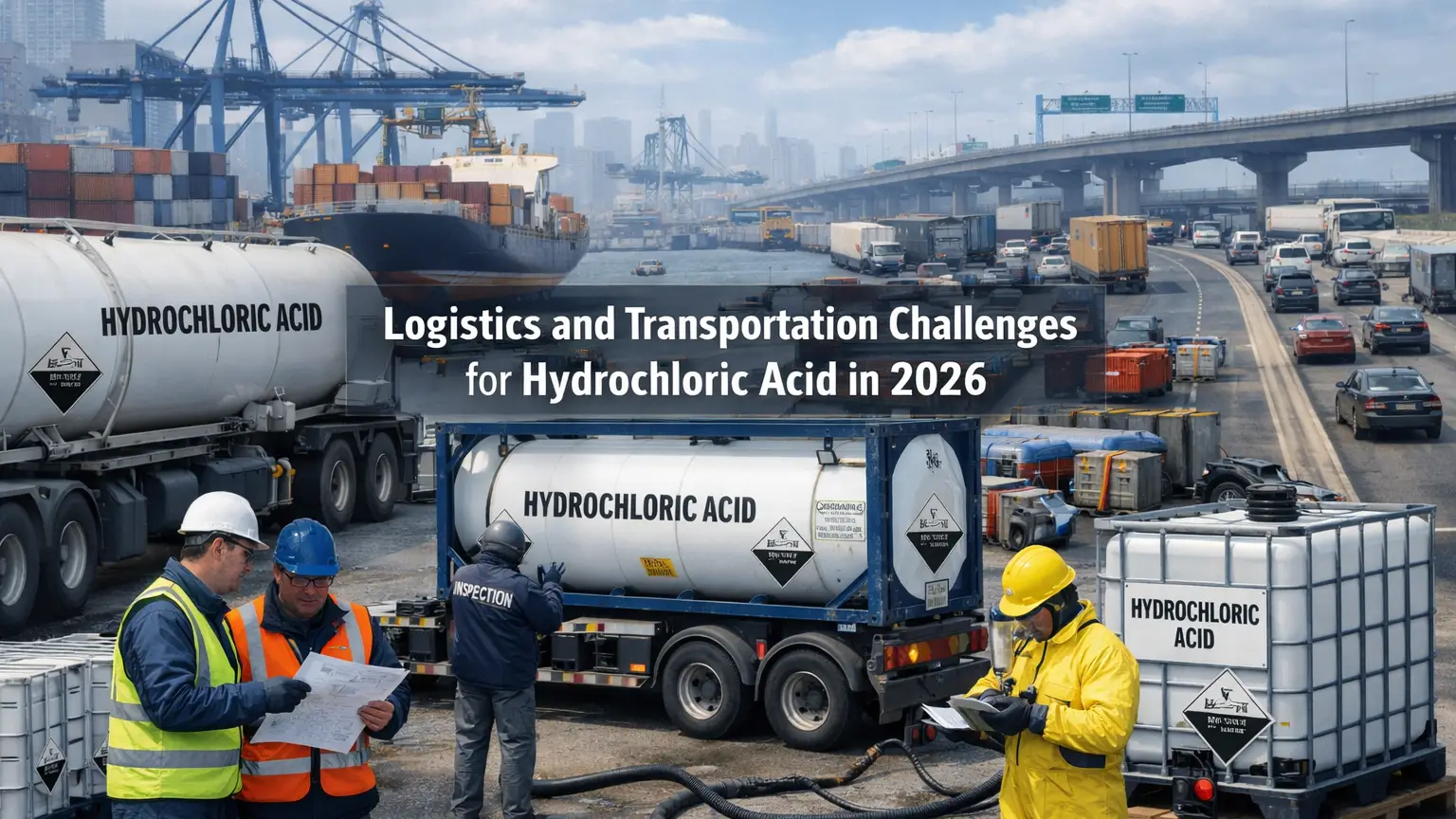
Hydrochloric acid logistics are becoming more complex in 2026 as industrial demand rises alongside stricter safety regulations, aging infrastructure, and volatile freight costs. Used widely in steel pickling, water treatment, chemicals, and food processing, hydrochloric acid requires specialized handling that exposes producers, transporters, and buyers to higher operational risk than many other bulk chemicals.
As Asia-Pacific continues to lead global hydrochloric acid production and consumption, supply chains are under pressure to deliver corrosive cargo safely, on time, and in full regulatory compliance. For procurement and logistics teams, understanding where the main constraints lie is now critical to maintaining production continuity.
Why Hydrochloric Acid Logistics Are More Challenging in 2026
Hydrochloric acid transport has always required strict controls, but several structural shifts are making logistics more fragile in 2026. Energy price volatility has increased freight unpredictability, while post-pandemic congestion still affects ports and inland corridors. At the same time, environmental and hazardous materials regulations are tightening across major markets.
Global hydrochloric acid demand continues to grow, supported by infrastructure investment, steel output, and water treatment expansion. This demand growth is outpacing investments in hazardous chemical transport infrastructure, especially in emerging markets. As a result, dwell times are longer, carrier availability is tighter, and logistics costs account for a larger share of delivered acid prices.
Chemical Properties That Drive Transport Risk
Corrosivity and material compatibility
Hydrochloric acid is highly corrosive to most metals, including carbon steel. Concentrations commonly traded for industrial use can cause rapid material degradation if tanks and fittings are not properly lined. Rubber-lined steel, PTFE-lined systems, and high-density polyethylene containers are standard, but these linings have limited service lives and require regular inspection.
Aging tank fleets are a growing concern in 2026, as many assets installed a decade ago now approach the end of their safe operating window. Replacement costs are high, and downtime during relining reduces fleet availability.
Fuming and vapor pressure risks
At higher concentrations, hydrochloric acid releases hydrogen chloride vapor, creating visible fumes that corrode nearby equipment and reduce visibility during loading and unloading. In warm and humid climates, this effect is amplified, making temperature control and ventilation essential during transport.
These properties increase the need for trained operators, vapor management systems, and conservative routing, all of which raise logistics costs.
Regulatory and Compliance Pressures in 2026
Hazardous materials classification
Hydrochloric acid is classified globally as a corrosive substance under UN 1789, Class 8. Transport rules under ADR, IMDG, and IATA continue to evolve, with 2026 updates focusing on stowage segregation, emergency response readiness, and traceability.
Road transport restrictions limit load sizes and impose route controls in many countries. Sea transport rules increasingly restrict where hydrochloric acid tanks may be placed on vessels, reducing flexibility during vessel planning.
Documentation and enforcement
Shippers must provide complete dangerous goods documentation, safety data sheets, and route-specific permits. Border inspections and port authority checks are more frequent, adding delays of several days in some corridors.
Penalties for non-compliance are severe, pushing buyers to audit logistics partners more rigorously and favor carriers with strong safety records.
Packaging and Container Availability Constraints
Bulk versus packaged transport
Most hydrochloric acid still moves in bulk via ISO tanks or dedicated road tankers, especially for steel mills and large chemical plants. However, growth in water treatment and specialty chemical applications is increasing demand for packaged formats such as IBCs and drums.
This shift adds complexity, as repackaging introduces additional handling risk and requires more UN-approved containers, which remain in short supply in several regions.
Container lifespan and fleet turnover
Corrosion and regulatory inspections shorten the usable life of acid-rated containers. Recycling and contamination rules introduced after 2025 have accelerated fleet retirement rates, tightening availability further in 2026.
Infrastructure and Transport Mode Limitations
Road transport challenges
Road haulage remains dominant for short and medium distances, but driver shortages, curfews, and hazardous cargo restrictions slow transit times. In parts of Southeast Asia, night driving bans for corrosive cargo extend delivery windows significantly.
Rail and inland waterways
Rail offers scale but lacks sufficient acid-rated wagons in many regions. Compliance requirements for rail safety systems further limit flexibility. Inland waterways provide efficient bulk movement where available, but low water levels and lock congestion disrupt reliability.
Port handling constraints
Ports restrict hydrochloric acid handling to dedicated zones with spill containment systems. Limited berth availability and stacking restrictions increase dwell times and demurrage costs, particularly at congested Asian ports.
Cost Pressures and Freight Volatility
Transporting hydrochloric acid requires specialized equipment and trained carriers, which command premium rates. In 2026, fleet shortages and fuel surcharges have pushed spot freight rates sharply higher, especially for long-haul and cross-border movements.
Energy regulations affecting marine fuel and ongoing geopolitical disruptions have increased sea freight volatility. These costs are increasingly passed through to buyers, making logistics a major component of total delivered cost.
Regional Differences in Logistics Challenges
Asia-Pacific
Asia-Pacific produces and consumes the majority of global hydrochloric acid, but logistics infrastructure has not expanded at the same pace. Monsoon seasons, port congestion, and regulatory fragmentation across ASEAN complicate regional distribution.
Europe
Europe faces the most stringent regulatory environment. Compliance with REACH, ADR, and environmental liability directives increases operating costs and administrative burden. Electrification mandates are also reducing the availability of diesel-powered tanker fleets.
Americas
In North and South America, weather-related disruptions such as hurricanes remain a key risk. While supply is relatively abundant, terminal congestion and rail safety rules limit flexibility during peak demand periods.
Risk Management Strategies Used by Buyers
Localization and shorter supply chains
Some large industrial users are reducing exposure by localizing hydrochloric acid production or sourcing from nearby suppliers. On-site generation and short-haul distribution significantly lower transport risk and improve reliability.
Carrier selection and contracting
Buyers increasingly favor long-term contracts with vetted logistics partners, prioritizing safety performance over spot pricing. Insurance coverage, audit scores, and emergency response capabilities are now standard evaluation criteria.
Digital monitoring and visibility
Real-time tracking, sensor-equipped tanks, and digital documentation platforms are becoming standard tools in acid logistics. These systems improve incident response and reduce administrative delays, while offering better cost forecasting.
2026 Outlook for Hydrochloric Acid Logistics
Logistics constraints for hydrochloric acid are expected to tighten further in 2026. Electrification policies, regulatory expansion, and rising water treatment demand will continue to strain specialized transport capacity. While production remains ample in many regions, moving acid safely and compliantly will be the primary challenge.
Buyers that treat logistics as a strategic function rather than a transactional cost are better positioned to maintain supply continuity and control risk.
Conclusion
Hydrochloric acid logistics in 2026 demand proactive planning, strict compliance, and close coordination between producers, carriers, and buyers. Corrosive properties, regulatory pressure, infrastructure limitations, and freight volatility have combined to make transport one of the most critical risk points in the supply chain.
For industrial users seeking reliable hydrochloric acid supply, Chemtradeasia supports sourcing strategies that account for logistics realities, offering regional supply options, compliant packaging, and coordination with experienced transport partners. Reach out to Chemtradeasia to discuss how to secure hydrochloric acid deliveries that meet both operational and safety requirements in 2026 and beyond.