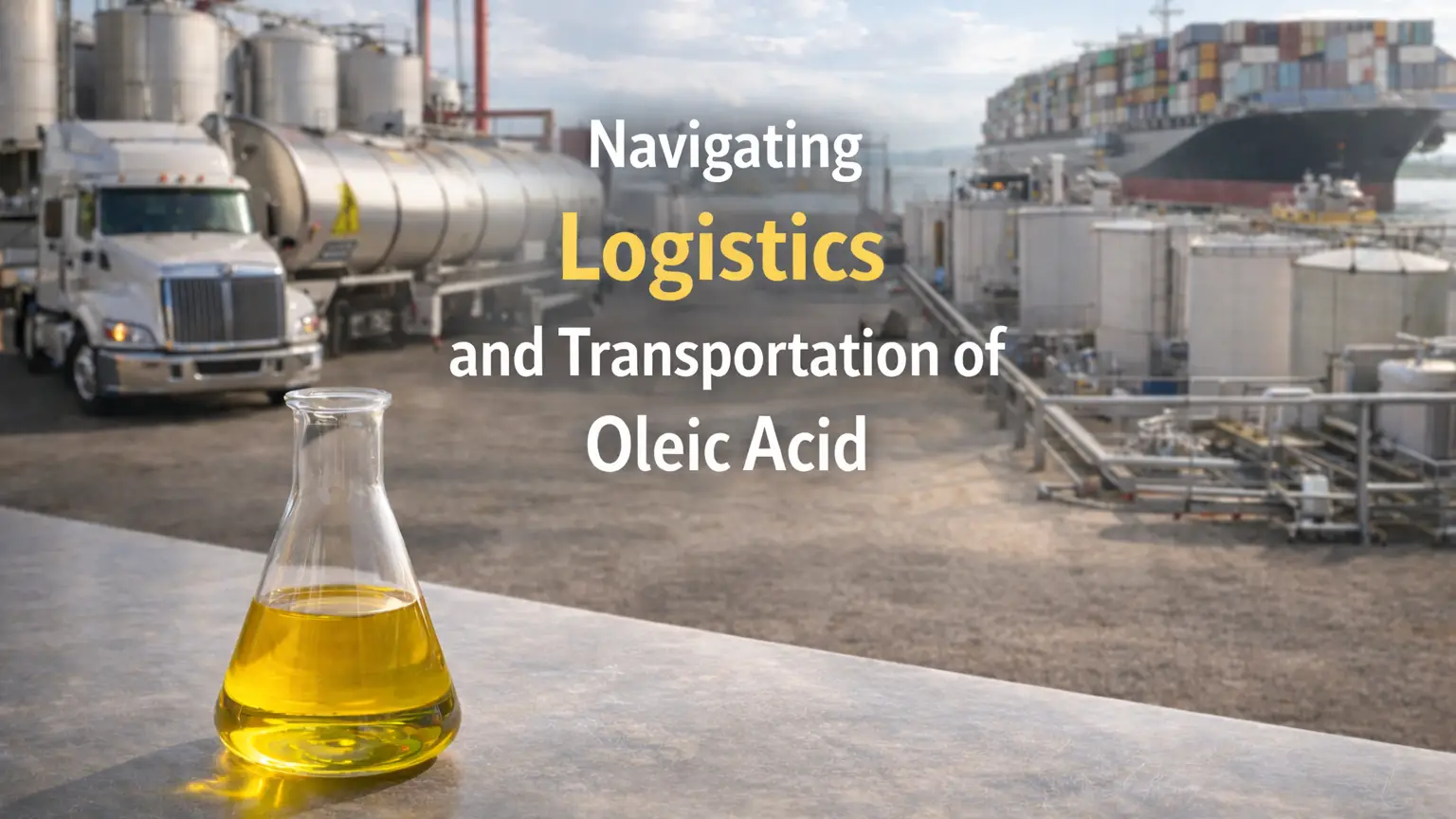
Logistics and transportation of oleic acid require careful coordination to preserve product quality and ensure regulatory compliance. Oleic acid is a widely traded fatty acid used in food, oleochemicals, and industrial formulations. Its physical properties and sensitivity to temperature make transport conditions an important operational consideration.
This article outlines how oleic acid is commonly transported, the constraints involved, and current practices used to manage quality and cost across domestic and international supply chains.
Role of Oleic Acid in Global Supply Chains
Oleic acid is used in surfactants, lubricants, plastic additives, and personal care formulations. Food-grade oleic acid is also used in emulsifiers and specialty fats. These applications support consistent global demand.
Most traded oleic acid is derived from vegetable oils, particularly palm oil. Indonesia and Malaysia are major export origins. Shipments move primarily to Europe, North America, and parts of East Asia. Volumes are typically large, which places emphasis on bulk transport efficiency and predictable transit conditions.
Port congestion and seasonal shipping constraints have increased attention on logistics planning. Supply chain reliability has become a practical concern rather than a secondary consideration.
Physical Properties Relevant to Transportation
Oleic acid has a melting point in the range of 13 to 14°C. It remains liquid under warm conditions but can solidify during transport through cooler climates. This behavior directly affects pumping, unloading, and storage operations.
The material has moderate viscosity and a density of approximately 0.89 g per milliliter at 25°C. These properties influence equipment selection and flow rates during transfer.
Oleic acid is also susceptible to oxidation when exposed to air over extended periods. Oxidation does not pose a safety risk but can reduce product quality. Transport systems therefore aim to limit air exposure where feasible.
Packaging Formats Used in Oleic Acid Transport
Several packaging options are used depending on shipment size and destination requirements.
Steel or plastic-lined drums, typically around 200 liters, are used for smaller shipments. They offer flexibility but require more handling and space per unit volume.
Intermediate bulk containers with a capacity of about 1,000 liters are common for regional distribution. They balance volume efficiency with manageable handling requirements.
For international shipments, flexitanks installed in standard 20-foot containers are widely used. They typically carry between 20,000 and 24,000 liters. Flexitanks reduce packaging costs and simplify container utilization.
Isotanks and dedicated bulk tankers are used for larger volumes. These systems often include heating coils and are suitable for long-distance transport with controlled temperature requirements.
Bulk Transport Versus Packaged Shipping
Bulk transport generally offers lower cost per ton for shipments above 20 metric tons. Fewer transfer points reduce the risk of contamination and handling losses.
Packaged shipping provides flexibility for smaller volumes or multi-drop deliveries. It also simplifies batch separation. These benefits come with higher logistics costs and additional handling steps.
The choice between bulk and packaged formats depends on shipment size, infrastructure at origin and destination, and quality management priorities.
Temperature Control During Transit
Temperature management is a central consideration in oleic acid transportation. Maintaining temperatures above the melting point prevents solidification during transit.
Insulated tanks and containers are commonly used. On colder routes, heating systems or pre-heating before discharge may be required. Typical discharge temperatures range from 40 to 50°C to ensure stable flow.
Excessive heating is avoided. Prolonged exposure to temperatures above 60°C may accelerate oxidation. Temperature monitoring systems are increasingly used to document compliance and identify deviations.
Handling Practices at Loading and Unloading
Oleic acid is considered low hazard. Standard industrial hygiene practices are generally sufficient during handling.
Transfers typically use positive displacement pumps designed for viscous liquids. Grounding is applied to reduce static accumulation. Spill containment measures are standard at loading bays.
Operators usually wear gloves and eye protection. Ventilation is used to manage odors and ensure a safe working environment. For short holding periods, nitrogen blanketing may be applied to reduce oxygen exposure.
Regulatory and Documentation Considerations
Oleic acid is classified as non-hazardous for transport under ADR, IMDG, and IATA frameworks. It does not carry a UN number and does not require hazard labeling.
Despite this classification, documentation remains important. Shipments are accompanied by Safety Data Sheets, certificates of analysis, and standard commercial documents. These records support quality verification and customs clearance.
Food-grade shipments may require additional documentation related to tank cleanliness and previous cargo history.
International Shipping Considerations
Sea freight is the dominant mode for international oleic acid shipments. Transit times from Southeast Asia to Europe typically range from 20 to 40 days.
Winter transits increase the likelihood of temperature-related challenges. Insulated equipment and routing choices help mitigate these risks.
Digital tracking tools are increasingly used to monitor location and temperature. These systems support more predictable delivery planning and post-shipment review.
Storage During Transportation and Interim Holding
Short-term storage during transit or at destination typically uses dedicated tanks. Temperature is maintained within a moderate range to preserve fluidity and limit oxidation.
Agitation may be applied to prevent stratification. Quality checks during storage often focus on peroxide values and visual clarity.
Dedicated equipment and cleaning protocols are used to reduce cross-contamination risks, especially for food-grade material.
Risk Management and Quality Control
Risk management in oleic acid logistics focuses on leakage prevention, oxidation control, and traceability. Double-walled tanks and routine pressure testing are common preventive measures.
Antioxidants may be added where contract specifications allow. Batch tracking systems improve traceability and support quality audits.
Insurance coverage often includes provisions related to solidification and temperature deviations during transit.
Conclusion
Efficient logistics and transportation of oleic acid depend on understanding its physical properties, choosing the right packaging format, maintaining proper temperature control, and complying with international regulations. By aligning logistics strategies with product characteristics and destination requirements, companies can safeguard quality while managing costs.
For businesses sourcing oleic acid across domestic and international markets, working with an experienced supplier simplifies both procurement and logistics coordination. Chemtradeasia supports customers with reliable oleic acid supply, proper documentation, and logistics expertise, helping ensure smooth and consistent delivery across global supply chains.