Introduction: The High-Intensity Compromise
In the modern food and beverage landscape, the mandate to reduce added sugars is ubiquitous. Formulators across the globe are tasked with creating "Zero Sugar" or "Reduced Sugar" products that perfectly mimic the sensory experience of their full-calorie counterparts. To achieve this, the industry relies heavily on High-Intensity Sweeteners (HIS) such as Steviol Glycosides (Stevia), Sucralose, Aspartame, and Acesulfame Potassium (Ace-K). These compounds offer immense sweetening power—often 200 to 600 times that of sucrose—without contributing significant calories. However, this intense sweetening power comes with a well-documented sensory compromise.
While High-Intensity Sweeteners successfully activate the sweet taste receptors on the human tongue, they frequently trigger bitter receptors simultaneously. This biological cross-talk results in undesirable off-notes—often described as metallic, astringent, or reminiscent of licorice—accompanied by a lingering sweetness that coats the palate long after the product is consumed. For the consumer, this artificial aftertaste is the primary barrier to accepting sugar-free products. To overcome this, sophisticated formulators do not use HIS in isolation; they utilize Maltitol as a foundational masking agent and bulk sweetener, creating a synergistic blend that rounds out the harsh edges of intense sweeteners and restores a clean, sugar-like flavor profile.
The Anatomy of an Aftertaste: Why Intense Sweeteners Linger
To understand why Maltitol is necessary, one must examine the temporal sweetness curve of sucrose compared to High-Intensity Sweeteners. Sucrose—the gold standard of sweetness—delivers a rapid onset of flavor that peaks quickly and drops off cleanly. It leaves the palate refreshed.
High-Intensity Sweeteners, conversely, operate on a distorted timeline. Natural extracts like Stevia (specifically Reb A) have a delayed onset; the sweetness takes a moment to register, peaks late, and then hangs on the palate in a prolonged, bitter tail. Synthetic options like Saccharin or high doses of Ace-K hit the palate with a sharp, immediate spike that quickly devolves into a metallic aftertaste. This occurs because these intense molecules bind differently to the sweet taste receptors and inadvertently bind to the TAS2R bitter receptors. When a formulator attempts to replace 100% of the sugar in a chocolate bar or chewing gum with a pure HIS, these temporal distortions and receptor cross-activations become the dominant flavor of the product, signaling to the consumer that the food is "diet" or "artificial."
Maltitol: The Structural Twin to Sucrose
The solution to this sensory challenge lies in the polyol family, specifically Maltitol. Maltitol (C12H24O11) is a sugar alcohol produced by the hydrogenation of maltose, which is derived from starch. Among all commercially available sugar alcohols, Maltitol is celebrated as the closest structural and sensory twin to sucrose.
It possesses approximately 90% of the sweetening power of table sugar, delivering a clean, natural sweetness with zero bitter off-notes. Furthermore, its temporal curve almost perfectly overlaps with sucrose—providing a rapid onset and a clean, crisp finish. Unlike Erythritol or Xylitol, which possess a strong, sometimes overpowering "cooling effect" due to high negative heats of solution, Maltitol has a very mild cooling effect that closely mimics the ambient mouthfeel of sugar. It is also non-cariogenic (does not promote tooth decay) and has a significantly lower glycemic index and caloric value (approx. 2.1 to 2.4 kcal/g) than sucrose.
The Masking Mechanism: Qualitative Synergy in Formulation
When a procurement manager purchases Maltitol to blend with a High-Intensity Sweetener, they are buying a powerful taste modulator. This blending strategy creates what sensory scientists call "Qualitative Synergy."
When Maltitol is introduced into a formulation alongside Stevia or Sucralose, it alters the way the brain perceives the flavor profile. The Maltitol provides the immediate, clean, up-front sweetness that the HIS lacks. As the Maltitol clears the palate, it effectively "clips" the lingering, bitter tail of the intense sweetener. The bulk sweetness of the polyol overwhelms the bitter receptor activation caused by the HIS, effectively masking the metallic or licorice off-notes.
Simultaneously, this combination yields a "Quantitative Synergy." The combined perceived sweetness of the Maltitol and the HIS is greater than the sum of their individual parts. This non-linear amplification allows the formulator to lower the overall dosage of the High-Intensity Sweetener, dropping it below the concentration threshold where its bitter off-notes are detectable. The result is a perfectly balanced, zero-sugar product that tastes remarkably like it was made with full-calorie sucrose.
The Missing Mass: Replacing Bulk and Mouthfeel
Beyond taste receptor modulation, Maltitol solves the second major problem of High-Intensity Sweeteners: the loss of bulk. Because HIS are used in micro-doses (often a few hundred parts per million), removing sugar from a recipe leaves a massive void in the product's physical structure. In a carbonated beverage, this missing mass is simply replaced with water. However, in solid and semi-solid foods, you cannot replace sugar with air.
Maltitol acts as a 1:1 weight replacement for sucrose. It physically rebuilds the matrix of the food. In chocolate manufacturing, it provides the precise viscosity required for conching and molding. In baked goods, it provides the structural density and moisture retention (humectancy) that keeps a cake soft. In chewing gum, it provides the crystalline crunch of the outer coating and the chewable volume of the core. High-Intensity Sweeteners cannot provide these textural attributes; they only provide sweetness. Maltitol provides the critical mouthfeel, texture, and density that tricks the consumer's palate into experiencing a full-sugar product.
Industrial Applications: Where the Blend Wins
The synergistic blending of Maltitol and High-Intensity Sweeteners is highly targeted toward specific industrial applications where both bulk and clean flavor are non-negotiable.
-
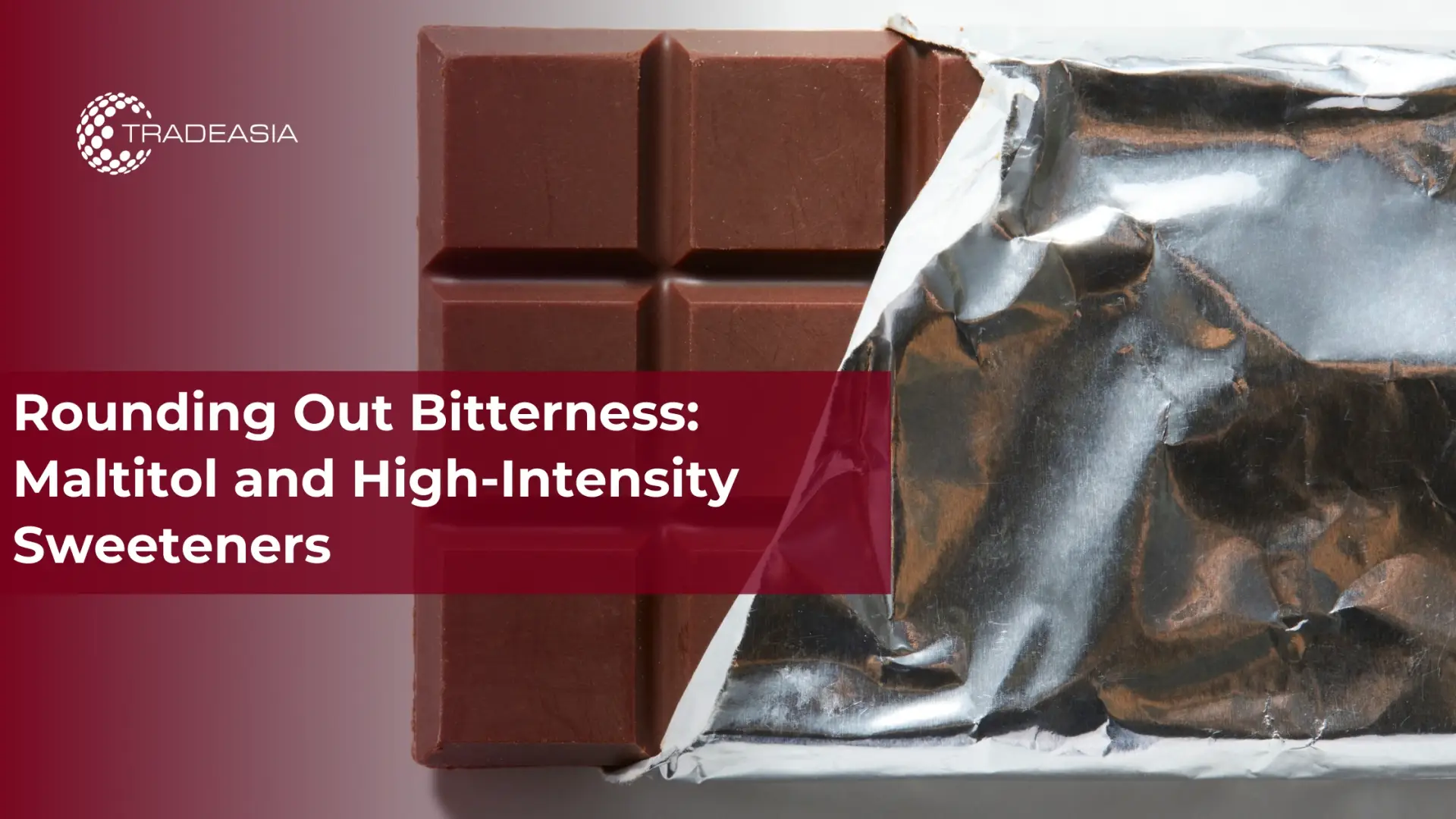
Sugar-Free Chocolate: Chocolate is highly sensitive to off-flavors. Maltitol is the absolute polyol of choice here because its low hygroscopicity prevents the chocolate from seizing during production, while its clean taste perfectly masks any Stevia added to reach the desired sweetness level.
-
Chewing Gum and Mints: Panned chewing gums rely on Maltitol for the hard, crunchy outer shell. When combined with Aspartame or Sucralose, the Maltitol delivers the initial sweet impact and structural crunch, while the HIS sustains the sweetness over a 20-minute chew.
-
Diabetic Bakery Products: Maltitol provides the necessary volume and crumb structure for cookies and muffins. By adding a fraction of Sucralose, the baker achieves the full sweetness profile without the excessive laxative risk associated with using enormous doses of polyols alone.
Conclusion
In the demanding architecture of sugar-free formulation, High-Intensity Sweeteners are the engine, but Maltitol is the chassis. While ingredients like Stevia and Sucralose provide the necessary caloric reduction, their harsh bitter notes and lingering aftertastes render them unpalatable in high concentrations. Maltitol bridges this sensory gap. By physically replacing the lost bulk of sugar and neurologically masking the metallic off-notes of intense sweeteners, Maltitol restores the clean, crisp temporal profile that consumers demand. For the strategic buyer, it is an indispensable functional ingredient that turns a compromised "diet" product into a premium "zero sugar" indulgence.
Partner with Food Additives Asia for Premium Maltitol
The success of your sugar-free formulation depends entirely on the purity and consistency of your bulk sweeteners. At Food Additives Asia, we supply high-grade Maltitol specifically optimized for synergistic blending in the confectionery, bakery, and pharmaceutical industries. We focus on:
-
Premium Quality: Supplying high-purity Maltitol with precise particle size distributions for optimal dissolution and flawless mouthfeel.
-
Supply Security: Ensuring consistent availability through a robust, global supply chain, protecting your production lines from seasonal shortages or logistical disruptions.
-
Trusted Sourcing: Partnering exclusively with audited, top-tier global manufacturers to guarantee the safety, stability, and traceability of your raw materials year-round.
Secure your supply. Protect your quality.
Contact us for Maltitol specifications, facility audit documentation, and forward contracting options at foodadditivesasia.com.