Introduction
Volatility in the soya lecithin supply chain has become a structural reality rather than a temporary disruption. Food, feed, confectionery, nutraceutical, and industrial formulators are entering Q2 2026 with heightened sensitivity to raw material availability, freight costs, sustainability expectations, and regulatory scrutiny. In this context, securing consistent, specification-compliant lecithin at competitive prices is a strategic priority for procurement and supply chain leaders worldwide.
Soya lecithin, a multifunctional emulsifier and surface-active agent derived primarily from soybean oil refining, is deeply embedded in global value chains. From chocolate and bakery products to instant beverages, margarine, animal feed premixes, and pharmaceutical coatings, demand is broad and resilient. However, the same global reach exposes buyers to regional crop risks in South America, North America, and Asia, as well as to geopolitical, logistics, and currency shocks that can rapidly cascade into price spikes and delivery delays.
To navigate these challenges, many companies are turning to specialized B2B distributors and digital platforms such as chemtradeasia.com, chemtradeasia.in, chemtradeasia.co.id, chemtradeasia.ae, and chemtradeasia.sg. These networks combine multi-origin sourcing, regional warehousing, and technical knowledge to help manufacturers manage uncertainty while maintaining product quality and regulatory compliance. This article explores the market context for Q2 2026, unpacks the main volatility drivers, and outlines practical strategies to stabilize lecithin supply.
Global Soya Lecithin Market Outlook for Q2 2026
The global lecithin market has been on a steady growth trajectory, with most industry analyses estimating a compound annual growth rate (CAGR) of around 5–7% between 2023 and 2028. Within this, soya lecithin remains the dominant segment, accounting for an estimated 60–70% of total lecithin consumption by volume, thanks to its cost-effectiveness, established regulatory approvals, and widespread availability from major soybean-crushing regions.
Heading into Q2 2026, several structural factors are shaping the market outlook. First, the recovery of foodservice and bakery segments in Asia-Pacific, the Middle East, and Latin America continues to support demand for lecithin as an emulsifier, release agent, and texture improver. Second, clean-label trends are encouraging formulators to replace synthetic emulsifiers with naturally derived options such as fluid soya lecithin and de-oiled lecithin powder, particularly in confectionery, plant-based dairy alternatives, and dietary supplements. Third, the feed industry is increasingly using lecithin for pellet lubrication and as a nutritional phospholipid source, further underpinning demand.
On the supply side, soybean production in key origins such as Brazil, the United States, and Argentina remains the principal determinant of lecithin availability. While global soybean output is forecast to be broadly adequate in the 2025/26 crop year, localized weather events, export policy adjustments, and competition from biodiesel and protein markets can all influence the volume and quality of crude lecithin available for refining. Buyers working through regional distribution platforms like chemtradeasia.sg in Southeast Asia or chemtradeasia.ae in the Middle East can benefit from diversified sourcing strategies that reduce exposure to any single origin or logistics corridor.
Key Drivers of Soya Lecithin Supply Chain Volatility
Managing soya lecithin in Q2 2026 requires a clear understanding of the underlying volatility drivers. The first and most visible factor is agricultural risk. Droughts, excessive rainfall, and changing climate patterns in major soybean-growing regions directly impact oil yield and lecithin quality. For example, lower oil content or higher impurity levels can reduce the volume of lecithin recovered during degumming and increase refining costs. In years with tight soybean balances, crushers may prioritize oil and meal margins, limiting the flexibility to supply customized lecithin grades or offering them at higher premiums.
The second driver is logistics and freight disruption. The past few years have highlighted the vulnerability of global shipping routes to port congestion, container shortages, and geopolitical tensions. For lecithin, which often moves in flexitanks, drums, or IBCs, any disruption in key export hubs in South America or Asia can lead to extended lead times and spot price volatility. B2B distributors with multi-hub warehousing, such as those operating through chemtradeasia.com and regional portals like chemtradeasia.co.id, can buffer these shocks by holding safety stocks closer to end-use markets and by optimizing shipment sizes and routes.
A third, less obvious but increasingly important driver is regulatory and sustainability pressure. Food manufacturers are under scrutiny to ensure traceability, non-GMO or identity-preserved sourcing where required, and compliance with regional standards such as EU food additive regulations, U.S. FDA GRAS status, and halal/kosher certifications. Shifts in labeling rules, deforestation-free supply chain policies, and customer audits can quickly change the acceptable supplier base for lecithin. This can tighten supply for specific certified grades, particularly in Europe and premium export markets in Asia, making proactive qualification of multiple suppliers through partners like chemtradeasia.in strategically valuable.
Product Focus: Soya Lecithin Grades, Specifications, and Applications
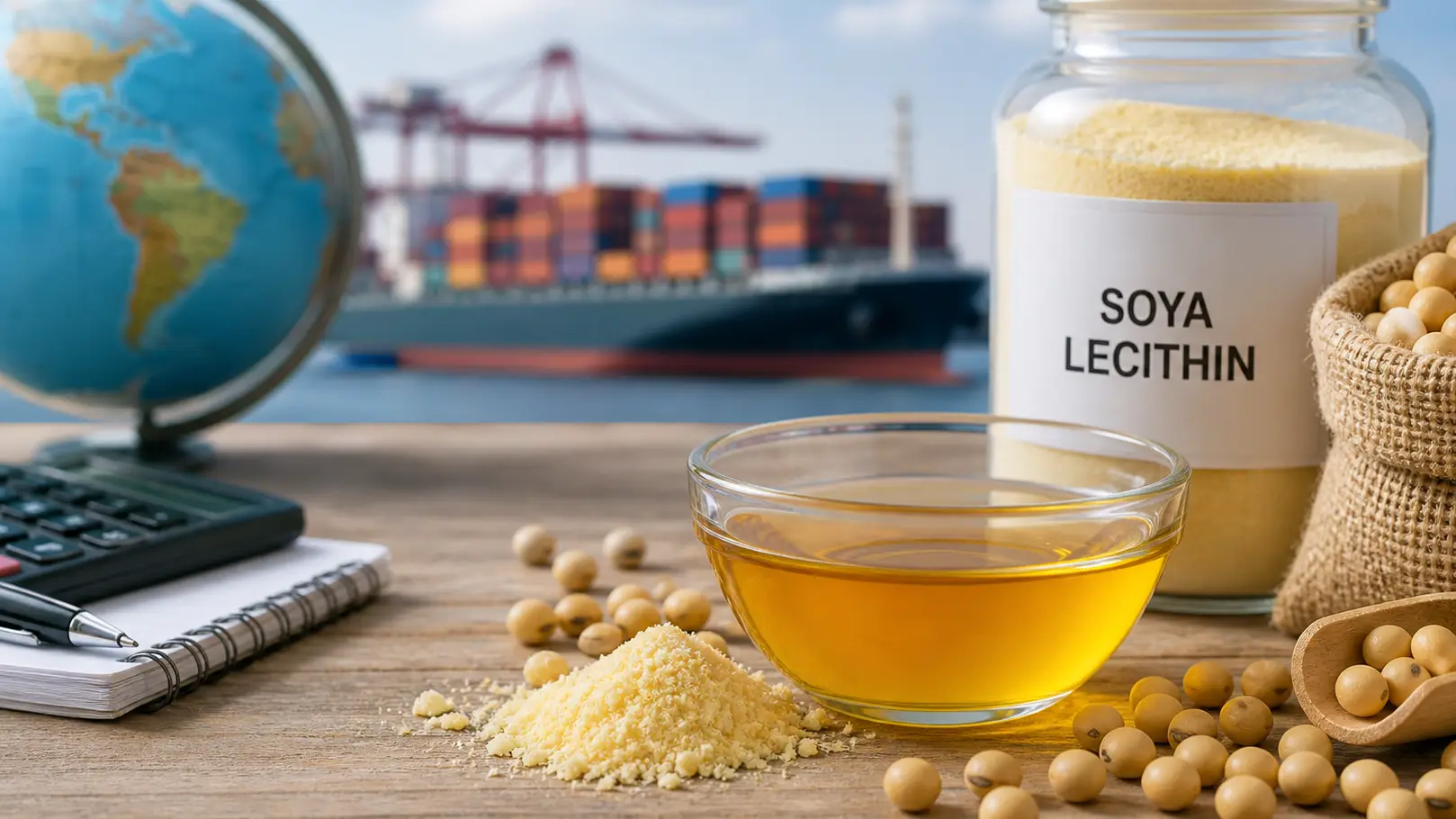
A robust volatility-management strategy starts with a clear understanding of the product landscape. Soya lecithin is not a single commodity but a family of phospholipid-rich ingredients with varying physical forms, purity levels, and functional properties. The three most common commercial categories are fluid soya lecithin, de-oiled lecithin powder or granules, and modified or fractionated lecithin. Each is tailored to specific applications and performance requirements in food, feed, and industrial formulations.
Fluid soya lecithin is typically a viscous, brownish liquid with a phospholipid content of around 60–70%, an acid value often below 30 mg KOH/g, and moisture levels generally under 1%. It is widely used in chocolate, compound coatings, bakery products, margarines, and instant drink powders to improve wetting, reduce viscosity, and enhance dispersion. De-oiled lecithin powder, on the other hand, is produced by removing most of the neutral oil fraction, yielding a free-flowing powder with phospholipid content that can exceed 95%. This form is preferred in instant drink mixes, nutritional powders, and dietary supplements where low fat and easy handling are critical. Modified lecithin variants—such as hydrolyzed or enzyme-treated lecithin—offer improved hydrophilicity or tailored HLB values, making them suitable for specialized emulsions and pharmaceuticals.
Applications span a wide spectrum. In confectionery, lecithin is essential for controlling chocolate viscosity and bloom, often allowing partial replacement of more expensive cocoa butter. In bakery, it improves dough stability, crumb softness, and shelf life. In feed, it enhances pellet lubrication and supports energy density, while in industrial sectors it can act as a dispersant for pigments or as a release agent in metalworking. B2B distributors operating via platforms such as chemtradeasia.com and its regional sites (chemtradeasia.sg, chemtradeasia.in, chemtradeasia.co.id, chemtradeasia.ae) typically offer multiple grades—GMO and non-GMO, halal/kosher-certified, and region-specific standards—enabling formulators to match specification, functionality, and cost targets while maintaining supply flexibility.
Risk Mitigation Strategies with Global B2B Distributors
In an environment of persistent volatility, collaboration with experienced B2B distributors becomes a key strategic lever. One of the most effective approaches is multi-origin, multi-supplier sourcing. Rather than relying on a single crusher or region, buyers can work with distributors that aggregate supply from South America, North America, Europe, and Asia, balancing seasonal availability and freight costs. Platforms such as chemtradeasia.com and its country-focused portals (chemtradeasia.in for India, chemtradeasia.co.id for Indonesia, chemtradeasia.sg for Southeast Asia, and chemtradeasia.ae for the Middle East and Africa) are structured to provide this diversification, combining local warehousing with global procurement reach.
Another critical strategy is inventory and contract optimization. By combining spot purchases with medium-term contracts and vendor-managed inventory arrangements, buyers can smooth price volatility and reduce the risk of stockouts. Regional distributors can hold buffer stocks of standard fluid and de-oiled lecithin grades, enabling just-in-time deliveries and shorter lead times even during shipping disruptions. They can also support demand forecasting by sharing market intelligence on upcoming crop reports, freight trends, and regulatory changes, allowing procurement teams to time purchases more effectively and adjust formulations where necessary.
Finally, technical and regulatory support is increasingly important. Ensuring that lecithin grades meet evolving standards—such as allergen labeling, non-GMO verification, and halal/kosher certification—requires up-to-date documentation and close coordination with suppliers. Distributors with dedicated quality and regulatory teams can assist in managing product specifications, change-control processes, and sample evaluation, reducing the internal workload for manufacturers. Buyers can leverage the technical resources available through portals like chemtradeasia.com and its regional counterparts to evaluate alternative lecithin grades, explore cost-optimized blends, or assess the feasibility of switching from synthetic emulsifiers to soya lecithin-based systems without compromising performance.
Conclusion
As Q2 2026 approaches, the soya lecithin supply chain remains influenced by a combination of agricultural uncertainty, logistics complexity, and rising expectations around traceability and sustainability. Manufacturers and formulators that treat lecithin as a strategic ingredient rather than a simple commodity are better positioned to protect margins, maintain product quality, and respond quickly to market shifts. Understanding the full spectrum of lecithin grades, their technical attributes, and their application-specific roles is central to building resilient sourcing and formulation strategies.
Working with global B2B distributors and digital platforms such as chemtradeasia.com, chemtradeasia.in, chemtradeasia.co.id, chemtradeasia.ae, and chemtradeasia.sg can significantly reduce exposure to regional disruptions and certification bottlenecks. These partners provide multi-origin supply options, regional stock points, and technical support that together enable more agile and informed decision-making. By combining diversified sourcing, structured contracts, and proactive risk management, companies can transform lecithin volatility from a constant threat into a manageable variable within their broader procurement strategy.
This article is intended solely for informational and market insight purposes and does not constitute technical, safety, regulatory, or professional advice. Readers should independently verify all information with qualified experts, consult official documentation such as MSDS/SDS and relevant standards, and contact appropriate technical or commercial teams for guidance on specific applications or compliance requirements.
Leave a Comment