Introduction
Asia has become the world’s most dynamic region for animal protein production, with rising incomes, urbanization, and dietary changes driving sustained growth in poultry, swine, aquaculture, and dairy sectors. As producers seek to maximize feed efficiency and animal health, the demand for high-quality trace minerals has increased significantly. Among these, manganese carbonate has emerged as a critical ingredient in modern feed formulations across Asia in the lead-up to Q4 2025.
Manganese is an essential trace element required for bone formation, enzyme activation, antioxidant defense, and reproductive performance in livestock and aquaculture species. While it can be supplied in several inorganic forms, feed-grade manganese carbonate offers a balance of bioavailability, cost-effectiveness, and formulation flexibility that is particularly attractive for large-scale feed mills. The shift toward scientifically balanced diets and precision nutrition has therefore translated into growing consumption of manganese carbonate in key Asian markets such as China, India, Indonesia, Vietnam, and Thailand.
Market participants, including integrated feed producers, premix manufacturers, and distributors, increasingly rely on structured sourcing platforms such as chemtradeasia.in and chemtradeasia.co.id to secure consistent-quality manganese carbonate. As Q4 2025 approaches, understanding the regional trends, product specifications, and application benefits of manganese carbonate is essential for stakeholders looking to optimize their feed formulations and supply chains across Asia.
Manganese Carbonate: Properties, Grades, and Product Profile
Manganese carbonate (MnCO₃) is a pale pink to light brown crystalline powder that serves as a key raw material for both industrial and nutritional applications. In the context of animal feed, it is valued primarily for its manganese content, typically around 43–48% Mn on a dry basis, depending on purity. The compound is sparingly soluble in water but becomes more available in the acidic environment of the gastrointestinal tract, where it releases manganese ions for absorption.
Feed-grade manganese carbonate is usually produced to strict quality standards, focusing on controlled heavy metal levels, low moisture, and consistent particle size distribution. Typical specifications for feed applications in Asia include a manganese content above 44%, moisture below 2%, and controlled impurities such as lead, arsenic, and cadmium in line with local regulatory limits (e.g., FAMI-QS, EU standards, or equivalent national rules). These specifications are important for ensuring both nutritional efficacy and animal safety, especially in high-density production systems.
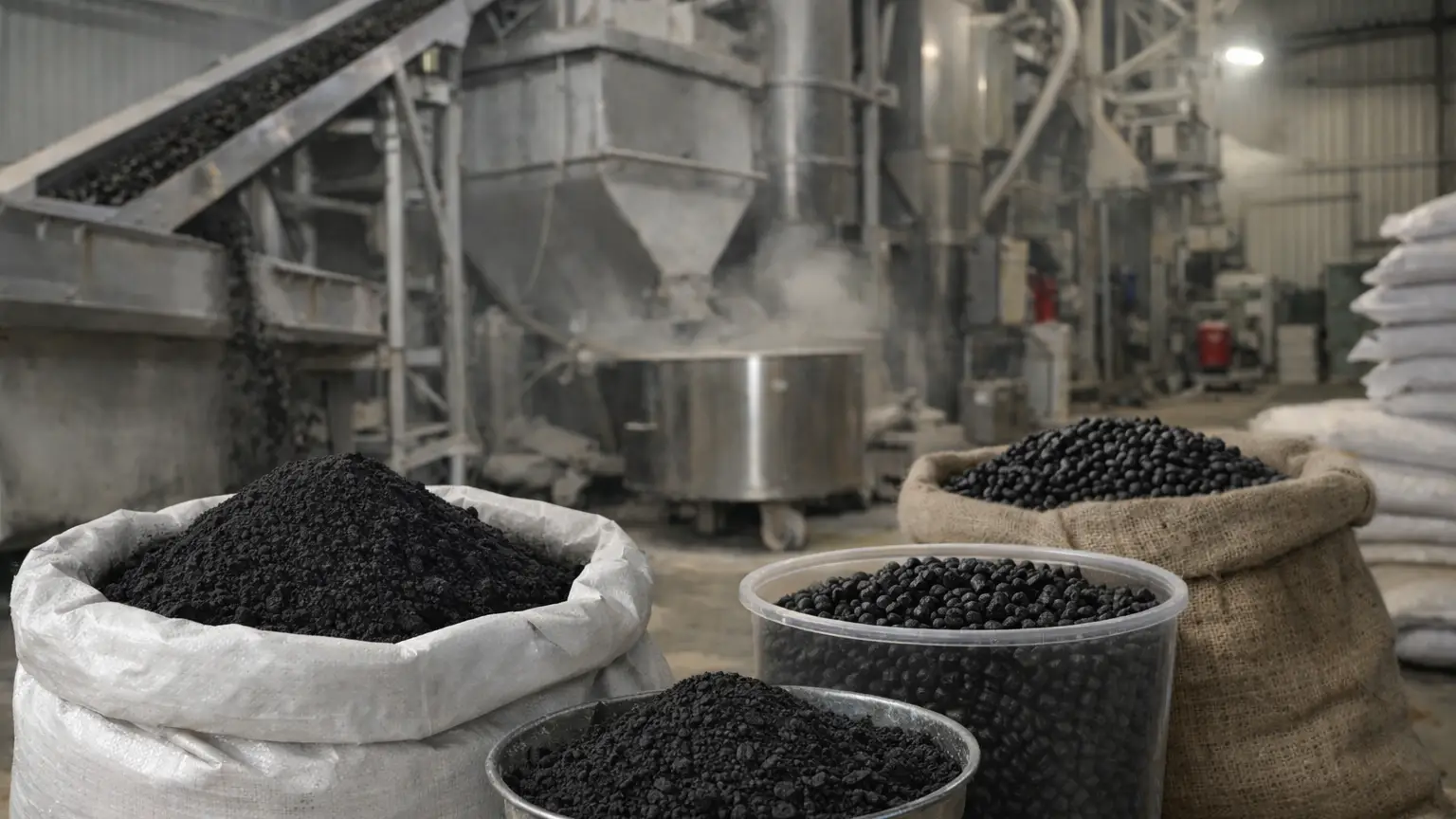
Suppliers operating through platforms like chemtradeasia.in and chemtradeasia.co.id commonly offer multiple packaging formats—25 kg bags, 500–1000 kg big bags, and customized packing for premix manufacturers. In addition to standard feed-grade manganese carbonate, some producers provide coated or granulated variants designed to reduce dusting, improve flowability, and enhance mixing uniformity in large feed mills. These product options allow nutritionists and formulators to select the most appropriate grade for poultry, swine, ruminant, and aquafeed applications while aligning with factory handling constraints.
Market Dynamics in Asia’s Animal Feed Ingredient Sector
The Asian manganese carbonate market for animal feed is closely linked to the region’s overall feed production, which, according to industry estimates, accounts for more than one-third of global output. China remains the largest consumer, followed by emerging growth markets such as India, Indonesia, and Vietnam. Between 2021 and 2024, compound feed production in Asia has grown steadily, driven by rising demand for poultry meat, eggs, and aquaculture products. This expansion directly supports higher consumption of trace minerals, including manganese carbonate, in premixes and complete feeds.
Several structural trends are shaping demand in Q4 2025. First, there is a clear shift from small, backyard operations toward larger, commercial farms and integrated supply chains. This industrialization of livestock production increases the adoption of scientifically formulated feeds where trace minerals are precisely dosed. Second, regulatory tightening around heavy metals and environmental emissions is prompting feed manufacturers to choose higher-purity manganese sources with predictable quality. Third, the post-pandemic focus on biosecurity and animal resilience has reinforced the role of micronutrients, including manganese, in supporting immune function and overall performance.
On the supply side, Asia sources manganese carbonate both from domestic manufacturers and international exporters, often linked to regions rich in manganese ore such as China and parts of Africa. Feed-grade material competes with technical-grade manganese carbonate used in ceramics, catalysts, and battery precursors, which can influence price volatility. As battery and energy-storage industries expand, especially in China and Southeast Asia, there is potential for tighter raw material availability. This makes reliable procurement channels, such as those accessed via chemtradeasia.in and chemtradeasia.co.id, increasingly important for feed producers seeking stable and predictable supplies.
Applications and Benefits of Manganese Carbonate in Animal Nutrition
In animal feed formulations, manganese carbonate is used as a primary source of manganese in premixes, mineral concentrates, and complete feeds. It plays a vital role in skeletal development, cartilage formation, and the prevention of leg disorders, particularly in fast-growing broilers and turkeys. Adequate manganese intake helps reduce skeletal deformities, improves bone strength, and supports proper eggshell formation in layers and breeders, thereby lowering breakage rates and improving overall productivity.
Manganese is also a cofactor for several key enzymes involved in metabolism and antioxidant defense, such as manganese superoxide dismutase (Mn-SOD). By supporting these enzymatic systems, manganese carbonate contributes to better oxidative stress management, improved reproductive performance, and enhanced immune response. In swine, proper manganese supplementation supports joint health and reproductive efficiency in sows, while in ruminants it helps maintain connective tissue integrity and fertility. In aquaculture, manganese plays a role in growth, skeletal development, and stress resistance, making it a critical trace mineral in modern fish and shrimp feeds.
Compared with other inorganic manganese sources such as manganese oxide or manganese sulfate, manganese carbonate is often preferred when nutritionists seek a combination of good bioavailability, lower hygroscopicity, and manageable reactivity in vitamin-mineral premixes. Its relatively neutral behavior can help reduce unwanted interactions with vitamins and other trace minerals during storage. In practice, feed formulators adjust inclusion rates based on species requirements, baseline manganese content in raw materials, and national guidelines, typically adding manganese carbonate to achieve dietary levels in the range of 20–120 mg Mn/kg feed depending on species and production stage.
Supply Chain, Pricing Trends, and the Role of Tradeasia
The supply chain for feed-grade manganese carbonate in Asia involves miners, chemical processors, distributors, and feed manufacturers. Raw manganese ore is processed into carbonate through controlled chemical reactions, followed by filtration, drying, and milling to achieve the required particle size and purity. From there, the product moves through regional distributors and trading companies that consolidate demand from multiple feed mills and premix plants. Logistics considerations—such as port access, container availability, and customs procedures—play a significant role in final landed costs for buyers in countries like Indonesia, India, and Vietnam.
Pricing trends for manganese carbonate in Q4 2025 are influenced by several factors: fluctuations in manganese ore prices, energy costs, environmental regulations affecting mining and processing, and competing demand from industrial sectors. While detailed spot prices vary by contract and origin, the general pattern in recent years has been moderate upward pressure with periodic spikes linked to raw material or freight disruptions. Feed producers, whose margins can be sensitive to ingredient costs, increasingly seek longer-term contracts and diversified sourcing to manage this volatility.
Digital sourcing platforms such as chemtradeasia.in and chemtradeasia.co.id have become important tools for buyers across Asia to navigate this complex environment. These platforms connect feed manufacturers and premix producers with vetted suppliers of feed-grade manganese carbonate, offering transparent product specifications, documentation, and logistics support. By aggregating demand and offering multi-origin options, they help buyers compare quality, price, and lead times, while also supporting compliance with local feed regulations. For many mid-sized feed mills in South and Southeast Asia, leveraging such platforms reduces procurement risk, improves traceability, and ensures consistent supply of critical micronutrients.
Conclusion
As Asia’s animal protein sector continues to expand and modernize, the importance of precise micronutrient nutrition becomes ever more apparent. Manganese carbonate has established itself as a cornerstone trace mineral in feed formulations, supporting bone development, reproductive performance, and overall metabolic health in poultry, swine, ruminants, and aquaculture species. Its favorable balance of bioavailability, stability, and cost positions it as a preferred manganese source for many feed manufacturers across the region.
In the run-up to Q4 2025, market dynamics point to sustained, and in some segments accelerating, demand for feed-grade manganese carbonate in Asia. Rising feed production, stricter regulatory oversight, and the move toward higher-efficiency, data-driven farming systems all underpin this growth. At the same time, competition from industrial applications, raw material constraints, and logistics challenges underscore the need for robust sourcing strategies and reliable supplier relationships.
Platforms such as chemtradeasia.in and chemtradeasia.co.id are playing a pivotal role in this evolving landscape by linking buyers with quality-assured manganese carbonate producers and facilitating efficient, transparent trade flows. For stakeholders across the animal feed value chain—from premix formulators to integrated livestock companies—leveraging these channels and understanding the technical and market aspects of manganese carbonate will be key to maintaining feed quality, optimizing animal performance, and capturing the opportunities emerging in Asia’s rapidly growing animal nutrition market.
Leave a Comment