Navigating the 2026 Octyl Alcohol Supply Landscape in Southeast Asia
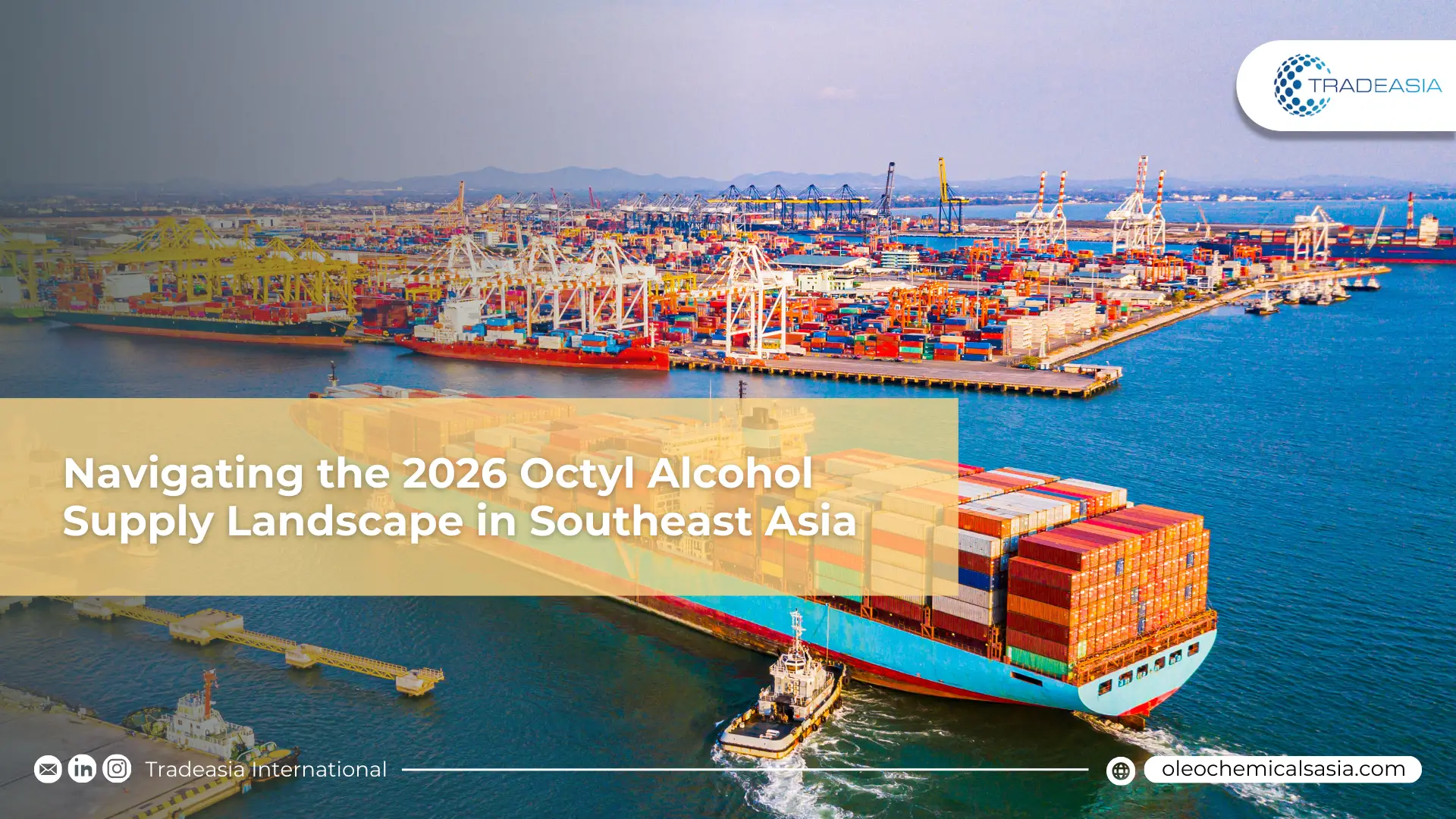
Table of Content
-
Regional Production Dynamics and Indonesia’s Strategic Edge
-
Price Trends and Market Stability for 2026
-
Sourcing Advantages in the "China Plus One" Era
The global procurement landscape for Octyl Alcohol, also known as 1-Octanol or C8 alcohol, is undergoing a significant structural shift as we move into 2026. For B2B procurement officers, the focus has pivoted from simple cost-minimization to a more nuanced strategy of regional reliability and supply chain integration. Indonesia has emerged as the definitive hub for this transition, leveraging its massive palm oil feedstock advantage to stabilize the production of high-purity C8 derivatives. As of early 2026, the Asia-Pacific region commands nearly 40% of the global market share, and the logistical proximity of Indonesian refineries to major shipping lanes offers a distinct lead-time advantage over European or North American competitors.
Regional Production Dynamics and Indonesia’s Strategic Edge
The Indonesian oleochemical sector has invested heavily in downstream capacity, moving beyond crude palm oil exports to refined specialty alcohols. In 2025, the market for 1-Octanol was valued at approximately USD 1.72 billion, and current projections for 2026 suggest a rise to USD 1.8 billion. This growth is underpinned by the Indonesian government’s 2026 mandate for expanded biodiesel and bio-ethanol programs, which, while focused on fuel, have the secondary effect of scaling the infrastructure for all palm-based derivatives. For a buyer, this means that Indonesian suppliers are no longer just commodity traders; they are vertically integrated entities capable of providing 99% purity Octyl Alcohol with consistent feedstock security.
Price Trends and Market Stability for 2026
Entering the first quarter of 2026, price transparency has become a critical tool for managing procurement budgets. While isopropyl alcohol and other short-chain alcohols saw volatility in 2025, Octyl Alcohol prices in the Southeast Asian spot market have stabilized around USD 1,100 to USD 1,250 per Metric Ton FOB, depending on the purity grade. This stability is a direct result of increased domestic production volumes in Malaysia and Indonesia, which have helped buffer the market against the trade shocks seen in previous years. Furthermore, the 2.8% projected Compound Annual Growth Rate for the broader octyl alcohol segment indicates a mature market where supply is largely keeping pace with the rising demand from the surfactants and flavor industries.
Sourcing Advantages in the "China Plus One" Era
The "China Plus One" strategy continues to influence how multinational corporations structure their 2026 contracts. Relying on Indonesia as a primary or secondary source for C8 alcohol mitigates the risks associated with evolving trade tariffs and geopolitical friction. Indonesian ports like Tanjung Perak in Surabaya have undergone modernization programs throughout 2025, specifically to handle increased volumes of liquid bulk chemicals. These upgrades allow for faster vessel turnaround times and more flexible ISO tank availability. For a procurement manager, sourcing from this region in 2026 represents a hedge against global uncertainty, offering a combination of competitive pricing and a modernized logistical framework that is increasingly difficult to match in other regions.
Leave a Comment