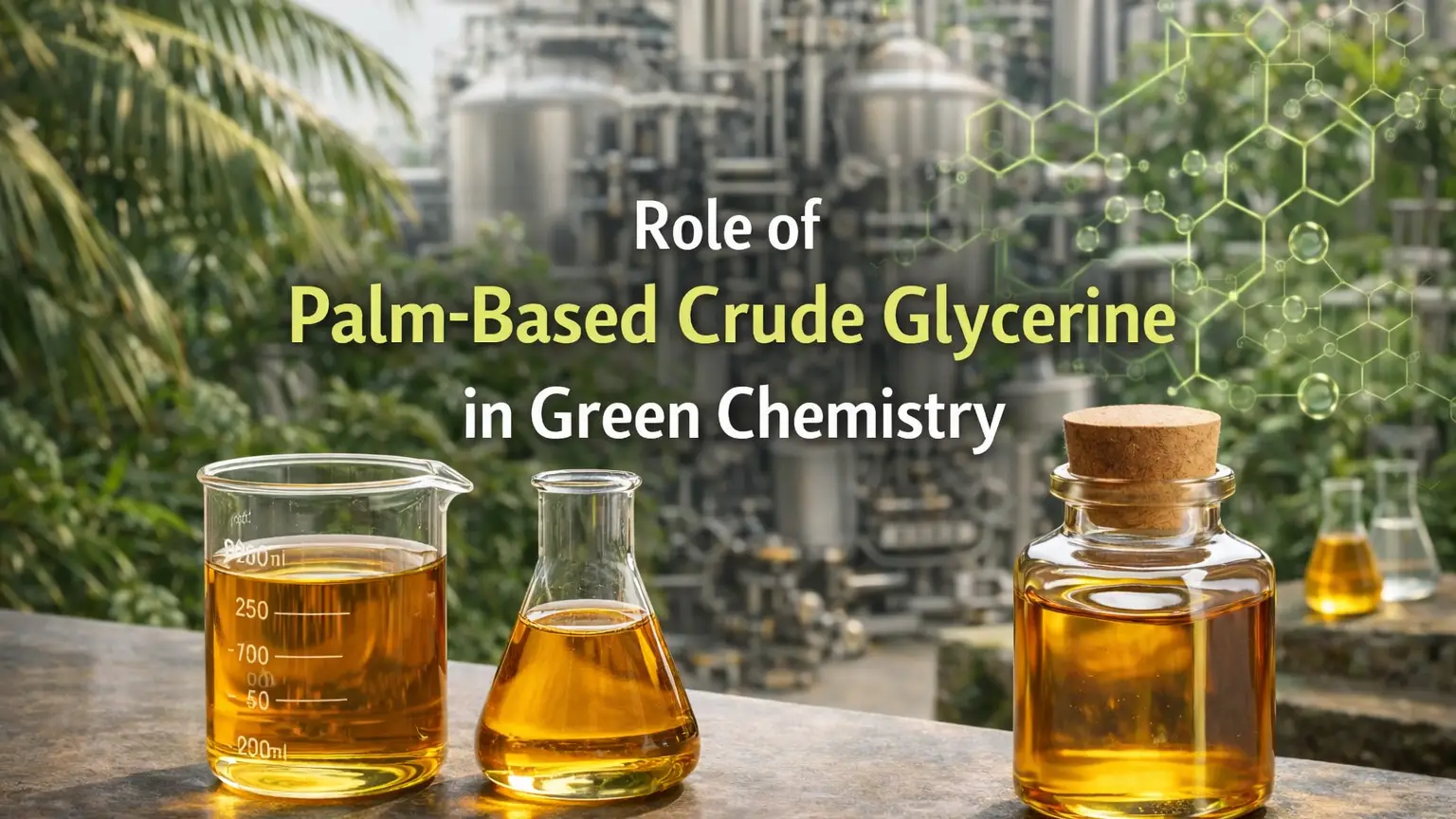
Palm-based crude glycerine plays an increasingly important role in green chemistry as industries seek renewable feedstocks that support lower carbon manufacturing. Generated mainly as a by-product of palm oil biodiesel production, crude glycerine offers a practical pathway to valorize waste streams while supplying raw material for a wide range of chemical applications. Its growing use reflects a balance between sustainability objectives and industrial scalability.
As chemical manufacturers, researchers, and procurement teams evaluate alternatives to petrochemical inputs, palm-based crude glycerine has gained attention for its availability, functionality, and alignment with circular economy principles.
Green Chemistry and the Shift Toward Renewable Feedstocks
Green chemistry focuses on reducing environmental impact through efficient resource use, waste minimization, and reliance on renewable inputs. One of its core principles encourages the use of feedstocks derived from annually renewable sources rather than finite fossil resources.
Palm-based crude glycerine fits within this framework by transforming a biodiesel by-product into a usable chemical raw material. In regions such as Southeast Asia, where palm oil production is concentrated, this approach strengthens circular economy models within the oleochemical sector. It allows biodiesel production and chemical manufacturing to operate within interconnected value chains rather than isolated systems.
Industrial adoption of renewable feedstocks remains grounded in feasibility. Applications are prioritized where bio-based glycerine can be integrated into existing processes with manageable modifications and predictable performance.
Alignment with Green Chemistry Principles
Palm-based crude glycerine supports several green chemistry objectives. Its renewable origin reduces dependence on fossil carbon. Its use as a chemical feedstock prevents disposal or low-value burning of biodiesel by-products, supporting waste prevention.
Life cycle assessments generally show lower environmental impact for glycerine derived from biodiesel systems compared to standalone petrochemical production, provided impurities are managed responsibly. Many conversion routes use catalytic or biochemical processes that improve atom efficiency and reduce hazardous waste.
These characteristics explain why crude glycerine has moved beyond experimental use into established industrial applications.
Crude Glycerine in Circular Economy Models
In palm oil biorefineries, crude glycerine functions as a secondary feedstock that improves overall process economics. Instead of being treated as waste, it is reintegrated into chemical manufacturing streams.
This circular approach strengthens the financial viability of biodiesel production while reducing material losses. In Southeast Asia, integrated producers increasingly refine or convert crude glycerine into oleochemical intermediates, solvents, and polyols.
Sustainability certification, including RSPO and ISCC schemes, plays a role in ensuring that palm-derived glycerine is sourced responsibly. Traceability systems help address environmental and land-use concerns associated with palm cultivation.
Key Green Chemistry Applications of Crude Glycerine
Palm-based crude glycerine is used in several green chemistry applications where scalability has been demonstrated.
One major area is bio-based solvents. Refined glycerol derived from crude glycerine replaces petroleum-based solvents in coatings, cleaners, and formulations with lower volatility.
Another application involves biopolyols produced through catalytic reactions between glycerine and biomass-derived compounds. These polyols are used in polyurethane foams and perform comparably to fossil-based alternatives.
Crude glycerine is also converted into glycols and epichlorohydrin, which serve as intermediates in resins, adhesives, and composites. Bio-based epichlorohydrin routes have gained commercial traction in Asia, reducing reliance on propylene-based processes.
Additional uses include organic acids, surfactant intermediates, and pharmaceutical-grade glycerol following further purification.
Carbon Footprint Considerations
Carbon footprint outcomes for crude glycerine depend heavily on purification methods and waste management. Energy-intensive processes such as vacuum distillation increase emissions, while optimized ion exchange and residue handling reduce environmental impact.
Studies indicate that proper management of impurities and residues can significantly lower overall emissions. When crude glycerine is integrated within biodiesel systems, shared energy use further improves carbon efficiency.
For manufacturers tracking Scope 3 emissions, glycerine-based intermediates often show lower life cycle impact compared to petrochemical equivalents, particularly in polymer and resin applications.
Replacing Petrochemical Feedstocks
Palm-based crude glycerine substitutes petrochemical feedstocks in several established processes. Epichlorohydrin production, polyol synthesis, and solvent manufacturing increasingly rely on glycerine-derived routes in Asia.
These substitutions are driven by feedstock availability, cost stability, and regulatory pressure to reduce fossil carbon intensity. While performance parity has largely been achieved, consistency and impurity control remain important operational considerations.
Economic competitiveness improves as biodiesel production expands, ensuring steady glycerine supply.
Challenges and Limitations
Using crude glycerine in green chemistry presents technical and economic challenges. Impurities such as salts and methanol require pretreatment through acidification, distillation, or ion exchange. These steps increase processing cost and energy use.
Feedstock variability introduces additional complexity. Differences in salt content and organic impurities affect catalyst performance and resin life. Waste streams generated during purification must be managed carefully to avoid shifting environmental burdens.
These limitations mean that crude glycerine adoption is application-specific rather than universal.
Quality and Sustainability Criteria
Industrial users evaluate crude glycerine based on glycerol content, impurity levels, and traceability. Crude grades typically target at least 80 to 85 percent glycerol. Refined grades for food or pharmaceutical use require purity above 99 percent.
Sustainability certifications such as RSPO and ISCC provide assurance of responsible sourcing. Certificates of analysis document moisture, ash, color, and residual methanol levels. These criteria help procurement teams manage technical risk and sustainability reporting requirements.
Future Outlook for Green Chemistry Applications
Demand for palm-based crude glycerine is expected to grow steadily through the end of the decade. Expansion is driven by oleochemicals, cosmetics, pharmaceuticals, and renewable materials. Advances in enzymatic processing and membrane separation are improving efficiency and reducing purification costs.
Regulatory frameworks related to deforestation and carbon reporting are likely to increase demand for certified glycerine streams. Pricing is expected to remain linked to biodiesel production trends, supporting supply stability.
Conclusion
Palm-based crude glycerine represents a practical renewable feedstock within green chemistry. It enables waste valorization, supports circular economy models, and reduces reliance on fossil-derived inputs. While technical challenges remain, continued improvements in purification and conversion processes are expanding its industrial relevance.
For companies sourcing palm-based crude glycerine for green chemistry applications, Chemtradeasia provides access to regionally sourced material supported by quality documentation and sustainability credentials, enabling consistent integration into established chemical value chains.