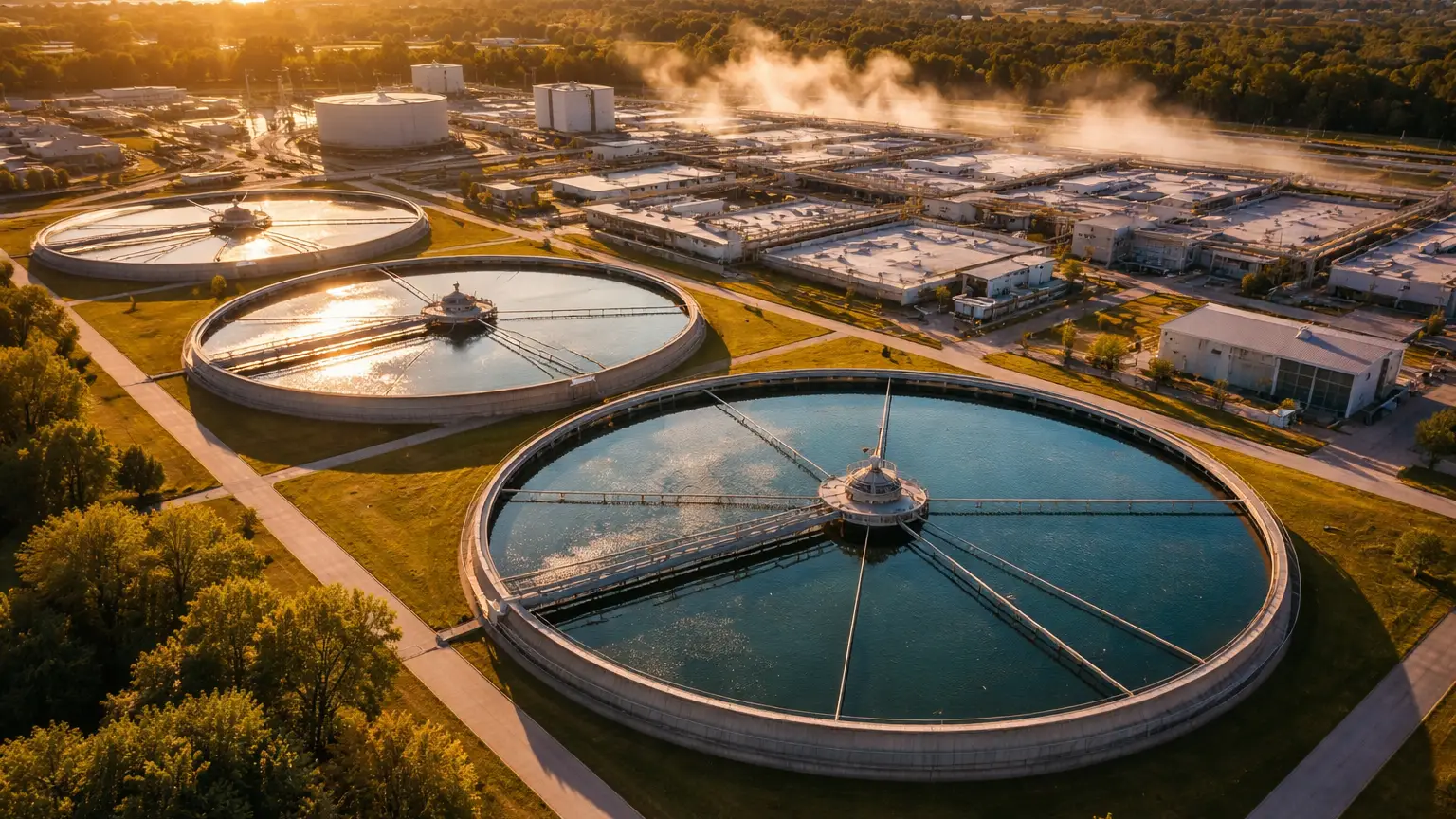
Polyaluminium chloride (PAC) is primarily used in drinking water purification, municipal wastewater treatment, and industrial effluent management. Key buyers include municipal utilities, industrial wastewater operators, pulp and paper manufacturers, and textile processors. Demand is driven by tightening water quality regulations, rapid urbanisation in Asia-Pacific, and PAC's cost-performance advantage over traditional coagulants like aluminium sulfate.
Polyaluminium chloride is the dominant inorganic coagulant in global water treatment, commanding roughly 70% of all PAC end-use volume. The market was valued at approximately USD 2.14 billion in 2026 and is forecast to reach USD 2.62–2.83 billion by 2030–2031, growing at a CAGR of 4–7% depending on the segment. Demand is structurally anchored by municipal water infrastructure investment, with Asia-Pacific, the Middle East, and Africa representing the most active growth markets. Industrial buyers in pulp and paper, textiles, and oil and gas round out the remaining consumption base. The near-term outlook is firm: regulatory tightening, water reuse mandates, and PAC's operational advantages over conventional coagulants are sustaining demand even as upstream aluminium cost pressures introduce pricing complexity.
Core Applications of Polyaluminium Chloride
| Application | Sector | Demand Share (est.) | Trend | Buyer Type |
|---|---|---|---|---|
| Drinking water purification | Municipal water utilities | ~45% | Growing ↑ | Government / Institutional |
| Municipal wastewater treatment | Sewage & sanitation authorities | ~25% | Growing ↑ | Government / Institutional |
| Industrial effluent treatment | Food, chemicals, textiles, oil & gas | ~12% | Stable → | Industrial / Manufacturer |
| Pulp & paper processing | Paper manufacturers | ~10% | Stable → | Industrial / Manufacturer |
| Textile effluent treatment | Textile mills | ~5% | Stable → | Industrial / Manufacturer |
| Cosmetics & personal care | Specialty formulators | ~2% | Growing ↑ | Manufacturer / Niche |
| Other (ceramics, oil & gas, pharma) | Mixed industries | ~1% | Emerging ↑ | Niche / Emerging |
Water treatment, combining drinking water and municipal wastewater, accounts for the dominant share of PAC demand globally, estimated at around 70% of total consumption volume.
Emerging Applications
High-Purity / Food-Grade PAC for Bottled Water and Beverages Several PAC producers in India, Sweden, and the United States have developed food-grade and pharmaceutical-grade PAC formulations manufactured under GMP-certified conditions. These are now being specified for bottled water production, IV fluid manufacturing, and food processing effluent treatment. The niche is small but fast-growing, driven by increasingly strict residual aluminium limits in drinking water standards. Timeline: commercially active now, with meaningful scale expected within 2–3 years across premium markets.
High-Basicity PAC for Microplastics and Emerging Contaminant Removal PAC formulations with basicity levels exceeding 85% have demonstrated strong performance in capturing microplastics, PFAS-adjacent compounds, and other emerging contaminants that conventional coagulants fail to address. Drinking water plants in Germany, Japan, and Canada are already deploying these grades. As the EU Urban Wastewater Treatment Directive revision formalises enhanced nutrient removal targets, adoption is expected to accelerate across European municipal systems within 3–5 years.
Desalination Pre-Treatment Expanding desalination capacity in the Middle East, Southeast Asia, and coastal South Asia is creating new demand for PAC as a pre-treatment coagulant ahead of membrane systems. Saudi Arabia's SWPC-led megaprojects and Philippines desalination plants coming online through 2027 represent a growing project pipeline for PAC supply.
Key Buyer Segments for Polyaluminium Chloride
Municipal Water Utilities and Drinking Water Authorities
Municipal water utilities are the largest and most stable buyer segment for PAC globally. These are public agencies or government-linked operators responsible for delivering safe potable water to urban and peri-urban populations. They use PAC as the primary coagulant in conventional water treatment trains covering rapid mix, flocculation, sedimentation, and filtration. PAC's faster floc formation and lower sludge volumes (typically 30–50% less than aluminium sulfate) reduce both chemical and operational costs.
How they buy: Long-term supply contracts, often 1–3 years, sometimes with escalation clauses linked to aluminium indices. Procurement is typically through formal tender processes, especially for public utilities. In emerging markets, purchasing may be routed through government procurement agencies or public-private partnership (PPP) operators such as Veolia, SUEZ, or Metito.
Price sensitivity: Medium. Procurement teams evaluate life-cycle treatment cost, including sludge handling, dosing efficiency, and chemical residuals, rather than spot price alone. PAC's operational advantages over alum sustain demand even when PAC carries a price premium.
Key decision factors: Consistency of supply, aluminium residual compliance (increasingly set at ≤0.1 mg/L in advanced markets), dosing efficiency, and logistics reliability.
Regional concentration: Asia-Pacific (China, India, Indonesia, Vietnam, Philippines), Middle East and North Africa (Saudi Arabia, UAE, Egypt), Sub-Saharan Africa, and Latin America (Brazil, Mexico).
Municipal Wastewater and Sewage Treatment Authorities
Wastewater treatment operators, including public utilities, PPP concessionaires, and independent sewage authorities, represent the second-largest buyer segment. PAC is used here for phosphorus removal, suspended solids reduction, and colour removal from secondary effluent before discharge or reuse.
How they buy: Similar tender-based procurement to drinking water utilities; in some regions, wastewater contracts are bundled with water supply tenders.
Price sensitivity: Medium-high. Budget pressure is significant in emerging markets; however, stricter discharge regulations are compelling upgrades that favour PAC over cheaper but less effective alternatives.
Key decision factors: Regulatory compliance with chemical oxygen demand (COD) and total suspended solids (TSS) limits, sludge management costs, and compatibility with downstream nutrient removal systems.
Key regulatory catalyst: The EU Urban Wastewater Treatment Directive revision, expected to formalise enhanced nutrient removal targets from late 2025 onward, is directly expanding PAC demand among European wastewater operators.
Industrial Wastewater Operators (Food, Chemicals, Textiles)
Large manufacturers in food processing, chemicals, and textiles generate high-volume effluent streams that require coagulation treatment before discharge or reuse. PAC is preferred for its ability to operate effectively across a wide pH range and handle variable influent quality, which is critical for industries where process water chemistry fluctuates.
How they buy: Predominantly on shorter contracts or spot arrangements, enabling supplier switching based on pricing and performance. Some large food and beverage manufacturers use annual contracts with approved supplier lists.
Price sensitivity: High. Industrial buyers are more likely than municipal buyers to switch on price if performance specifications are met. This segment is more exposed to competition from aluminium sulfate during periods of PAC price spikes.
Key decision factors: Total treatment cost per unit of effluent, grade consistency, corrosion compatibility with plant equipment (liquid PAC is acidic and requires acid-resistant handling infrastructure), and supplier responsiveness.
Pulp and Paper Manufacturers
The pulp and paper industry is the second-largest industrial consumer of PAC after water treatment. PAC is used here as a retention aid and drainage accelerator that improves the retention of fibres and fillers, enhances paper formation and strength, and reduces water removal time. Unlike water treatment applications, pulp and paper PAC demand is primarily driven by production throughput rather than regulatory pressure.
How they buy: Long-term supply agreements with qualified chemical suppliers, often coordinated through regional chemical distributors. Product consistency and just-in-time delivery are priorities.
Price sensitivity: Medium. Quality and supply continuity outweigh marginal price differences. Mills that have optimised their wet-end chemistry around specific PAC grades are reluctant to switch.
Key decision factors: Basicity grade compatibility, alumina content consistency, logistics (often requires bulk liquid supply), and supplier technical support for dosing optimisation.
Growth outlook: The global paper packaging industry continues to grow on e-commerce demand, supporting stable PAC offtake through 2030.
Distributors and Chemical Traders
A significant share of PAC reaches end users through distributors and chemical traders. This includes SME-scale industrial plants, smaller municipalities, and emerging market buyers who rely on these intermediaries to aggregate demand, provide local storage and blending capability, and enable competitive pricing without requiring large direct contracts.
How they buy: Short-term spot purchases or rolling quarterly contracts from PAC producers, then resell on margin to end users. Regional distributors in Southeast Asia, South Asia, and the Middle East are particularly active channels.
Price sensitivity: Very high. Margin-driven buyers who switch suppliers frequently based on delivered cost.
Key decision factors: Product availability, credit terms, local storage and repackaging capability, and speed of delivery.
Emerging and Niche Buyers
Pharmaceutical and IV Fluid Manufacturers: Adopting food-grade PAC for ultra-pure water systems in drug production. Small volume, high margin, growing with pharma investment in Asia.
Desalination Plant Operators: Using PAC in pre-treatment trains for reverse osmosis desalination systems. Volume is growing with capacity expansions in the GCC, Southeast Asia, and coastal India.
Oil and Gas Water Treatment: PAC is used for produced water treatment and injection water clarification in upstream operations. Demand is steady but concentrated in large integrated operators.
Demand Drivers and Market Outlook
Economic Linkage
PAC demand is most directly linked to urban population growth, municipal infrastructure investment, and industrial output in water-intensive manufacturing sectors. Asia-Pacific's water and wastewater treatment market was valued at approximately USD 176 billion in 2025 and is projected to grow at 7.7% CAGR through 2035, making it the fastest-growing region for water infrastructure globally. This translates directly into sustained baseline PAC consumption at scale. Secondary linkage exists to pulp and paper production volumes (e-commerce-driven packaging growth) and food and beverage output.
Sector Growth
The two sectors with the strongest forward momentum for PAC demand are:
Municipal water infrastructure in Asia-Pacific and MENA. China, India, Indonesia, Vietnam, and the Philippines are all commissioning new water treatment plants and upgrading legacy facilities under urbanisation-driven investment programmes. Saudi Arabia's Vision 2030 water security strategy, channelled through the Saudi Water Partnership Company (SWPC), is funding multiple desalination and wastewater reuse megaprojects that create durable PAC demand. PPP models with operators like Metito, Veolia, and SUEZ are accelerating project delivery.
Industrial water reuse. China's national-level water conservation regulations introduced in May 2024 set sector-specific water quotas and recycling targets, directly stimulating demand for high-performance coagulants in industrial reuse systems. Similar trends are visible in India under the Namami Gange and AMRUT programmes.
Substitution Risk
PAC faces limited but real substitution pressure from two directions. First, ferric-based coagulants (ferric chloride and ferric sulfate) compete in wastewater applications where lower pH operation and phosphorus removal are priorities. Second, bio-based and sustainable coagulants are under development. Grasim Industries in India is trialling bio-based PAC derived from aluminium recycling residues, though these alternatives remain pre-commercial at scale. The more significant risk is downward substitution to cheaper aluminium sulfate during PAC price spikes, particularly among price-sensitive industrial buyers. PAC's operational advantages (lower sludge, wider pH window, reduced dosage) typically sustain loyalty among municipal buyers, but not unconditionally.
Policy and Regulatory Drivers
Three regulatory forces are actively expanding PAC demand in 2026:
- EU Urban Wastewater Treatment Directive revision (late 2025 implementation): Formalises enhanced nutrient removal targets that favour high-performance coagulants like PAC over conventional alternatives.
- China Water Conservation Regulations (May 2024): National sector-specific water recycling quotas accelerate industrial water reuse investment, driving coagulant demand.
- US EPA and advanced APAC market aluminium residual limits: Tightening drinking water standards (targeting ≤0.1 mg/L residual aluminium) are pushing utilities toward high-basicity PAC grades with lower residual profiles.
Upstream, aluminium supply constraints are tightening the PAC cost base, with global aluminium deficits forecast to persist into 2026. This is making long-term supply contracts with index-linked escalation clauses increasingly standard in municipal procurement.
Strategic Insight: Commercial Opportunities
1. Who drives demand today?
Municipal water utilities, covering both drinking water and wastewater, drive approximately 70% of global PAC consumption. Within this, Asia-Pacific municipalities (China, India, Indonesia, Vietnam) represent the highest-volume buyers, purchasing primarily on multi-year tender contracts through either public procurement processes or PPP operators. This is the segment that sets the baseline for global PAC demand and the one most resistant to substitution.
2. Where is growth coming from?
The fastest-growing demand vectors are municipal infrastructure expansion in Southeast Asia and MENA, and industrial water reuse in China and India. The desalination pre-treatment niche, linked to GCC megaprojects and coastal Asian cities, is a smaller but high-value growth pocket for high-purity PAC grades. The EU regulatory tightening cycle is also pulling European wastewater operators toward PAC upgrades, creating a near-term wave of incremental municipal demand.
3. Where is risk concentrated?
Price-sensitive industrial buyers, particularly in textiles and general chemicals, are the most exposed segment. These buyers operate on short contracts or spot terms, and when PAC prices spike due to upstream aluminium tightness, they are the most likely to switch to aluminium sulfate or ferric coagulants. Pharmaceutical and food-grade PAC buyers are low volume but high margin. Their risk is regulatory, tied to product specification changes, rather than price.
4. What does this mean for commercial strategy?
Priority for outreach should be large-scale municipal procurement teams and PPP operators active in Southeast Asia (Indonesia, Vietnam, Philippines) and the MENA region (Saudi Arabia, UAE, Egypt), where new water infrastructure is being commissioned at pace and multi-year supply contracts are actively being tendered. For content and positioning, the most commercially productive angle is PAC's cost-of-treatment advantage over aluminium sulfate, specifically its lower sludge volumes, reduced dosing requirements, and compliance with tightening aluminium residual limits. This speaks directly to the procurement calculus of municipal buyers facing both regulatory pressure and budget scrutiny. Aluminium cost pass-through risk and supply security should be monitored as a commercial hedging signal: buyers who face price uncertainty are more likely to move toward long-term contracts, which is a supplier opportunity.
Where to Source Polyaluminium Chloride
If you're looking to source polyaluminium chloride for your water treatment operations, Tradeasia International offers reliable global supply backed by rigorous quality controls and end-to-end logistics capability. With over two decades of experience in chemical distribution and a network spanning Asia Pacific, the Middle East, the Americas, and Europe, Tradeasia delivers PAC to municipal utilities, industrial processors, and specialty buyers worldwide, covering both liquid and solid grades suited to drinking water, wastewater, and industrial applications. Contact us today to discuss your sourcing requirements, pricing, and lead times.