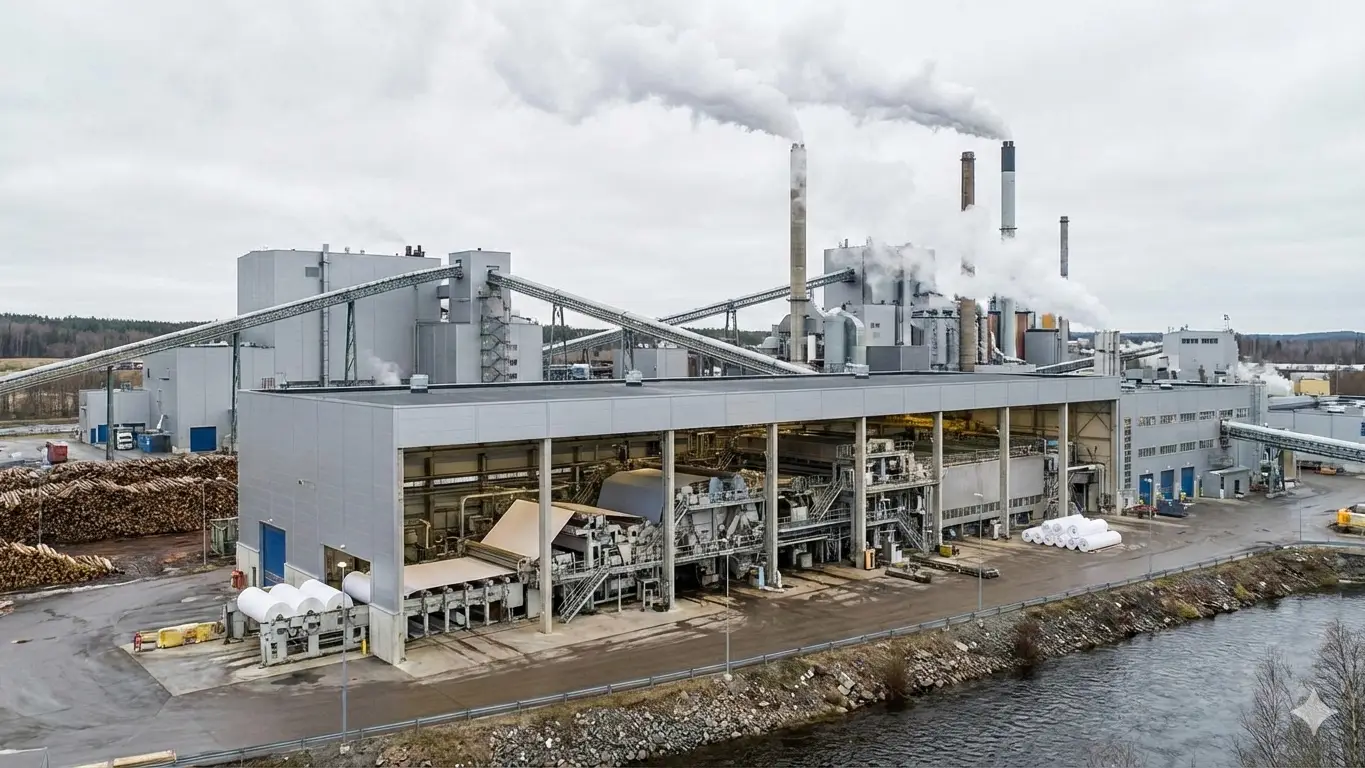
The paper and pulp industry is under mounting pressure and rising energy costs, tightening environmental regulations, and growing demand for recycled fiber are forcing mills to rethink how they operate. For many manufacturers, the answer has been hiding in plain sight: Polyaluminium Chloride (PAC), a high-performance coagulant that is quietly reshaping how modern papermaking works.
Once seen as a niche alternative to conventional alum, PAC has become a cornerstone chemical across the global paper industry — valued not just for its technical performance, but for the operational and environmental gains it delivers at scale.
What Is Polyaluminium Chloride (PAC) and Why Does It Matter in Papermaking?
PAC is an inorganic polymer coagulant built around polynuclear hydroxyl aluminum complexes with a structure that gives it an exceptionally high positive charge density. In practice, this means PAC can attract, bind, and aggregate negatively charged particles in pulp suspensions far more effectively than legacy additives.
Critically, PAC arrives pre-hydrolyzed. It does not need to draw alkalinity from the surrounding water to activate, which allows it to perform consistently across a wider range of process conditions. For mills dealing with fluctuating raw material quality and variable water chemistry, that stability is a competitive advantage that compounds over time.
Key Applications of Polyaluminium Chloride in Paper and Pulp Manufacturing
PAC as a Retention and Drainage Aid in Paper Machines
Retention and drainage is where PAC has its most immediate impact. In the papermaking slurry, fine fibers and mineral fillers, calcium carbonate, clay must be captured on the forming fabric, not lost with draining water. PAC neutralizes surface charges and bridges particles into larger, more easily captured flocs. The downstream effects are significant: less raw material loss, faster water drainage, higher machine speeds, and measurably lower energy consumption in the drying stage.
How PAC Controls Anionic Trash in Closed-Loop Water Systems
Anionic trash control is a less visible but equally critical application. Pulping and bleaching processes release dissolved and colloidal substances known in the industry as "anionic trash" into closed-loop water systems. Left unchecked, these negatively charged contaminants interfere with chemical additives and generate persistent machine deposits. PAC neutralizes them at the source, stabilizing wet-end chemistry and keeping equipment running cleanly. As mills push toward greater water recirculation, this function becomes increasingly important.
The Role of PAC in Internal Sizing for Water-Resistant Paper
Internal sizing rounds out PAC's core role in paper and pulp manufacturing. Sizing agents such as AKD and ASA are added to paper to control absorbency and prevent ink feathering. PAC anchors these agents onto cellulose fibers, creating a durable, water-resistant surface. This is particularly effective in neutral and alkaline papermaking environments which, not coincidentally, tend to produce higher-quality, longer-lasting paper.
Polyaluminium Chloride vs. Aluminum Sulfate (Alum): Which Is Better for Paper Mills?
Aluminum sulfate held its position as the industry standard for decades. That position is now difficult to defend.
The limitations are well-documented. Alum is only reliably effective under acidic conditions, typically below pH 5, constraining the range of papermaking environments where it can be deployed. It depresses system pH sharply, accelerating corrosion in machinery and driving up maintenance costs. And it produces weaker, less shear-resistant flocs a real liability on modern high-speed paper machines.
PAC addresses all of these weaknesses directly. It performs across a pH range of 5.0 to 9.0, enabling mills to operate in neutral or alkaline conditions where paper quality improves. It requires 30–50% lower dosages than alum to achieve equivalent results, which is a cost reduction that is material at production scale. Its flocs are denser and more resilient under turbulence, improving retention and sheet consistency. It causes less pH depression, reducing corrosion and extending equipment life. And it remains effective at lower temperatures, a practical advantage for mills in colder operating environments.
Environmental Benefits of Using PAC in Paper Mill Wastewater Treatment
Regulatory pressure on industrial water discharge is intensifying across major paper-producing regions. PAC's environmental profile is increasingly a factor in procurement decisions, not just a secondary consideration.
In mill wastewater treatment, PAC has demonstrated reductions of 60–80% in Chemical Oxygen Demand (COD) and Biological Oxygen Demand (BOD) performance that supports compliance with discharge standards without requiring major infrastructure investment. It generates less sludge than conventional coagulants, directly reducing disposal costs and landfill burden. And because it contains no sulfate ions, it eliminates the sulfate-heavy runoff associated with alum-based systems, a known concern for regulators in water-sensitive regions.
Perhaps most significantly for mills facing water scarcity or usage caps, PAC's superior clarification performance enables greater process water reuse, reducing freshwater intake at a time when water costs and availability are increasingly variable.
Future Trends: How Polyaluminium Chloride Is Shaping Sustainable Papermaking
The industry is moving. Two trends in particular are shaping how PAC will be used over the next decade.
The first is integration with nanomaterials. Researchers are exploring the combined use of PAC with nanofibrillated cellulose (NFC) and silica nanoparticles to improve the strength and retention characteristics of recycled fiber, particularly Old Corrugated Containers (OCC). As recycled fiber becomes a larger share of raw material inputs, this work has direct commercial implications for mills looking to maintain quality without increasing costs.
The second is smart water management. PAC is being incorporated into automated dosing systems tied to real-time process monitoring, allowing mills to optimize chemical use dynamically rather than relying on static dosing protocols. Early adopters report more consistent effluent quality and measurable reductions in chemical spend.
Key Takeaways
PAC has moved from alternative to standard, and for good reason. It performs better than alum across the metrics that matter most to paper manufacturers: retention efficiency, machine compatibility, paper quality, and environmental compliance. As the industry contends with rising input costs, stricter regulations, and growing demand for sustainable production, the strategic case for PAC is not just technical. It is commercial.
Mills that have not yet conducted a systematic review of their coagulant strategy may find that the gap between current performance and what PAC can deliver is larger than expected.