Introduction
In the rapidly evolving landscape of plant-based nutrition, food formulators face a persistent challenge known as the "Protein Quality Gap." While consumer demand for plant-based products has skyrocketed, the nutritional reality is that most botanical proteins are biologically incomplete. Traditional cereal grains like wheat, rice, and corn are deficient in key essential amino acids, necessitating complex blending strategies to achieve a nutritional profile comparable to animal protein.
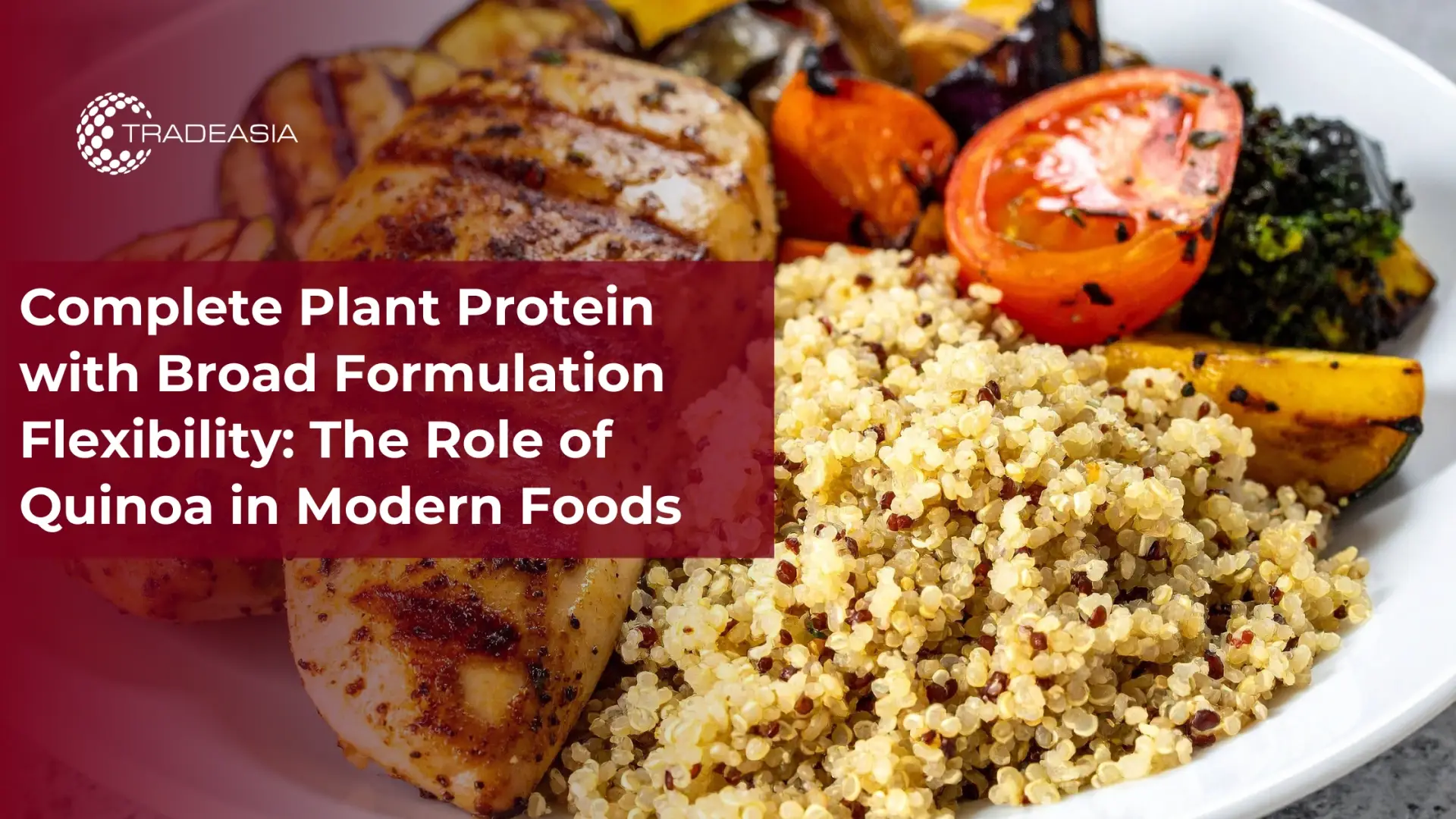
Amidst this formulation complexity, Quinoa (Chenopodium quinoa) has emerged not merely as a "superfood" trend, but as a critical functional ingredient for the modern food engineer. Distinguished by its rare status as a complete plant protein, quinoa offers all nine essential amino acids in a balanced profile, bridging the nutritional gap that plagues other grains. Beyond its macronutrient profile, its versatility in processing—ranging from micronized flours to extruded crisps—allows it to solve textural challenges in gluten-free and clean-label applications. This article explores the technical attributes of quinoa and its strategic role in the next generation of nutrient-dense food manufacturing.
A Rare Complete Protein: The Amino Acid Advantage
Quinoa stands uniquely apart from the grass family (Poaceae) as a pseudocereal that behaves, nutritionally, more like milk or soy than wheat. The primary limitation of most plant proteins is the "Limiting Amino Acid"—usually Lysine in grains and Methionine in legumes.
Quinoa disrupts this norm by providing a complete amino acid profile. It is exceptionally rich in Lysine, the essential amino acid crucial for tissue growth and synthesis, which is notoriously scarce in wheat and corn. Simultaneously, it provides adequate levels of Methionine and Cysteine, sulfur-containing amino acids often lacking in pulses. On a dry weight basis, quinoa delivers approximately 13–15% protein, surpassing the 10-12% average of conventional wheat and the 7-9% of rice. For manufacturers of plant-based meat alternatives and protein-enriched baked goods, quinoa serves as a natural "fortification agent," boosting the Protein Digestibility Corrected Amino Acid Score (PDCAAS) of the final product without the need for synthetic additives or isolated protein powders.
Nutritional Density: The "Clean Label" Micronutrient Premix
In an era where consumers scrutinize the back of the package for "chemical-sounding" ingredients, quinoa acts as a natural, clean-label micronutrient delivery system. Formulating with quinoa allows brands to make legitimate content claims regarding minerals without adding synthetic premixes.
It is a robust source of Magnesium, Iron, Zinc, Potassium, and Phosphorus—electrolytes and minerals vital for metabolic health. Furthermore, quinoa is rich in bioactive compounds, including polyphenols (like quercetin and kaempferol) and flavonoids, which contribute to a strong antioxidant profile. From a regulatory and labeling perspective, this allows for a "cleaner" deck. Instead of listing "Magnesium Oxide" or "Ferrous Sulfate," a manufacturer can simply list "Whole Grain Quinoa" while still achieving a nutrient-dense panel. This aligns perfectly with the "Minimal Processing" trend, offering high nutritional value in a format that consumers perceive as authentic and wholesome.
Broad Formulation Flexibility: From Rheology to Texture
One of Quinoa’s strongest assets is its polymorphic utility. It is not a single-format ingredient; it is a versatile raw material that can be engineered into multiple physical forms to suit specific processing environments.
-
Bakery & Gluten-Free Systems: In the realm of gluten-free baking, achieving structure is the primary hurdle. Quinoa flour possesses unique starch granules that are small and polygonal, which, when combined with its protein matrix, help support the crumb structure of breads and cakes. It improves water absorption and contributes a nutty, earthy flavor profile that masks the metallic taste often associated with gluten-free starch blends.
-
Snacks & Extrusion: For the snack industry, quinoa is available in flakes, grits, and pre-gelatinized flours perfect for extrusion. It supports expansion in direct-expanded snacks (like puffs) and adds a desirable "crisp" texture that resists staling.
-
Retort & Frozen Applications: In ready meals (MREs) and frozen bowls, whole grain quinoa demonstrates exceptional process tolerance. Unlike rice or pasta which can become mushy after retort sterilization or freeze-thaw cycles, the structural integrity of the quinoa seed—protected by its pericarp—remains intact. This ensures a distinct, premium mouthfeel ("al dente") even after reheating.
Functional Performance in Plant-Based Systems
In the booming plant-based meat sector, texture is king. Quinoa is increasingly utilized in "hybrid" formulations—blended with pea or soy protein—to improve the bite and chew of veggie burgers and sausages. Its starch component provides binding properties, while the whole grain inclusions offer visual appeal and a texture that mimics the heterogeneity of ground meat. Because it is naturally Gluten-Free, it is a cornerstone ingredient for allergen-free facilities, allowing for safe production of high-protein foods that cater to the celiac and gluten-sensitive demographics without compromising on sensory experience.
Conclusion
The strategic integration of quinoa into modern food matrices represents a pivotal advancement in plant-based formulation. Beyond its origins as a niche commodity, quinoa has established itself as a critical functional asset that addresses the industry's dual mandate for protein quality and clean-label compliance. By offering a complete amino acid profile within a resilient, process-tolerant grain, it enables manufacturers to bridge the gap between nutritional aspiration and industrial reality. As the market continues to favor nutrient-dense, minimally processed foods, the ability to deploy such versatile ingredients will define the next generation of category-leading products.
Partner with the Experts in Functional Grains
At Food Additives Asia, we recognize that superior product development demands superior raw materials. We invite you to evaluate our enterprise-grade Quinoa portfolio, including Whole Grain (White, Red, Black) and specialized Flours and Flakes engineered for industrial scalability.
Secure your supply chain with a trusted partner. Visit our website to review our detailed product specifications and submit your commercial inquiry today. Our technical sales team is ready to provide the insights and competitive pricing necessary to support your next innovation.
Explore Our Quinoa Solutions & Inquire at foodadditivesasia.com