Why Sodium Lauryl Sulfate Compliance Matters More in 2026
Sodium lauryl sulfate (SLS) remains one of the most widely used surfactants in personal care, detergent, and industrial cleaning products. In 2026, however, regulatory oversight has become more detailed and enforcement-driven. Authorities in Europe, North America, and Asia are placing stronger emphasis on accurate hazard communication, impurity disclosure, and traceability across chemical supply chains.
At the same time, consumer awareness around skin sensitivity, occupational exposure, and environmental impact has increased. Even when SLS is legally permitted, errors in labeling, outdated Safety Data Sheets, or inconsistent documentation can trigger recalls, import delays, or contractual disputes. For manufacturers and industrial buyers, compliance is now a continuous operational requirement rather than a one-time regulatory task.
Overview of Sodium Lauryl Sulfate and Its Uses
Chemical Properties and Functional Role
Sodium lauryl sulfate, CAS number 151-21-3, is an anionic surfactant derived from lauryl alcohol. Its molecular structure allows it to reduce surface tension efficiently, which explains its strong cleansing, emulsifying, and foaming performance. These characteristics make SLS attractive for high-volume formulations where cost efficiency and performance consistency are critical.
Purity varies depending on production method and grade. Trace impurities such as 1,4-dioxane are closely monitored under REACH and cosmetic regulations, making supplier quality control and testing documentation essential for compliant use.
Main Application Segments
SLS is commonly used in shampoos, body washes, liquid soaps, and toothpaste at controlled concentrations. It is also widely applied in household detergents, institutional cleaners, and industrial degreasers. Bulk industrial use presents higher worker exposure risks compared to consumer products, which directly affects labeling, storage, and workplace safety obligations.
Safety Profile and Hazard Classification
Health and Environmental Hazards
From a toxicological perspective, SLS is classified primarily as an irritant. It can cause skin irritation, serious eye damage, and respiratory irritation if inhaled in dust or aerosol form. Oral exposure at higher doses is considered harmful. Environmental assessments show toxicity to aquatic organisms at certain concentrations, although SLS is readily biodegradable under normal conditions.
These characteristics do not prohibit use but require appropriate controls during manufacturing, handling, and disposal.
GHS and CLP Classification
Under the Globally Harmonized System and EU CLP Regulation, sodium lauryl sulfate is classified for skin irritation, eye damage, respiratory irritation, and aquatic hazard. Depending on physical form and concentration, labeling may require pictograms such as the exclamation mark, corrosion symbol, and environmental hazard symbol. Accurate classification must always match the supplied grade and intended application.
Safety Data Sheet Requirements in 2026
Mandatory SDS Content
A compliant Safety Data Sheet remains central to SLS risk management. Suppliers must provide a full 16-section SDS aligned with GHS and local regulations. Key sections include hazard identification, handling and storage guidance, exposure controls, personal protective equipment, and ecological data.
In 2026, regulators increasingly expect SDS documents to reflect current impurity profiles and updated regulatory interpretations. Generic or outdated SDS files are a common cause of non-compliance during audits.
Update and Revision Expectations
SDS documents should be reviewed regularly and updated whenever new hazard information, regulatory changes, or formulation modifications occur. Many jurisdictions now expect downstream users to be notified of SDS revisions within defined timeframes, reinforcing the need for structured document control systems.
Labeling Requirements Across Applications
Industrial and Institutional Labeling
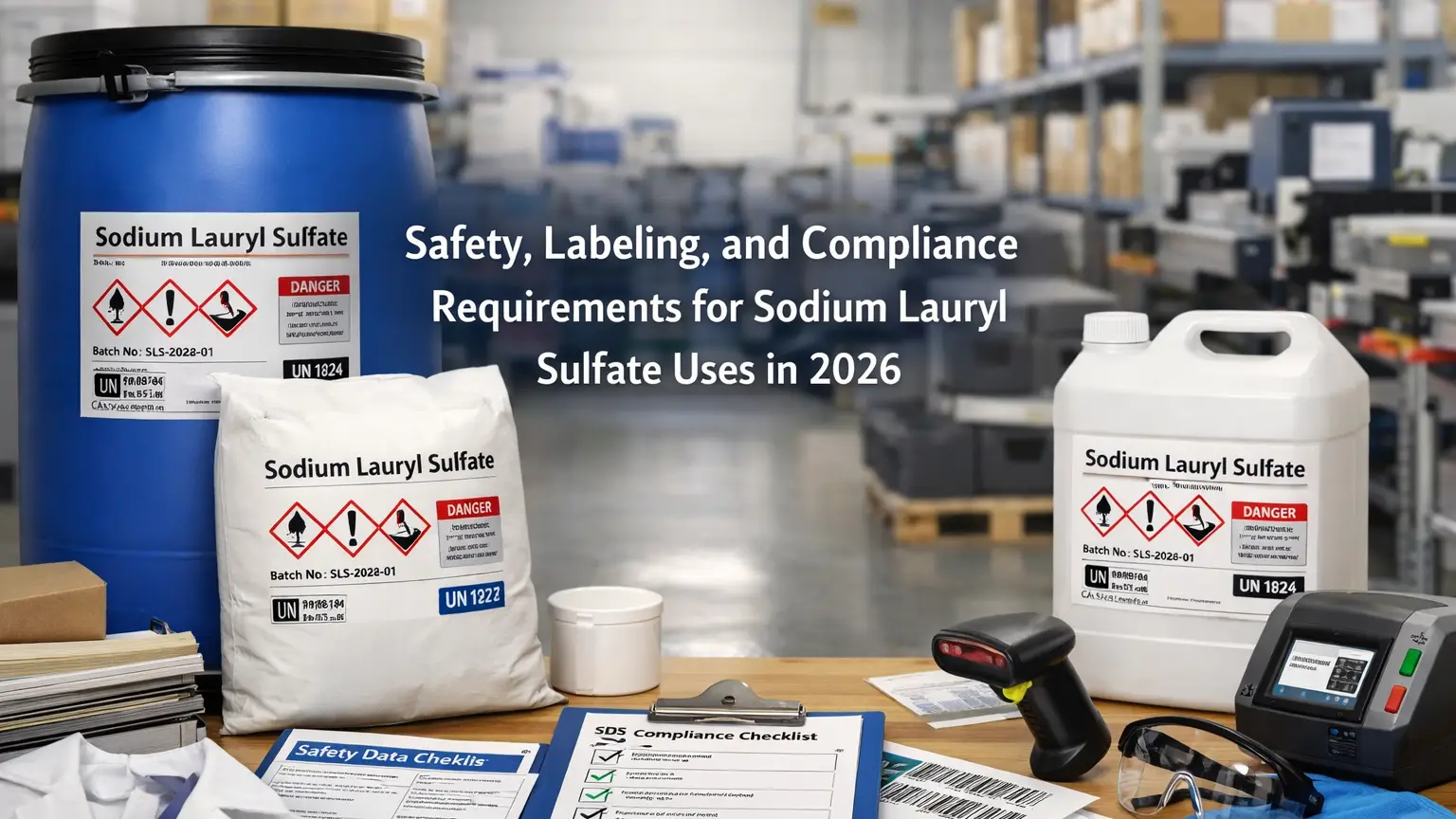
Industrial SLS containers must display clear product identifiers, hazard pictograms, signal words, hazard statements, precautionary statements, and supplier contact details. Labels must remain legible throughout storage and use. Workplace containers and bulk packaging require internal labeling to ensure worker awareness and safe handling.
Consumer and Cosmetic Labeling
In cosmetic products, SLS must be declared using its INCI name, Sodium Lauryl Sulfate. Cosmetic regulations in the EU, United States, and most Asian markets allow SLS without specific concentration bans, provided safety assessments support its use. While warning statements are not mandatory at compliant levels, claims related to mildness or irritation are increasingly scrutinized by authorities.
Regulatory Frameworks Governing Sodium Lauryl Sulfate
Chemical Control Regulations
SLS is registered under REACH and listed on major chemical inventories worldwide, including TSCA in the United States, IECIC in China, and ASEAN inventories. It is not classified as a Substance of Very High Concern, but impurity disclosure and accurate hazard classification are mandatory.
Cosmetic Regulations
Under EU Cosmetic Regulation 1223/2009 and US CIR assessments, sodium lauryl sulfate remains permitted when used appropriately. Asian regulatory frameworks also allow its use, subject to labeling and safety requirements. No broad regulatory bans are expected in 2026, although documentation and digital reporting obligations continue to expand.
Transport, Storage, and Workplace Safety Obligations
SLS in solid form may fall under flammable solid transport classifications depending on formulation. Storage should be dry, cool, and well ventilated to minimize dust formation. In workplaces, ventilation, protective eyewear, gloves, and respiratory protection are recommended during powder handling.
Segregation from incompatible substances and clear spill response procedures support both regulatory compliance and occupational safety.
Differences in Compliance Focus by Industry Segment
Personal care manufacturers prioritize consumer exposure assessments, ingredient transparency, and formulation safety testing. Detergent and industrial cleaning producers focus more heavily on worker protection, bulk handling procedures, and wastewater discharge controls. Compliance systems should reflect these different exposure and risk profiles.
Common Compliance Risks and Consequences
Frequent compliance issues include outdated SDS files, incorrect labeling, incomplete impurity data, and reliance on unverified suppliers. Regulatory consequences may involve fines, import alerts, or product withdrawals. Commercial impacts often extend further, affecting customer trust and long-term supply agreements.
Best Practices for Ensuring SLS Compliance in 2026
Leading companies implement structured supplier qualification programs that require current SDS, Certificates of Analysis, REACH declarations, and traceability data. Internal audits, periodic regulatory reviews, and documented corrective actions help identify gaps before inspections occur. Ongoing monitoring of regulatory updates is essential as digital compliance tools become more widespread.
Conclusion
Sodium lauryl sulfate continues to play an important role across multiple industries when safety, labeling, and regulatory requirements are properly managed. Accurate documentation, verified suppliers, and proactive compliance monitoring are now essential operational standards rather than optional safeguards.
For manufacturers and industrial buyers sourcing sodium lauryl sulfate, Chemtradeasia supports compliant procurement by connecting you with reliable suppliers, up-to-date documentation, and region-specific regulatory insight to help ensure safe and uninterrupted operations in 2026 and beyond.
Leave a Comment