Introduction
The global chemical supply chain is entering a period of heightened complexity, particularly for critical industrial minerals like Boric Acid. As manufacturing sectors from glass and ceramics to agriculture and electronics continue to expand, securing a reliable supply of this essential boron compound has become a top strategic priority. With Q2 2026 on the horizon, procurement managers and supply chain professionals must act now to navigate potential disruptions, price volatility, and tightening availability.
This article provides a comprehensive roadmap for securing your Boric Acid supply in Q2 2026. We will explore current market dynamics, key demand drivers, strategic procurement tactics, and the specific product specifications that matter most for your manufacturing needs. By leveraging insights from industry experts and global distributors like chemtradeasia.com, you can build a resilient supply chain that ensures uninterrupted production and cost efficiency.
Understanding the Global Boric Acid Market in 2026
The Boric Acid market is heavily influenced by the concentration of natural reserves and production capacity. Over 70% of the world's boron supply originates from a few key regions, primarily Turkey, the United States, and parts of South America. This geographic concentration creates inherent supply chain vulnerabilities, as any disruption—whether from geopolitical tensions, natural disasters, or logistical bottlenecks—can have a cascading effect on global availability.
Entering 2026, the market is characterized by steady demand growth driven by high-tech applications, particularly in the production of borosilicate glass for solar panels and fiberglass for wind turbine blades. Simultaneously, supply-side constraints, including energy costs and stricter environmental regulations in mining regions, are putting upward pressure on prices. For manufacturers, this means that spot purchasing in Q2 2026 will be significantly riskier and more expensive than securing long-term contracts in advance.
Data from industry analysts suggests that global boric acid production is projected to increase by only 2-3% annually, while demand from key end-use sectors is growing at 4-5%. This supply-demand gap underscores the importance of early engagement with reliable suppliers. Platforms like chemtradeasia.in and chemtradeasia.sg provide real-time market intelligence and access to diversified sourcing options, helping buyers anticipate price movements and secure allocations before shortages materialize.
Key Factors Driving Boric Acid Demand for Manufacturing
The demand for Boric Acid is being propelled by several structural trends across multiple industries. In the glass and ceramics sector, which accounts for the largest share of consumption, the push for energy-efficient buildings and renewable energy infrastructure is driving demand for borosilicate glass and fiberglass insulation. These materials require high-purity boric acid to achieve thermal resistance and mechanical strength.
In the agricultural sector, boric acid is an essential micronutrient for crops like cotton, soybeans, and fruit trees. As global food security concerns intensify, farmers are increasingly using boron-based fertilizers to boost yields. This agricultural demand is relatively inelastic, meaning it persists even during economic downturns, adding a stable base load to global consumption.
Furthermore, the electronics and flame retardant industries are witnessing robust growth. Boric acid is used in the production of liquid crystal displays (LCDs) and as a key component in certain flame retardants for plastics and textiles. With the global shift towards electric vehicles and smart devices, this demand is expected to accelerate. Manufacturers must therefore evaluate their specific consumption patterns and align them with these macro trends to avoid supply gaps in Q2 2026.
Strategic Procurement for Q2 2026: Mitigating Supply Risks
Securing Boric Acid supply for Q2 2026 requires a proactive, multi-faceted procurement strategy. The first step is to shift from a reactive, just-in-time inventory model to a more strategic, just-in-case approach. Given the potential for extended lead times and transportation delays, particularly from major exporting regions, manufacturers should consider building buffer stocks of 4-6 weeks of consumption.
Diversification of supply sources is another critical risk mitigation tactic. Relying on a single supplier or geographic region exposes your business to significant disruption. Engaging with global distributors like chemtradeasia.com and chemtradeasia.ae allows you to access a network of vetted producers from different regions, including Turkey, the USA, and Chile. This not only ensures supply continuity but also provides leverage in price negotiations.
Finally, early contract negotiations are essential. By Q2 2026, many producers will have already allocated their production capacity to long-term customers. Initiating discussions now, locking in pricing mechanisms (such as quarterly or semi-annual adjustments), and agreeing on delivery schedules will give you a significant advantage. Our team at chemtradeasia.co.id can facilitate these negotiations, leveraging our deep market knowledge and established relationships with key producers.
Product Spotlight: Industrial Boric Acid Specifications and Applications
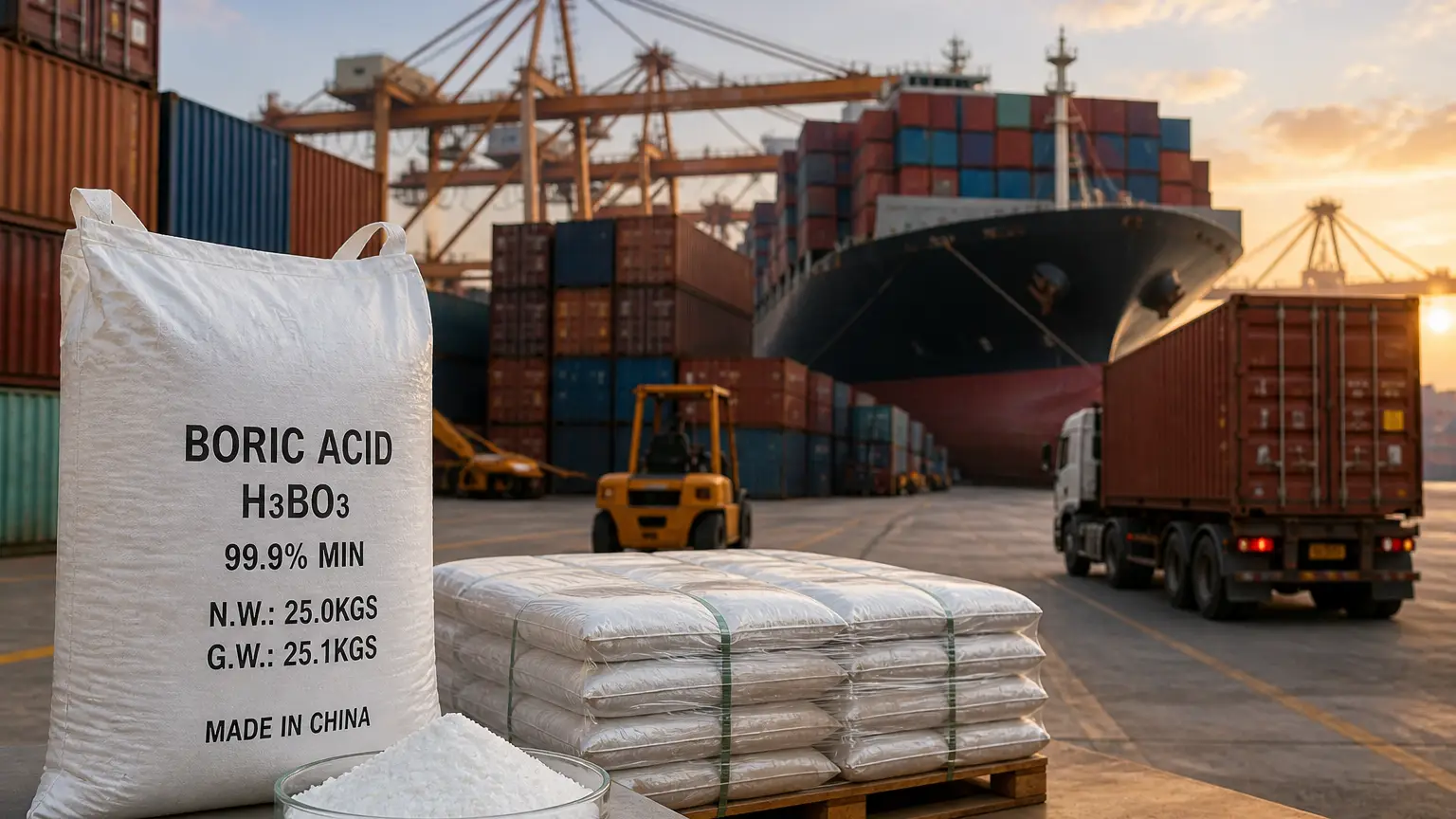
Understanding the specific technical requirements of your manufacturing process is paramount when sourcing Boric Acid. Industrial grade boric acid is typically available in granular, powder, and fine powder forms, with purity levels ranging from 99.5% to 99.9%. The choice of grade depends on the application. For example, the glass industry often prefers granular boric acid due to its low dust content and better flow characteristics, while the pharmaceutical and specialty chemical sectors require the highest purity powder.
Key specifications to verify include: Boric Acid (H3BO3) content (minimum 99.5%), Boron Trioxide (B2O3) equivalent (typically 56.3% minimum), and impurity levels for elements like iron, chloride, and sulfate. For sensitive applications, such as in the production of LCD glass or high-performance ceramics, ultra-high purity grades with impurity levels below 10 ppm are required. Our product listings on chemtradeasia.sg and chemtradeasia.in provide detailed technical datasheets and certificates of analysis for each grade.
Use cases for industrial boric acid are diverse. In fiberglass production, it acts as a flux to lower melting temperatures and improve the mechanical properties of the final product. In the wood preservation industry, it is used as a fungicide and insecticide. For the production of boron-based chemicals, such as zinc borate or sodium borohydride, boric acid serves as the primary raw material. By matching the correct specification to your application, you can optimize both performance and cost, making your procurement strategy more effective.
Benefits of Partnering with a Global Chemical Distributor
Navigating the complexities of the global Boric Acid market is challenging for even the most experienced procurement teams. Partnering with a specialized global distributor like chemtradeasia.com offers several strategic advantages. First, we provide access to a diversified portfolio of suppliers, ensuring you are not dependent on a single source. Our established relationships with producers in Turkey, the USA, and South America allow us to secure competitive pricing and reliable allocations, even during tight market conditions.
Second, we offer comprehensive logistical support. From managing international shipping and customs clearance to warehousing and just-in-time delivery, our team handles the operational complexities. Our regional offices, including chemtradeasia.ae in the Middle East and chemtradeasia.co.id in Southeast Asia, are strategically located to serve key manufacturing hubs, reducing transit times and costs.
Third, we provide market intelligence and technical expertise. Our team continuously monitors global supply and demand dynamics, regulatory changes, and price trends. We share this information with our clients to help them make informed purchasing decisions. Whether you need assistance with product selection, contract negotiations, or supply chain risk assessment, we are your trusted partner. By working with us, you can focus on your core manufacturing operations while we ensure your Boric Acid supply is secure and cost-effective.
Conclusion
Securing a stable and cost-effective Boric Acid supply for Q2 2026 is not merely a procurement task; it is a strategic imperative for any manufacturer reliant on this versatile chemical. By understanding the tight market dynamics, diversifying your supply base, and engaging in early contract negotiations, you can mitigate risks and ensure production continuity. The key is to act now, leveraging the expertise and global network of a trusted distributor to navigate the challenges ahead.
Disclaimer: This article is provided for informational and market insight purposes only and is not intended as technical, safety, or professional advice. The market data, trends, and strategies discussed are based on publicly available information and general industry analysis. Readers are strongly advised to independently verify all information with qualified experts, consult official documentation such as Material Safety Data Sheets (MSDS/SDS), and contact our team at chemtradeasia.com for specific applications, technical requirements, and current pricing. We make no representations or warranties regarding the accuracy or completeness of the information presented.
Leave a Comment