Introduction
In the intricate science of savory food formulation, acidity is a fundamental pillar of safety and structure. Lowering the pH of a product is often the most effective way to inhibit microbial growth, extend shelf life, and potentiate flavor. However, for the food scientist, this creates a sensory dilemma. Most acidulants—such as citric acid, lactic acid, or vinegar (acetic acid)—bring with them a distinct, often aggressive, sour taste profile. While desirable in a vinaigrette or a sour gummy, this sharpness can be disastrous in a savory meat emulsion, a creamy sauce, or a delicate seasoning blend where "sour" is considered a defect.
Sodium Acetate ($C_2H_3NaO_2$) solves this dilemma. As the sodium salt of acetic acid, it offers the unique ability to modulate pH and inhibit bacteria without the sharp "vinegar bite" associated with its free acid form. It functions as a "Stealth Acidulant," operating quietly in the background to stabilize the chemical environment while allowing the savory, umami, and salty notes to take center stage. This white paper explores the buffering mechanics, antimicrobial utility, and sensory advantages that make sodium acetate an indispensable tool in modern savory processing.
Stable and Predictable pH Control: The Buffer Effect
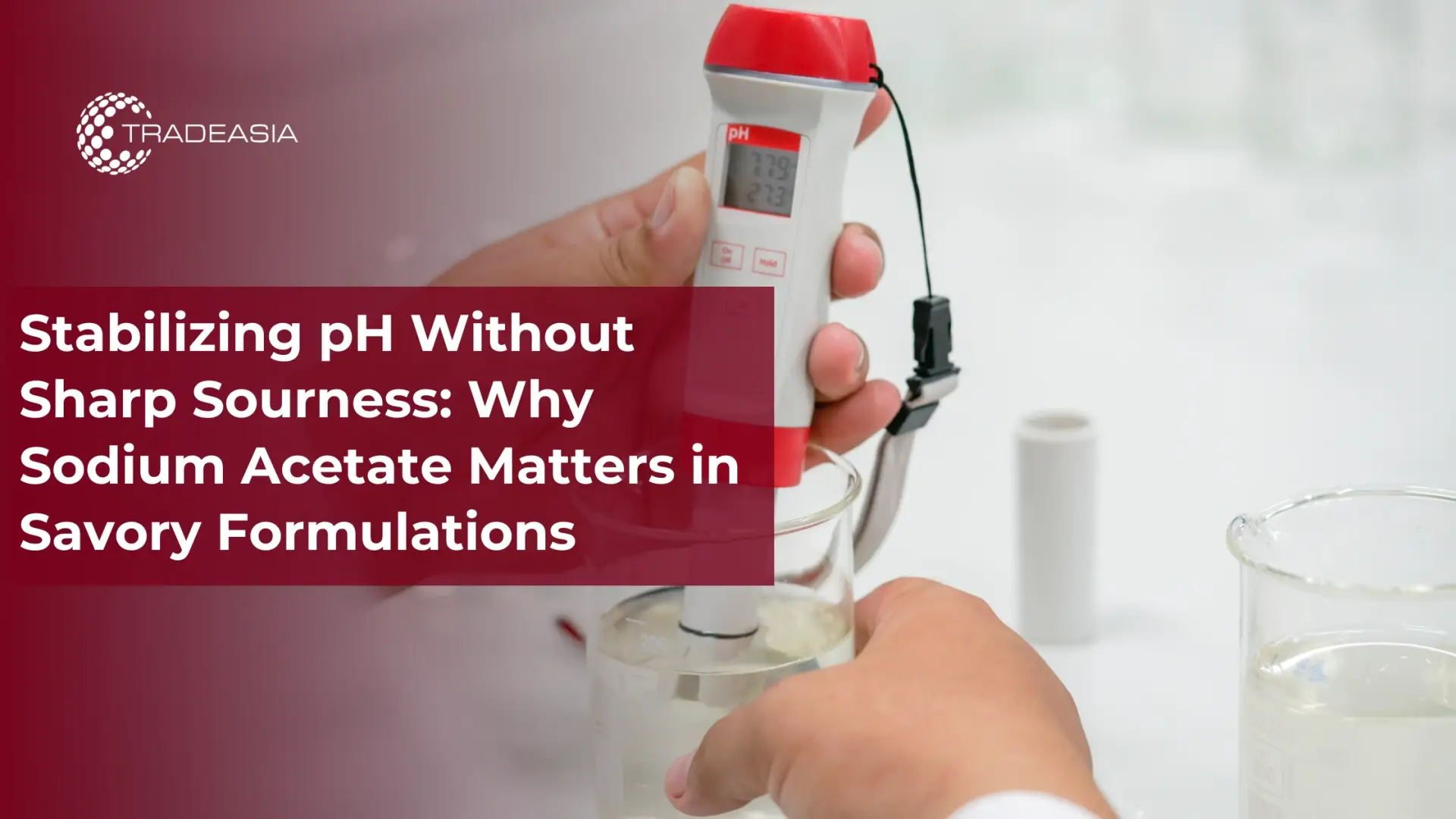
The primary value of sodium acetate lies in its chemical identity as a Conjugate Base. When added to a food system, it does not simply lower the pH; it establishes a Buffer System.
In industrial processing, pH stability is often threatened by external factors:
-
Thermal Processing: High heat can cause proteins to release basic compounds or organic acids to volatilize, causing pH drift.
-
Ingredient Variability: Natural variations in the acidity of tomatoes, meats, or spices can lead to batch-to-batch inconsistency.
Sodium acetate acts as a chemical shock absorber. By providing a reservoir of acetate ions, it resists changes in pH when small amounts of acid or base are introduced. This "Buffering Capacity" ensures that a sauce formulated to pH 4.8 stays at pH 4.8 throughout the cooking, cooling, and storage cycle. This predictability is vital for Enzymatic Control (preventing enzymes from breaking down texture) and Microbial Management (ensuring the environment remains hostile to pathogens).
Minimal Impact on Sensory Profile: The "Round" Taste
The defining characteristic of sodium acetate is its Organoleptic Neutrality. Direct addition of acetic acid (vinegar) creates a volatile, pungent aroma and a sharp, stinging sensation on the tongue (trigeminal irritation). This is because the protonated acid ($CH_3COOH$) vaporizes easily and attacks taste receptors aggressively.
Sodium acetate, being a salt, is non-volatile. It contributes the necessary acetate ions for functional preservation but remains bound in the food matrix.
-
Flavor Unmasking: By avoiding the "acid spike," sodium acetate allows subtle savory notes—like the caramelized depth of roasted meat, the heat of chili peppers, or the creamy richness of dairy—to be perceived clearly.
-
Umami Synergy: Interestingly, the mild saltiness of sodium acetate often works synergistically with umami compounds (glutamates), enhancing the overall savory impact without the need for excessive table salt (Sodium Chloride). This makes it a valuable tool in Sodium Reduction strategies, where maintaining flavor intensity is the biggest challenge.
Functional Benefits in Meat and Poultry: The "Hurdle" Strategy
In the processed meat sector, sodium acetate is a cornerstone of Hurdle Technology—the use of multiple preservation barriers to ensure safety.
-
Microbial Inhibition: Sodium acetate is particularly effective against specific spoilage organisms and pathogens, including Listeria monocytogenes, which is a critical concern in Ready-To-Eat (RTE) deli meats and hot dogs. The acetate ion penetrates the bacterial cell wall and disrupts its internal pH balance, effectively stalling growth even at refrigeration temperatures.
-
Water Holding Capacity (WHC): Unlike strong acids that can denature proteins and cause water loss (syneresis), sodium acetate's mild pH modulation supports the protein structure. In cured meats and sausages, it helps the myofibrillar proteins retain moisture, resulting in a juicier bite and higher cook yields. It stabilizes the "emulsion" of fat and water in a hot dog, preventing the fat from rendering out during cooking.
Performance in Sauces and Condiments
In the realm of emulsified sauces (mayonnaise, ranch dressing, cheese sauces), pH is critical for emulsion stability. If the pH drops too low, the emulsifying proteins can reach their isoelectric point and precipitate, causing the sauce to break or separate into oil and water.
Sodium acetate maintains the pH in the "Safe Zone"—low enough to inhibit spoilage but high enough to keep the emulsifiers functional.
-
Flavor Harmony: In a creamy cheese sauce, the sharp taste of vinegar would be jarring and chemically incompatible with the dairy profile. Sodium acetate provides the necessary preservation function while maintaining a smooth, creamy, and "milky" flavor profile. It prevents the sauce from tasting like "salad dressing" while ensuring it has the shelf life of a commercial condiment.
Role in Snack and Seasoning Applications
In the booming snack industry, consistency is currency. Seasoning blends for chips, nuts, and extruded snacks must deliver the exact same flavor punch in every bag.
-
Dry Blending: Sodium acetate is available in a free-flowing powder form (anhydrous or trihydrate) that integrates easily into dry seasoning mixes.
-
Vinegar Substitute: For "Salt & Vinegar" chips, manufacturers often use sodium diacetate (a complex of sodium acetate and acetic acid) to deliver the tang. However, for savory flavors like "BBQ" or "Sour Cream & Onion," where a vinegar note is unwanted, pure sodium acetate is used to adjust the acidity of the seasoning powder without altering the flavor profile. It protects the seasoning from caking (hygroscopicity management) and ensures the flavor release is consistent on the palate.
Conclusion
Sodium Acetate is a prime example of a functional ingredient that works best when it is unnoticed. It is the silent guardian of the savory food world. By decoupling pH control from sensory sourness, it allows food manufacturers to prioritize safety and shelf life without compromising the culinary integrity of their products.
Whether it is protecting a premium deli turkey from Listeria, keeping a cheese sauce creamy and stable, or ensuring a snack seasoning tastes savory rather than sour, sodium acetate delivers the chemical precision required by modern food processing. It enables the creation of foods that are safer, longer-lasting, and simply taste better.
Stabilize Your Savory Formulations
At Food Additives Asia, we recognize that the perfect savory profile requires a delicate balance. You cannot sacrifice safety for flavor, nor flavor for safety. Our portfolio of Food-Grade Sodium Acetate is engineered to help you achieve that equilibrium.
We invite you to explore our technical specifications and discover how our acetate solutions can refine your meat, sauce, and snack formulations. Visit our website to request a sample and submit your commercial inquiry today. Our technical team is ready to assist you in optimizing your product's performance.
Explore Our Sodium Acetate Solutions & Inquire at foodadditivesasia.com