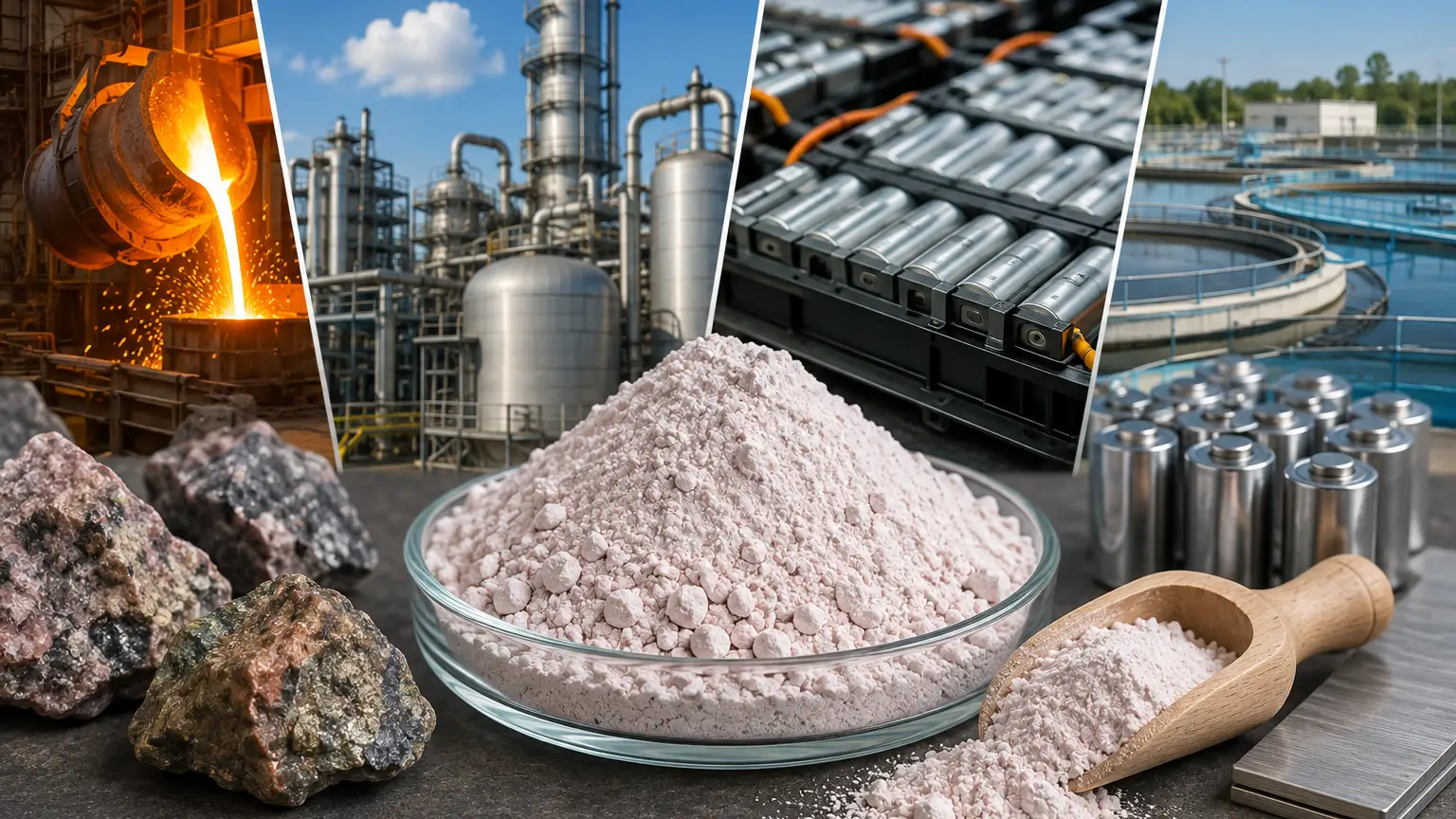

Overview of the Global Sodium Sulphate Market
The early sodium sulphate market May 2026 landscape presents a commercial environment that is widely regarded as balanced-to-soft globally, interspersed with mild but notable regional firmness. Corporate buyers entering the second quarter are encountering a commercial ecosystem that is fundamentally well-supplied rather than structurally tight. The prevailing stability provides procurement professionals with a predictable foundation for managing their bulk chemical inventories without the immediate threat of widespread material shortages. Consequently, the core focus for multinational manufacturing enterprises has shifted toward optimizing logistical efficiencies and refining regional contract negotiations.
According to chemical industry reporting published by ICIS, the overarching sodium sulphate global supply continues to meet baseline industrial consumption rates effortlessly. Major production facilities are maintaining steady operational outputs that align perfectly with the current recovery phases of downstream manufacturing sectors. This operational equilibrium prevents the sudden, chaotic price spikes that frequently characterize more volatile inorganic chemical commodities. As a result, the current market definitively rewards strategic foresight and disciplined purchasing schedules over reactionary spot buying.
Managing Stable Product Sourcing
The practical reality for industrial purchasers is that exceptional sodium sulphate product availability remains the defining characteristic of the current quarter. Because producers are efficiently satisfying existing contracts, corporate buyers can safely evaluate secondary supply nodes to further diversify their logistical networks. Utilizing comprehensive market insights, which can be found in our robust download center, empowers purchasing departments to validate their quarterly forecasting models with verifiable technical data. Accessing these vital analytics ensures that corporate purchasing decisions are rooted in fundamental market realities rather than speculative forecasts.
Moving forward, identifying highly reliable sodium sulphate producers remains a straightforward task within this balanced commercial framework. While the overarching market avoids deep scarcity, strategic buyers must still monitor nuanced shifts in operational output across different producing nations to secure the best rates. Cultivating strong, long-term relationships with verified international manufacturers ensures that localized logistical hiccups never evolve into actual factory shutdowns. Ultimately, the robust availability of the chemical ensures that downstream production schedules can proceed without unnecessary disruption throughout the month.
Analyzing Detergent and Glass Industry Demand
The foundational stability of the current chemical landscape is intrinsically linked to the steady consumption patterns of essential manufacturing sectors globally. Specifically, the baseline sodium sulphate detergent demand remains a massive volume driver, heavily utilized globally as a cost-effective filler and processing aid in powdered formulations. Because household cleaning products represent a non-cyclical consumer necessity, this sector provides a permanent, highly reliable floor for bulk chemical extraction and refining. This persistent downstream demand effectively insulates the broader market from severe volume contractions during economic downturns.
Concurrently, the vital sodium sulphate glass industry demand contributes significantly to the overarching structural support of the commodity. In the manufacturing of flat glass and specialized fiberglass, the inorganic salt acts as a crucial fining agent, helping to eliminate microscopic air bubbles from the molten silica matrix during production. According to industrial manufacturing data from the Glass Packaging Institute, steady construction and automotive recovery are directly sustaining the need for these high-quality glass inputs. Consequently, the ongoing health of these downstream sectors fundamentally dictates the actual commercial tempo of the upstream chemical market.
The Essential Role in Textiles
Beyond basic cleaning products and construction materials, specialized sodium sulphate textile demand represents another critical avenue of industrial consumption. Within the global dyeing and finishing sector, the chemical is heavily relied upon to drive dye particles directly into fabric fibers, ensuring deep, uniform color saturation. Modern textile manufacturers require massive, uninterrupted streams of high-purity inorganic salts to maintain the stringent quality standards demanded by international fashion brands. For procurement managers, securing premium sodium sulphate anhydrous is absolutely essential for keeping these high-volume fabric production lines operational.
As global manufacturing output slowly normalizes, the diverse group of global sodium sulphate consumers ensures that no single industry downturn can collapse the entire chemical supply chain. The remarkable versatility of the compound guarantees that its commercial relevance remains firmly intact across multiple technological applications and distinct manufacturing hubs. Industrial buyers must continue to track the specific economic health of these distinct downstream sectors to anticipate future volume requirements accurately. This diversified consumption portfolio is the ultimate source of the market's current balanced stability.
Regional Supply Dynamics and Availability
Evaluating the complex sodium sulphate demand by continent reveals distinct regional manufacturing focuses that directly shape international export routes and chemical availability. Different geographic zones operate under unique economic mandates, heavily influencing local production capacities and domestic industrial consumption rates. For international procurement professionals, understanding these distinct localized drivers is absolutely crucial for engineering a resilient, multi-continental supply chain. Recognizing where material is abundant versus where it is tightly controlled allows buyers to optimize their final acquisition costs successfully.
The highly active sodium sulphate Asia market continues to dominate the global production narrative, fueled by the immense concentration of textile, detergent, and glass manufacturing across the region. The continent not only serves as the primary consumption hub but also acts as the central engine for raw material extraction and refinement. According to regional economic analysis published by the Asian Development Bank, the sustained industrial output of these manufacturing hubs guarantees that regional chemical availability remains incredibly robust. This massive localized capacity anchors the global supply network and keeps overarching physical shortages at bay.
Managing Intercontinental Trade Flows
Because the Asian industrial sector is so dominant, international trade routes are largely structured around balancing its massive output with the specialized needs of Western economies. Global buyers frequently leverage the surplus material generated by these dense manufacturing zones to fulfill their operational deficits in regions with stricter environmental or extraction limitations. Navigating these intercontinental trade flows requires sophisticated logistical planning and a deep understanding of localized tariff structures and maritime freight availability. Companies that master these diverse trade vectors secure a distinct competitive advantage in the open market.
Looking ahead, the overarching availability of the chemical will remain deeply tied to the sustained operational health of these distinct regional manufacturing nodes. While the market is currently well-supplied globally, unexpected localized disruptions in energy availability or raw material extraction could temporarily impact specific export volumes. B2B buyers must prioritize building highly agile supply networks that can rapidly pivot between different geographic origins as regional dynamics slowly evolve. Supply chain agility remains the most effective corporate defense against localized market turbulence.
Tracing the European and North American Markets
While Asian production anchors the broader global volume, Western industrial zones present unique commercial environments defined by mature supply chains and stringent regulatory frameworks. The specialized sodium sulphate North America market is currently characterized by highly stabilized domestic production that efficiently supports the localized glass and pulp industries. Procurement teams operating within this sector rarely face genuine physical scarcity, as domestic extraction and synthetic recovery processes operate at a highly predictable, balanced cadence. The primary focus here is logistical efficiency and freight optimization rather than scrambling for raw volume.
According to industrial commodity reporting from the American Chemistry Council, North American manufacturers have successfully aligned their output with the cautious, steady recovery of the domestic construction and paper sectors. This careful calibration prevents the buildup of massive, margin-crushing inventories while ensuring that long-term contract obligations are seamlessly met. Corporate buyers in this region benefit from a highly transparent, orderly commercial environment that rewards consistent, long-term procurement planning. Sudden, unpredictable supply shocks remain exceptionally rare within this mature industrial framework.
European Price Stability and Output
In contrast to the volume-driven eastern hubs, the European landscape is currently navigating a period of nuanced stabilization following earlier quarters of notably softer conditions. Industrial buyers are observing mild regional firmness as localized producers expertly manage elevated energy inputs and strict environmental compliance costs. The overarching economic reality is that European factory managers must aggressively defend their operational margins, preventing the spot market from dropping into heavily discounted territory. This defensive posture effectively supports the baseline valuations across the continent.
Consequently, the interplay between the North American and European industrial sectors provides a stabilizing counterweight to the massive chemical volumes traded across the Pacific. Because these Western markets heavily prioritize supply chain reliability and technical purity over sheer volume, they establish high-quality commercial benchmarks for the entire inorganic chemical industry. Procurement officers handling multinational portfolios must carefully blend the high-volume accessibility of the East with the regulatory stability of the West. This highly balanced approach is the hallmark of modern, sophisticated chemical sourcing.
Tracking the Early May 2026 Price Trend
A critical analysis of the current financial metrics reveals that the overarching sodium sulphate price trend 2026 remains generally soft to stable, punctuated by localized areas of distinct commercial firmness. The complete absence of a structural global shortage ensures that aggressive, widespread price inflation has not materialized during the early days of the month. Instead, the pricing landscape is heavily dictated by localized downstream industrial health rather than a desperate scramble for scarce raw materials. This highly predictable environment is exceptionally favorable for corporate budgeting and long-term financial planning.
The clearest current public price point illuminating this mild firmness originates directly from the European manufacturing sector. According to chemical pricing analytics published by Business Analytiq, the specialized sodium sulphate Europe price trend reported April 2026 valuations at US$0.42/kg, accompanied by a modest 2.4 percent upward outlook. This specific metric actively suggests a commercial stabilization, indicating that the earlier, softer conditions have largely bottomed out across the region. Producers in the area are successfully defending their margins against underlying operational costs, creating a firm baseline.
Financial Strategies for Procurement
For international procurement professionals, this localized firmness highlights the absolute necessity of utilizing highly accurate regional data during complex contract negotiations. Because the market is not experiencing uniform global inflation, buyers must rigorously analyze their specific geographic supply chains to avoid overpaying based on irrelevant international benchmarks. Securing cost-effective bulk chemical deliveries requires dissecting these regional pricing nuances and adjusting quarterly purchasing schedules accordingly. The current market heavily penalizes generalized purchasing strategies and actively rewards hyper-localized commercial intelligence.
Moving into the latter half of the quarter, corporate purchasing departments should anticipate a strong continuation of this stable, slightly firm pricing environment. Unless there is a catastrophic disruption in global energy markets or a sudden, unexpected explosion in downstream textile manufacturing, valuations should remain highly predictable. This distinct absence of extreme volatility allows chemical formulators and industrial manufacturers to comfortably project their operational costs through the end of the fiscal year. Financial stability is currently the defining characteristic of the inorganic salt market.
Strategic Sourcing and Global Trade Outlook
As global manufacturing safely normalizes, the overarching sodium sulphate trade outlook remains highly constructive, underpinned by continuous downstream demand and robust upstream extraction. The current commercial environment, beautifully characterized by excellent availability and mild regional firmness, allows corporate buyers to focus heavily on optimizing their long-term supply architecture. Rather than managing emergency logistical fires, modern procurement officers have the strategic bandwidth to cultivate deeper, more permanent relationships with verified international distributors. This proactive approach is absolutely essential for long-term commercial success.
According to international trade flow analysis from the World Trade Organization (WTO), maintaining a fully diversified, multi-continental sourcing strategy is the single most effective defense against future macroeconomic instability. Companies that actively monitor global industrial sentiment and brilliantly align their purchasing schedules with regional pricing shifts will consistently outmaneuver their competitors. The fundamental reality is that while the market is completely balanced today, the agility of a corporate supply chain strictly determines its resilience tomorrow. Proactive supply chain management remains a mandatory operational requirement globally.
Finalizing Your Procurement Architecture
To fully optimize your complex chemical procurement framework and safeguard your industrial operations, establishing direct communication with verified industry experts is highly recommended. We actively encourage procurement professionals to contact us to discuss customized supply agreements and real-time logistical guidance tailored to your specific manufacturing needs. Partnering directly with a dedicated chemical distributor ensures that your facility maintains continuous access to high-quality raw materials, regardless of nuanced shifts in the global commercial landscape.
Furthermore, to actively support your ongoing formulation strategies and expertly validate your corporate budgeting, we invite you to review specialized technical offerings such as premium sodium sulphate anhydrous. Industrial buyers can seamlessly access detailed analytical reports, historical pricing context, and verified product specifications directly within our robust download center. Integrating these powerful commercial resources into your daily purchasing routine guarantees that your enterprise is firmly positioned to navigate the early May 2026 market with total confidence.