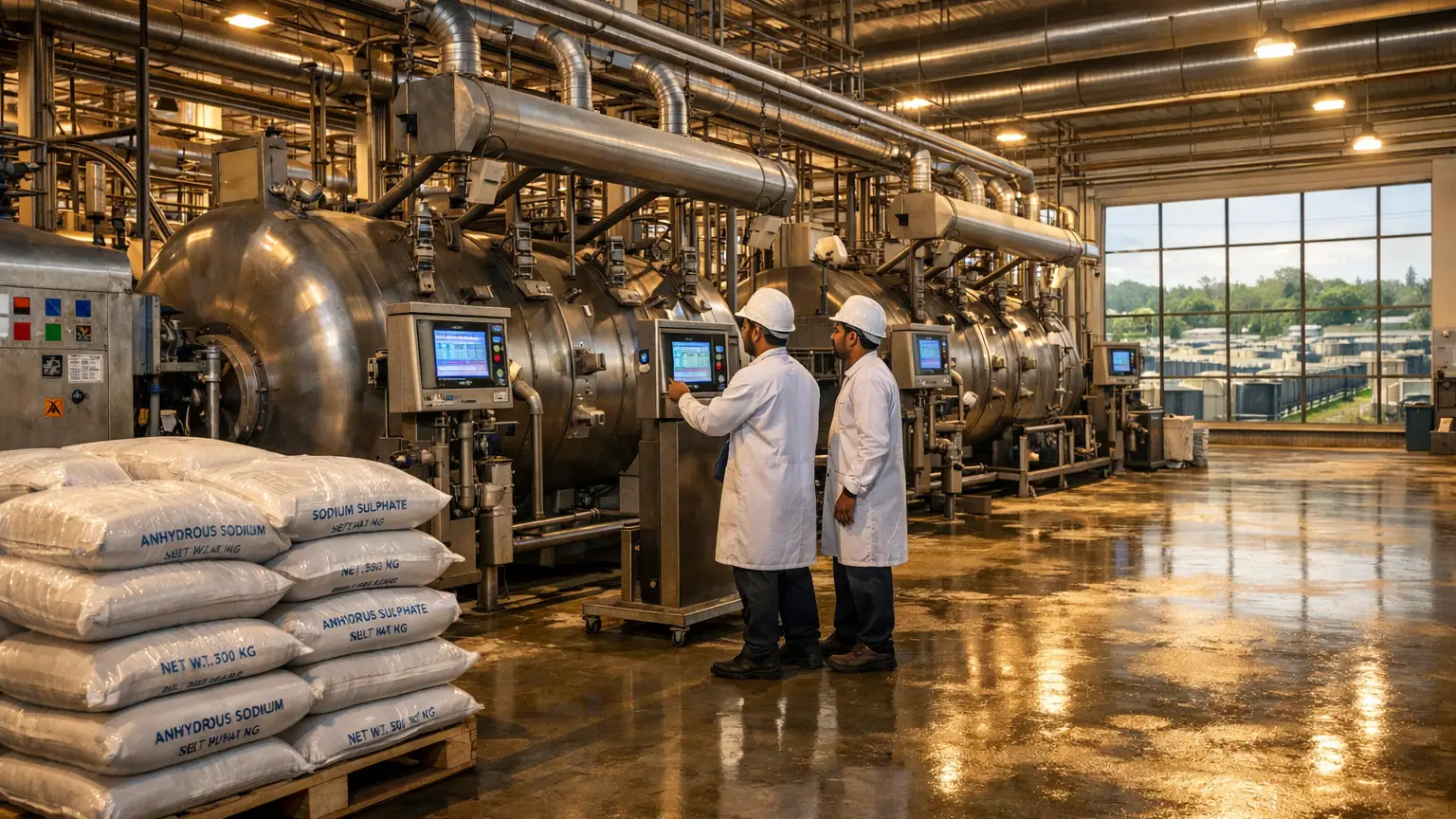
Across the dyehouses of Dhaka, Tirupur, and Ho Chi Minh City, procurement managers are making a consistent chemical substitution: sodium chloride out, sodium sulphate in. The shift is not driven by process chemistry alone: both electrolytes perform the same core function of neutralising the negative surface charge on cellulosic fibres and promoting dye exhaustion into the fabric. What is driving the switch is a convergence of equipment economics, wastewater compliance pressure, and dyeing quality requirements that, in 2026, overwhelmingly favour sodium sulphate for industrial-scale reactive dyeing of cotton.
Understanding this preference requires looking beyond the price tag on the bag of salt. The decision happens at the intersection of effluent treatment costs, ZDHC MRSL conformance obligations imposed by European and North American brands, and the real operational cost of replacing corroded dyeing machinery.
How Both Electrolytes Function and Where They Diverge
Reactive dyes used on cotton carry a negative charge. So do cellulose fibres in water. Without an electrolyte, electrostatic repulsion prevents the dye molecules from migrating toward the substrate. Inorganic salts (whether sodium chloride (NaCl) or sodium sulphate (Na2SO4)) are added in concentrations typically ranging from 10 to 100 g/L to suppress this charge barrier and drive dye exhaustion from the bath into the fibre.
The functional divergence between the two electrolytes begins at the rate of ion release. Sodium chloride is highly soluble and pushes dye onto the fabric rapidly, which suits bulk commodity dyeing where speed is the primary variable. Sodium sulphate, particularly in its decahydrate form (Glauber's salt), releases sodium and sulphate ions more gradually and in a controlled pattern, producing a slower, more level dyeing. Research on K/S values (the metric used to measure colour depth) shows Glauber's salt consistently achieves marginally higher colour strength than sodium chloride at equivalent concentrations, making it technically superior for producing deep shades with reactive dye classes. At 50 g/L concentration, the colour strength difference between the two electrolytes is marginal; at lower concentrations of 20 g/L or below, sodium sulphate maintains higher K/S values, a distinction that matters for reducing total chemical load per kg of fabric dyed.
The Equipment Corrosion Argument That Has Shifted Procurement
The chloride ion (Cl) in sodium chloride is the most commercially compelling reason why large-format dyehouses have moved away from it as their primary electrolyte. Industrial dyeing equipment (jet dyeing machines, overflow dyeing machines, jiggers) is predominantly constructed from AISI 316L or comparable grades of stainless steel. Chloride ions are well-documented initiators of pitting corrosion in stainless steel, particularly at elevated dyeing temperatures and under the acidic-to-alkaline pH swings common in reactive dyeing processes. A dyehouse operating multiple machines at high utilisation rates can incur substantial maintenance and replacement costs when sodium chloride is the standard electrolyte.
Sodium sulphate does not carry this corrosion risk. The sulphate ion (SO4²) is far less aggressive toward stainless steel under textile dyeing conditions. For a dyehouse running 20 or more machines around the clock (common in composite knit factories in Bangladesh and Vietnam) the equipment lifecycle extension achieved by switching to sodium sulphate represents a capital cost reduction that dwarfs the per-tonne price premium sodium sulphate commands over sodium chloride in most Asian markets.
What Export-Oriented Textile Buyers Are Specifying in 2026
The strongest structural force reshaping electrolyte procurement in Asian textile manufacturing is brand-driven chemical compliance. The ZDHC (Zero Discharge of Hazardous Chemicals) Roadmap to Zero Programme, which has achieved broad adoption among European and North American apparel brands, requires wet processing suppliers to demonstrate conformance with the ZDHC Manufacturing Restricted Substances List (MRSL) and to disclose wastewater test results through the ZDHC Gateway. ZDHC Wastewater Guidelines Version 2.2, which came into effect in November 2024, tightened parameters across conventional and MRSL-specific substances, raising the compliance burden for dyehouses producing effluent with elevated chloride and TDS (Total Dissolved Solids) loads.
High chloride concentrations in dyehouse effluent are a direct consequence of heavy sodium chloride use. Electrical conductivity measurements (a proxy for dissolved ion load) in dyehouse wastewater in Bangladesh's Gazipur district have been documented at approximately 12 times the permissible standard, with sodium and chloride contributing a significant portion of that load. Effluent treatment plants (ETPs) are not designed to remove chloride ions through conventional biological or physico-chemical treatment; desalination-grade equipment would be required, which is economically prohibitive for most dyehouses. Sodium sulphate, while also contributing to effluent TDS, generates a sulphate-dominant discharge profile that is easier to manage within existing ETP infrastructure, provided sulphide formation under anaerobic conditions in the treatment plant is controlled.
For export-focused factories in Bangladesh (the world's second-largest apparel exporter), ZDHC conformance has moved from a voluntary certification to a commercial prerequisite. Major brands including Fast Retailing now mandate monthly ZDHC Performance InCheck reports from wet processing suppliers, and brands such as Benetton target 90% ClearStream scores per wastewater parameter set. Dyehouses that cannot demonstrate compliant effluent quality risk losing supply chain approval from brand buyers who have embedded ZDHC requirements into their vendor onboarding standards.
Regional Buyer Behaviour: Where Sodium Sulphate Is Dominant and Where Sodium Chloride Persists
Bangladesh and South Asia
Bangladesh's dyehouses have led the electrolyte substitution trend within Asia. Export pressure from EU brands, combined with government enforcement of effluent discharge standards under Bangladesh's Department of Environment, has pushed large composite factories toward sodium sulphate as their primary electrolyte for reactive cotton dyeing. Fibre2Fashion procurement data shows Bangladeshi buyers routinely tendering for sodium sulphate anhydrous at 99% purity in lots of 25 mt or more, a procurement pattern consistent with continuous industrial use rather than batch-by-batch purchasing. India's Tirupur cluster (which hosts over 700 dyeing and bleaching units concentrated around the River Noyyal) faces similar compliance exposure and has seen progressive substitution, though the fragmented small-mill structure of Tirupur slows the pace of transition compared to the larger composite units in Dhaka and Narayanganj.
Southeast Asia
Vietnam and Indonesia are the fastest-growing procurement markets for sodium sulphate in the textile sector. Combined sodium sulphate imports into Indonesia and Vietnam exceeded 450,000 mt in 2023, a volume driven in significant part by textile sector growth rather than detergent use alone. Vietnam's dyeing capacity has expanded rapidly as apparel production shifted from China, bringing with it the compliance requirements of European and US brands already embedded in Vietnamese factories' client portfolios. Indonesian dyehouses, which are intensifying their production of synthetic and blended fabrics alongside cotton, are increasing sodium sulphate consumption as they upgrade toward ZDHC-aligned chemical management.
Price-Sensitive Markets Where Sodium Chloride Remains Competitive
Sodium chloride retains a structural cost advantage in price-sensitive markets where brand compliance requirements are lower and export exposure to stringent buyers is limited. Domestic-serving dyehouses in inland India, parts of Pakistan, and smaller markets in Sub-Saharan Africa continue to use sodium chloride as their primary electrolyte because the compliance cost of switching including the management systems, chemical tracking, and wastewater testing required by ZDHC exceeds the perceived benefit when buyers are not mandating it. In these segments, sodium chloride's significantly lower price per tonne and universal local availability are the decisive procurement factors.
The Pricing Landscape in 2026 and What It Means for Procurement Decisions
Sodium sulphate pricing in 2026 shows significant regional dispersion. Q2 2025 benchmark data showed Chinese domestic prices at approximately USD 460/mt, Germany at USD 360/mt, the United States at USD 216/mt, and Latin American markets at approximately USD 96/mt, a spread that creates substantial arbitrage opportunity for well-positioned textile chemical traders. For Asian dyehouses sourcing through China, which dominates natural sodium sulphate production with over 3 million mt of annual output (primarily from deposits in Sichuan, Qinghai, and Inner Mongolia) delivered prices remain manageable within dyeing cost structures when offset against the ETP savings and equipment lifecycle benefits.
The global sodium sulphate market was valued at approximately USD 1.2–1.4 billion in 2024 and is projected to grow at a compound annual growth rate of around 4.0–4.5% to 2033–2035, with the textile and dyeing sector contributing 20–24% of total demand. China leads consumption growth at approximately 5.9% CAGR through 2035, followed by India at 5.5%. The textile dyeing segment alone consumes over 950,000 mt annually, confirming it as the second-largest end-use category behind detergents. This volume base, combined with growth from expanding dyeing capacity in Southeast Asia, supports the structural case for sodium sulphate over sodium chloride in any medium-term procurement planning horizon.
What the Salt-Free Dyeing Trend Means for Both Electrolytes
Both sodium sulphate and sodium chloride face a longer-term structural challenge from the development of salt-free and low-salt dyeing technologies. Academic and commercial research (including solvent-assisted dyeing using ethanol, propanol, and isopropyl alcohol) has demonstrated reactive dye uptake above 95% in non-aqueous media without any electrolyte, compared to 70–75% uptake in conventional aqueous systems using sodium chloride at 60°C. Organic alternatives such as trisodium nitrilotriacetate (TNA) are also being evaluated as combined exhausting and fixing agents that could replace both inorganic salt and sodium carbonate in the reactive dyeing bath. Grasim Industries' 2024 launch of EcoSodium (sodium sulphate recovered from Viscose Staple Fiber production and positioned as a REACH and ZDHC MRSL-compliant alternative) signals that the industry is beginning to address not just which salt to use, but whether salt-based dyeing is the right long-term architecture at all.
For the next three to five years, these technologies remain commercially nascent. Industrial adoption requires capital expenditure in new dyeing equipment and process re-engineering that most dyehouses in Bangladesh, Vietnam, and India are not positioned to undertake at scale in the near term. The commercial opportunity window for sodium sulphate suppliers in the textile sector remains intact through at least 2028–2030, particularly for high-purity natural sodium sulphate that meets ZDHC MRSL Level 1 or above conformance and can be documented through the ZDHC Gateway for brand compliance purposes.
Conclusion
The preference for sodium sulphate over sodium chloride in industrial reactive textile dyeing is no longer a technical debate: it is a procurement reality anchored in equipment economics, wastewater compliance, and brand supply chain requirements. Dyehouses supplying ZDHC-aligned brands in Europe and North America do not have a meaningful choice: chloride-heavy effluent profiles are incompatible with the wastewater parameters their brand clients now mandate as a condition of sourcing. The commercial case has already been made in Bangladesh and Vietnam; the holdouts are in price-sensitive domestic-serving markets where compliance pressure from end buyers has not yet reached the dyehouse floor. As brand sustainability programmes extend further down the supply chain, to subcontractors and smaller mill tiers, the remaining sodium chloride strongholds in textile dyeing will narrow, and sodium sulphate demand from this sector will continue to grow ahead of global market averages.
FAQ
What is the difference between sodium sulphate and sodium chloride in textile dyeing? Both act as electrolytes that neutralise the negative charge on cellulose fibres and promote dye exhaustion from the bath into the fabric. Sodium sulphate releases ions more gradually, producing more even colour distribution; sodium chloride drives faster dye uptake but at the cost of greater risk to stainless steel equipment due to chloride-induced corrosion.
Why are textile dyehouses switching from sodium chloride to sodium sulphate? Three factors are driving the switch: sodium sulphate is less corrosive to stainless steel dyeing machinery, extending equipment lifespan; it produces a sulphate-dominant effluent profile that is more manageable in conventional ETPs; and export-oriented dyehouses must meet ZDHC wastewater guidelines that are harder to satisfy with high chloride discharge loads from sodium chloride use.
Which industries use sodium sulphate in textile dyeing? Cotton knit and woven fabric dyehouses are the primary users, particularly those operating reactive dyeing processes. Major consumption clusters are in Bangladesh, India (Tirupur, Surat), Vietnam, and China. These are predominantly garment export-focused facilities supplying brands in Europe and North America.
What drives demand for sodium sulphate in textile dyeing globally? Demand is driven by growth in cotton dyeing capacity across Asia, tightening effluent compliance requirements from brands aligned with the ZDHC Roadmap to Zero Programme, and the equipment economics of operating stainless steel dyeing machinery over multi-year horizons.
What is Glauber's salt and how is it used in textile dyeing? Glauber's salt is the common name for sodium sulphate decahydrate (Na2SO4·10H2O). In textile dyeing, the decahydrate form is preferred for its controlled ion release, which produces more uniform colour distribution, particularly important for deep shade reactive dyeing and larger batch sizes where streaking risks are higher.
Is sodium sulphate or sodium chloride more expensive for textile dyehouses? Sodium sulphate generally commands a higher price per tonne than sodium chloride, with significant regional variation Chinese prices at approximately USD 460/mt in mid-2025 compared to lower prices in Latin American and US markets. However, total cost-in-use calculations often favour sodium sulphate when equipment maintenance savings and ETP compliance costs are factored in.
What is the future outlook for salt use in textile dyeing? Both electrolytes face long-term competition from salt-free dyeing technologies including solvent-assisted and non-aqueous dyeing systems that achieve higher dye uptake without electrolytes. Commercial adoption of these technologies at industrial scale is expected beyond 2028. In the near term, sodium sulphate will continue to gain share at the expense of sodium chloride in export-oriented markets.