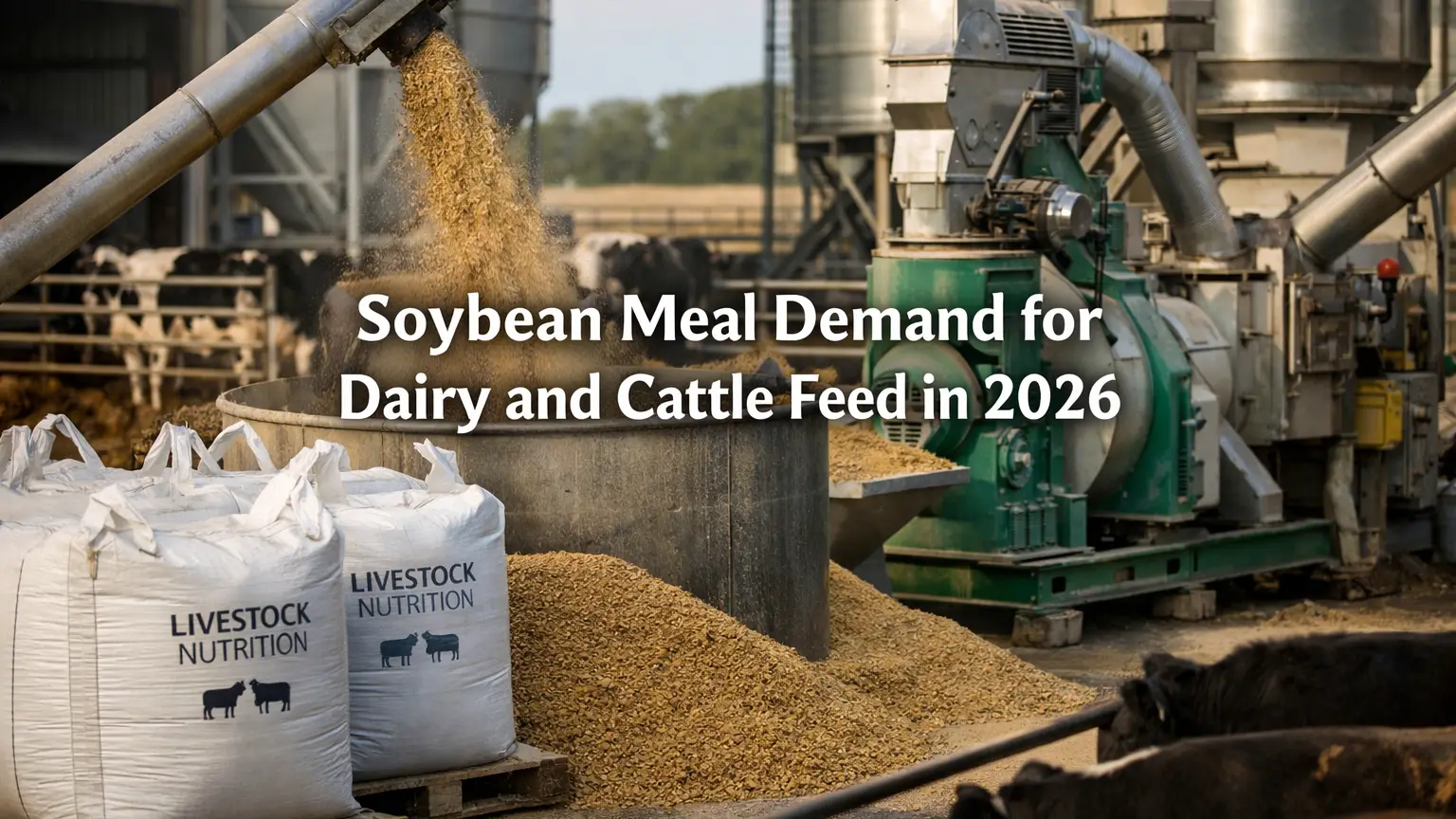
Soybean meal demand for dairy and cattle feed remains strong heading into 2026, supported by herd expansion, rising productivity targets, and the need for consistent, high-quality protein in ruminant diets. Despite competition from alternative protein sources and shifting dynamics in soybean oil markets, soybean meal continues to anchor global feed formulations. With the global soybean meal market valued at over USD 100 billion, feed buyers are entering 2026 focused on efficiency, supply security, and responsible sourcing.
Why Soybean Meal Remains Central to Ruminant Feed
Soybean meal has long been a cornerstone ingredient in dairy and cattle nutrition. Its strength lies in a combination of high crude protein content, balanced amino acid composition, and reliable digestibility. While by-products such as distillers dried grains or rapeseed meal offer cost advantages in certain formulations, they rarely match soybean meal’s consistency across different production systems.
In 2026, feed manufacturers face two parallel pressures. Livestock numbers continue to grow in emerging markets, while supply chains face volatility from weather patterns, trade policy, and sustainability regulation. These conditions reinforce the importance of dependable protein sources that perform predictably in both intensive and semi-intensive feeding systems.
Nutritional Role of Soybean Meal in Dairy and Cattle Diets
Protein Quality and Amino Acid Balance
Soybean meal provides a favorable balance of rumen degradable and rumen undegradable protein, supporting efficient microbial protein synthesis while supplying bypass protein for high-producing animals. It delivers strong digestibility for key amino acids such as lysine and methionine, which are critical for milk protein synthesis and muscle development.
Compared with many alternative meals, soybean meal supports more efficient nitrogen utilization, reducing excess nitrogen excretion while maintaining performance. This nutritional reliability is one of the main reasons it remains a formulation benchmark.
Impact on Milk Yield and Growth Performance
In dairy rations, soybean meal inclusion is consistently associated with improved milk yield and stable milk fat levels when diets are properly balanced. Research and field data show that well-formulated diets using soybean meal achieve comparable or better results than rations relying heavily on alternative protein sources.
For beef and cattle fattening operations, soybean meal supports steady average daily gains, typically in the range of 1.2 to 1.3 kilograms, without negative effects on animal health or carcass quality. These outcomes make it suitable for both growth and finishing phases.
Key Demand Drivers for 2026
Dairy Herd Expansion and Productivity Targets
Global dairy production continues to expand, particularly in Asia-Pacific markets. Countries such as China, India, Indonesia, and Vietnam are investing in larger, more efficient dairy operations to meet rising domestic consumption. Asia-Pacific dairy market growth is forecast at close to 5 percent annually into the next decade, increasing demand for high-quality feed protein.
In mature markets like the United States, herd sizes remain relatively stable, but productivity per animal continues to rise. Higher milk yields require precise amino acid supply, reinforcing soybean meal demand even without significant herd expansion.
Rising Global Demand for Animal Protein
Consumer demand for animal protein remains resilient, supporting feed demand across dairy, cattle, poultry, and aquaculture. Even where cattle growth slows, expansion in other livestock segments helps stabilize overall soybean meal consumption. This cross-sector demand provides a buffer against cyclical downturns in any single protein category.
Regional Demand Patterns
Asia accounts for a large share of global soybean meal consumption, driven by expanding livestock industries and limited domestic protein alternatives. China remains the largest producer and consumer, while Southeast Asia shows steady growth as commercial feed production increases.
In North America and Europe, soybean meal demand is relatively stable. Feed manufacturers focus on formulation efficiency, sustainability compliance, and cost optimization rather than volume growth. These regions benefit from established supply chains but face increasing scrutiny on sourcing practices.
Price Sensitivity and Procurement Challenges
Relationship Between Soybean Crush and Meal Supply
Soybean meal availability is closely linked to soybean oil demand. Growth in biofuel production has increased crushing activity, resulting in higher meal output. Since 2020, global soybean crush volumes have expanded significantly, increasing meal availability even as oil markets tighten.
For 2026, soybean meal prices are expected to remain sensitive to weather conditions in South America, planting progress in the United States, and geopolitical factors affecting trade flows. Futures markets suggest pricing around the low 300 dollar per ton range, with volatility tied to crop and logistics risks.
Managing Volatility in Feed Procurement
Feed buyers increasingly rely on a mix of forward contracts, diversified sourcing, and market monitoring to manage cost exposure. Tracking developments such as drought conditions in Brazil or Argentina, export policy changes, and logistics disruptions is essential for budgeting and supply planning.
Competition from Alternative Protein Sources
Alternative protein ingredients such as rapeseed meal, DDGS, and emerging microbial proteins play a role in modern feed formulations. DDGS can support weight gain but often reduces fiber digestibility in ruminant diets. Rapeseed meal offers cost advantages in some regions but provides lower rumen bypass protein.
Specialty proteins and amino acid supplements help address specific nutritional gaps but do not replace the broad nutritional balance soybean meal provides. As a result, soybean meal continues to serve as the reference protein against which alternatives are measured.
What Feed Buyers Should Prepare for in 2026
Looking ahead, feed manufacturers should plan for steady soybean meal demand growth, supported by nutritional performance and livestock expansion. Diversifying sourcing across major producing regions such as the United States, Brazil, and Argentina helps mitigate weather and policy risks.
Close monitoring of soybean crush trends, sustainability regulations, and regional livestock development will support more resilient procurement strategies.
Conclusion
Soybean meal demand for dairy and cattle feed remains robust in 2026, underpinned by its superior nutritional profile, global availability, and consistent performance. While alternative proteins play supporting roles, soybean meal continues to set the standard for ruminant feed formulations.
For feed manufacturers and buyers navigating evolving market and sustainability conditions, Chemtradeasia provides access to regionally diversified soybean meal supply, market intelligence, and sourcing support across Asia-Pacific and global markets. This enables feed producers to align nutritional performance with cost stability and responsible sourcing in the year ahead.